✅ONLINE LECTURE: Myths of Aging
Myths of aging
There are a host of myths and age-related stereotypes that pervade American culture. Stereotypes come in three main forms: positive stereotypes - which see the elderly in a favorable light (like all older people are wise or deserving)negative stereotypes - in which the elderly are seen as ill, impotent, ugly, mentally ill, or useless reverse stereotypes- depicting the elderly doing things that only younger people can do, like race car driving or climbing mountains. Reverse stereotypes are usually silly images These stereotypes hide the truth about aging and undermine our images and expectations of our potential vigor and health as we grow old. Let’s take a look at some myths that help shape our cultural attitudes.
 (Source: Image courtesy of Gerd Altmann under Pixabay Licence)
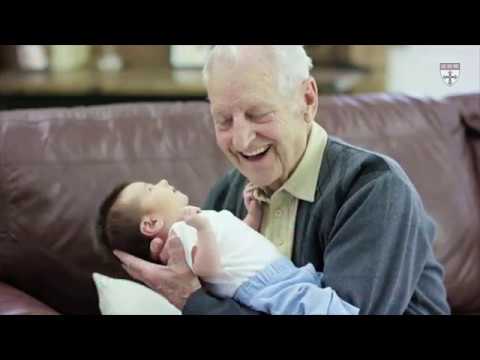
(Source: Harvard Chann School of Medicine - Captioning Provided by Harvard Chann School of Medicine)
Myth #1 - Old Age begins at 65
Think back to when you were in elementary school. Was your kindergarten teacher “old?” When I ask students this question, most indicate that their kindergarten teacher was ancient, when in reality that teacher was probably in the mid-20 age range. Perception of “old,” is relative to where we are in the life course. I can tell you that as a 55 year-old woman, I am genuinely surprised when my sons friends refer to me as, “older.” I do not identify myself as an older person. In fact, I'm not entirely sure how to respond when people tell me I look great...."for my age." What exactly does THAT mean? To me, an 80-year-old person is an “old” person.
In discussing humans, the most commonly accepted age at which the term "old "applies is the retirement age of 65 years. Why? There is no scientific reason. We do not go to bed at age 64 years and 364 days old and then suddenly wake up the next morning biologically different.
This age was set by the founder and first chancellor of the German Empire, Otto von Bismarck, in the late 1800s.
Von Bismarck needed an age to retire some of his military personnel. He knew nothing about aging. In the 1800's life expectancy hovered around 45 years, and he noted that nearly 90% of his sailors could expect to die before reaching their 65th birthday. So the age of 65 was chosen as the retirement age for German officers because so few of them would be alive to collect from the worlds first "social security" program.
The age of 65 in contemporary American society means something very different from what it meant over 100 years ago. With the elevated and continually increasing life expectancy, more that 80% of the population will reach their 65th birthday. A new U.S. Trust report has found that perceptions of old age vary ... the start of old age while those 65 and older put the number closer to 74. (AARP, 2017)
If we were to factor in the elevations in life expectancy that have occurred since the late 19th century, today a corresponding marker of old age would actually be 108 years (Dychtwald). Clearly von Bismark's choice of age has no place in the contemporary lifespan model.
Myth #2 America has always been a youth-focused culture.
During the early years of our nation's history, it was the elderly who were exalted and given superior status. In Colonial America, the aged were honored in all social rituals, because, according to the Puritan doctrine that was profoundly influential at the time, living to a great age was a sign of God's special favor. Spiritual worth and longevity were used as a scale to measure one's closeness to God. Remember, not many lived into old age, so to do so meant one must have special protection or powers.
The elderly were thought to possess highly developed moral faculties. It was assumed that they possessed divine wisdom regarding the secrets of health, happiness, spiritual perfection and long life.
Before industrialization, 90% of the businesses were family owned and run, being the head was comparable to having social control (only men who owned property could vote in early America). It was not unusual for children to be grown with families of their own before any part of their parents' or grandparents' property was turned over to them. Young people of that time associated aging with a gain in the so-called good things of life. In this society, each year of life promised more, not fewer, rewards.
Old age was so highly valued that people actually tried to appear older than they were. Fashions were designed to mimic the older body. For example, men hid their hair beneath wigs or powdered it to make it white as if with age.
Clothing was cut in ways that emphasized the postures and physiques of the elderly: the hips and waist coats were broadened and the shoulders were made to appear narrow and rounded to mimic the posture of the elderly. People tended to exaggerate their age when questioned by census takers.
Myth#3. Old age is a disease.
Although vulnerability to disease does increase with age, it is entirely possible to grow old and live one's entire life in the absence of physical disease and with traces of only the most subtle physical degenerations not appearing until the very latest years of life.
Although we are led to believe that the elderly are mostly frail and disabled, our nation is populated by healthy and vibrant elderly individuals who are actively living out their lives. Many run marathons, dance, swim or get involved as senior Olympiads. Many studies indicate that with proper diet and exercise the body can keep resilient, beautiful and disease free through the entire life span.
Myth#4 All old people end up in nursing homes
The truth is that 80-90% of all long-term care is provided in the home by family members. Just 3-5% end up living long-term in nursing homes.
Myth#5 Old age brings feeblemindedness
 This belief came about due to an American psychologist, George Beard, who reported his controversial findings on how aging affects the mental faculties. Studying the age at which great creative works had been accomplished, he reported that 70% of creative works had been achieved by age 45 and 80% by age 50. Using vague and highly impressionistic data, Beard concluded that as people grew old, their mental faculties deteriorated considerably. (Beard, 1869)
This misnomer is further strengthened by the fear that senility looms in everyone's future. The word senility has the same origin as the word senate. They are both Latin and mean old. The root of the word connoted wisdom and experience, but in more recent years, it has come to be associated with aging decline.
Senile refers to a host of disorders such as confusion, forgetfulness, dizziness or lack of self-care. In reality, the term has no medical legitimacy because there are more than 100 different conditions all easily treatable that can lead to such symptoms as well as a few serious diseases that do produce mental deterioration.
Recent research into the aging brain has begun to suggest a practical model of how the mind is affected by the aging process.
(Source: Image Courtesy ElNeato, Flikr)
" . . . the old mind is like an old muscle. It must be used and challenged in order to function well. If housed within four empty walls and left to wither, the mind will atrophy, [like your arm will if left in a cast for a long period of time] roaming back into the past where it was put to good use and unable to snap back to the dreary present even when called upon to do so. But, if enclosed in an environment that challenges and stimulates, the mind not only will survive, it will grow".
There is no reason one can not remain sharp and alert until the eve of his/her death.
How would Beard explain the fact that Michelangelo, sculptor, painter, architect, and poet of the Italian Renaissance was aged 71 when he was appointed the chief of architect in St. Peter's Cathedral in Rome. How would he explain Humboldt's work and his great contributions to science, the KOSMOS, from ages 76 to 90, and other important works done by people in their later years? Here is a brief story about Humboldt Biography of Alexander von Humboldt
The notion that most poets (and other creative people) dry up at 50 is quickly refuted by a glance at the relatively recent past. William Butler Yeats published Last Poems and Two Plays at age 73, in the year he died. Playwright George Bernard Shaw won the Nobel Prize for Literature in 1925 at the age of 69 and was at work on a new play when he died at 94. Poet Maya Angelou, born in 1928, was writing at her ripe—not at all dried up-age.
Myth#6 All old people are similar to each other.
If you consider the current elevation in life expectancy, old age can span 57 years (subtract age 65 from age 122, the oldest documented human life-span). From this view, it makes no sense to talk about older people as though they are all the same. Look at the differences from someone age 20 to age 77, a 57 year span, or someone aged 50 to aged 107, another 57 year span. Each of these categories is very different in activity, needs, goals, and physical stamina.
Stereotyping older adults into one category can actually make people uncomfortable about growing older. It suggests that the diversity and individualism we all cherish so much must come to an end. Diversity among America's elderly is great. Some older people are terribly sick and waiting to die, others are vigorous and are training to run marathons.
Some are very poor and depend entirely on government support for food and shelter, others have vast fortunes and assets and travel the world first-class. Some serve on boards of directors of large multinational businesses where others wait in breadlines for a warm meal.
Although some elderly have rigid and conservative life styles, others are extremely radical and live freer and more experimental lives. Some feel finished with work and enjoy retirement, others love working and hope to continue at their jobs.
To better understand the diversity of old people, scientists analyze the aged population in terms of three population segments of senescence (which means growing old or aging).
- Young old - aged 65 to 75 (the lower limits of this group is actually about age 55, because in recent years, more and more people are choosing to retire younger). The upper age limit is 75, because at present this age more closely fits the cultural images of what an elderly person is than the current younger standards of age 65. For example, if we were to take a poll and ask people their description of the average 65 year old, their description would more closely match that of the typical 75-year old (another example of cultural lag).
- Middle-Old - are those whose life experiences and age correspond to the period of life we might call late middle essence. Spanning the years between 75 and 90, this age group is the fastest growing segment of the population. They are multiplying at nearly three times the rate of the overall population. In this stage older people begin to move closer to family and services.
- Old Old - demographers talk of a period of life called senescence which comprises those people over the age of 90. This age group is expanding at nearly eight times the rate of the total population. Once over the age of 85, one needs more help with activities of daily living. American elders have a greater diversity in how they behave, what they look and feel like, what they do for a living, how they perceive retirement, and in how they wish to be treated; even more than their younger counterparts.
Myth#7 All Old People Are Powerless
In the past 50 years, the power and clout of America's elderly have steadily increased so that they are now a population mass with which to be reckoned. Some experts say that there won't be anybody as powerful as the organized elderly in just a few short years when the Boomers become retirement age. Some say because they were protesters in their youth, they will continue to protest in their old age.
What Can Older Americans Do?
Older Americans have played an increasingly active role in securing other aspects of their well-being. They have encouraged political and human service groups to assist them in meeting their needs. Their milestones have included:
- The First National Conference on Aging supported by the Federal Security Agency in 1950.
- Establishment of a Federal Office of Aging and an interdepartmental committee that later became the Federal Council on Aging in 1973.
- The development of the White House Conference on Aging held each 10 years.
- Passage of the Older American's Act, which established a purpose, structure, and funding mechanism for the Administration on Aging to coordinate programs for older people's income, housing, legal, health and social needs.
- Legislation passed in 1967 eliminated discrimination in employment for people between ages 40 and 65.
- Indexing of Social Security benefits to inflation. This means that when inflation goes up, Social Security payments to retirees increase also.
- Supplement Security program for the aged which provides minimum income for the poor.
- Federal legislation banned mandatory retirement for most workers under age 70.
Because elders have demanded better mental, physical and social health care, the field of aging, along with research work with the aged, has greatly expanded.
Although slow to respond to the needs of an aging America, the medical specialty of geriatrics is beginning to provide medical care targeted at older people and their special medical problems.
 Myth#8 Tomorrows Elderly will be Very Similar to Today's Elderly
Each generation of Americans grows healthier, better educated, more politically savvy, more accustomed to life-style change, more mobile, more youthful in appearance, more comfortable with technology and more outspoken. For example: Today's elderly have less formal education than any younger group. Nearly 70% have a 7th grade education or less, 20% are functionally illiterate, and 7% have had no formal education at all.
In contrast, the generation of Americans currently between the ages of 45 and 55 who will begin celebrating their 65th birthdays in just 10 years are highly educated. Nearly 50% have been to college, and 25% have college degrees. Only 20% attended college 40 years ago. It is estimated that the percentage of high school graduates over age 65 will increase form 29% in 1970 to more than 70% in 2010.
Tomorrow's elderly will have traveled to more places, read more books and magazines and met more people, lived through more world changes, experienced more sexual and life-style experimentation, and will have lived longer than any previous cohorts in the history of the world.
The world is changing so fast that each successive generation is in some ways light years different from the ones that came before. In the past 60 years we have entered the atomic age, the space age, the computer age, life expectancy has increased by more than 35 years, and global population has more than doubled.
As America ages our internal images and expectations will have to change and shift to reflect this transformation of the world.
Myth#9 All Older People are Wise
This is an example of a positive stereotype. What's wrong with positive stereotypes?
They are not realistic and create expectations we can not meet. This can leave older people feeling like failures in old age.
These myths hide the actual truth about the later years of life and undermine our image and expectations of people who potentially have more years of vigor and health. For the elderly status and the health of aged Americans to rise, we must identify and dissolve these myths.
How do we do this?
- The women's movement first used the power of language to facilitate change. Language shapes our attitudes. First, our language changes then our attitude. Talk positively about aging and dispel myths with accurate information (i.e. only 3-5% live in nursing homes).
- Emphasize people who have made contributions in later life. Like John Glenn and Jessica Tandy.
- Focus on and look for people who are currently productive.
- Dispel the myth that old age brings feeblemindedness. Intelligence does not decrease with age. Our working memory (fluid memory) becomes slower but crystallized intelligence or long-term memory can be just as good or actually increase with use.
- We must change our attitudes. If we see aging as positive, older adults will feel more positive about the process and have a more positive and healthful experience.
- Increase educational courses regarding the normal process of aging and require aging knowledge as a prerequisite to work in the field, a certificate or degree in gerontology. When service providers hold stereotypes and prejudices about the elderly, they build these beliefs into the programs they develop. This creates programming that does not meet the needs of the elderly and wastes precious or scarce public funds.
- The advantage of educated service providers is that education in gerontology can dispel commonly held misconceptions about the elderly, reasons for their behavior become clearer, and research shows that educated service providers provide more effective, efficient and economical programs in more humane ways
How Can We Fix It?
We Must All Work to Dispel Stereotypes:
Stereotypes lead to ageism, societal segregation, decreased communication, increased crime, a waste of public funds as programs incorporate stereotypes into their programs and miss providing for the needs of older adults. They stifle our potential, decrease our health and increase our own fears of aging. Part of successful aging is the ability to overcome these stereotypes.
Part of the cultural shift is the fact that a course like this even exists! If you take everything you are learning in this class, and apply "even a little bit" of what you've learned...we've busted a few stereotypes!
That's it for this lecture, though, so keep your eyes open, and share your awareness with your colleagues, friends, family and community!
Here are my truths.
- Despite what the media would tell us, all older people are NOT poor, lonely, isolated, wrinkled, frail, grouchy or starved for attention.
- They do NOT fall all the time.
- They do NOT depend on their children. Some are. Some do. But. NOT. ALL.
Most older people in the United States, in fact 95% of them, live independently. In fact, among the population over age 65, only 5% live in nursing or care facilities. (Disclaimer: That number does go up significantly after age 85.) - Most older adults consider their health to be excellent, and they enjoy good and healthy sex lives.
- Most older adults do NOT have memory problems and are NOT neglected by their families.
- Many older adults are the best and most reliable members of the workforce, and are responsible for starting more new businesses than younger people.
Technology, that cool stuff you keep in your pocket, was created BY the generation you are now considering “old.”
What are your truths?
Here are my truths.
Despite what the media would tell us, all older people are NOT poor, lonely, isolated, wrinkled, frail, grouchy or starved for attention.
They do NOT fall all the time.
They do NOT depend on their children. Some are. Some do. But. NOT. ALL.
Most older people in the United States, in fact 95% of them, live independently. In fact, among the population over age 65, only 5% live in nursing or care facilities. (Disclaimer: That number does go up significantly after age 85.)
Most older adults consider their health to be excellent, and they enjoy good and healthy sex lives. Most older adults do NOT have memory problems and are NOT neglected by their families.
Many older adults are the best and most reliable members of the workforce, and are responsible for starting more new businesses than younger people.
Technology, that cool stuff you keep in your pocket, was created BY the generation you are now considering “old.” B
Exploring the embedded "-isms" around age
If you were told that you were smart….for your age. Would you be complimented? What if you were told you were smart…for a woman/man. That wouldn’t feel so great, would it. So, WHY do we feel no hesitation to add that “for your age,” tag?
(Source: http://www.aarp.com)
What are YOUR images of aging? When you think of someone older in your family, who do you think about? How often are you interacting with someone at least 50 years older than you?
If we aren’t regularly interacting with real older-people, how are we going to learn how to be an older person? We learn how to “be” in the world from watching others, and we don’t have a great system in place for you to be training to be long lived. What NOW?
Positively Aging: How Growing Old is Envisioned Around the World
The number of retirement-age people across the world is growing In the U.K., residents over the age of 65 will account for nearly 1 in 3 people by 2050, and by the same time in the U.S., the number of Americans over the age of 65 will increase by 27 percent.
In some ways, people across the world entering into retirement may feel a sense of dread regarding what getting older may look and feel like. These misconceptions are largely perpetuated by external and social factors that might not be telling the whole story.
To understand how we perceive people aged 55 and older across the world, we asked graphic designers from 18 countries to retouch an image of a man and woman to the standards of their country’s ideals. In seven of the 18 countries, more than 1 in 4 residents are 65 years old and older ).
Click the link below to read the entire article, and be prepared to discuss your findings.
Daily Mail | The 'Ideal' 55-year-old Woman (Worldwide)
Older People are Happier (Guest Video Lecture)
"In the 20th century we added an unprecedented number of years to our lifespans, but is the quality of life as good? Surprisingly, yes! Psychologist Laura Carstensen shows research that demonstrates that as people get older they become happier, more content, and have a more positive outlook on the world."
Conclusion:
Gerontology is the multidisciplinary study of aging and the human experience from maturity to old age. The United States is a youth-oriented nation, however, like other nations around the world, longevity is transforming the population. Social problems such as ageism, changing burdens to the economy and are challenging existing policies in all sectors. Many stereotypes of old age exist, most of which are negative. Greater public education and interaction with older people, emphasizing accomplishments and draw attention to successful, active and engaging later life. Gerontologists believe that studying aging can guide a transformation of health and lifestyle to change the experience of an aging population.
Applying Your Knowledge
Your job for this module is to do some investigative work. I want you to seek out the messages that you are being exposed to on a regular basis, and really think about how they influence your perspective.
Your job is to seek out examples of media that depict older adults.
Start out easy with an internet search (watch those parameters), but also step into the greeting card aisle and look for birthday cards. I bet you won’t find one that celebrates turning 60 that doesn’t have some hint of humor or sarcasm. Look in newspapers and magazines, scroll Instagram or whatever social media you frequent. What’s the ratio of older to younger?
Be prepared to share what you find!