✅ONLINE LECTURE: Old Age and the Welfare State
 ]
Now that you have some basic understanding of the aging population, let's dive into some of the social issues related to an older age. This semester we will explore the "real-time" issues of aging, including some of the latest headline news about public programs. In fact, the first week of class, the headlines were about how we are going to negotiate our country out of the economic impact of COVID-19. Many of the suggestions, including reducing payroll taxes, have long-range implications on how we fund programs and services for those who require long-term assistance, rather than short-term offsets. We are forced to consider such a wide range of situations and circumstances, that we need to understand what sort of social obligations we already have in place, and what we can do to improve what we already have - and what we need to fill in the gaps.
I know it doesn't always seem like it, but we live in a country where we DO have a history of putting programs into place that are designed to help our citizens in need. No, it may not be as generous as some countries, nor as generous as we might like them to be….but there are structures in place to help those in need. You may hear the term welfare state, which turns these programs into hot-buttons for politicians, but let's take some time to look at what programs exist and how they got here.
The concept of welfare gets beaten up pretty badly in the press. gets beaten up pretty badly in the press. There s a false correlation between troubles with the infrastructure and the quality of the people to receive the help or the organizations that provide that assistance. Hopefully, this lecture will shed some light on different perspectives about the welfare state and perhaps broaden your understanding of the welfare state's intentions in its current iteration.
Growth of the Welfare State
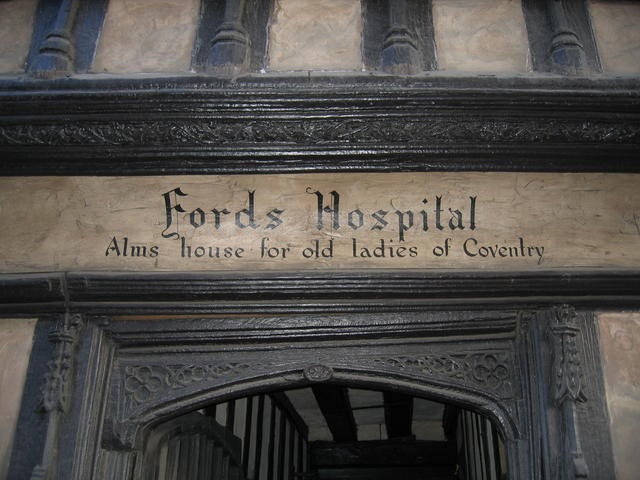
Before 1935, the United States was not a social welfare state. In fact, it was in every man for himself state. After the crash of Wall Street and the depression, the country needed to recover its social strengths as well as its economic vigor. Against shouts of socialism, legislation was passed in 1935 to fill in some of the gaps that existed in our system. Prior to this legislation, we had no state-funded old-age pension or workers compensation program for older adults. Anyone who needed help ended up in Almshouses, which were workhouses for the destitute. In worst-case scenarios, these unemployed, impoverished older adults would end up begging on the streets. (Quadagno, 1988)
In 1935 the Social Security Act was passed. It created two programs specifically for the elderly. The first was the Social Security program designed to be income replacement for retired workers over the age of 65. The second was the old-age assistance program for the aged poor. This was provided to everyone who was over the age of 65 who needed a little help. There was some refining done in 1937, where legislation was changed to include a benefit for widows and spouses of retired workers and allowed early retirement at age 62 with a reduced benefit. Prior to that, the benefit died with the worker, so widows left behind were left on funded. This legislation allowed the widow to receive their share of the Social Security of their deceased spouse. (DeWitt, 2010)
Fast forward to 1965, and Lyndon B Johnson said that the Social Security act of 1935 was simply not enough. He believes that we also need to provide basic medical care for our older adults and those in need through the Medicare and Medicaid Act of 1965.
Medicare is linked to Social Security as healthcare insurance provided to people over 65, not based on income or need. Medicaid was the benefit specifically designed for people living at or below the poverty level, regardless of age. The irony is that Medicaid will pay for nursing home care, while Medicare will not. Disability Insurance was added in 1972 for workers who were unable to work because of illness. If you look at your paycheck, you can see that a little bit of money is taken out of each of your paychecks. This money contributes to the funds used to support these programs.
What exactly IS a Welfare State?
What exactly is a welfare state? Well, a welfare state includes programs to protect people on behalf of the government. Some programs are permanent, and some are transitional. Whereas Social Security and Medicare become permanent after the age of 65, can you think about any programs that might be more transitional? Consider unemployment insurance and disability insurance. These are both intended to be transitional programs. We have programs that protect people when they become divorced or in poor health, like food stamps or Medicaid. It's not only cash assistance but social programs that improve well-being and financial security like farm subsidies. (Quadagno, 1988)
Three Forms of Public Welfare
Public Assistance Programs
Public assistance programs provide minimum benefits. Everyone pays into them through payroll deductions, but only those who meet the means tests can receive them. (Shapiro et al, 1987) What is a means test? A means test is a measure to determine if you are at or below the poverty level or meet whatever program's financial requirements are being used. Different programs have different means of test benchmarks.
Fiscal Welfare
Fiscal welfare is not a direct payment at all. It is in direct payments to individuals through the tax system. (Sinfield & Greve, 2013). So, if your employer contributes to health insurance or a savings program for your retirement like a 401(k) matching plan, they are contributing to your welfare. It is costing them, rather than costing you.
Social Insurance Programs
Social insurance programs provide economic security and are considered an earned entitlement that you have paid into during your work life. As long as you have contributed to the common pool, paid through your payroll taxes, you will receive compensation proportional to what you contributed to the system when you retire and become eligible. (Rejda, 2012) Our federal insurance program is called social security.
Let's Break 'em Down
Social Security
Social Security is a thing that we know exists, but many of us don't understand. Anyone who is working and paying payroll taxes (FICA) is paying into the social security system.
It is not a savings account. It is a pay it forward system, where workers are contributing to current recipients. How much will you earn in retirement? It is based on a very complex formula that reflects the number of years you've worked, the number of years you've paid into Social Security, and the amount of wages that you earned.
Someone who earns a lot of money before retirement does indeed make back an awful lot of money in retirement, but will they make their money back faster? The impact that money has on their lives is usually smaller than you think. The worker who has earned a lower level dollar for dollar paycheck will see more impact of the dollars they have contributed to the system. I know that sounds counterintuitive, but as we go through the material, I think it will make sense.
If we consider where income comes from for our older adults, it's important to know that 37% of all income earned by those over 65 comes from Social Security. That leaves us needing to have saved at least 60% of what we will need to live on. This is why it is vital to have personal savings, assets, government pensions, earnings from investments, or real estate. If we have to live on Social Security, we will be living below the poverty level in every state in the United States. That's why retirement planning, or "lifelong financial literacy," is so darn important!
Supplemental Security Income
Supplemental security income is slightly different from Social Security. It is referred to as SSI. It's also funded by tax revenue, but it is only available to very specific groups - the impoverished elderly, the blind, and the disabled. It provides cash for basic needs and gives priority to housing and other resources. Learn more at the following website: SSI.GOV
Medicare and MediCal
People say we don't have national healthcare, but we actually have an existing infrastructure for a national healthcare program if we were willing as a nation to fund it. During the Presidential elections, we often see "national healthcare" become part of the debate because healthcare is a pivotal social issue. What people who oppose Medicare for All may not understand is that Medicare is not free. It is a program designed to offset major medical expenses but still requires premiums and copayments, much like any traditional insurance.
Disability
We support our disabled in our welfare state. Disability insurance is another premium that we pay as a part of the Social Security system. We pay a small percentage of our income into an insurance policy so that if we lose our income due to becoming physically or mentally disabled, disability insurance will kick in. It now covers people with disabilities who have never worked for wages or have never worked for long periods of time, but it does not provide what I would consider a flush lifestyle, only basic support.
We find that most people who enter the disability program, regardless of the severity of their conditions, never leave. Of those of working-age, 2/3 indicates that they would like to leave the program, but there is a disincentive. It's entirely possible that for these workers, employment may not provide as much money as disability insurance does. If you leave the disability program, it is very cumbersome to be put back into the system. Because of the limitations placed on the number of hours that a disability recipient can work, there is great fear about losing qualification. On the flip side, there are many people working with a disability that probably shouldn't be because they know that the financial support from disability services will represent a radical loss of income. It is not a perfect scenario by any means.
Learn more about Federal Disability here: Disability | SSA
Learn more about State of California Disability here: Disability Insurance Benefits | EDD
Long Term Care

The United States is not well equipped to provide long-term care. There are two trains of thought when we consider long-term care. Some are optimistic that longer and healthier lives will require fewer and fewer of our older adults to deteriorate to the point that they need long-term care. Some pessimists believe that we have done a wonderful job of extending life expectancy is. Still, we may have a growing need for the oldest old who have extended life expectancy, with chronic dementia or other debilitating conditions. At the federal level, we simply do not have a plan. We leave our Medicare recipients to take out long-term care insurance or do financial planning that will allow an older person to afford long-term care. Some are using a process called divestment to reduce personal assets to qualify for Medicaid.
Fortunately, many innovative ideas are coming forward about possibilities for long-term care, including ranges of services and supports designed to help us live independently outside of institutions for as long as we possibly can. There is institutional care for people who need more extensive care, but it's a changing market place. We know that regardless of how many changes, it's still going to be expensive.
Assistance Programs

Some federal programs will help the state provide various services for the poor and disabled, but they are neither well-advertised nor well-funded. For those who need temporary assistance due to injury, illness, unemployment, and financial need, programs are designed to be "stop-gap." The benefits do run out, and each program has its own very specific set of criteria for benefits.
The Temporary Assistance for Needy Families (TANF) program helps needy families achieve self-sufficiency. TANF is available to older people IF they are caring for a child in their home. The benefits are not for the elder but offset the cost of caring for a child. TANF can prove hugely impactful for grandparents caring for grandchildren and make it possible to have a higher quality of life.
The Supplemental Nutrition Assistance Program (SNAP) provides nutrition assistance to eligible low-income individuals and families. The program is especially important in helping low-income older adults afford nutritious food so they can stay as healthy as possible. With financial assistance, seniors won't be forced to make dangerous trade-offs like skipping meals or skipping medication. According to the National Council on Aging (NCOA), "Nationally, about 4.7 million older adults (aged 60+) are enrolled in SNAP. Yet this figure represents less than half of the eligible population; approximately 3 out of 5 seniors who qualify to receive SNAP are missing out on benefits —an estimated 5.2 million people in all." Read more about SNAP: 7 Facts about SNAP for Seniors
Location, Location, Location....
Some federal programs will supplement funds provided by the state to support the poor and disabled, but they are neither well-advertised nor well-funded. It seems crazy to say, but California may be one of the most expensive places to get sick if you are not impoverished. Medi-Cal provides good care for those who means test for that support, but what about everyone else?
Recently, I am seeing more and more Californians relocating to other states where healthcare may not be as advanced, but it is far less expensive. When we are talking about our retirement, there are so many things to consider that healthcare expenses are often overlooked. Only 41% of Americans are even remotely aware of the cost of long-term care. If you look at this page from WalletHub.com, here in real annual cost for long-term care, you can see that it is far less expensive in some states. 2020's States with Best Healthcare
In making decisions about where you want to receive your care, you need to think about quality and access, and location. Do you want your family members to be cared for close to home? Look at this graph for the per-day costs just for bed food, housing, and care in a nursing home, and you'll see why long-term care insurance can become really important.
Community Support
When we talk about the welfare state, we're talking about the people's welfare, which includes meals and personal care and nursing services and chore services and meals on wheels. Senior centers, or community centers, are perfectly positioned to do so many elderly related social services. Programs exist at the community level, and because they are administered locally, they are keenly aware of needs within the community. It could be Meals, or it could be social activities. The idea is to provide a myriad of supports for housing to allow people to age in place.
Financial Assistance
Some of our state programs are designed to make life as affordable as the system will allow. We give text expenditure deductions for housing, allowing landlords to provide lower rents through subsidies. There are mortgage guarantee programs that allow us to deduct the cost of our home loans' interest. We are increasing the poor's housing supply by encouraging developers to construct low-income housing by subsidizing construction costs. We are getting creative with the housing shortage by allowing multiple units like granny units in residential areas.
In California, certain areas are seeing tremendous housing innovations, where new city plans require that for every new single-family home, one low-income apartment also needs to be built.
Need Vs. Age
As the population over the age of 65 grows, we will need to ask whether our programs should be age-based or needs-based. We know that there are arguments that older adults should not benefit from programs designed to provide income support if they are higher wage earners. The argument is that older adults are indeed earning 3 to 4 times over the poverty line, and they are "stealing" resources from our younger people. In my opinion, this creates unnecessary tension between the old and the young.
This intergenerational tension often serves to miss direct from the intention of the policy itself, which in most cases has been created with the best of intentions. As our world is reconstructing itself after the pandemic, we have the opportunity to design equitable support services for our population. Now is the time to consider what we want our social welfare program to look like and begin the journey of creating the future.
This short video tells the story of how generations can work together to grow and learn.

(Source: Encore.org)
Image Citation
Image courtesy of David Stowell under CC BY 2.0
Image courtesy of Then Mo, Flckr under CC BY-NC-SA 2.0
Image courtesy of Dobrowski, Flickr under CC BY-SA 2.0