ONLINE LECTURE: Friendship
How many of you are still friends with someone you've known since kindergarten? I think the purest relationship we ever have is with that first friend on the playground, that first day of kindergarten. You're both so scared, and everything is equal. You're new. They're new. There's an easy trust to playground friendships, and it would be lovely to think that we could achieve something so pure as we age. Maybe we can! Maybe I'm just a cynic.... but, as we become more of who we are, we become more different from everyone else. It takes time, work, and honestly to develop friendships - particularly as we get older. However, the need for friends at any age does NOT change. There are two classifications of social support - the confidant and the companion. A confidant is someone to confide and share personal problems with, whereas a companion is someone with whom you share activities and pastimes. They may be the same person, but it is possible to have people in our lives that serve different functions. Both are valuable, but it is important to acknowledge the difference.
Friendship
We've talked about parents and children, and we've talked about grandchildren and siblings. Because of the foundations of where we come from, but the people that we choose to interact with our most often our friends. We've picked them! I would like to introduce you to my ideal of having a lifelong best friend.
Please watch the following:
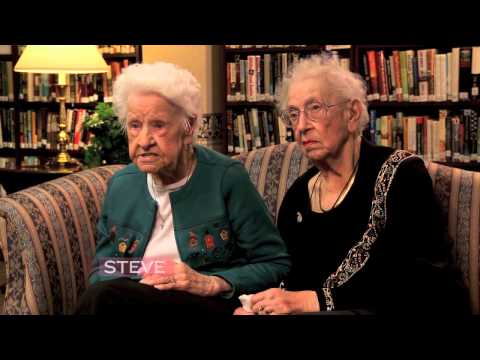
(Source: Steve Harvey Show)
Who are your friends? How do you choose your friendships? By definition of friendship is a relationship of mutual affection between two or more people. But it's not that simple, is it? There are lots of people for whom I feel affection, but they're not my friend in the truest sense. It comes down to three significant factors that make friendship possible.
Proximity - you can't become friends with someone you've never met. Certainly, Facebook and other social media have broken down the geographic barrier, but still, a certain amount of physical or cyber proximity is required. You must be able to be introduced! The more you interact with that person, the more you will have the opportunity to share connectedness - or know that you need to stay away! (Lussier et al, 2002)
Reciprocity - Reciprocity is an interesting phenomenon because I know we all have that one friend who, after we got off the phone with them… We need to take a nap. The exhaust us. Why do we continue this friendship? Is it reciprocal? What are we getting out of this? Well, maybe it's because we need to feel needed. Maybe it's because we need someone to laugh about or to complain about. What do you getting out of the relationship, the friendship? If the payoff isn't equal to the exchange for your energy, does it really qualify as a friendship, or is it an acquaintance-ship?
Similarity - Similarity doesn't necessarily mean that you're identical. Certainly, opposites attract, but you have to be able to find some common ground, right? In all things, we find that friendships require work. As we get older, friendships can become more complicated. We've got marriages, we've got work, we've got parenthood, and we can get caught up in life. Sometimes we can forget how important that connectedness can be, and our similarities are the thru-line that can keep our relationships strong.
Friendships, Life Satisfaction, and Facebook
Particularly for people in mid-life, it is not uncommon for them to report low levels of life satisfaction. One of the first questions we ask is, "who are your friends?" If they have to think about it, that to me is a big indicator. Having consistent and quality relationships at any age directly impacts our quality-of-life.
Later in life, friendships become even more important because they are our link to the larger community. It is very easy for us if we stop driving, particularly to find ourselves isolated. I guess that's why we have things like Facebook, right? Well, not really, and yeah. For me, I have a rule. If I don't have a relationship with you face-to-face first, I'm not going to be your friend on Facebook unless you come highly recommended.
I certainly see the value of social media, but I'm very clear that I am not gathering "friends." I am gathering acquaintances, and I am very careful that nobody knows that much about me. At least, not up first.
Imagine meeting someone for the first time:
Hi my name is Pam. I like this website, and I liked these 300 pages, so you know everything that I'm interested in. I went to school here. I did this. This is my favorite color. This is the picture I took of my favorite food. Oh and by the way, I've been at this job for this many years, I drive this kind of car, this is what my friend's house looks like, you can actually see what my address is. This is the picture of my small child who lives at that house.
 If I were to divulge all that information in the first five minutes of meeting you at a party, you would be walking away slowly, because you would think I was drunk or a total creeper.
Just something to think about....
Why in the world would we think that Facebook or other social media was a safe place for us to establish relationships with people that we've never met before? I'm not saying, "don't do that!" But, I am saying be aware that maybe what you were creating is a strong acquaintance start relationship. Not necessarily a friendship to hang your hat on. How many of the friends that you have on Facebook do you talk to regularly? How much do you have in common with them? What is that common bond? Of the five or 600 friends, you have on Facebook, who do you actually hang out with on a Friday night? Just something to think about.
Now, on the flip side, if an older person can't get out of their house, maybe having a social media platform to interact with other human beings can be incredibly valuable. I think there's a place for it all.
Patterns of Friendship
Never minimize the importance of having friends and acquaintances, relationships with our neighbors and other regular interactions, or as important to an older person as they are to a younger person. In fact, most older adults given a choice would have the same friendship pattern that you have. It would involve active social life, close friends, weekly contact with people, and participation in the larger community. The longer we live in a community, the more grounded we are with our relationships within that community.
Think about your own friends. During the pandemic, and social distancing requirements, how have YOU substituted "proximity" in a way that has allowed you to stay connected? Then, think about the older people in your life. How have they (or HAVE they) been able to maintain their relationships. Do you think that they are at risk for loneliness, or has Zoom cured the problem? What about those who don't know how to Zoom.
Who we choose to be friends with is about the people we feel we are in balance with. We have that something in common Dash be at a social club organization, a membership in some sort of group, a regular exposure to each other at religious gatherings.

(Source: Foxdenvlog)
Who's in Your Convoy?

In the military (or trucker) talk, a convoy is a group of vehicles moving together with a central purpose. In gerontology, the term is used to mean a group of people moving together through life with mutual purpose. Each ring of the convoy represents a different degree of personal relationships.
If we had friends that we've had forever, or we have friends that we've just recently, what we are doing is building something called a social convoy. We want those friends to travel with us through the life course. Think about that social web. It's a structural characteristic that shows or supports in our network right? What is your social support? It's the idea that we're not alone in the universe. If we feel like we're understood, and we feel like we're supported, our life satisfaction measures go up.
Our social convoy, those people that go with us, I called them my "bubble wrap people," because they form a protective barrier between me and the outside world that might harm me. These people support us throughout our lives.
Social convoys expand and contract over time. Think about the number of friends you had when you were a kid compared to where you are now, compared to what your parents have, and your grandparents' lives. On average, and older and, all of us, if we have between five and nine people in our convoy who can on some level act as our confidant, be our social supporter, and maybe provide caregiving, that's all we really need. It's really about having people that we know that we can count on.
Those people who make up our convoy support us and are supported by us throughout life. People come and go throughout our life--those in the outer circles more so than those closer in. As we age, people leave our convoy through death and distance. The closer they were to the center of our social web, the greater the sense of loss.
It becomes more difficult to replace people in our convoy as we age. We may no longer work or be as active in the community, which creates fewer candidates to choose from. Some of our relationships can never be replaced (parents, children, siblings), and we often replace them with close friends who become as close as family. We refer to these people as fictive kin.
Experts offer the following advice to build and maintain your convoy.
Reach Out -- remember building infers action on your part. You must make the first move. There is risk involved--you may be rebuffed, you may decide this relationship isn't what you anticipated and you will need to change the terms. But the risk must be taken if you are going to keep your convoy well populated.
Join In and Participate - groups are often the best place to form new relationships, but your chances are directly proportional to your degree of participation. If you function only on the periphery of the group, you will probably remain a wallflower. Don't be afraid to join in.
Volunteer - opportunities are endless for sharing with others. Experts say that when you reach out and share yourself, others respond and relationships begin. Don't be afraid to give of yourself. You will probably receive more than you ever thought possible.
Pets - Pets can provide a sense of being needed and appreciated and provide a common interest among people opening up new opportunities to develop human relationships. Caring for pets also keeps our people-caring skills in practice.
Be Flexible - let go of preconceived ideas, expectations, and all your old rigid rules about people. Rigid rules and unrealistic expectations place barriers to relationships.
Be Accepting and Nonjudgmental - learn to accept and appreciate people for who they are, not who you want them to be. You don't have to like everything about a person to like the person.
Be a Good Listener - most of us like to talk more than we like to listen, so if you can be a good listener, there will be no shortage of people who will be happy to talk to you. You learn a great deal about a person and about life when you truly listen--not just to the words, but to the feelings. Words carry very little of the true meaning. True meaning is carried in our tone, voice volume, body language, and facial expressions. These non-verbal cues all convey much more. This is all part of listening.
Be a Positive Person - positive people attract other people. Negativism pushes people away. People who love life and find it interesting never lack for others to share their joy. Concentrate on the good in each situation, maintain an active interest in life and your convoy will be well populated.
Like kin keeping, women are more overt in their social convoy than men across the life course. It doesn't mean that men are active, it just means they don't go in for the greeting card and birthday gift thing in quite the same way that women do.
Achieved vs. Ascribed Relationships
How do we choose the people in our lives? Well, sometimes we don't get a choice. Those are our ascribed relationships. Those are the folks who, we didn't choose, we were born into or married into them. We tend to value our "achieved relationships" because we chose them. Our friends and romantic partners are the relationships we work on. We strive for emotional intimacy and bonds. The more solid those bonds are, the happier we report being. It's not about the number of people in our social network, though; it's about how satisfying those relationships are. (Galupo & Gonzales, 2013)
I often say I need three people in my life.
- I need someone to sit and listen to me and not say anything.
- I need someone to nurture me and give me feedback.
- And I need somebody to kick me in the behind and make me make changes.
It is better for my psychological well-being if I have three of those three (or three times those three people), it is better for my psychological well-being. I feel supported. That stays constant throughout the life course. Part of our self-concept is measured by how valuable we see others and how we see ourselves being valued by them.
The convoy may be in place for older adults, but it may be out of reach. Maybe they have a disability that causes them to not be able to be out interacting. Perhaps it's an illness or lack of transportation. The isolation that can come with retirement; the death of friends and family can all impact life satisfaction. So we nurture the friendships that we have.
Please watch this video:
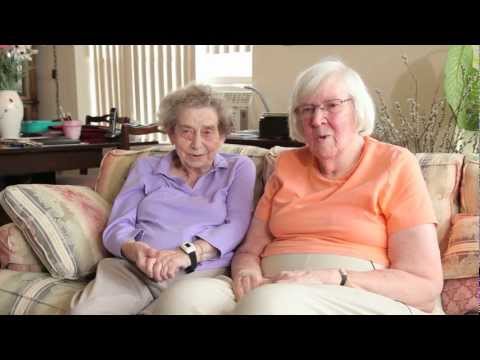
(Source: Cyber Senior Care)
I don't know about you, but these friendships inspire me. I found a wonderful article that I'd like to share with you. Please take a moment to read this article and tell me what you think:
Aging Gracefully - Social Engagement and Resistance to Cognitive Decline
and finally, imagine if the key to living longer was actually our social lives!
The Italian island of Sardinia has more than six times as many centenarians as the mainland and ten times as many as North America. Why? According to psychologist Susan Pinker, it's not a sunny disposition or a low-fat, gluten-free diet that keeps the islanders healthy -- it's their emphasis on close personal relationships and face-to-face interactions. Learn more about super longevity as Pinker explains what it takes to live to 100 and beyond.
Image Citation:
Image courtesy of Devlab under Pixabay License