✅ONLINE LECTURE: Love
Love
According to most of the major developmental theorists, one of the most important tasks that we have in our adolescence to midlife is establishing a partner bond - whether that is to start a family or to establish a personal, lifelong bond with one other human. We find that research tells us that those of us with long-term relationships built on a foundation of friendship that blossoms into love have a measurable increase in reported life satisfaction. Define love any way you darn well like. The key to remember is that it remains important across the entire life course.
What Makes a Relationship Successful?
I guess how successful a relationship is and how to keep it that way depends on the person that you're asking. According to young adults, services have shown love, communication, trust, attraction, and compatibility are the key factors. When we ask older adults, it's honesty, communication, companionship, respect, positive attitude.
Marriage is no longer a social requirement. It's not an economic requirement either. We are marrying. We may be staying married. We may be ending marriages. Some of us are creating new paradigms of marriage. It's all a matter of choice rather than a social construct. Legal, state-sanctioned marriages are declining in number. But the number of people in relationships seems to be about the same, if not increasing. We're redefining what we consider marriage. Is it a state-sanctioned economic and social distinction? Is it a church-sanctioned condition? I don't know the answer. I think we're working it out.
There used to be a contract where a woman was property and accompanied by a dowry as a part of a legal marriage agreement. By moving marriage into the purview of choice, we have actually complicated things a bit. Marriage is not as uncommon as you would think among older adults. In fact, because of the longevity increases in men, we are finding that more older adults are married for longer periods of time than ever before. It used to be that more older women were widowed, but because the husbands are living longer, widowhood is becoming slightly less common amongst older women. (Canham, et al., 2014; Stevenson & Wolfers, 2007)
When we look at the current population of older adults, we see that being married is far more common for men than women. Men will tend to quickly remarry after divorce or widowhood. Why? Well, it's a target-rich environment. There are simply more older women than there are older men.
We know that married people are healthier, especially men. They report being happier, less lonely, and certainly more financially stable than their single elder counterparts. However, long-term marriage brings with it a likelihood of being a caregiver, which can bring a tremendous amount of satisfaction and an equal amount of stress. There is a big pay off, though, for the emotional closeness and knowing that you are responsible for taking care of another human being.
Older men report being more satisfied with marriage than their wives do so. (Aticelli & Antonucci, 1994). I will leave that to your own observations to determine why that is true.
Please watch this video:

(Source: The More We Know)
81 years. That blows my mind. I am going on 30 years with my husband, and I thought that was a long time. The face of marriage has certainly changed in the last 20 years, though. We have seen it acknowledgment on the national level that there was a huge segment of our population that would like to be recognized for their commitment to each other. We haven't had the laws, and we've only just started seeing the social pressure to accept anything other than the "traditional" concept of marriage.
Same-sex marriage. Later life marriage. Domestic partnerships. Until recently, couples living "non-traditional" lives were not afforded the same legal rights as their "traditional" counterparts. This required legal wrangling to assure healthcare coverage and other legal protections - like rights of survivorship for pensions, retirement plans, and property.
These ladies waited 50 years to get married. Now they are in their 90's and are celebrating their relationship. Watch this to warm your heart:

(Source: HLN)
Marriage
Most adults want their love relationships to result in marriage, although Americans take longer to get there. The median age of first marriage for adults in the US has been rising for several decades. From 1960 to 2020, the median ages for marriage have risen for men (23 to 31 years) and women (20 to 28 years). More than 90% of American adults are likely to marry, but according to the Pew Research Center the way we marry is changing:
Americans are staying single longer, and the marriage rate among adults over 18 has dropped 8% since 1990.
Americans still marry for love. Nine in ten cite love and companionship as the primary motivators for marriage. However, the keys to staying married have shifted, identifying shared interest, satisfying sex life and equal allocation of household chores being of primary importance
Americans are living together more than ever. Roughly 7% of Americans over age 18 are “living together, representing a 29% increase since 2007 -and half of those are over age 50.
Americans are remarrying. Four in ten marriages are re-marriages. More men remarry than women, though, with women citing that they had no desire to remarry after divorce or widowhood. (Mahay & Lewin, 2007; Livingston et al., 2002)
One in six newlyweds in 2015 were married to someone of a different race or ethnicity, up from only 3% in 1967. Among GenZ and Millennials, 53% say that people of different races marrying each other is a good thing for our society compared with 41% of GenXers, 30% Boomers and 20% of those in the Silent Generation, according to the Center’s 2019 report. (Geiger, 2019)
As anyone who has tried it knows, marriage is hard work. Most of us have an intuitive sense that certain factors, such as similarity of interests and values, age of the couple, and so forth, make a difference in the probability that a marriage will succeed. But we may not be aware of other important determinants.
One of the clearest factors for marital success is a basis of similarity of values and interests - this extends across a wide variety of cultures and societies.
A second important factor in enduring marriages is the relative maturity of the two partners when they are married. In part, the age issue relates to Erikson's belief that we can't achieve a high level of intimacy until we have a strongly established identity is established.
Another reason that marriages may or may not last is the degree of financial security present. Financial difficulties have a negative effect on marriages and increase the likelihood they will end in divorce.
Developmental Issues in Marriage
Roger Gould saw the central issue in marriage as a question of how well one tolerates growth and change. Ideally, changes will be welcomed, show growth, and improve the relationship. Unfortunately, some perceive change as a threat. We are more comfortable with things, just the way they are. (Gould, 1978)
Alvin Toffler argues that it is utterly unlikely that marriage as a long-term commitment can last. He sees instead serial marriage with a pattern of marriage-divorce- remarriage-divorce-remarriage, best suited for what he sees as an era that does not value permanence in anything. (Toffler, 1970)
Lillian Troll offers some possibilities that partners in a marriage can remain compatible over the course of years. He describes the outcomes that are likely based on the personality growth and development of the partners.
- If neither partner becomes more complex, the match can remain good.
- The match can remain compatible if both partners become less complex (as sometimes occurs in later life)
- It can remain compatible if both partners become more complex and move in compatible directions - a popular idea among young adults. It is also the most difficult to sustain.
- If one partner grows toward greater complexity and the other does not, or if one becomes less complex and the other remains stable, it is easy to see how the possibilities for uneven growth and mismatching can be acute. (Troll, 1982)
Marital Satisfaction
Overall marital satisfaction is highest at the beginning of the marriage, falls until the children leave home, and rises again later in life. This "U" shaped pattern depicts satisfaction at the top of both sides of the "U" shape.
In its early days, marriage is at its most intense. During this honeymoon phase, the couple spends considerable time together, usually resulting in high satisfaction.
As the honeymoon phase's bliss becomes a monotony, marital satisfaction tends to decline, especially for women. This decline in satisfaction holds for couples of diverse educational, religious, employment, age, and racial backgrounds.
The most common reason given for this drop is the birth of children. For most couples having children means having substantially less time to devote to the marriage. Even childless couples experience a modest decline in marital satisfaction, which means that the drop is not totally due to having children.
By mid-life marital satisfaction hits rock bottom, and some differences between husbands and wives emerge.
Husbands at all stages of the marriage tend to describe it in positive terms, whereas middle-aged wives tend to be more critical. A 1975 study found that 80% of husbands, but only 40% of wives rated their marriages favorably in mid-life. (Lowenthal, Thurnher, & Chiriboga, 1975) Wives' chief complaint about their husbands was that they were too dependent and "clingy"; interestingly, this difference in feelings is sometimes noted in newlyweds, but the husbands describe their wives in such terms.
Marital satisfaction usually begins to rebound, at least temporarily, following the launching of adult children. The improvement is especially noteworthy in women. It stems partly from the increased financial security after children leave, the relief from the day-to-day duties of parenting, and the additional time that wives have with their husbands.
For some middle-aged couples, however, marital satisfaction continues to be low. These couples tend to be ones who have grown apart but who continue to live together. In essence, they have become "emotionally divorced". For these couples, more time together is not a welcome change.
Overall, marital satisfaction ebbs and flows over time. The pattern of a particular marriage over the years is determined by the nature of each spouse's dependency on the other.
- The marriage is strong and close when dependence is mutual and about equal.
- When the dependence of one partner is much higher than that of the other, however, the marriage is likely to be characterized by stress and conflict.
Changes in individual lives over adulthood shift the balance of dependence from one partner to the other one; for example, one partner may go back to school, become ill, or lose status. Learning how to deal with these changes is the secret to long and happy marriages.
Long Term Marriages
Researchers know very little about long-term marriages, especially from a developmental perspective.
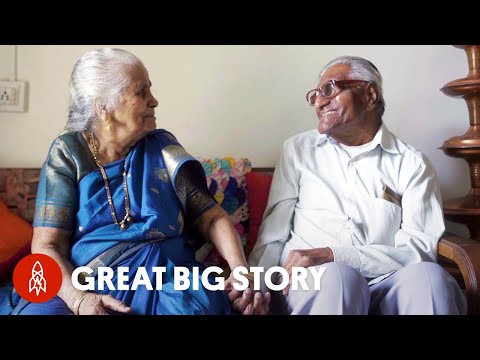
One of the only longitudinal studies of long-term marriages followed 17 couples in the Berkeley Studies. These couples had been married between 50 and 69 years and had been interviewed from time to time since their children were born in 1928 and 1929. The 1982-1984 interview revealed the following:
They found these couples fit into four categories:
- stable-positive marriages, which had maintained moderately high to high levels of satisfaction throughout their duration.
- stable-neutral marriages, in which couples had never experienced high emotionality or intimacy.
- stable-negative marriages, in which couples had experienced primarily negative emotions throughout.
- curvilinear marriages, which had shown the typical drop in satisfaction in mid-life but which had risen in later life.
All of the couples demonstrated shared and separate interests, and all showed commitment to the marriage, and acceptance of each other. Couples with curvilinear or stable-positive marriages also demonstrated understanding, affection, love, and were uncritical of their mates and their marriages.
These findings point out the importance of a willingness to work at the marital relationship to keep it going. The continued sense of commitment to the relationship and to one's spouse is also key.
(Source: The Great Big Story)
Divorce
If this book had been written in the 1980’s, much of the conversation would be about how 50% of marriage in America ends with divorce. New research shows that this is no longer the case. Divorce rates have been declining since 1980, along with marriage rates. In 2018, there were more than 788,038 divorces in the United States, representing a 39% divorce rate - down 10% since 1980. While the average age for divorce is around age 30, the number of Americans experiencing a “grey divorce” over age 50 has doubled between 1990 and 2010. Roughly 1 in 4 divorces in 2010 occurred to persons aged 50 and older. (AOA, 2016) Among these divorces, women are frequently the initiators, and researchers are carefully studying the demographic and economic trends that accompany this new phenomenon. It is thought that the financial independence of women allows greater mobility after the “parenting” roles have been fulfilled. Unlike generations of women before them, marriage has become a choice rather than a social or financial requirement for survival. (Bowen, et al., 2017)
What are some of the factors leading to the “grey divorce?”
Money - Finances are often cited as the biggest reason for divorce, and this is true of late-life divorce. Factors include an imbalance in spending habits, high levels of debt, mismanagement of funds, and who earns the most money. According to Forbes, marriage grows stronger when a husband increases his earnings but often fails when the wife’s earnings increase.
Personal Changes - “We just grew apart” is often part of the divorce narrative, especially if the marriage occurred at an early age. If the marriage has solely focused on building assets, raising families or running a business, after age 60 there are radical changes like retirement and empty-nest. If shared interests wane, so does marital satisfaction.
Infidelity - According to Forbes, Baby Boomer tend to be individualists, placing their needs and happiness ahead of others, which can lead to infidelity. For most of us, this is a deal-breaker.
Extended Life Expectancy - We are living longer. It is entirely possible that the best partner for us to grow old with is not the same person we married 30 years ago. We ask a lot about marriage in contemporary society - we want safety, security, companionship, shared interests, passion, and fidelity. For some, that may be a lot to ask for over an average 75-year lifespan.
Romance and Remarriage
The rate of divorce among baby boomers is on the rise. Interestingly enough, most of these divorces seem to be initiated by women. Why? Well, marriage has become a choice. If I have fulfilled my social contact to have children in mid-life, and I've done everything our culture prescribes that I need to accomplish, there is no reason for me to stay with someone I don't like anymore. I can stay or walk away, and there is no shame in acknowledging that I am not the same person I was 25 years ago.
We also see remarriage is on the rise. We find that second or third opportunity for love, and we jump at it! Some pretty harsh legal ramifications can come along with this. Who inherits your stuff if you're on your third or fourth marriage, especially if you've had children with two or three people. It can be very complicated if you have eight grandchildren and don't know how to separate your assets. It requires planning so that you don't leave a muddy situation. What do you do with Christmases and birthdays when you have two and three exes, but you've bonded with their children and their grandchildren.
My friends are a good example. They have a second and a third marriage and children between them. Christmas has become a lottery system for gifts because it's simply too expensive!
The Never Married
4% of our population over age 65 have never married. (Wang, 2014) They report high levels of life satisfaction, rely on their friends, and achieve social support relationships. They have taken great care and protected themselves in arranging in advance for long-term care in caregiving. They must create social networks with great intention because they do not have the built-in mechanism of fail that would come from being married - spouse, children, grandchildren. (Rubenstein, 1987)
There are those the report wishing that they married, or at least had children to leave some footprint, but for the most part, these single people report having quite a satisfying life. I often think it takes great bravery and our culture to not marry nor have children. You have to really know what you want.
and those looking for love...
As I said, it is becoming more and more common for divorced and widowed individuals to remarry. Dating, though, at any age, is tough. I have conversations with single people over the age of 50 who would like to date. They are actively seeking partners and having to navigate an entirely new dating scene.

Some have experienced great success in the more traditional ways of social organizations and special interest groups. However, I am seeing more and more people utilizing technology to find a future mate.
Only a few years ago, I was doing some research on dating over age 50, and I could find only five Internet sites specific to older individuals. When I searched in preparation for this class, I found the number had increased to over 30, specifically for dating over 50. Some use psychometrics to look for the perfect partner. There were also "swipe left swipe right" Tinder-like sites available for the more recreational dater!
Widowhood
When I look at the couple in the last video, I see that they are in their 90s. They will have time together, but one of them will lose the other one, probably within the next ten years. Widowhood is a distinctly female condition, particularly for those over age 75. In 2016, older men were each more likely to be married than older women. - and widows accounted for 34% of all older women. There were more than three times as many widows (8.8 million) as widowers (2.6 million). (AOA, 2016)
Among our older population now, we see a large proportion are very traditionally structured (gender role specific) marriages. The husband managed the finances, and the woman managed the household. What happens when you find yourself in widowhood and have only half of the skillset you need to survive? If the husband has left a financial mess, and the wife has never managed money in the first place, imagine the stress that could be layered on to the experience of losing her husband. Concurrently, it is not uncommon for widower to hire a cook or a housekeeper because he has no domestic talent.
What about the loss of intimacy? The loss of a sexual partner? The loss of social networking status can come along with widowhood? If you were a couple that did "couple things," and now you're not a couple anymore, what do you do with that? We're going to talk more about widowhood when we're talking about death and dying stages, but there are some social patterns. Lopata (1988) was among the first to recognize and identify the stages of widowhood:
Recognition - Recognition that this has actually happened, and needing to get through the social expectations of funerals and public expressions of loss.
Withdrawal - a period of healing and withdrawal from society to allow the widow to process grief.
Limbo - where the world is just trying to figure out the next steps forward. Not being quite ready to make major changes, but starting to consider possibilities.
Reengagement - we always hope that there will be a period of re-engagement. This is where we get back in touch with our friends and we start having social interactions again.
The experience of widowhood is profoundly individual. And certainly, men and women experience this very differently. The support of friends can range from super positive to infuriating! I've had friends tell me that they are still working through their grief and do not need someone telling them to "snap out of it.”
They need people who will be resources because women may find that they are going to face financial hardship and may need help getting their lives back up again. They need someone to help navigate the pensions or the minutia of day-to-day living.
Support groups are great. When my dad passed away, my mom had access to a support group, and they continued to contact each other for almost 20 years.
I'd like to introduce you to Fred. Fred's story is one of those gut-wrenching, heart feeling salutes to the benefits and pain that come with a lifelong relationship. It's about 10 minutes long, so plan accordingly, and if you're a sentimental person, maybe sure you have a tissue handy.
Please watch this video:

(Source: Greenshoes Studio)