7.7 The Rituals of Goodbye
Human beings have always created rituals surrounding death.
Every culture does it differently, but almost every culture does it. We gather. We tell stories. We sing. We cook. We pray. We cry. We wear special clothing. We light candles. We sit vigil. We preserve objects. We decorate graves. We parade through streets. We leave offerings. We speak to the dead. We create structure around loss because grief is too large and chaotic to hold entirely alone.
And honestly, death rituals are not really for the dead.
They are for the living.
Ritual gives grief somewhere to go.
End of Life Celebrations
The funeral industry makes billions and billions of dollars each year by capitalizing on the heightened emotions of people who are in a state of loss. In fact, the average cost for a funeral in the United States is between $12,000 and $15,000. Certainly, you can order of Costco casket, I kid you not, for about $2500- but you have to wait five months for it to be delivered. They come in lots of colors and are quite attractive. I know two people who have them stored in their garage under their ping-pong table…just in case.
A nice casket will, on average, cost $5000. Imagine how easy it would be for a funeral director, who might not be particularly reputable or have good business practice, to overcharge you. I don't know anyone that walks into a funeral home and says, "I want the cheapest thing for my mom." We want the best for our loved ones, and often we can fall victim to unscrupulous business practices.
What in the world could be unscrupulous? How about something as simple as one tiny little square on the intake form, asking whether we want our loved one to be embalmed. What does embalming do? It preserves the tissue so that you can have an open casket. It's a chemical preservative that gets pumped into the body, that keeps it from decomposing. If you were going to have an open casket, you do want to have that embalming done. If not, though, what's the point? The cost can be upwards of $2000. Why would you want to spend that extra money?
The Funeral Industry
A little history. Did you know that the Funeral Industry is relatively new? Prior to the turn of the 1900's, funerals were organized by family and neighbors. People were buried on their family property. Women had the primary role in death, as they prepared the bodies, washing, dressing and "laying out" for mourners. Bodies were displayed in home made caskets, and death was as common in the home as was childbirth. Undertakers were often just the local cabinet maker, trying to make extra money on the side!
During the Civil War, 620,000 soldiers died. Dr. Auguste Renouard, a US. physician developed a process that would preserve the bodies, allowing them to be shipped home. Undertakers saw an opportunity to grow their businesses by creating "funeral parlors," where famlies would not need to attend to the deceased. Slowly, the "funeral industry" developed. Between 1865 and 1920, over 25,000 funeral homes were established in the United States.
Over time, the "mom & pop" funeral parlor were consolidated, and in 2021, the four largest funeral service operators are estimated to own 20% of the approximately 23,000 funeral homes in the United States.
The funeral industry makes billions and billions of dollars each year by capitalizing on the heightened emotions of people who are in a state of loss. (My opinion.) In fact, the average cost for a funeral in the United States is between $12,000 and $15,000.
A nice casket will, on average, cost $5000. Imagine how easy it would be for a funeral director, who might not be particularly reputable or have good business practice, to overcharge you. I don't know anyone that walks into a funeral home and says, "I want the cheapest thing for my mom." We want the best for our loved ones, and often we can fall victim to unscrupulous business practices.
For the budget conscious, Costco sells caskets, I kid you not, for about $2500- but you have to wait five months for it to be delivered. They come in lots of colors and are quite attractive. I know two people who have them stored in their garage under their ping-pong table…just in case.
What in the world could be unscrupulous about a service that takes care of us in our time of need? How about something as simple as one tiny little square on the intake form, asking whether we want our loved one to be embalmed. What does embalming do? It preserves the tissue so that you can have an open casket. It's a chemical preservative that gets pumped into the body, that keeps it from decomposing. For those opting for an open casket, embalming is necessary to give time for preparations. In addition, there will be costs for preparing the body for viewing - for a fee. There will be costs for flowers, programs, renting of facilities, transportation, etc.
If, however, you do not want the open-casket, or are opting for cremation, why spend $1000 on embalming or $5000 on a casket? Perhaps we are not presented these choices. It all depends on the business practices of the funeral home.
Watch the video:
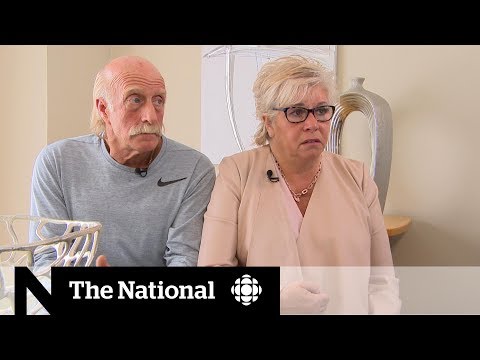
Some of the cultural things that we talked about can come into play as well. In the Jewish faith, funeral rites state that you must be buried immediately after death, without an autopsy. Buddhists feel the same way. Well, that's all good and well, but if your doctor hasn't seen you within a predetermined amount of time, an autopsy may be required to determine the cause of death.
Please read the following, "Required Reading: Nearing the End of Life - A Guide for Relatives and Friends of the Dying ."
Death Rites
ifferent cultures also develop very different rituals surrounding death, mourning, remembrance, and the care of the body after death. And honestly, one of the most important things to understand before exploring these practices is this:
there is no universally “correct” way for human beings to say goodbye.
What feels respectful, sacred, loving, comforting, or dignified in one culture may feel unfamiliar, strange, or even unsettling to someone raised in another. That does not make one tradition better than another. It simply reminds us that human beings understand death through the lens of culture, spirituality, history, environment, and worldview.
If your only framework for death rituals has been the traditional American Christian funeral, some of these practices may initially feel surprising. Good. That discomfort is not a bad thing. It gives us an opportunity to recognize how deeply our own assumptions about death have been shaped by the culture we grew up inside.
Some cultures emphasize preserving the body carefully.
Others believe the body should return to nature quickly.
Some focus on solemn mourning and restraint.
Others celebrate loudly with music, dancing, storytelling, food, and public gathering.
Some believe the spirit remains connected to the family long after death.
Others focus on releasing the soul peacefully into the next stage of existence.
And honestly, when you step back far enough, most death rituals are trying to accomplish the same deeply human tasks:
- honoring the person who died
- supporting the living
- creating meaning around loss
- helping communities process grief
- acknowledging transition
- preserving continuity between generations
Death rituals are not random traditions humans invented just to be complicated. They are psychological, social, spiritual, and cultural tools that help people survive the emotional reality of impermanence.
Some of the following practices may resonate deeply with you. Others may challenge your assumptions. Some may even feel uncomfortable at first glance. Try to approach each with curiosity rather than judgment. Every one of these traditions developed inside a cultural system attempting to answer the same impossible human question:
What do we do with love after someone dies?
Let’s take a look at some of the remarkable ways different cultures navigate death, grief, memory, and the transition between life and what comes next.
Hindu
n Hindu traditions, death is not typically viewed as an ending in the same way it is in many Western traditions. Instead, death is often understood as part of a continuous spiritual cycle of birth, death, and rebirth known as samsara. The soul is believed to continue its journey, carrying the consequences of karma from one life into the next.
Because of this worldview, Hindu death rituals place enormous importance on helping the soul transition peacefully and appropriately into the next stage of existence.
Traditionally, Hindu funerals occur very quickly after death, often within twenty-four hours if possible. Family members may wash and prepare the body themselves as an act of love and respect. White clothing, rather than black, is commonly worn by mourners because white symbolizes purity, mourning, and spiritual transition.
Cremation is the most common practice in Hindu funeral rites because fire is viewed as a sacred purifier that helps release the soul from the physical body. In some traditions, the eldest son or closest male relative historically lights the funeral pyre, though practices continue evolving in many modern families and communities.
One of the most visually striking and spiritually significant rituals occurs along the Ganges River in India, where cremations may take place publicly as part of sacred funeral ceremonies. To those raised in cultures where death is hidden away from public view, these rituals can feel emotionally intense or unfamiliar at first. Within the cultural and spiritual context of Hindu traditions, however, these practices are deeply meaningful acts of reverence, transition, and spiritual continuity.
Please note:
the following video has been marked “age restricted” by YouTube because it contains real images associated with death and funeral rites. The material is not graphic in a sensationalized way, but it does include culturally authentic funeral imagery that some viewers may find emotionally sensitive or uncomfortable. Please approach the video respectfully and with cultural curiosity rather than judgment.
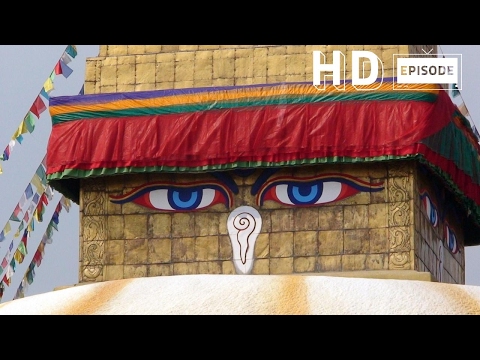
(Source: 3-Minute Adventures)
Buddhist
Buddhist approaches to death are deeply connected to the belief that life is impermanent and constantly changing. Rather than viewing death as a failure or interruption, many Buddhist traditions see death as a natural transition within the ongoing cycle of existence. Suffering, attachment, compassion, mindfulness, and spiritual preparation all play important roles in how death is understood.
One of the central ideas in many Buddhist traditions is that the mental and emotional state of the person at the moment of death matters greatly. Because of this, the dying process is often approached with intentional calm, prayer, meditation, chanting, and peaceful surroundings whenever possible. Family members and spiritual leaders may remain present, speaking gently, reading sacred texts, or helping the dying person focus attention peacefully as death approaches.
Unlike many Western practices that attempt to shield people from death, Buddhist traditions often encourage direct acknowledgment of impermanence. Death is not ignored. It is recognized as part of the human condition.
In some Buddhist communities, the body may remain undisturbed for a period of time after death because it is believed consciousness may still be transitioning. Rituals surrounding the body vary significantly depending on the country, region, and specific Buddhist tradition involved. Some communities practice cremation, while others may utilize burial or other forms of ritual care.
One of the things I personally find fascinating about Buddhist approaches to death is the emphasis on acceptance rather than control. Modern Western culture often treats death as something to battle endlessly, delay indefinitely, or avoid discussing altogether. Many Buddhist traditions instead encourage people to prepare emotionally and spiritually for mortality throughout life itself.
And honestly, there is something psychologically grounding about that perspective.
The following video explores Buddhist death rituals and beliefs surrounding dying, mourning, and spiritual transition. As with all cultural rituals, the goal is not to decide whether these traditions feel “right” or “wrong” according to our own upbringing, but to better understand the many ways human beings create meaning around death and loss.
Please watch the video:
(Source: The Walrus)
Jewish
Jewish traditions surrounding death are deeply rooted in dignity, respect, community responsibility, and the belief that every human life carries sacred value. There is often a strong emphasis on honoring the deceased quickly, compassionately, and with as little unnecessary interference with the body as possible.
In many Jewish traditions, burial ideally takes place within twenty-four hours after death. The body is treated with profound respect throughout the process because it is believed the physical body itself deserves dignity, even after death has occurred. A sacred group known as the Chevra Kadisha often prepares the body through ritual washing and care called taharah, performed quietly and respectfully by members of the community.
Traditional Jewish funerals are generally simple rather than elaborate. Extravagant displays are discouraged because the emphasis remains on equality in death and respect for the individual rather than material status. In many traditions, embalming and cosmetic alteration of the body are avoided unless required legally because they are viewed as unnecessary interference with the natural process of returning the body to the earth.
Mourning practices within Judaism are also highly structured, which honestly can provide enormous psychological support during periods of grief. Rather than leaving mourners emotionally adrift, Jewish mourning rituals create a clear communal framework for grieving.
You may have heard terms like:
- Shiva
- Shloshim
- Yahrzeit
These are all part of the mourning process.
During Shiva, which traditionally lasts seven days following burial, mourners gather at home with family and community members who bring food, prayers, stories, companionship, and support. Mirrors may be covered. Work responsibilities pause. The focus becomes grief, remembrance, and community presence rather than productivity or emotional performance.
And honestly, there is something profoundly psychologically healthy about that idea.
Modern American culture often expects people to return to “normal” almost immediately after major loss. Jewish mourning traditions instead acknowledge that grief requires time, ritual, witness, and community care.
Another important aspect of Jewish death traditions is remembrance. Memory is not viewed as something private and temporary. It becomes an active responsibility carried forward through storytelling, prayer, anniversaries, and acts of remembrance across generations.
The following video explores Jewish funeral and mourning traditions surrounding death, burial, remembrance, and community support. As you watch, pay attention not only to the rituals themselves, but also to the emotional and social functions those rituals serve for both the deceased and the living.
Please watch the video:

(Source: NewJewishLearning)
Islamic
In Islamic traditions, death is understood as a transition from earthly life into the afterlife and an important step in the soul’s journey before God. Because of this, Islamic funeral rites place strong emphasis on dignity, humility, community responsibility, and caring for the deceased with respect and efficiency.
As with several other traditions we’ve explored, burial usually occurs very quickly after death, often within twenty-four hours if possible. The body is washed carefully in a ritual purification process called ghusl, typically performed by family members or members of the Muslim community of the same gender as the deceased. The body is then wrapped in a simple white cloth called a kafan, symbolizing equality, humility, and the belief that material wealth and status do not follow us into death.
One of the things many people notice immediately about Islamic funeral traditions is their simplicity. Elaborate displays, ornate caskets, and excessive decoration are generally discouraged. The focus remains on prayer, humility, respect for the deceased, and returning the body to the earth with dignity.
Funeral prayers, known as Salat al-Janazah, are performed communally, emphasizing both spiritual support for the deceased and collective responsibility within the community. Burial traditionally takes place with the body positioned facing Mecca, the holiest city in Islam.
Like Jewish traditions, many Islamic practices discourage embalming or unnecessary alteration of the body unless legally required. There is often an emphasis on allowing the body to return naturally to the earth as part of the cycle of life and creation.
And honestly, one of the things I find psychologically powerful about Islamic mourning traditions is the strong sense of communal responsibility surrounding grief. Mourners are not expected to navigate loss entirely alone. Community members often bring food, assist with practical responsibilities, participate in prayers, and provide ongoing support for the grieving family.
At the same time, Islamic traditions also encourage balance in mourning. Grief is recognized as natural and deeply human, but excessive self-destruction or permanent withdrawal from life is discouraged. The emphasis becomes honoring both the deceased and the continuation of life itself.
As with all the traditions in this section, the goal is not to compare religions or determine which ritual system is “best.” Instead, the purpose is to recognize the many ways human beings create structure, meaning, compassion, and dignity around death.
The following video explores Islamic funeral traditions and beliefs surrounding death, burial, mourning, and community care.
Please watch the video:
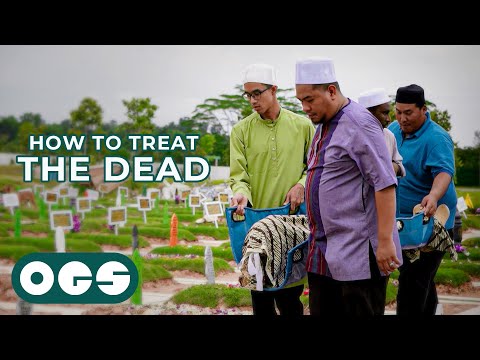
(Source: Our Grandfather's Story)
Russian Orthodox

Russian Orthodox funeral traditions are deeply symbolic and heavily rooted in ritual, prayer, and the belief that death represents a spiritual transition rather than a final ending. Much of the mourning process focuses not only on honoring the deceased, but also on helping guide the soul through its passage from earthly life into the afterlife.
Traditionally, funerals in the Russian Orthodox Church are held three days after death, reflecting important spiritual symbolism connected to resurrection and transition. Mourning itself, however, continues far longer. Family members often wear black clothing for forty days following the death, a period associated with prayer, remembrance, spiritual reflection, and the soul’s journey after death.
There are also many ritual practices surrounding preparation of the body and burial itself. The deceased may be dressed in specific colors or garments symbolizing purity, faith, or spiritual readiness. Certain objects may be placed with the body, including small religious items, written prayers, or symbolic gifts meant to accompany the individual into the next stage of existence.
Some traditions include placing coins over the eyes and a belt around the waist. These practices carry symbolic meaning tied to spiritual passage, protection, and helping guide the soul through the transition between life and death. To someone outside the culture, these rituals may seem unusual at first glance, but within the spiritual framework of Russian Orthodox belief, they represent acts of care, reverence, and continuity between the living and the dead.
And honestly, this is one of the fascinating things about death rituals across cultures:
human beings consistently create symbolic actions to help make sense of something emotionally enormous and difficult to fully comprehend.
Candles.
Coins.
Prayer.
Music.
Special clothing.
Food.
Flowers.
Processions.
Storytelling.
Different symbols. Same human need.
The following material explores Russian Orthodox funeral and mourning traditions and the spiritual beliefs that shape them.
Sky Burials, Nature and Returning to Earth
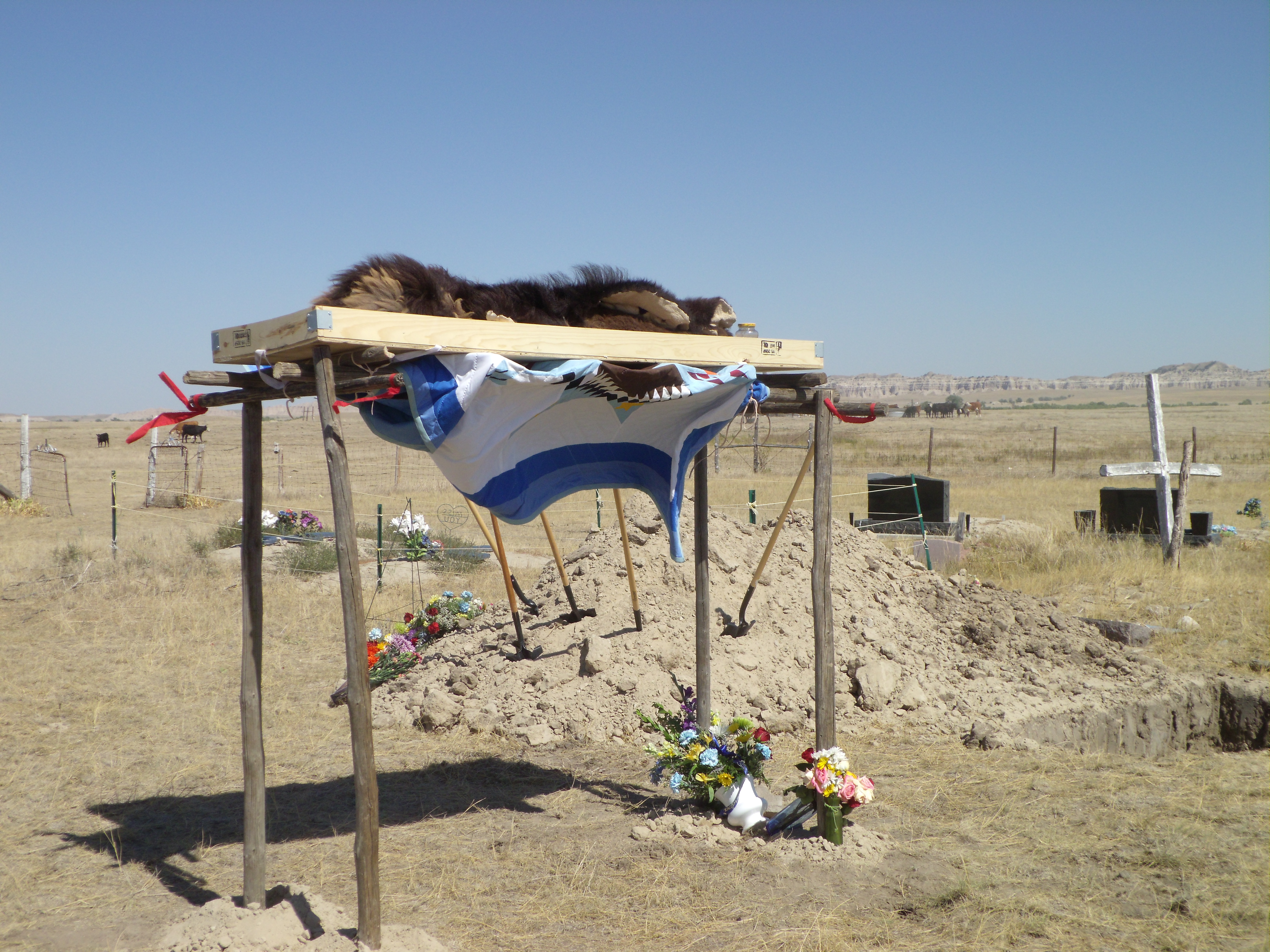
One of the most powerful themes that appears across many Indigenous and traditional funeral practices is the idea that human beings are not separate from nature, but part of it. Rather than preserving the body indefinitely, some traditions emphasize returning the body naturally to the earth, sky, animals, weather, and larger cycles of existence.
Sky burial traditions exist in different forms across several cultures, including Tibetan, Mongolian, and some Indigenous North American traditions. While the specific rituals differ, many share a common underlying belief:
the body is temporary, while the spirit or life force continues beyond physical existence.
The Lakota perspective surrounding death and burial is particularly moving to me because it frames death as reintegration rather than disappearance.
Traditionally, Lakota beliefs emphasized that the body should return naturally to the earth and elements. Historically, this sometimes included wooden platform burials, where the body was elevated and left exposed to nature rather than enclosed permanently underground. The philosophy behind this practice was not neglect or disrespect. Quite the opposite. The body belonged to the earth before birth and would eventually return to the earth after death.
Nothing extra was needed.
No elaborate preservation.
No separation from nature.
The land existed before us, and eventually we become part of it again.
Modern practices within Lakota communities vary widely today, and many families now choose cremation or other contemporary burial practices. But the spiritual themes of connection, continuity, ancestry, and return to nature remain deeply important.
One tradition I find especially beautiful is the large memorial gathering often held approximately one year after death. Why one year? Within some Lakota spiritual understandings, that period allows the soul time to complete its work in the universe before continuing onward. The gathering becomes not simply a funeral, but a celebration of continuity, remembrance, community, and spiritual transition.
Some Mongolian and Tibetan sky burial traditions share philosophical similarities with Indigenous beliefs surrounding return to nature and the transcendence of the soul, even though the actual rituals differ culturally and spiritually.
In several of these traditions, the physical body is understood as temporary, while the spirit or consciousness continues beyond earthly existence. Rather than preserving the body indefinitely, the remains are intentionally returned to the natural world. In some forms of sky burial, the body may be placed in elevated natural settings and exposed to the elements and wildlife as part of a sacred ecological and spiritual process.
To many people raised within Western burial traditions, these practices can initially feel startling or even unsettling because modern American culture tends to hide both death and decomposition from public view. But within the cultural and spiritual framework of these traditions, the practice is not considered disrespectful or gruesome. It is viewed as an act of generosity, humility, and return.
And honestly, when you step back from your own cultural assumptions for a moment, there is something profoundly ecological about the idea.
The body nourishes the earth.
The earth nourishes life.
Nothing is wasted.
Nothing is entirely separate.
Rather than resisting nature, these traditions often emphasize reintegration into it.

And honestly, many Indigenous death traditions challenge modern Western assumptions in fascinating ways.
In highly industrialized cultures, we often approach death by trying to preserve, contain, sanitize, and separate the body from natural processes. Many Indigenous traditions instead emphasize relationship:
relationship to land,
to ancestors,
to spirit,
to nature,
to generations yet to come.
To someone raised entirely within modern Western funeral traditions, these practices may initially feel unfamiliar or even emotionally difficult to imagine. But underneath the ritual differences sits a deeply human idea:
that death is not disconnection from the world, but a return to it.
New Orleans Jazz Festival Funeral
I once had the opportunity to observe a New Orleans jazz funeral, and honestly, “funeral” hardly feels like the right word for the experience. It felt more like grief and celebration braided together into one long human procession.
The ceremony lasted several days and included one of the most extraordinary public expressions of mourning I have ever witnessed.
The procession from the church to the cemetery moved slowly and solemnly. Musicians played deep, mournful jazz that sounded almost heavy with sorrow. The crowd moved together quietly, carrying grief openly through the streets rather than hiding it away. It felt reverent. Weighted. Honest.
And then something fascinating happened after the burial.
The music changed.
The procession from the cemetery to the reception became joyful, loud, rhythmic, energetic, and absolutely alive. People danced through the streets carrying umbrellas and handkerchiefs. Music echoed everywhere. Strangers joined the celebration. People sang, laughed, praised God, celebrated heaven, celebrated the person who had died, and celebrated life itself.
Honestly, it completely changed the way I thought about mourning.
In many American funeral traditions, grief is expected to remain restrained, quiet, and emotionally contained. The New Orleans jazz funeral tradition acknowledges sorrow fully, but it also leaves room for joy, gratitude, memory, community, spirituality, and continuation. The ritual recognizes that a person’s death may bring enormous sadness while also honoring the fact that the person lived, mattered, loved, contributed, and remains woven into the community they leave behind.
And psychologically, that balance is incredibly important.
Human beings often need permission not only to mourn, but eventually to laugh again, tell stories again, dance again, and continue living without feeling disloyal to the person they lost.
That does not mean grief disappears.
It means love continues alongside grief.
The New Orleans jazz funeral tradition beautifully captures that tension between sorrow and celebration. The first procession honors the pain of loss. The second honors the life that made the grief necessary in the first place.
And honestly, there is something deeply human about that.
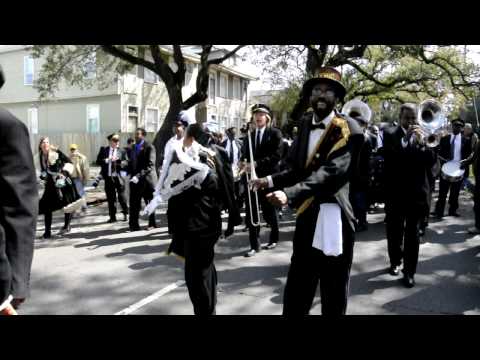
(Source: NOLAFestJunkie)
Famadihana: The Turning of the Bones
Now for something that sits completely outside my own cultural comfort zone, but is also absolutely fascinating from an anthropological and psychological perspective.
In Madagascar, there is a funerary tradition called famadihana, often translated as “the turning of the bones.” Every five to seven years, families may gather to remove the remains of deceased relatives from family crypts. The bodies are carefully rewrapped in fresh cloth, perfumed, celebrated, carried in procession, and then returned to the tomb.
And honestly, if you were raised in a culture where death is hidden away quietly and permanently, this can sound shocking at first.
But within the cultural framework of famadihana, the ritual is not morbid or disrespectful. It is relational.
The dead are not viewed as entirely absent from family life. Ancestors remain spiritually and socially connected to the living. The ceremony becomes an opportunity to honor them, speak to them, celebrate family continuity, share stories, strengthen intergenerational bonds, and reaffirm connection across time.
In many ways, it reminded me of Día de los Muertos traditions, where families gather at gravesites with food, music, stories, photographs, and celebration so the spirits of loved ones can symbolically rejoin the family gathering for a time.
But honestly, famadihana takes that sense of ongoing relationship even further.
The honored dead are not symbolically “remembered from afar.”
They remain active participants in family identity and cultural continuity.
The guest of honor is still at the table.
And psychologically, I think that is part of what makes these rituals so powerful. Many Western approaches to grief emphasize separation, closure, and “moving on.” Traditions like famadihana instead emphasize continuing bonds, ancestral presence, and ongoing relationship across generations.
Different cultures answer grief differently.
Some emphasize letting go.
Others emphasize maintaining connection.
Most do some combination of both.
The following video explores the Malagasy tradition of famadihana and the cultural beliefs surrounding ancestry, remembrance, and the relationship between the living and the dead.
Please watch the video:
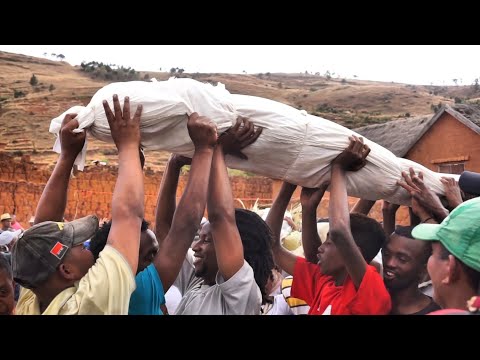
(Source: APA News Agency)
Dia De Los Muertos and the Continuing Presence of the Dead
One of the most misunderstood death traditions in popular culture is Día de los Muertos, or Day of the Dead. People who have never experienced it personally sometimes mistake it for a “Mexican Halloween,” largely because of the bright colors, skeleton imagery, painted faces, music, candles, flowers, and public celebration. In reality, Día de los Muertos is not about horror or fear at all.
It is about remembrance.
The tradition blends Indigenous beliefs surrounding ancestry and the continuing presence of the dead with Catholic observances connected to All Saints’ Day and All Souls’ Day. Rather than treating death as something to avoid discussing, Día de los Muertos creates intentional space for families to reconnect emotionally and spiritually with loved ones who have died.
And honestly, it is one of the most psychologically beautiful grief traditions I have ever encountered.
Families create ofrendas, or altars, decorated with photographs, candles, flowers, food, drinks, music, objects, and favorite items belonging to the deceased. Marigolds, believed to help guide spirits home, often decorate gravesites and homes with brilliant color. Families gather in cemeteries to clean graves, eat meals together, tell stories, play music, laugh, cry, and spend time together across generations.
The dead are not erased from family life.
They are invited back into it.
That emotional philosophy is profoundly different from many mainstream American grief expectations, where mourners are often subtly encouraged to “move on,” remain composed, and avoid dwelling too long on loss. Día de los Muertos instead embraces the idea that remembering is healthy. Speaking the names of the dead matters. Telling stories matters. Maintaining emotional connection matters.
And honestly, I think there is something deeply healing in that.
Many grief theorists now recognize what these traditions have understood for generations:
healthy grieving does not necessarily mean severing emotional bonds with the deceased. Often, healthy adaptation means finding new ways to carry relationships forward.
You will also notice something else important in many Latin American mourning traditions:
grief and joy often coexist.
Music.
Food.
Prayer.
Candles.
Humor.
Children.
Storytelling.
Tears.
Celebration.
All existing side-by-side.
Because human beings are complicated enough to miss someone deeply while still celebrating that they lived at all.
And honestly, perhaps that is part of what makes these traditions resonate so strongly with so many people. They acknowledge that death changes relationships, but does not necessarily end them emotionally.
The following video explores Día de los Muertos traditions and the ways many families continue honoring, remembering, and maintaining connection with loved ones after death.
Please watch the video:

North American Funeral Practices, the Funeral Industry, and the Return to Nature
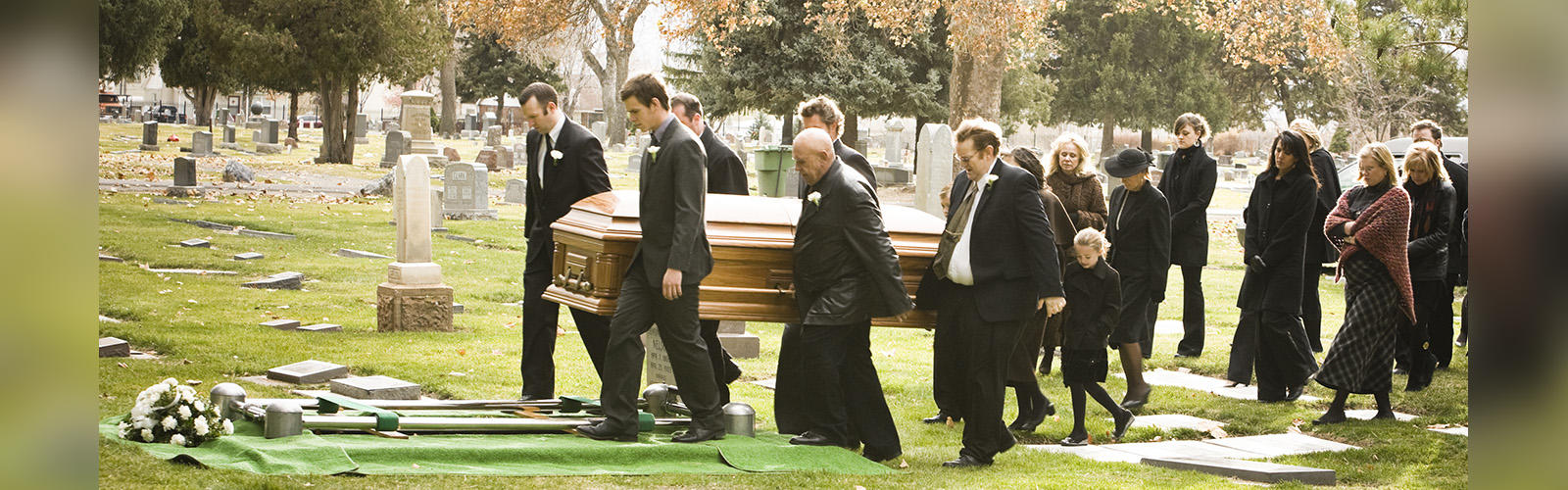
American funeral practices are an interesting blend of religion, culture, commerce, medicine, family tradition, and the funeral industry itself. Many of the funeral rituals we think of as “traditional” are actually relatively modern inventions shaped by changing social expectations, technological advances, urbanization, and the rise of professional funeral services.
And honestly, most people do not think much about any of this until they suddenly have to bury someone they love.
In the United States, the two most common methods of caring for the dead are burial and cremation.
Traditional burial generally involves placing the body into a casket, often made of wood or metal, and lowering it into a cemetery plot marked with a headstone or memorial marker. Families may visit the gravesite regularly as a place for remembrance, prayer, reflection, conversation, or emotional connection with the physical resting place of the person who died.
For many people, having a permanent place to visit matters deeply. Humans are physical creatures. Place helps anchor memory.
At the same time, traditional American burial has become extraordinarily expensive. Funeral services, embalming, cemetery plots, vaults, headstones, transportation, flowers, obituary notices, and ongoing maintenance fees can easily cost many thousands of dollars. Families often make major financial decisions while actively grieving, emotionally exhausted, sleep deprived, and overwhelmed by logistics.
And honestly, the funeral industry exists at the strange intersection of compassion and commerce.
Most funeral directors genuinely care about helping families navigate devastating moments. But the system itself is still an industry, and grieving people are also consumers inside that system. That reality creates tension sometimes, particularly when families feel pressured toward expensive products or services during moments of emotional vulnerability.
Cremation has become increasingly popular in the United States, in part because it is often less expensive and offers greater flexibility for memorialization. Cremation involves reducing the body through intense heat until only bone fragments and ash-like remains remain. Families may place ashes in urns, bury them in cemeteries, place them in memorial crypts, scatter them in meaningful locations, divide them among family members, or incorporate them into memorial art, jewelry, reefs, or other commemorative objects.
And honestly, the rise of cremation reflects changing cultural relationships with death, mobility, religion, family structure, and even geography. Families are more geographically scattered than they once were. Fewer people remain tied to multigenerational hometown burial plots. People increasingly personalize memorial practices in ways previous generations may not have considered.
At the same time, environmental concerns are forcing people to rethink what happens to the body after death.
Traditional embalming chemicals can eventually leach into soil and groundwater systems. Metal caskets, concrete vaults, synthetic fabrics, and other burial materials remain in the ground for extremely long periods of time. Cemeteries also require enormous amounts of land, maintenance, irrigation, landscaping, and infrastructure.
And frankly, there is a demographic reality sitting quietly underneath this conversation:
the aging of the Baby Boom generation means the United States will experience a massive increase in deaths over the next several decades.
That raises difficult practical questions.
Where do we place millions of bodies?
How much land can realistically be dedicated indefinitely to burial space?
What environmental costs accompany modern burial practices?
What funeral options remain financially accessible to ordinary families?
As a result, there has been growing interest in green or natural burial practices.
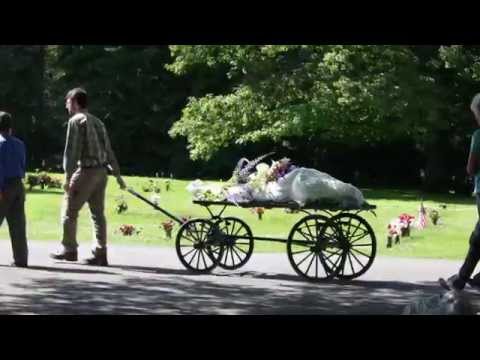
Natural burial attempts to work with ecological systems rather than against them. Instead of elaborate embalming, sealed vaults, metal caskets, and heavily manicured cemetery spaces, natural burials emphasize biodegradability and return to the earth. Bodies may be buried in simple shrouds, wicker, willow, pine, or other rapidly decomposing materials. Grave markers may be trees, stones, native plants, or GPS coordinates rather than large traditional headstones.
The philosophy behind these practices often echoes themes we saw earlier in Indigenous and nature-centered traditions:
the body came from the earth,
and eventually returns to it.
And honestly, there is something psychologically interesting happening here too.
After generations spent trying to preserve, sanitize, and distance ourselves from death, many people now seem drawn toward funeral practices that feel more personal, ecological, communal, and connected to natural cycles again.
Perhaps that shift reflects environmental awareness.
Perhaps financial necessity.
Perhaps spiritual change.
Or perhaps human beings are simply rediscovering older truths about impermanence and belonging.
The following video explores changing American funeral practices, the environmental and economic realities surrounding death care, and the growing movement toward natural burial and alternative end-of-life practices.
Please watch the video:
(Source: Legacy.com)
Natural or “green” burials also offer practical environmental benefits. Because the body is not heavily embalmed and is buried in biodegradable materials, decomposition occurs more naturally and much more quickly. Green burials reduce the long-term environmental impact associated with metal caskets, concrete vaults, synthetic fabrics, and embalming chemicals that can eventually affect soil and water systems.
There are now dozens of environmentally focused cemeteries throughout the United States specifically designed for green burials. And honestly, many of them look less like traditional cemeteries and more like nature preserves or public parks. Instead of endless rows of polished stone markers and artificial grass, there are trees, meadows, walking paths, native plants, and natural landscapes. The emphasis shifts from preserving the body indefinitely to allowing human remains to return naturally to the ecosystem.
And honestly, I understand why many people find that idea comforting.
At the same time, cremation has also opened the door to an entire new industry of memorial creativity. Once cremation became more common, people began rethinking what memorialization could even look like.
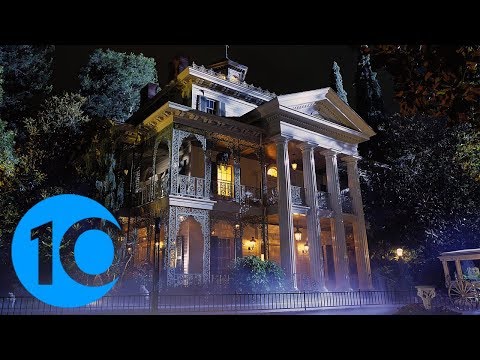
Some families keep ashes in decorative urns or memorial niches at cemeteries. Others scatter ashes in meaningful places connected to the person’s life, although there are actually legal restrictions surrounding where human remains can be scattered. For example, ashes generally cannot legally be scattered freely on public property, from major landmarks like the Golden Gate Bridge, or at places like Disneyland.
And yes, apparently people try the Disneyland thing constantly. Somewhere there is probably an exhausted employee whose entire career consists of vacuuming unauthorized grandparents out of the Haunted Mansion.
Scattering ashes at sea is also regulated. In the United States, cremated remains generally must be scattered at least three nautical miles offshore, and federal regulations govern how this is done.
But honestly, modern memorial options have become astonishingly creative.
Ashes can now be:
- compressed into laboratory-created gemstones
- incorporated into ceramic art or glass sculptures
- mixed into tattoo ink
- pressed into vinyl records
- launched into fireworks displays
- incorporated into artificial coral reefs
- planted with trees in biodegradable urns
- even sent into space
And while some of these ideas may sound strange at first, they actually reflect something deeply human:
people want memorial practices that feel personal.
The traditional funeral model does not resonate with everyone anymore. Some people want ritual. Others want simplicity. Some want environmental sustainability. Some want humor. Some want symbolism. Some want permanence. Others want return to nature.
And honestly, I think that says something important about modern grief itself.
We are increasingly moving away from standardized mourning rituals and toward individualized remembrance. People are trying to create endings that reflect personality, values, identity, humor, spirituality, environmental ethics, creativity, and connection.
Even in death, human beings keep trying to tell the story of who they were.

(Source: Buzzfeed)
All of these ideas are pretty great, but they've also all been approved by the government. For example, you cannot scatter ashes at sea until you are 12 miles from shore. That's international waters. You are not allowed to scatter ashes from the Golden Gate Bridge or any other public land. You are definitely not allowed to leave ashes at Disneyland. (Don't laugh. Lots of people try every year!).
(Source: USA Today)
Final Thoughts
One of the most fascinating things about studying death rituals is realizing how creative human beings become when trying to make sense of loss.
Some cultures mourn quietly.
Others loudly.
Some preserve the body carefully.
Others return it quickly to nature.
Some emphasize solemnity.
Others music, storytelling, dancing, food, prayer, or celebration.
And honestly, every one of these traditions tells us something important about the people who practice them.
Death rituals are never only about death.
They reflect beliefs about family, identity, spirituality, memory, nature, community, ancestry, love, and what it means to remain connected after physical life ends. They help the living organize grief into something survivable. They create space for mourning, remembrance, storytelling, humor, continuity, and meaning-making during moments when life suddenly feels fragile and disorganized.
At the same time, funeral practices continue evolving alongside culture itself. Modern families are increasingly personalizing memorial rituals, questioning environmental impact, rethinking expense, and searching for ways to honor loved ones that feel authentic rather than simply traditional.
And perhaps that is the larger lesson underneath all of this:
human beings may approach death differently across cultures, religions, and generations, but almost all of us are trying to answer the same deeply human questions.
How do we honor the people we love?
How do we carry memory forward?
How do we remain connected after loss?
And how do we help one another survive the reality that life is temporary?
The rituals may differ.
The humanity underneath them is remarkably similar.