4.3 Stress and Aging
Stress is one of those words that shows up almost everywhere in modern life. Students feel stress when deadlines pile up, parents feel stress when responsibilities collide, and workers feel stress when demands exceed the hours available in a day. Whether it is finals week, financial worries, relationship conflicts, family responsibilities, or simply trying to keep up with a busy schedule, most people have experienced moments when life feels overwhelming.
These experiences are real, and the emotions that accompany them can have a powerful impact on our thoughts, behaviors, and physical well-being.
At the same time, psychologists define stress as more than simply feeling busy, frustrated, or overwhelmed. Stress involves a complex interaction between our environment, our perception of challenges, and our body's biological response systems. In many ways, the stress response is an ancient survival mechanism that evolved to help human beings recognize threats, mobilize resources, and respond to difficult situations.
The challenge is that the same system that once helped our ancestors respond to immediate dangers now responds to modern pressures such as exams, financial strain, social conflict, caregiving responsibilities, workplace demands, and uncertainty about the future.
Understanding stress requires looking beyond the feeling itself and exploring what happens in the mind and body when we perceive that the demands we face exceed the resources we have available to meet them.
Your body does not distinguish particularly well between being chased by a tiger and being humiliated in a meeting, navigating a divorce, caring for a parent with dementia, worrying about paying rent, or waiting for a medical diagnosis. The same basic stress-response systems activate regardless of whether the threat is physical, emotional, psychological, social, or financial.
When the brain perceives danger, the body activates the sympathetic nervous system and releases stress hormones such as adrenaline and cortisol. Heart rate increases. Breathing changes. Muscles tense. Blood flow shifts. Attention narrows. The body prepares for survival through what we commonly call the “fight, flight, or freeze” response.
In short bursts, this system is incredibly useful. Stress responses help us react quickly during emergencies, focus attention, and mobilize energy. The problem is that modern human beings often live under chronic psychological stress rather than temporary physical danger. The tiger no longer leaves the village after ten minutes. Now the tiger sends emails, creates financial pressure, appears in family group texts, and schedules performance evaluations.
This becomes especially important when we begin connecting stress to personality development and human aging.
Not all people experience stress the same way because personality strongly influences how individuals interpret challenges, relationships, uncertainty, criticism, conflict, failure, and change. A highly conscientious perfectionist may experience intense stress over academic performance or workplace expectations. A person high in neuroticism may experience stronger emotional reactions to uncertainty or interpersonal conflict. A sensation seeker may actually feel energized by stimulation and pressure that would overwhelm someone else entirely.
Our developmental history matters as well.
If you think back to Erik Erikson’s psychosocial stages of development, each stage involves a central developmental challenge or crisis. Whether we successfully navigate those stages influences how we see ourselves and interact with the world later in life.
For example, individuals who struggled during Erikson’s stage of identity versus role confusion may experience greater insecurity in relationships or career settings because they never developed a strong sense of self. Someone who experienced repeated criticism, failure, or humiliation during the stage of industry versus inferiority may carry feelings of inadequacy into adulthood that later emerge as perfectionism, avoidance, impostor syndrome, or anxiety around performance-based tasks.

A student struggling with math anxiety in college may not simply “hate math.” That anxiety may reflect years of earlier experiences involving embarrassment, criticism, comparison, learning difficulties, or fear of failure. An older adult who becomes intensely distressed by loss of independence may not simply be “stubborn.” Their reaction may reflect a lifetime identity built around competence, control, caregiving, or self-reliance.
Over the lifespan, personality traits and developmental experiences interact continuously. Together, they influence:
-
relationship choices,
-
communication styles,
-
parenting,
-
caregiving,
-
coping behaviors,
-
career paths,
-
stress management,
-
emotional regulation,
-
physical health,
-
and even vulnerability to illness.
This is one reason gerontology is such an interdisciplinary field. Human aging cannot be understood through biology alone. To understand why people age the way they do, we must also understand personality, culture, trauma, resilience, relationships, development, cognition, environment, and social systems.
When we begin layering all of these perspectives together, older adults often become easier to understand compassionately. The difficult patient, the anxious parent, the rigid grandfather, the emotionally distant grandmother, the perfectionistic caregiver, the socially withdrawn retiree, all arrived at later life through a complicated combination of genetics, environment, developmental experiences, coping patterns, stress exposure, and personality traits developed across decades.
Their current behavior did not appear out of nowhere.
Our history informs our reality, and for many people, that reality has involved years of chronic stress, adaptation, caregiving, survival, disappointment, reinvention, and resilience. Understanding stress across the lifespan is not simply about learning how the body responds to challenge. It is about understanding how human beings carry experiences forward psychologically, emotionally, behaviorally, and biologically throughout the aging process.

Types of Stress
When most people hear the word stress, they immediately think of something negative. We associate stress with exhaustion, burnout, conflict, financial pressure, caregiving strain, anxiety, and emotional overload. However, not all stress is harmful. Human beings actually require some degree of stress in order to grow, adapt, stay motivated, and function effectively.
Psychologists generally divide stress into two broad categories: eustress and distress.
Eustress
Eustress refers to productive or positive stress. It is the type of stress that energizes us, sharpens focus, motivates action, and helps us rise to challenges. Eustress still activates the body’s stress-response systems, but the experience feels manageable, meaningful, exciting, or rewarding rather than overwhelming.
Many of the most important experiences in life are also stressful. Starting college, falling in love, getting married, becoming a parent, beginning a new career, traveling somewhere unfamiliar, performing in front of an audience, or pursuing a meaningful goal all place demands on the body and mind. Your heart rate may increase. Sleep patterns may shift. Stress hormones activate. Attention sharpens. The body prepares for adaptation.
Without some degree of stress, human beings often become stagnant. Moderate stress can improve learning, motivation, resilience, problem-solving, and adaptation. In many ways, eustress is part of healthy development across the lifespan.
Distress
Distress, on the other hand, occurs when stress becomes excessive, chronic, unpredictable, emotionally overwhelming, or feels impossible to control. Instead of promoting growth or adaptation, distress begins wearing down physical and psychological systems. Chronic distress may contribute to anxiety, depression, sleep disruption, exhaustion, irritability, immune suppression, cardiovascular strain, cognitive fatigue, and increased vulnerability to illness.
One of the most important things to understand is that the body’s physiological stress response often looks very similar whether the stressor is positive or negative. Your body may react to getting married, moving across the country, receiving a promotion, or preparing for a baby with many of the same biological responses associated with grief, divorce, financial crisis, caregiving, or illness. The nervous system recognizes intensity, uncertainty, responsibility, and change. It does not always neatly sort experiences into categories of “good” or “bad.”
This became especially clear through the work of psychiatrists Thomas Holmes and Richard Rahe, who developed the Social Readjustment Rating Scale during the 1960s. Their research examined how major life changes requiring adjustment could influence physical illness and psychological strain. What made their findings so interesting was the realization that both positive and negative life events appeared associated with increased stress load and increased risk for illness.
Marriage, retirement, pregnancy, relocation, career changes, financial shifts, and major achievements all require adaptation. Even exciting changes place demands on the body and mind. Holmes and Rahe assigned numerical values to life events based on the amount of adjustment typically required. The greater the accumulated stress load over time, the greater the statistical risk for illness, exhaustion, or emotional strain.
This does not mean stress directly causes disease in a simplistic way. Human health is far more complicated than that. However, chronic activation of the stress response can significantly affect the body over time. Elevated stress hormones influence blood pressure, inflammation, sleep quality, immune functioning, digestion, mood, memory, and emotional regulation.
Over the lifespan, stress exposure accumulates.
Personality also strongly influences whether people experience situations as eustress or distress. A hardy personality may experience challenge as energizing and meaningful, while a highly anxious individual may experience the exact same situation as threatening or overwhelming. Two people can encounter the same life event and have completely different stress responses depending on personality, coping skills, developmental history, social support, physical health, and perception of control.
This becomes especially important in aging because later life often involves multiple simultaneous stressors. Retirement, caregiving, chronic illness, grief, changing identity, financial concerns, sensory loss, and physical decline may all converge during the same period of life. At the same time, many older adults also develop stronger emotional regulation skills and become more selective about where they invest their attention and energy.
Aging does not simply increase stress. In many cases, it also increases perspective.
By later life, many people become better at recognizing which stressors deserve their emotional energy and which ones are simply noise. Understanding stress across the lifespan requires recognizing that stress itself is not always the enemy. Human beings are designed for challenge, adaptation, excitement, and growth. The real problem occurs when stress becomes chronic, unsupported, psychologically overwhelming, and unrelenting without adequate recovery, connection, meaning, or coping resources.
Patterns of Stress
Gerontologist Bernice Neugarten introduced the idea that societies operate according to a kind of invisible social clock, a set of cultural expectations about when major life events are “supposed” to happen. These expectations shape how we view ourselves and others across the lifespan. We absorb these timelines so deeply that we often do not even realize they are cultural constructions until our lives drift away from them.
According to Neugarten, events that occur “on time” within cultural expectations tend to create less psychological distress because they feel socially predictable and developmentally appropriate. Even when these events are stressful, they usually follow an anticipated life trajectory. Graduating from school, beginning a career, getting married, becoming a parent, buying a first home, retiring, or eventually losing elderly parents are all examples of life transitions many people expect to encounter at some point. These events may involve tremendous emotional strain, adjustment, responsibility, exhaustion, and uncertainty, but they generally fit within the social narrative people have been taught to anticipate.
For example, becoming a parent is extraordinarily stressful. New parents lose sleep, experience financial strain, negotiate shifting identities and relationships, and suddenly become responsible for keeping a tiny fragile human alive despite having slept approximately eleven cumulative minutes that week. Yet culturally, parenthood is often framed as an expected developmental milestone. Because it fits the social clock, many people receive emotional support, rituals, guidance, and social validation surrounding the transition.
The same is true for retirement or the death of an elderly parent. These events may involve grief, role loss, financial adjustment, loneliness, or identity disruption, but they are generally understood as part of the expected progression of life. There are social scripts for them. Friends know how to respond. Workplaces have retirement parties. Communities organize funerals. People may still struggle deeply, but the events themselves are culturally recognizable and socially validated.
Off-time events are different.
When life events occur outside expected social timing, they often create not only emotional stress but also social disorientation. The individual may feel isolated, abnormal, invisible, angry, ashamed, or profoundly disconnected from peers who are following more expected life trajectories.
For example, the death of a child is widely recognized as one of the most psychologically devastating losses a human being can experience partly because it violates the expected order of life. Parents are not “supposed” to outlive their children according to the social clock. There are fewer social scripts for this kind of grief. Friends often feel uncomfortable and do not know what to say. The bereaved parent may feel profoundly isolated because their experience falls outside the expected developmental pattern.
The same can occur with early widowhood. A thirty-five-year-old widow often experiences not only grief, but also a kind of social displacement because peers are still building families, careers, and futures while the widow is navigating loss, identity disruption, financial strain, and single parenthood. Their life suddenly no longer matches the cultural timeline surrounding them.
Divorce can also function as an off-time stressor depending on life stage and social context. A divorce at age twenty-five may be interpreted very differently than a divorce after forty years of marriage. Gray divorce, meaning divorce later in life, often creates enormous stress because it disrupts assumptions surrounding aging, retirement, caregiving, finances, social networks, and identity at a stage when people expected stability rather than reinvention.
Neugarten’s work was especially important because it helped researchers recognize that stress is not simply about whether an event is objectively “good” or “bad.” Stress is also shaped by timing, social expectations, cultural meaning, and whether people feel emotionally and socially prepared for the transition.
This concept becomes especially interesting when we examine changing cultural norms across generations. The “social clock” itself evolves over time. In previous generations, marrying young, having children early, remaining in one career for life, and retiring around age sixty-five were considered relatively standard developmental patterns. Contemporary adulthood is often much less linear. People may return to school at fifty, become parents later in life, remarry after widowhood, change careers multiple times, or remain unmarried entirely.
As cultural expectations shift, so do perceptions of what feels “on time” or “off time.” However, the emotional impact of disrupted expectations remains powerful. Human beings build internal narratives about how life is supposed to unfold, and when reality diverges sharply from those expectations, stress often intensifies.
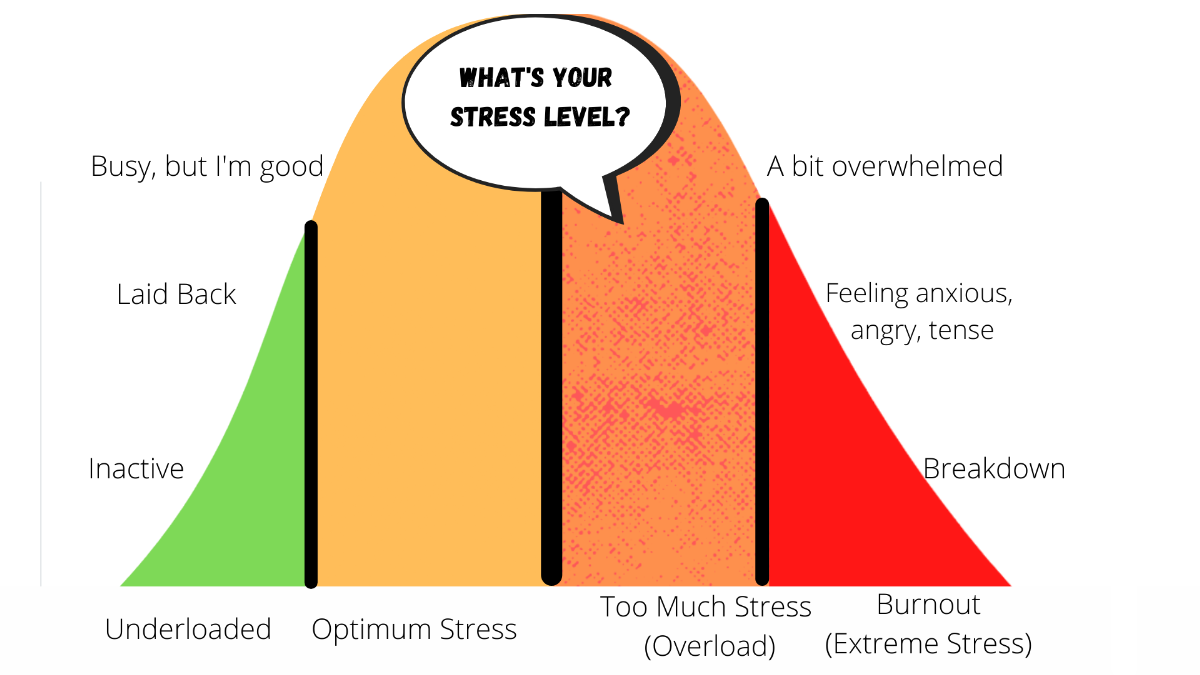
Here's a visual to help make sense of the theory:
This is one reason aging can become psychologically complicated. Many older adults are not only coping with actual losses and transitions; they are also coping with the collapse of expected timelines and identities. A person who imagined retirement as peaceful may instead become a caregiver. Someone who expected lifelong marriage may face late-life divorce or widowhood. Someone who anticipated good health may instead confront chronic illness or disability decades earlier than expected.
Stress across the lifespan is therefore not simply about events themselves. It is also about timing, expectation, identity, culture, and whether the life we imagined matches the life we are actually living.
Stress and the Body
Stress is not just "in your head."
One of the most important things to understand about stress is that the body responds to emotional and psychological stress as though it were a physical event. When the brain perceives danger, uncertainty, conflict, overload, or prolonged emotional strain, the nervous system and endocrine system activate a cascade of physiological reactions designed to help us survive.
In short bursts, this stress response is adaptive. It increases alertness, sharpens attention, mobilizes energy, and prepares the body for action. The problem occurs when stress becomes chronic and the body remains activated for long periods of time without adequate recovery. Human beings were designed to survive short-term threats, not to remain physiologically activated for months or years while simultaneously answering emails, caregiving, paying bills, doomscrolling the news, and pretending everything is “fine.”
Over time, chronic stress affects nearly every system in the body.
It's In the Skin
The skin is often one of the first places stress becomes visible. Many people experience acne breakouts, eczema flares, psoriasis, dermatitis, hives, stress rashes, itching, or delayed wound healing during periods of emotional strain. Stress hormones increase inflammation throughout the body, and the skin frequently reflects what is happening internally. It is not unusual for students during finals week, caregivers under chronic strain, or individuals experiencing grief or trauma to suddenly develop skin problems seemingly “out of nowhere.” The body is not malfunctioning. It is responding.
It's In the Digestion
The digestive system is also highly sensitive to stress because the brain and gastrointestinal system are deeply interconnected. During stress, digestion may slow down, speed up, or become dysregulated altogether. Some individuals experience nausea, stomach cramps, reflux, diarrhea, constipation, bloating, appetite changes, or worsening symptoms of conditions such as irritable bowel syndrome (IBS) or inflammatory bowel disease (IBD). Stress can alter nutrient absorption, gut motility, inflammation levels, and even the balance of bacteria in the digestive tract.
This is one reason people often describe “feeling stress in their stomach.” They literally are.
It's in the Hormones
Chronic stress also influences metabolism and blood sugar regulation. Stress hormones such as cortisol increase glucose availability in the bloodstream because the body assumes it may need immediate energy to survive a threat. Over time, prolonged elevation of stress hormones may contribute to insulin resistance, weight fluctuations, abdominal fat accumulation, vascular damage, and increased risk for Type 2 diabetes and cardiovascular disease.
The immune system is particularly vulnerable to chronic stress exposure. Short-term stress may briefly enhance immune readiness, but long-term stress tends to suppress immune functioning and increase inflammation throughout the body. People under chronic stress often become more susceptible to infections, slower recovery from illness, fatigue, and inflammatory conditions. Researchers now recognize strong connections between chronic inflammation and conditions such as heart disease, autoimmune disorders, arthritis, dementia, depression, and some cancers.
It's in Our Brain
Stress also has profound effects on the brain and mental health. Headaches, muscle tension, irritability, emotional reactivity, anxiety, depression, panic attacks, sleep disruption, brain fog, concentration problems, memory difficulties, and exhaustion are all common stress responses. Chronic stress affects neurotransmitters, attention, emotional regulation, and cognitive processing. When stress becomes overwhelming, people often describe feeling mentally “fried,” emotionally numb, forgetful, or unable to focus.
From a neurological standpoint, this makes sense. A brain focused on survival is not prioritizing abstract reasoning, creativity, or long-term planning. It is prioritizing immediate threat management.
It's in Our Skeleton and Muscles
Muscles and joints also respond strongly to stress. Many people unconsciously tighten muscles when anxious or overwhelmed, especially in the neck, jaw, shoulders, and back. Chronic muscle tension may contribute to headaches, migraines, jaw pain, back pain, inflammation, fatigue, and posture problems. Long-term stress is also associated with worsening pain perception because stress hormones and inflammation can increase sensitivity to discomfort throughout the body.
Even bone health can be affected over time. Chronic stress hormones may contribute to reduced bone density, increasing risk factors associated with osteoporosis and fracture, particularly among older adults already vulnerable to bone loss.
It's In our Reproductive Systems
The reproductive system is highly sensitive to stress as well. Chronic stress may disrupt hormone production, reduce fertility, alter menstrual cycles, contribute to erectile dysfunction, lower testosterone or estrogen levels, reduce libido, and interfere with sexual functioning. From an evolutionary standpoint, reproduction is not the body’s priority during perceived survival crises. The body essentially says:
“Now is not an ideal time to make a baby. We appear to be fighting metaphorical tigers.”
Stress also changes behavior in ways that further affect health. Some people overeat. Others lose appetite completely. Sleep becomes disrupted. Physical activity decreases. Substance use may increase. People withdraw socially, neglect medical care, abandon healthy routines, or become emotionally reactive in relationships. Over time, the indirect effects of stress can become just as damaging as the physiological effects themselves.
This becomes particularly important in aging because older adults often experience cumulative stress exposure over decades. Caregiving strain, chronic illness, grief, financial pressure, social isolation, retirement transitions, sensory loss, trauma, discrimination, and physical decline all contribute to long-term allostatic load, the cumulative “wear and tear” stress places on the body over time.
The body keeps score, even when people try to push through.
This does not mean stress inevitably causes illness in a simple or deterministic way. Human health is influenced by genetics, lifestyle, environment, healthcare access, personality, coping skills, relationships, and resilience as well. However, chronic unmanaged stress clearly affects physical and psychological functioning across the lifespan.
Understanding stress physiology helps explain an important reality in gerontology and healthcare: emotional experiences are biological experiences. The mind and body are not separate systems politely ignoring each other across the room. They are in constant conversation.
The Gender Divide
All human beings are biologically equipped to handle a certain amount of stress. The stress response system is adaptive and necessary for survival. Problems emerge when stress becomes chronic, cumulative, and unrelenting without adequate recovery. While we often think about trauma as a single catastrophic event, researchers increasingly recognize that long-term cumulative stress can be equally damaging to the body and mind over time.
Stress across adulthood is influenced by biology, personality, culture, social roles, and historical context. While patterns often emerge along gender lines, individual experiences vary widely. The goal is not to understand what all women or all men experience, but how social expectations can shape stress, coping, and well-being across the lifespan.
This cumulative burden of stress is sometimes called allostatic load, referring to the wear and tear chronic stress places on physiological systems across the lifespan. Unlike a single dramatic trauma, cumulative stress often builds quietly and incrementally. Caregiving strain, financial insecurity, workplace pressure, discrimination, chronic illness, parenting demands, emotional labor, relationship conflict, sleep deprivation, grief, and social isolation may individually seem manageable. Over years or decades, however, the body continues paying the biological cost of remaining activated.
One of the earliest signs of chronic stress overload is often not dramatic collapse, but persistent fatigue. People frequently normalize feeling exhausted, emotionally overloaded, anxious, irritable, distracted, or physically depleted because the buildup happens gradually. Eventually, however, chronic stress begins affecting immune functioning, cardiovascular health, sleep, metabolism, emotional regulation, and cognition.
Researchers have also found important gender differences in how stress is experienced, processed, expressed, and managed. This does not mean one gender experiences “more” stress than another in a simplistic sense. Men and women often encounter different stressors, are socialized to interpret stress differently, and are encouraged toward different coping behaviors beginning very early in life.
Historically, men have often been socialized toward independence, emotional control, stoicism, competition, productivity, and self-reliance. Many boys grow up receiving direct or indirect messages that vulnerability, emotional expression, or asking for help reflects weakness. As adults, this can influence how stress is processed and expressed. Men may externalize stress through irritability, anger, withdrawal, overwork, substance use, risk-taking, or emotional shutdown rather than openly discussing emotional distress.
Women, on the other hand, are often socialized toward emotional awareness, caregiving, relational connection, emotional labor, and social responsiveness. Women frequently carry not only their own stress, but also the emotional management of households, children, aging parents, relationships, workplaces, and social dynamics. Researchers sometimes refer to this invisible management burden as the “mental load,” the constant cognitive tracking and emotional coordination required to keep families and systems functioning.
Interestingly, women are generally more likely to acknowledge stress openly and utilize multiple coping mechanisms. Research from the American Psychological Association found that women were more likely to seek emotional support, spend time with family and friends, attend religious services, pursue counseling, engage in self-care activities, or actively attempt stress management strategies. Men were more likely to utilize physical activities, sports, distraction, or solitary coping approaches and were significantly less likely to seek professional mental health support or consciously engage in stress-reduction practices.
This difference creates important health implications.
Men often underreport emotional distress and are less likely to seek preventive mental health care, despite experiencing significant physiological effects of chronic stress. As a result, stress in men may emerge more visibly through physical illness such as hypertension, cardiovascular disease, substance misuse, sleep problems, or Type 2 diabetes. Emotional distress may be present but less verbally acknowledged.
Women, meanwhile, often experience high levels of chronic role strain because they are statistically more likely to serve as caregivers across generations while simultaneously balancing employment, parenting, household labor, emotional labor, and social expectations. Women also experience higher reported rates of anxiety disorders, depression, autoimmune disorders, and stress-related exhaustion. In many cases, women become culturally conditioned to continue functioning while overwhelmed, effectively normalizing chronic depletion as part of adulthood.
Of course, these patterns are influenced not only by biology, but also by culture, gender expectations, economics, race, sexuality, caregiving roles, occupation, and generational norms. Gender differences in stress are not universal rules. Many men are emotionally expressive and highly self-aware. Many women internalize stress silently and avoid seeking support. Human beings are always more complicated than stereotypes.
Still, the larger patterns matter because they shape long-term health outcomes across the lifespan.
For example, an older man who spent decades believing stress should simply be “pushed through” may enter later life with poorly managed hypertension, cardiovascular disease, emotional isolation, or unresolved depression. An older woman who spent decades caregiving for children, spouses, parents, coworkers, and extended family may enter later life emotionally exhausted, physically depleted, and uncertain how to prioritize her own needs at all.
This becomes particularly important in gerontology because later life often intensifies existing coping patterns rather than completely changing them. The lifelong overfunctioner may continue caregiving past the point of exhaustion. The emotionally avoidant individual may become increasingly isolated after retirement or widowhood. The person who never learned healthy stress management at forty usually does not magically discover it at seventy-five.
Understanding gender and stress across the lifespan requires us to move beyond simplistic ideas about who is “stronger” or “weaker” under pressure. The more useful question is:
How have people been taught to survive stress, and what has that survival strategy cost them physically and emotionally over time?
The body eventually keeps track of those costs, even when culture rewards the behavior that created them.
Stress Patterns
Stress occurs on a continuum, beginning with mild pressure and ending with trauma. Continual exposure to higher levels of stress can cause cumulative stress.
Early warning signs of cumulative stress include boredom, fatigue, anxiety, depression, and low concentration. As the stress impact grows, relationships may suffer. Signs of extended cumulative stress include increased drug/alcohol abuse, personality and performance changes, and even manifestations in isolation or fear of leaving home. (Godin et al., 2005; Horowitz, et al, 1980)
Stress itself is not the enemy. In many ways, stress is what gets human beings moving. A certain amount of pressure motivates us to get out of bed in the morning, study for exams, show up to appointments on time, prepare for presentations, care for our families, and perform well in school or work. Without any stress at all, motivation tends to disappear. Human beings generally function best with some degree of challenge, urgency, stimulation, and accountability.
Research consistently shows that moderate levels of stress can actually improve performance. Mild to moderate stress may sharpen attention, improve reaction time, increase alertness, and even strengthen memory formation. In one study, researchers introduced moderate stress into a learning environment and found that subjects exposed to manageable stress performed better on memory tasks than those in completely low-stimulation conditions (Hupbach & Fieman, 2012). The brain essentially becomes more attentive because it recognizes that the information or situation matters.
This relationship between stress and performance tends to follow a fairly predictable pattern. As stress levels increase, performance often improves up to a certain point. Focus sharpens. Motivation increases. Energy mobilizes. Eventually, however, stress reaches an optimal threshold. Beyond that point, performance begins to deteriorate. Concentration declines, emotional regulation weakens, fatigue increases, mistakes become more common, and the body begins shifting from productive activation into overload. What was once motivating becomes exhausting.
Continued exposure to high levels of stress without recovery eventually contributes to burnout, emotional depletion, cognitive fatigue, sleep disruption, and erosion of physical health (Everly & Lating, 2002). The body was never designed to remain in a constant state of activation indefinitely.
Part of emotional maturity and healthy aging involves learning where that line exists for us personally. There is wisdom in recognizing the difference between meaningful effort and chronic depletion. There is also wisdom in understanding that a completely stress-free life is neither realistic nor necessarily desirable. Human beings need purpose, challenge, engagement, and goals to remain psychologically healthy.
The goal is not to eliminate stress entirely. The goal is learning how to live within a sustainable range of challenge and recovery. At the end of a meaningful day, there is a difference between feeling productively tired and feeling chronically destroyed. One builds resilience. The other slowly dismantles it.
Stress Management
Our reactions to stress are determined by many different factors: the trigger; the scale of the events themselves, the circumstances of life when they occurred, and how you manage stress. Essentially there are two different kinds of coping strategies, and most of us use both of them simultaneously.
Denial, Avoidance, and Active Engagement
Human beings cope with stress in very different ways, and not all coping strategies are inherently good or bad. In fact, some forms of temporary avoidance can actually be protective in the short term. There are moments in life when a stressful event is simply too overwhelming to process immediately. In those situations, people may temporarily “put a pin in it” emotionally while they gather information, resources, support, or emotional strength.
For example, someone receiving a frightening medical diagnosis may initially go numb and focus only on immediate practical tasks. A caregiver dealing with a family crisis may compartmentalize emotions temporarily in order to get through the emergency itself. A student facing multiple simultaneous stressors may intentionally postpone dealing with one issue until finals week ends and they can think clearly again. Temporary emotional distancing is not always unhealthy. Sometimes it is the mind’s way of preventing overload while prioritizing immediate survival.
The problem occurs when temporary avoidance becomes a long-term coping style.
Many people attempt to escape chronic stress through emotional withdrawal, oversleeping, binge-watching television for hours, compulsive scrolling, overworking, alcohol use, drug use, overeating, gambling, emotional shutdown, or simply pretending the problem does not exist. These strategies may provide temporary relief because they reduce emotional intensity in the moment. Unfortunately, they rarely solve the underlying problem and often create additional stress over time (D’Zurilla & Chang, 1995).
For example, someone stressed about finances may avoid opening bills because seeing the numbers creates anxiety. For a few hours or days, avoidance reduces discomfort. Eventually, however, the unpaid bills accumulate, fees increase, and the stress becomes larger than it originally was. Someone struggling emotionally may begin drinking every evening to “take the edge off.” Initially, alcohol may temporarily numb anxiety or emotional pain. Over time, however, sleep quality worsens, coping skills weaken, relationships become strained, and physical health may deteriorate, creating an entirely new layer of stress on top of the original problem.
Avoidance often feels helpful in the short term precisely because it delays discomfort. Unfortunately, delayed stress tends to collect interest like an unpaid credit card bill.
Active engagement with stress looks very different.
Rather than avoiding the situation entirely, active coping involves acknowledging the stressor and taking intentional steps to manage either the problem itself or your response to it. Importantly, active engagement does not mean controlling everything. Many stressors cannot be completely eliminated. Illness, grief, aging, caregiving, economic instability, relationship strain, and loss are all parts of human life. What people often can influence, however, is how they respond to those stressors.
For example, a student overwhelmed by a difficult class might actively cope by seeking tutoring, improving study habits, talking with the instructor, organizing a schedule differently, or asking for support rather than simply giving up. A person dealing with chronic stress at work might set healthier boundaries, improve sleep habits, seek counseling, increase exercise, or learn relaxation strategies instead of numbing stress through avoidance behaviors.
Sometimes active engagement simply means being honest enough to say:
“This situation is affecting me, and I need to deal with it.”
Research consistently shows that people who develop healthy coping strategies earlier in life tend to manage stress more effectively across adulthood and aging. Coping skills function much like muscles. The more opportunities people have to practice emotional regulation, problem solving, adaptability, and resilience, the stronger those skills often become over time.
This is one reason many older adults appear calmer during stressful situations than younger adults. It is not necessarily because they have less stress. In many cases, they have simply survived enough life experiences to recognize which stressors require action, which require acceptance, and which are simply not worth destroying themselves over anymore.
A twenty-year-old may experience a disappointing breakup or job setback as the emotional equivalent of the apocalypse. A seventy-year-old who has survived illness, grief, caregiving, financial hardship, parenting, and reinvention may still feel upset, but they often possess a broader emotional context for hardship. Aging does not eliminate stress. What it sometimes builds is perspective.
In many ways, stress management is less about avoiding stress entirely and more about learning how to recover from it without allowing it to consume your health, identity, relationships, or sense of self over time.
Stress Management
Stress management is not a single skill that suddenly appears in adulthood. It is a lifelong learning process built through experience, trial and error, failure, adaptation, and repetition. Every stressful situation we survive teaches us something about ourselves, our coping abilities, our limits, and the strategies that help us regain stability.
At its most basic level, the stress response cycle follows a fairly predictable pattern.
First, we recognize that a stressor exists. Sometimes this recognition is immediate and obvious, such as receiving bad news, facing an emergency, or realizing there is an exam tomorrow you somehow forgot existed until 11:47 p.m. Other stressors are slower and more subtle. We may simply notice irritability, exhaustion, anxiety, headaches, poor sleep, or emotional overload before fully recognizing that chronic stress has been building beneath the surface.
Once we recognize the stressor, we begin appraising it. How serious is this situation? Is it temporary or long term? Is it controllable? Dangerous? Embarrassing? Expensive? Emotionally threatening? Mildly irritating? Our perception of the stressor heavily influences how intensely the body reacts.
Next, we evaluate the coping tools available to us. Some people seek support. Others organize information, make plans, exercise, pray, compartmentalize, seek distraction, use humor, create structure, gather resources, or emotionally process the situation through conversation or reflection. We usually begin with the coping strategies that have worked for us before.
Then comes experimentation.
We try a coping strategy and monitor whether it helps regulate the stress response. If the strategy works, we are more likely to use it again in future situations. If it fails, we either adapt or search for another approach. Over time, these repeated experiences slowly build a personal coping toolkit.
This is one reason stress management often improves with age.
Older adults are not necessarily calmer because life becomes easier. In many cases, life becomes far more complicated. Aging often involves caregiving, grief, chronic illness, financial strain, retirement transitions, changing identities, physical limitations, and uncertainty. What changes is not necessarily the presence of stress, but the accumulated experience of surviving it.
Think about the things that stressed you at fifteen years old. A disagreement with friends, an awkward social interaction, a bad grade, or not being invited somewhere may have felt emotionally catastrophic at the time. Those feelings were real. But with age comes perspective. You survived those experiences, adapted, and learned emotional regulation skills from them, whether consciously or unconsciously.
Somewhere along the way, most people begin recognizing patterns:
“When I ignore problems, they get worse.”
“When I organize ahead of time, I feel less anxious.”
“When I do not sleep, everything feels more overwhelming.”
“When I isolate completely, my stress increases.”
“When I ask for help early, I cope better.”
Those realizations become part of the stress-management process moving forward.
In many ways, coping strategies are learned behaviors shaped across the lifespan. Once people discover techniques that help regulate stress effectively, they tend to reuse those strategies while adjusting them to fit new circumstances.
For example, I see many students actively engaging in stress management on the very first day of class. Before the semester has even fully begun, calendars come out. Assignment dates are entered. Work schedules are compared. Childcare arrangements are considered. Students begin building structure to reduce uncertainty and avoid unpleasant surprises later. That is not weakness or overthinking. That is active coping.
Somewhere in your history, you learned that organization lowers your stress level. You learned that planning ahead helps create predictability and control. You are not eliminating stress entirely. You are managing it before it escalates from productive stress into overwhelming distress.
That distinction matters.
Healthy coping is rarely about avoiding all stress. It is about recognizing stress early enough to respond intentionally rather than react impulsively. Over time, people who develop effective coping skills tend to become more adaptable, more resilient, and more aware of what helps them regulate emotionally under pressure.
In many ways, aging itself becomes an ongoing graduate-level course in stress management. Some people emerge with stronger coping skills, broader perspective, and emotional flexibility. Others remain trapped in coping patterns that no longer serve them. The difference is not simply age. It is whether experience has been transformed into learning.