12.3 Current Customs: A World of Goodbyes
A Funeral Is Never Just a Funeral
Imagine that someone you love has died. Before you can make any arrangements, you have to answer a question that may not have an obvious answer: What happens next?
For some families, the answer is immediate. Religious traditions establish how the body should be treated, who should participate, when burial should occur, and what prayers or ceremonies should accompany the death. For others, there may be no established religious framework at all, leaving family members to create something that feels meaningful. And for many people, the answer falls somewhere in between, drawing on religious beliefs, family traditions, cultural expectations, and personal preferences that don't always fit together neatly.
Throughout this course, we've discussed the ways death disrupts ordinary life. Someone who was present yesterday is suddenly absent, and the people who remain must somehow begin adjusting to that reality. Death rituals help us navigate that disruption, but they also reveal something fascinating about the societies that create them. They tell us what people believe about the body, the soul, the afterlife, family obligations, community relationships, and the meaning of a human life.
In this lecture, we're going to travel across religious traditions and cultural communities to examine how people respond to death. Rather than treating each tradition as a checklist of funeral customs, I want you to look for the beliefs beneath the behaviors. Why might one family consider cremation a sacred obligation while another considers burial essential? Why do some communities gather immediately after death while others return to the deceased years later? Why might a funeral begin with profound sorrow and end with people dancing in the street?
As we explore these questions, remember that religious and cultural traditions are not interchangeable with individual preferences. People interpret their beliefs differently, families combine practices, and customs evolve over generations. Understanding a tradition gives us a starting point for respectful conversation, not permission to assume that every person associated with that tradition will make the same choices.
Hindu Traditions: Death as a Transition, Not an Ending
Many Hindu traditions understand human existence through the concepts of samsara, the cycle of birth, death, and rebirth, and karma, the relationship between actions and their consequences. The ultimate spiritual goal, often described as moksha, involves liberation from the cycle of rebirth. Hindu beliefs and practices are enormously diverse, but these concepts help explain why death rituals may focus on the soul's journey rather than solely on preserving the physical body.
Cremation is common among many Hindu communities because the physical body is understood as temporary, while the enduring spiritual self continues beyond it. Fire can carry important symbolic and sacred meaning, and funeral rites may include prayers, offerings, and participation by family members. In some traditions, a close relative takes a central role in the cremation ceremony. The details depend on region, community, family tradition, and individual circumstances, and burial is practiced in some Hindu traditions as well.
Consider the sacred city of Varanasi in India, situated along the Ganges River. For many Hindus, the city has profound religious significance, and its cremation grounds have become internationally recognized symbols of the relationship between death, spirituality, and liberation. To an unfamiliar observer, witnessing cremation in such a public setting might seem startling. Yet within its religious context, the ceremony may represent the fulfillment of sacred responsibilities and the hope for a favorable spiritual transition.
There's an important distinction here between the physical treatment of the body and the spiritual meaning assigned to that treatment. In Chapter 12, we examined cremation as a disposition method, considering costs, technology, and environmental consequences. In this chapter, we're asking why cremation can represent something sacred. The same physical process can carry very different meanings depending on the beliefs of the people involved.
As you watch, consider how beliefs about reincarnation and spiritual liberation influence the meaning of the funeral. How might these beliefs shape the way family members understand their responsibilities toward the deceased?
Hindu Traditions and Death in Varanasi (You will need to click "Watch on Youtube" to access this video.
(Source: 3-Minute Adventures)
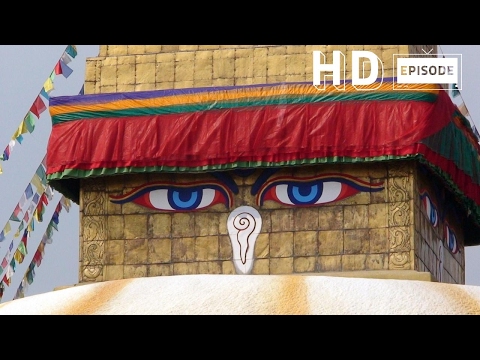
Buddhist Traditions: Impermanence and the Experience of Letting Go
Buddhist traditions also offer perspectives on death that differ from the assumption that a permanent, unchanging self simply moves from one existence to another. A central Buddhist teaching is impermanence, the understanding that conditioned things are constantly changing. Death is therefore not an unexpected violation of the natural order, even though losing someone we love can still bring profound sorrow.
Different Buddhist traditions have different understandings of rebirth, consciousness, and the processes associated with dying. Some emphasize meditation and the cultivation of a peaceful state of mind near death, while others include chanting, offerings, prayers, or ceremonies intended to benefit the deceased and support surviving family members. In some traditions, memorial observances continue at designated intervals after death, reflecting the belief that the transition associated with dying is not necessarily completed at the moment biological life ends.
Tibetan Buddhist traditions, for example, include teachings about intermediate states associated with death and rebirth, often discussed through the concept of bardo. Rituals and prayers may be performed to assist the deceased during this transition. Other Buddhist communities emphasize different practices, and it would be inaccurate to suggest that there is one universal Buddhist funeral.
What interests me here is the relationship between spiritual belief and emotional experience. Buddhist teachings about impermanence do not mean that practitioners are incapable of grief or that sorrow is somehow a failure. Rather, these teachings may provide a framework for understanding loss as part of the human condition. A person can recognize that all relationships are subject to change while still feeling devastated when someone they love dies.
Think about how this differs from the American tendency to describe death as something that has gone wrong, particularly when a person dies before reaching what we consider an acceptable age. Buddhist perspectives invite us to consider whether recognizing mortality as an ordinary part of existence might change how we prepare for death, accompany someone who is dying, or respond afterward.
While watching, pay attention to the role of chanting, ceremony, and spiritual preparation. Consider how the emphasis on impermanence might influence both the treatment of the deceased and the emotional support offered to survivors.
(Source: The Walrus)
Buddhist Funeral Service Rituals
Jewish Traditions: Dignity, Simplicity, and Community Responsibility
Now consider a tradition in which the treatment of the body is closely connected to the belief that every human being deserves dignity, even after death.
Within Jewish tradition, caring for the deceased is regarded as an important religious responsibility. The principle of kavod hamet, honoring the dead, helps explain practices intended to treat the body respectfully and avoid unnecessary displays of wealth or status. In many traditional Jewish communities, burial occurs as soon as reasonably possible, although legal requirements, travel arrangements, and denominational differences can affect the timing.
The ritual washing and preparation of the body, known as taharah, may be performed by members of a chevra kadisha, a community group devoted to caring for the deceased. Traditional practices often emphasize simplicity, including plain burial garments and modest burial arrangements. These customs communicate that the dignity of the deceased does not depend on an expensive casket, elaborate clothing, or an impressive funeral.
Notice how different this emphasis is from the commercial funeral arrangements we discussed in Chapter 12. In a marketplace where families may feel pressure to demonstrate love through spending, traditions emphasizing simplicity offer a different understanding of respect. The value of the person is not measured by the price of the funeral.
Jewish mourning practices also recognize that grief continues beyond burial. Shiva, traditionally observed during the first seven days following burial, creates a structured period in which mourners receive support from relatives, friends, and the community. Subsequent periods of mourning and remembrance may include shloshim, the first thirty days, and longer observances for certain relationships. Practices vary among Orthodox, Conservative, Reform, Reconstructionist, secular, and other Jewish communities, but the broader idea is worth examining: mourning is not treated as something that should be completed before everyone returns to work on Monday.
Imagine the difference between telling someone, "Call me if you need anything," and participating in a community tradition that already establishes when people gather, bring food, offer comfort, and acknowledge the loss. Ritual can transform a vague promise of support into a recognizable social responsibility.
As you watch, consider how simplicity, community participation, and structured mourning reflect Jewish understandings of dignity and responsibility. What might these traditions teach us about supporting people after the funeral is over?

(Source: NewJewishLearning)
Islamic Traditions: Respect for the Body and Obligations to the Community
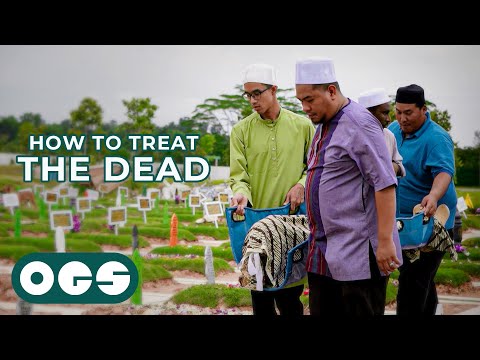
Islamic funeral traditions also place considerable emphasis on dignity, simplicity, and the responsibilities of the living toward the deceased. In many Muslim communities, the body is washed and prepared according to religious practices, wrapped in a shroud, and buried as soon as reasonably possible. Funeral prayers, known as Salat al-Janazah, bring members of the community together to ask for mercy for the deceased and offer support to the family.
Burial is generally preferred in Islamic tradition, and cremation is generally prohibited. The body is treated with respect because human dignity does not end with death. Practices surrounding washing, shrouding, prayer, and burial reflect both religious obligations and a recognition that death is part of the human journey.
Muslim communities are extraordinarily diverse, extending across continents, languages, and cultural traditions. Funeral arrangements may differ according to local customs, religious interpretations, and practical circumstances. In some places, families have ready access to Muslim burial grounds and community organizations familiar with these practices. Elsewhere, they may have to negotiate with funeral providers or public institutions that are less familiar with their requirements.
Consider what might happen when a Muslim family experiences a death in a hospital where administrative procedures delay release of the body. The family's desire for prompt burial is not simply a personal preference or an inconvenience for the institution to manage. It may reflect deeply held religious responsibilities. Understanding that distinction can help healthcare professionals, funeral directors, and social service providers respond with greater cultural sensitivity.
There's also an important similarity between Islamic and Jewish traditions in their emphasis on modesty, respect, and timely burial. The theological foundations are not identical, but the practices remind us that different religious communities may arrive at some comparable funeral expectations through their own systems of belief.
As you watch, consider how religious obligations shape the sequence of events after death. What challenges might arise when these expectations encounter hospital procedures, transportation delays, or unfamiliar funeral providers?
(Source: Our Grandfather's Story)
Christian Traditions: Resurrection, Remembrance, and Many Ways of Saying Goodbye
Christianity presents a particularly useful reminder that even a shared religious identity does not produce one uniform funeral tradition. Catholic, Orthodox, Protestant, evangelical, and other Christian communities may have different beliefs and practices surrounding the body, funeral services, burial, cremation, and remembrance.
Many Christian traditions understand death through beliefs about resurrection, eternal life, and the relationship between the living and God. Funeral ceremonies may include scripture readings, prayers, hymns, a sermon or homily, and rituals intended to commend the deceased to God's care. Yet the emphasis of the service can vary considerably. Some funerals are solemn liturgical observances, while others are highly personalized celebrations of life.
Within Catholic tradition, a funeral Mass may emphasize prayer for the deceased, resurrection, and the sacred significance of the body. Eastern Orthodox Christian traditions often incorporate distinctive prayers, chanting, and ceremonial practices, with burial traditionally favored over cremation. Many Protestant communities offer greater flexibility in the structure of services, and some emphasize personal testimonies, favorite music, and the deceased person's relationship with the congregation.
Even within the United States, Christian funeral practices can look dramatically different. A formal Episcopal service, a Catholic funeral Mass, a Baptist homegoing celebration, and a small nondenominational memorial gathering may all express Christian beliefs while creating very different experiences for mourners.
This diversity is particularly visible in some African American Christian funeral traditions, where the concept of homegoing may frame death as a spiritual return rather than simply a final departure. Music, preaching, testimony, and communal participation can express sorrow alongside confidence in the promise of eternal life. These traditions are not universal among Black Christians, but they offer an important example of how religious belief, historical experience, and cultural identity can shape the meaning of a funeral.
And that brings us to one of my favorite examples of the relationship between mourning and celebration: the New Orleans jazz funeral.
As you watch, consider how beliefs about resurrection and eternal life influence funeral ceremonies. Why might two families who share Christian beliefs still choose dramatically different ways of honoring someone who has died?