12.3.2
New Orleans: When the Funeral Becomes a Celebration
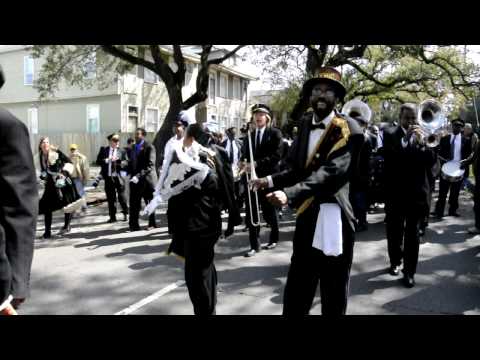
I once had the opportunity to observe a New Orleans jazz funeral, and I can tell you that it was unlike anything I'd experienced before. The observances extended over several days, but what stayed with me most was the procession itself. The journey from the church toward the cemetery was slow and solemn, accompanied by music that seemed to carry the weight of everyone's sorrow. It was mournful, dignified, and deeply moving, with the musicians setting a pace that invited everyone to acknowledge the seriousness of the loss.
Then something remarkable happened. After the burial, the character of the procession changed. The music became energetic, the mood shifted, and the return journey felt almost like an entirely different event. People danced, umbrellas appeared above the crowd, and the music transformed the gathering into an extraordinary celebration of the person who had died. There was joy, movement, laughter, and a sense of collective release that I have never forgotten.
At first glance, the contrast might seem contradictory. How can people move from profound sorrow to celebration in the space of a funeral procession? But that question assumes grief and joy cannot exist together. In the context of a New Orleans jazz funeral, particularly traditions associated with the city's African American communities, the change in music and movement can express both the reality of death and the celebration of a life that mattered.
The distinction between the solemn procession and the celebratory second line is especially meaningful. The music accompanying the journey toward burial acknowledges the loss, while the more exuberant music afterward can affirm community, remembrance, and the continuation of life. These practices reflect a distinctive cultural history shaped by African American musical traditions, Christian beliefs, community organizations, and the social life of New Orleans.
Not every funeral in New Orleans follows this pattern, and jazz funerals have their own histories, customs, and community associations. Still, the experience illustrates something that is easy to overlook when we study death rituals only through written descriptions. Sometimes the meaning of a ritual becomes most apparent when you witness what it allows people to feel and express together.
I remember the music, the movement, and the extraordinary change in atmosphere. What I don't remember is anyone suggesting that the celebration made the loss less significant. If anything, the joy seemed to communicate how deeply the deceased had mattered.
Pay attention to how the music and movement influence the emotional character of the gathering. How does the procession communicate the transition from mourning to remembrance, and what does it tell us about the relationship between grief and celebration?
(Source: NOLAFestJunkie)
Lakota Traditions: The Relationship Between the Living, the Dead, and the Spirit World
Let's turn to a very different cultural context, one in which the relationship between the individual, the community, the natural world, and the spiritual world has historically shaped death practices.
Among Lakota communities, beliefs and ceremonies surrounding death have reflected spiritual understandings of the person's continuing journey and relationships with family and community. Historical practices included forms of aboveground placement of the deceased, including burial scaffolds in some communities, although these were not universal and should not be treated as standard contemporary Lakota practice.
Some Lakota mourning traditions have included keeping a loved one's spirit close through ceremonies associated with the Keeping of the Soul, followed by a ceremony releasing the spirit. The duration and specific observances have varied, and contemporary Lakota families may draw on traditional spiritual practices, Christian ceremonies, conventional burial arrangements, or combinations of these approaches.
What I find particularly important is the idea that the relationship between the living and the deceased may continue through a recognized period of spiritual responsibility. The funeral does not necessarily mark the end of the family's obligations. Instead, mourning can involve an ongoing relationship that changes over time and is acknowledged through ceremony.
We also need to be careful about how Indigenous traditions are presented in textbooks and popular media. Too often, Native American communities are described entirely in the past tense, as though their traditions disappeared when modern funeral homes and cemeteries became common. Lakota people are living members of contemporary communities whose cultural and spiritual practices continue to evolve.
The most respectful approach is not to memorize a single description of a Lakota funeral and assume it applies to everyone. It is to recognize that death practices may carry profound cultural and spiritual significance, and that families and communities themselves are the appropriate authorities on how those traditions should be observed.
Sky Burial: When the Body Returns to the Natural World
Some death practices challenge Western assumptions about what it means to treat a body respectfully. One of the most striking examples is sky burial, a term used for certain practices in which human remains are exposed to the natural environment rather than buried in the ground or cremated.
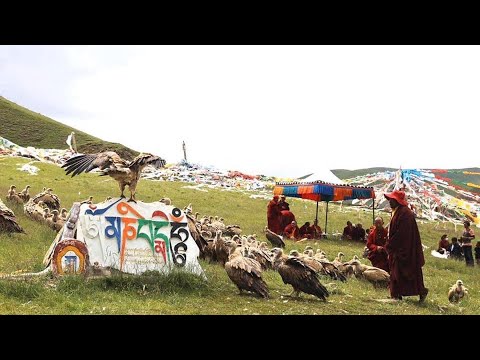
The best-known contemporary examples are associated with Tibetan Buddhist communities, where sky burial, or jhator, has religious and ecological significance. In appropriate settings, the deceased's body may be prepared and offered to scavenging birds, particularly vultures. The practice can reflect beliefs about impermanence, compassion, generosity, and the distinction between the physical body and the consciousness or spiritual continuity associated with the deceased.
For someone accustomed to burial in a cemetery or cremation in a specialized facility, the practice may initially seem disturbing. But consider the assumptions underlying that reaction. Why do we associate respect with placing the body inside a sealed container? Why might another community understand respect as allowing the body to nourish other living beings after the person has died?
Historically, forms of exposure burial have also existed in parts of Mongolia and elsewhere, although contemporary practices vary substantially. We should not assume that all Mongolian communities use sky burial or that Mongolian and Tibetan practices are identical. Religious traditions, geography, political history, and changing social conditions all influence what families do today.
Nor should we automatically equate sky burial with historical Lakota scaffold burial. The methods may share the feature of placing remains above ground, but the cultural beliefs, ceremonies, and meanings associated with them are distinct.
This example gives us an opportunity to revisit a question from Chapter 12 without repeating the discussion of environmental disposition methods. If a body can return its physical materials to the natural world in many different ways, what makes one method sacred, another conventional, and another uncomfortable to contemplate? Much of the answer lies in culture and the meanings we attach to the body after death.
Madagascar: When the Dead Come Back to the Family Gathering
Now imagine attending a family celebration where the guests of honor have been dead for years.
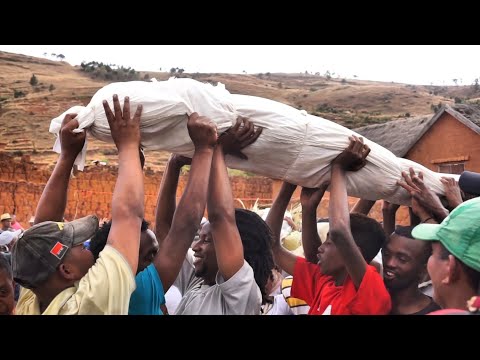
In parts of Madagascar, particularly among some communities in the central highlands, a tradition known as famadihana, often translated as the turning of the bones, involves reopening family tombs and ceremonially tending to the remains of deceased relatives. The practice may include rewrapping ancestral remains, music, dancing, food, and gatherings of extended family members.
For participants, the ceremony can be an important expression of respect for ancestors and the continuing relationship between generations. The dead are not necessarily understood as having disappeared from family life. Instead, ancestral relationships may remain significant, and ceremonies provide opportunities to honor those relationships while strengthening bonds among living relatives.
Think about what a gathering like this accomplishes. Family members who live far apart may return to participate. Younger generations encounter stories about ancestors they never met. Relatives renew relationships, fulfill obligations, and reaffirm their shared family history. The ceremony is about the deceased, certainly, but it is also about the living community and its sense of continuity.
From an unfamiliar cultural perspective, the idea of reopening a tomb may seem shocking. Yet many Americans visit cemeteries, decorate graves, preserve photographs, wear jewelry containing cremated remains, or keep urns in their homes. These practices are not identical to famadihana, but they reveal a common desire to maintain some form of relationship with people who have died.
Famadihana also illustrates how traditions can change. The practice is not observed by every Malagasy community, and its frequency, meaning, and contemporary acceptance vary. Families may adapt ceremonies because of economic circumstances, religious beliefs, public health concerns, or changing social expectations.
The lesson here is not that one culture has a more unusual relationship with death than another. It is that the boundary between the living and the dead is understood differently across societies, and those differences influence what people consider respectful, meaningful, or necessary.
As you watch, consider the roles of family history, ancestor relationships, and community participation. How does this ceremony challenge the assumption that funeral rituals must end shortly after someone dies?
Madagascar - Turning of the Bones
I saw a fascinating documentary on the Madagascar turning of the bones. It's called famadihana. Every 5 to 7 years, bodies that have been in tuned, or exhumed from the crypt, perfume, rewrapped, and replaced. Much like a Dia Delos Muertos celebration, where there is a picnic at the graveside to allow the spirits of deceased family members to enjoy the company of the generations that follow them, in Madagascar, the guest of honors is at the table!
Please watch the video:
(Source: APA News Agency)
The Contemporary American Funeral Rite
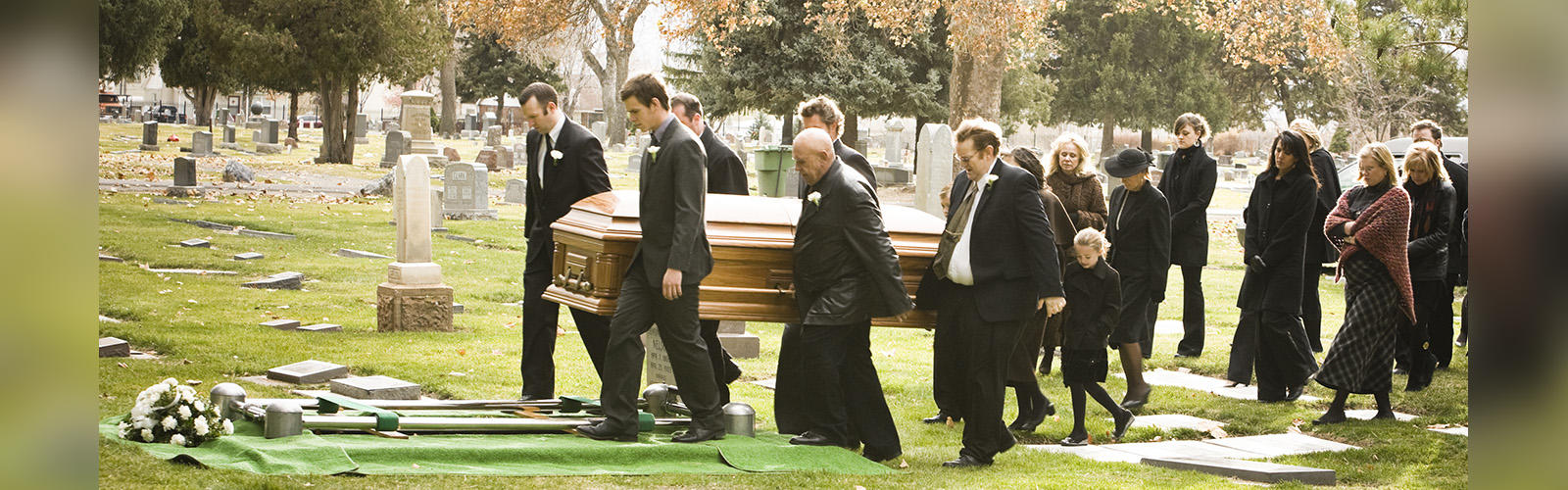
After exploring these traditions, let's return to the United States. What does an American funeral look like today?
There isn't one answer. American funeral practices reflect a mixture of religious beliefs, cultural histories, family traditions, commercial services, and increasingly individualized preferences. Some families choose a formal religious service followed by burial, while others prefer cremation and a memorial gathering several weeks later. Some organize celebrations of life featuring favorite music, food, photographs, and personal stories. Others choose quiet private arrangements with no public ceremony.
We examined the practical side of these choices in Chapter 12, including disposition methods, costs, consumer protections, and environmental alternatives. What matters here is the cultural shift behind many contemporary arrangements. Families are increasingly willing to question whether inherited funeral conventions accurately reflect the person who died or the needs of those who remain.
Consider a family whose loved one never attended religious services but whose relatives assume a church funeral is expected. Or imagine someone who spent every available weekend outdoors, yet whose family is offered only conventional funeral packages. These situations raise questions about whose values should guide the ceremony: the deceased person's, the family's, the religious community's, or the broader culture's?
The answer is not always simple. Funeral arrangements often involve several people with different relationships to the deceased, and each may have a legitimate emotional investment in what happens. A surviving spouse may want a private gathering, while adult children may believe a larger public service is necessary. Religious relatives may consider certain prayers essential, while others may prefer a secular remembrance.
These disagreements remind us that rituals are not merely expressions of individual preference. They are social events that bring together people with different needs, beliefs, and expectations. The challenge is finding ways to honor the deceased while recognizing the significance of the loss to the wider community.
Contemporary technology adds another dimension. Livestreamed memorials, digital tribute pages, online remembrance gatherings, and recorded messages allow people to participate across geographic distances. These innovations can be especially meaningful for older adults whose families are spread across the country or for individuals whose health or mobility prevents them from attending in person.
Yet even as technology changes the form of remembrance, the underlying human questions remain remarkably familiar. How do we acknowledge that someone mattered? How do we bring people together? How do we preserve memories and help survivors recognize that their lives have changed?