12.3.3
What Happens When Traditions Meet Modern Institutions?
One of the most important reasons to study religious and cultural death practices is that these beliefs don't exist in isolation. They encounter hospitals, nursing homes, funeral providers, government agencies, and legal systems that may operate according to very different assumptions.
Imagine a family whose tradition calls for prompt burial, but the death occurs under circumstances requiring a medical examiner's investigation. Or consider a hospital patient whose relatives wish to perform specific prayers or body-care rituals immediately after death, while staff members are focused on documentation and transferring the body. Neither side may intend disrespect, but a lack of communication can create conflict during an already difficult time.
For professionals working with older adults and their families, cultural knowledge should be a starting point for asking better questions. Rather than assuming that a Jewish, Muslim, Hindu, Buddhist, Christian, or Indigenous patient will follow a particular practice, a professional might ask whether there are religious or cultural considerations the family wants the care team to understand.
That approach recognizes both the importance of tradition and the individuality of the person involved. Someone may identify strongly with a religion while choosing not to follow all its customary funeral practices. Another person may have no formal religious affiliation but consider certain family traditions essential. A culturally respectful response makes room for both possibilities.
This is especially important in gerontology because older adults may have lived through significant changes in religious practice, migration, family structure, and social expectations. Their preferences may reflect traditions inherited from childhood, customs adopted later in life, or personal decisions that differ from those of younger family members.
Understanding death rituals, then, isn't simply about becoming familiar with ceremonies around the world. It is about recognizing that the choices people make at the end of life are connected to identity, belonging, history, and deeply held beliefs.
Different Goodbyes, Familiar Human Needs
We've traveled from sacred cremation grounds in India to Jewish and Islamic burial traditions, from Buddhist teachings about impermanence to Christian celebrations of resurrection. We've considered Lakota spiritual traditions, sky burial, New Orleans jazz funerals, and the extraordinary practice of famadihana in Madagascar.
The differences are striking, but so are the connections. Across these examples, people are trying to make sense of death, fulfill responsibilities toward the deceased, support surviving family members, and maintain relationships that remain meaningful after biological life has ended.
Some rituals emphasize separation, while others emphasize continuing connection. Some involve quiet prayer, while others include music and dancing. Some are completed within days, while others return annually or continue across generations. None of these differences can be reduced to a simple ranking of which culture grieves more deeply or honors its dead more appropriately.
I want you to consider something as we finish this lecture. If you had been raised in a completely different cultural or religious environment, how much of what you currently consider a proper funeral would seem obvious to you? Would you still prefer the same music, the same ceremonies, the same treatment of the body, or the same period of mourning?
That question is worth sitting with because it reminds us that our preferences are not formed in a vacuum. They emerge from the families, communities, beliefs, and experiences that shape our lives.
And perhaps that's the most important lesson of this chapter: death may be a universal human experience, but the ways we acknowledge it reveal an extraordinary range of human meanings. Understanding those meanings helps us move beyond simply observing unfamiliar customs toward appreciating the relationships, values, and responsibilities they represent.
But Wait... There's More! The Final Exit Gets Creative
Just when you think we've explored every possible way humans can honor their dead, somebody comes along with an entirely new idea. And considering how creative people can be during their lives, perhaps we shouldn't be surprised that they're getting equally imaginative about what happens afterward.
We've explored traditions that have existed for centuries, sometimes thousands of years. But contemporary memorial practices are increasingly personalized, and some are downright entertaining. People have found ways to incorporate cremated remains into jewelry, artwork, vinyl records, and even fireworks. Apparently, for some people, going out with a bang is more than a figure of speech.
And why not? If someone spent their life surrounded by music, perhaps becoming part of a record feels appropriate. If they loved the ocean, a marine memorial might hold special meaning. And if they were the sort of person who insisted on being the center of attention at every celebration, a fireworks display might be entirely in character.
The possibilities raise an interesting question: When does a memorial stop being a traditional ceremony and become a personal expression of identity? Perhaps the answer is that it can be both. After all, the traditions we've studied throughout this chapter were created by people, and people have never been particularly good at leaving well enough alone.
Video: Creative Things People Have Done with Cremated Remains
(Source: Buzzfeed)
One Last Thing: You Can't Just Leave Grandma Anywhere
Of course, personal creativity doesn't mean we can do absolutely anything we want. Laws and regulations still govern where remains can be placed or scattered, and those rules vary depending on the location and the activity involved. For example, federal rules generally require scattering cremated remains at sea at least three nautical miles from shore, while national parks, public spaces, and private properties may have their own restrictions or permit requirements.
And then there's Disneyland.
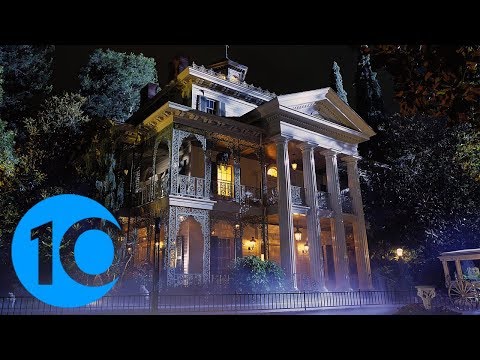
Apparently, some people have decided that the Happiest Place on Earth would also make an excellent final resting place. Disney, unsurprisingly, has other ideas. Scattering human remains inside the parks is prohibited, but that hasn't stopped some visitors from trying.
I'm not entirely sure what it says about our culture that someone might want their final resting place to be the Haunted Mansion, but I suppose it's a fitting reminder that people attach meaning to places in wonderfully unpredictable ways.
Video: The Unusual Problem of Ashes at Disney Parks
(Source: USA Today)
As we finish exploring death rites and rituals, remember that the practices we've examined aren't simply about what happens to a body. They're about identity, memory, relationships, and the ways we continue to tell someone's story after they've died. Whether that involves centuries-old religious ceremonies, an exuberant jazz funeral, a quiet gathering in the backyard, or a final appearance in a fireworks display, people are still finding ways to make death meaningful.
And perhaps that's a reassuring thought. We may not get to decide when our story ends, but we can have something to say about how the final chapter is remembered.