12.2 Death Rituals: The Many Ways We Mourn
Who Decided Grief Should Be Quiet?
Imagine you're attending a funeral. The room is relatively quiet, people are speaking in subdued voices, and everyone seems to be making an effort to maintain their composure. Someone begins to cry, and a friend gently places an arm around their shoulders. Perhaps another person offers a tissue or suggests stepping outside for a moment to collect themselves. Nobody has explicitly announced that crying is inappropriate, but there seems to be an unspoken expectation that grief should remain reasonably controlled.
Now imagine attending a funeral where mourners are expected to cry loudly, call out to the deceased, sing laments, or express their sorrow through movement and collective performance. Instead of encouraging someone to regain their composure, the community may encourage them to give their grief a voice. The louder the expression, the more clearly the loss is acknowledged by everyone present.
Which gathering demonstrates greater respect for the deceased? Which provides better emotional support for the people left behind? And who decided that a quiet funeral is somehow more dignified than a noisy one?
These questions take us into the fascinating world of death rituals, where cultural expectations influence not only what people do after someone dies, but also how they are permitted, encouraged, or expected to express their emotions. As we discussed in the previous lecture, death rituals are rites of passage that acknowledge the transition of the deceased and the changing relationships of those who remain. But the rituals themselves can look remarkably different depending on the community, its history, and the beliefs that give those practices meaning.
Death Rituals Begin Before the Funeral
When we hear the phrase death ritual, most of us probably imagine a funeral or memorial service. But death rituals can begin almost immediately after a person dies and may continue for weeks, months, or even years afterward. Depending on cultural and religious traditions, they may include preparing the body, maintaining a vigil, offering prayers, sharing food, gathering relatives, conducting a funeral, and observing prescribed periods of mourning.
Some of these activities involve the physical care of the deceased, while others are directed primarily toward the living. Washing and dressing a body, for example, may be understood as an act of respect, religious obligation, or final expression of love. Keeping watch over the deceased may provide an opportunity for relatives to say goodbye, fulfill spiritual responsibilities, or simply remain together during the first hours of loss. Sharing a meal after a funeral may seem like an ordinary social activity, but it can also reaffirm relationships and communicate that the bereaved are still part of a caring community.
What's interesting is that these practices often accomplish several things simultaneously. A vigil may honor the deceased while providing comfort to the family. A funeral procession may symbolize a final journey while publicly announcing that someone important to the community has died. A gathering after the burial may give people permission to remember, laugh, cry, and reconnect with relatives they haven't seen in years.
Rituals also help people navigate changes in social identity. When a spouse dies, the surviving partner is not simply grieving the loss of a loved one. That person may also be adjusting to a different household, new responsibilities, altered social relationships, and an identity no longer defined by marriage in quite the same way. Mourning practices provide a socially recognized context for acknowledging those changes, even though the adjustments themselves may take much longer.
When Grief Has a Voice
One of the most striking differences among mourning traditions involves the public expression of emotion. In some communities, restraint and quiet reflection are valued, while in others, visible and audible expressions of sorrow are expected. Crying, chanting, singing, lamenting, and calling out to the deceased can become important parts of the mourning process.
Anthropologists and historians have documented traditions of wailing, keening, and lamentation across numerous societies. These practices involve vocal expressions of grief that may follow established patterns, use traditional language, or incorporate poetry and music. Sometimes they are performed spontaneously by relatives, while in other settings particular community members have recognized responsibilities for leading the mourning.
It's tempting to interpret these practices simply as emotional release, but they often serve a broader social purpose. A lament may recount the deceased person's life, acknowledge the family's loss, express the community's sorrow, or communicate the significance of a relationship. The performance can give structure to emotions that might otherwise be difficult to articulate.
Consider what happens when someone dies unexpectedly. Family members may be overwhelmed, exhausted, or unable to find words that adequately express what has happened. A familiar lament or mourning song provides language and structure when ordinary conversation feels inadequate. The community doesn't have to invent a response to the loss because its traditions already offer one.
That doesn't mean everyone experiences these rituals in the same way. Some people may find public expressions of grief comforting and validating, while others may feel uncomfortable or pressured to participate. As with any cultural practice, the meaning of the ritual depends on the people involved and the circumstances in which it occurs.
The Māori Haka: Grief, Strength, and Collective Respect
Many people outside New Zealand have encountered the haka through sporting events, particularly performances by New Zealand rugby teams. Those performances have made the haka internationally recognizable, but they represent only one part of a much broader Māori cultural tradition.
Haka are powerful forms of Māori ceremonial performance involving coordinated movement, rhythmic vocalization, facial expression, and collective participation. Different haka have different purposes and meanings. They may be performed to welcome visitors, celebrate important occasions, demonstrate unity, express challenges, or honor someone who has died.
Within Māori funeral traditions, known as tangihanga, haka may form part of the community's response to death. A funeral haka can communicate grief, respect, love, and solidarity with the bereaved. The intensity of the performance should not be mistaken for aggression or a lack of emotional control. In its cultural context, it can be a deeply meaningful expression of collective feeling.
Imagine standing among relatives and friends as a group performs a haka in memory of someone who has died. The coordinated voices and movements communicate something that may be difficult to express through a quiet speech. The community is acknowledging the deceased, supporting the family, and demonstrating that the loss matters beyond the immediate household.
The performance also reminds us that grief is not always experienced or expressed as a purely individual emotion. Sometimes it becomes something a community carries together, using familiar cultural forms to give collective meaning to a death.
Video: Memorial Māori Haka
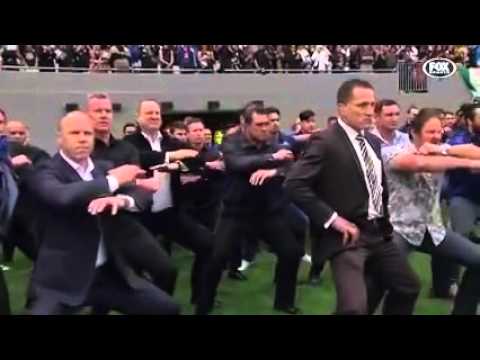
As you watch, pay attention to the relationship between the performers and the mourners. Consider how the performance communicates support and remembrance, even if you don't understand the words being spoken. What does the collective participation accomplish that a conventional eulogy might not?
Irish Keening: When Mourning Becomes a Lament
Another fascinating example comes from Ireland, where keening developed as a traditional form of vocal mourning associated with wakes and funerals. The practice, known in Irish as caoineadh, involved lamentation that could include crying, chanting, improvised poetry, and expressions of sorrow directed toward the deceased.
Keening was historically associated particularly with women, some of whom became recognized for their ability to lead these mourning performances. Their laments might recount the deceased person's qualities, relationships, accomplishments, or the circumstances of the death. The performance could be intensely emotional, but it also drew upon established cultural forms and expectations.
For communities familiar with the tradition, keening served as more than an expression of personal sadness. It publicly acknowledged the loss and helped create a shared emotional response. The lamenter gave voice to grief that extended beyond her own relationship with the deceased, allowing others to participate in or respond to the mourning.
Keening declined considerably in Ireland as social conditions, religious influences, and attitudes toward public expressions of grief changed. Although elements of the tradition have survived through historical recordings, scholarship, and cultural revival, it would be misleading to describe formal keening as a standard feature of contemporary Irish funerals.
What makes the tradition particularly interesting is the idea that grief can be expressed through a recognized performance. We often assume that the most authentic expressions of mourning must be spontaneous and unstructured. Keening challenges that assumption by showing how culturally established words, sounds, and actions can communicate genuine emotion.

Think about music at a funeral. A particular hymn or song may have been performed at thousands of ceremonies, yet it can still move a family to tears because it expresses something meaningful about their loss. The fact that an expression follows a familiar form doesn't necessarily make the emotion any less genuine.
Professional Mourners: Can You Hire Someone to Cry?
Now we're going to explore a practice that often surprises American students: professional mourning.
Throughout history, some societies have recognized individuals whose role is to participate in funeral ceremonies by leading laments, crying publicly, singing, or otherwise expressing grief on behalf of the deceased and the community. In certain traditions, these individuals were compensated for their services, much as a musician, religious officiant, or ceremonial specialist might be paid for participating in a funeral.
At first, this may seem peculiar. Why would someone pay another person to mourn? Doesn't grief have to come from a personal relationship with the deceased?
Those questions make sense if we understand mourning primarily as an individual emotional response. But in cultures where public lamentation serves an important ceremonial function, the professional mourner may be performing a recognized social role. The person isn't necessarily pretending to have known the deceased. Instead, they may be helping the community express sorrow through an established tradition.
Professional mourning has appeared in different forms across the world. Historical examples include lamenting women in parts of the Mediterranean, the Middle East, and other regions. In some communities, women were particularly associated with the work of vocal mourning, using poetry, chanting, and expressive performance to acknowledge death.
The details vary considerably. Some professional mourners performed highly structured laments, while others improvised words based on information about the deceased. In certain traditions, their role was connected to religious or spiritual beliefs; in others, the performance was primarily a public demonstration of respect or a way of supporting the bereaved.
We should also recognize that these traditions have changed over time. A practice documented in a historical community may no longer be common there, and the existence of professional mourners in one region does not mean everyone within that culture uses or approves of the practice.
Sardinia: The Women Who Give Grief a Voice
The Mediterranean island of Sardinia provides a particularly compelling example of traditional lamentation. Historically, certain women were associated with funeral mourning practices that involved vocal expressions of sorrow and ceremonial lament. These performances formed part of local understandings of death, community obligation, and the appropriate acknowledgment of loss.
What interests me about this example is the skill involved. We don't usually think of mourning as something a person can be trained or recognized for doing well. Yet in traditions of professional lamentation, the ability to express grief through culturally meaningful words, vocal patterns, and gestures could be valued by the community.
A skilled mourner might help give shape to a family's loss, expressing emotions that relatives were unable or unwilling to articulate themselves. The performance could also communicate the deceased person's importance within the community, transforming a private loss into a publicly recognized event.
Of course, paying someone to mourn raises questions about authenticity. Is a performed lament less meaningful because the mourner receives compensation? Or should we evaluate the ritual according to what it accomplishes for the family and community rather than whether the performer personally knew the deceased?
Before deciding, consider how many familiar funeral practices involve paid professionals. Families may compensate musicians to perform meaningful songs, clergy members to conduct services, or celebrants to deliver carefully prepared tributes. We generally don't assume that those contributions are meaningless simply because someone is being paid.
Professional mourning asks us to reconsider where we draw the line between personal emotion and ceremonial responsibility.
Video: Professional Mourners of Sardinia
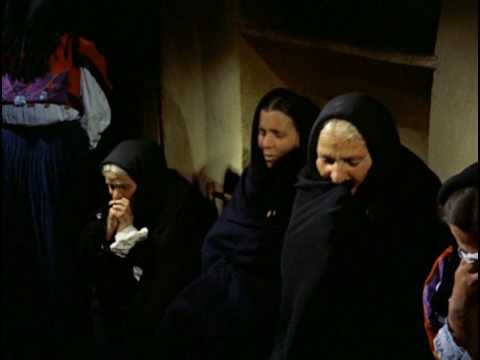
As you watch, consider how the mourners describe their responsibilities and the meaning of their work. What expectations does the community place upon them, and how does their participation influence the experience of those attending the funeral?
Professional Mourning in the Modern World
Professional mourning is not simply a historical curiosity. Versions of paid mourning and ceremonial performance continue in some contemporary communities, although their forms and purposes vary widely.
In parts of East Asia, for example, funeral performances may incorporate singing, crying, music, or other theatrical elements. Some contemporary funeral businesses offer services that would seem unfamiliar in a conventional American funeral home, including elaborate performances designed to honor the deceased or create a particular atmosphere for mourners.
In the United States, certain funeral providers have also become known for highly expressive ceremonies that incorporate professional singers, dancers, and dramatic celebrations of life. Golden Gate Funeral Home in Texas, for example, has attracted media attention for unconventional funeral performances and its emphasis on highly personalized ceremonies. (And I have no words for what you are about to see.)

These examples are not identical to traditional professional lamentation, and we shouldn't treat them as interchangeable. A paid performer at a contemporary celebration of life may have a very different role from a traditional lamenter whose practice is embedded in a longstanding cultural system. Still, both examples remind us that funeral ceremonies can involve people whose specialized contributions help shape the public expression of loss.
And perhaps we should ask why the idea of professional mourning seems so unusual to us. We readily accept that weddings involve photographers, musicians, coordinators, and officiants who help create a meaningful ceremony. Yet when someone dies, we may assume that every visible expression of emotion must be entirely spontaneous to be authentic.
That assumption reflects a particular cultural understanding of grief, not a universal rule.
When Public Mourning Becomes a Community Responsibility
There's another important distinction between cultures that emphasize individual expressions of grief and those that place greater emphasis on collective mourning. In some communities, participation in funeral rituals is understood as a responsibility extending beyond the immediate family. Neighbors, extended relatives, religious communities, and other social networks may be expected to attend, provide food, participate in ceremonies, or assist with practical arrangements.
These expectations can be tremendously supportive. A bereaved family may not need to organize every detail because the community already knows what to do. People arrive with meals, help prepare the gathering space, participate in prayers or songs, and remain involved during the mourning period.
But community expectations can also create pressure. A family may feel obligated to host large gatherings, provide extensive hospitality, or follow ceremonial practices that require considerable time and money. Individuals whose personal beliefs differ from community traditions may struggle to balance respect for those traditions with their own preferences.
This is why it's important to avoid romanticizing any particular approach to mourning. Collective rituals can provide belonging and support, but they may also carry obligations. Private mourning can offer freedom and intimacy, but it may leave some people feeling isolated. Neither model guarantees that everyone will feel comforted or understood.
For gerontologists, these differences matter because older adults may have spent decades participating in particular cultural traditions. A widow who expects neighbors and relatives to gather for an extended mourning period may feel abandoned if that support doesn't materialize. Conversely, someone who values privacy may find a large, highly structured funeral overwhelming.
Understanding a person's expectations requires more than knowing their religion or cultural background. It requires asking what these traditions mean to them personally.
What Counts as Authentic Grief?
Let's return to the questions we started with. Is grief more authentic when it is quiet or when it is loud? Does a spontaneous expression of sorrow carry more meaning than a traditional lament? Is a funeral less sincere because it includes professional performers?
We might be tempted to answer these questions according to our own experiences, but that's precisely what studying cultural rituals challenges us to reconsider. Grief is a human response to loss, while mourning involves the ways that grief is expressed and recognized within social and cultural settings. Those expressions can vary dramatically without necessarily revealing anything about the depth of a person's relationship with the deceased.
A person who sits silently throughout a funeral may be devastated by the loss. Someone who cries openly, sings, or participates in a vigorous ceremonial performance may be experiencing equally profound grief. And someone who laughs while telling stories about the deceased may be expressing love and remembrance rather than a lack of sorrow.
The form of mourning doesn't provide a reliable measure of how much someone loved the person who died.
As we continue exploring death rites and rituals, I want you to pay attention to the social work these practices accomplish. They may help people express emotions, acknowledge relationships, fulfill obligations, reinforce cultural identity, or bring communities together. They may also reveal tensions between tradition and individual choice, particularly as societies become more diverse and families develop new ways of honoring their dead.
The next time you encounter a funeral practice that seems unfamiliar, resist the urge to ask why anyone would do something so unusual. Instead, consider what the practice communicates, whom it supports, and what meaning it holds for the people who participate. That's where the real understanding begins.