11.4 Burial Capacity and Space Limits
How Much Space Do We Owe the Dead?
We've just examined the environmental consequences of conventional burial and cremation, including the materials, energy, and resources involved. Now I want you to consider a different problem, one that becomes particularly interesting when we look beyond the United States. What happens when a community simply runs out of convenient places to bury its dead?
For many Americans, cemetery burial comes with an assumption of permanence. We purchase a burial plot, place someone in the ground, install a marker, and generally expect that location to remain undisturbed. Families may visit the same graves for generations, and cemeteries become important places of remembrance and community history. But permanent burial occupies land, and in some parts of the world, land is an extraordinarily limited resource.
This doesn't mean the planet is about to run out of room for cemeteries. The problem is more complicated than that. Some communities have ample land available for burial, while others face severe geographic constraints, rapidly growing populations, high land prices, or restrictions on where cemeteries can be located. In densely populated cities, land that might be used for burial is also needed for housing, transportation, schools, parks, and other public purposes.
And here's where gerontology enters the picture. As populations age, communities must plan not only for the housing, healthcare, and support needs of older adults, but also for the infrastructure associated with increasing numbers of deaths. The relationship isn't identical everywhere, and demographic changes unfold over decades, but burial capacity is one of those practical planning issues that rarely receives much attention until a community begins experiencing serious shortages.
Paris: A City Built Over Its Dead
Let's begin with one of the more extraordinary examples of what happens when burial practices collide with urban growth.
By the late eighteenth century, Paris was facing a serious cemetery problem. Generations of burials had crowded the city's burial grounds, and some cemeteries had become associated with overcrowding and public health concerns. The solution was not to build an entirely new cemetery somewhere in the center of Paris, because available urban land was already limited. Instead, city authorities began transferring human remains into abandoned underground quarry tunnels.
 Those tunnels eventually became what we now know as the Catacombs of Paris, an extensive underground ossuary containing the remains of an estimated six million people. An ossuary is a place where human skeletal remains are collected and stored, often after an initial burial or another period of decomposition. The transfer of remains began in the late 1700s and continued in various phases during the nineteenth century.
Think about what that represents. The remains of millions of people were relocated because the city could no longer maintain its existing burial arrangements. From a modern American perspective, moving generations of human remains into underground tunnels might seem extraordinary, perhaps even disturbing. But the practice reflected the realities of a growing city and a different understanding of how burial space could be managed.
The Paris catacombs are now a historic site visited by people from around the world, but their origins were far more practical than their present-day reputation might suggest. They remind us that burial practices are not fixed forever. When circumstances change, societies sometimes develop solutions that would have seemed unimaginable to earlier generations.
Hong Kong: When Land Becomes the Problem
Now let's move from eighteenth-century Paris to contemporary Hong Kong, where geography and population density create enormous challenges for burial space.
Hong Kong has limited developable land, a large population, and significant competition for space. Cemeteries occupy land that cannot easily be expanded, and the cost and availability of burial plots have become important concerns. Families may face long waits or substantial expenses for certain types of permanent memorial space, particularly when they want arrangements consistent with their cultural or religious preferences.
One of the interesting things about Hong Kong is that cremation does not automatically solve every space problem. Cremated remains still need somewhere to go if families want them placed in a permanent memorial location. Columbariums, which contain individual niches for urns, can accommodate many more sets of remains within a relatively small footprint, but those facilities also require land, construction, maintenance, and planning.
Hong Kong has responded in part by developing large, multistory columbarium facilities. The Tsang Tsui Columbarium, for example, illustrates how a community can use vertical space to accommodate large numbers of cremated remains. Instead of spreading memorial spaces across extensive cemetery grounds, these facilities concentrate them within buildings designed for visitation and remembrance.
It's an approach that makes practical sense in a densely populated city, but it also raises interesting questions. Does visiting a loved one's remains in a multistory building feel different from visiting a grave in a landscaped cemetery? Does it matter whether memorial space is permanent or temporary? And how do families respond when the available arrangements differ from what previous generations expected?
These are not simply engineering questions. They're questions about cultural expectations, family traditions, and the relationship between the living and the dead.
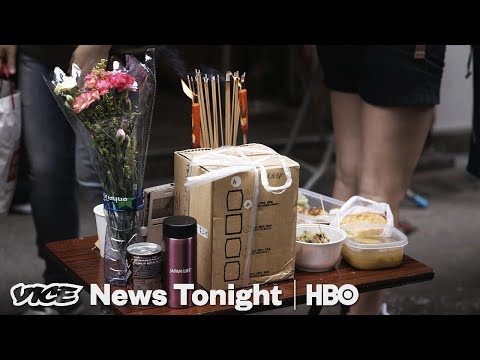
Video: Hong Kong Is Running Out of Space to Bury Its Dead (HBO)
https://www.youtube.com/watch?v=KepeRLQ_G1A
As you watch, pay attention to the relationship between geography, population density, government planning, and personal preferences. Consider which proposed solutions address the physical shortage of space and which might require people to reconsider familiar burial traditions.
When Cemeteries Grow Up Instead of Out
Hong Kong is not the only place experimenting with vertical approaches to memorial space. In Japan, some urban facilities use multistory columbariums and automated systems that retrieve urns for visitors. Rather than maintaining a traditional grave in a cemetery, families may visit a building where the remains are stored and brought to a designated memorial area.
 Other proposals have explored high-rise cemeteries that would accommodate caskets or burial spaces within multistory structures. Architects and planners have considered variations of these ideas in several densely populated cities, although proposals should not be confused with facilities that have actually been constructed and placed into operation.
The underlying concept is familiar from urban planning. When cities cannot easily expand outward, they often build upward. We use vertical space for apartments, offices, parking garages, and hospitals, so it's not surprising that some planners have considered similar approaches to accommodating the dead.
But a cemetery is not simply a storage facility. People may expect privacy, quiet, opportunities for religious observance, and a physical connection to a particular place. A successful design must consider those expectations as well as the practical problem of fitting more remains into less space.
This is an important distinction throughout our discussion. A technically efficient solution is not necessarily one that families will find acceptable, and communities must balance physical limitations with cultural and religious needs.
Grave Recycling: What If Burial Isn't Forever?
Here's a concept that may challenge some of your assumptions about cemeteries: grave recycling.
In many parts of the United States, families expect a burial plot to remain dedicated to the person buried there indefinitely. But that expectation is not universal. In several European countries, cemetery space has historically been managed through limited-term burial rights, renewable leases, or arrangements that allow graves to be reused after a specified period.
 The general principle is straightforward. A person is buried in a grave for an established period, often long enough for substantial decomposition to occur. When the burial right expires, the family may have an opportunity to renew it, or the cemetery may follow an established process for reusing the space. Depending on local law and practice, existing remains may be reinterred at a greater depth, transferred to an ossuary, or handled through another authorized procedure.
These arrangements vary considerably, and we shouldn't assume that all European cemeteries operate under the same rules. Burial periods, renewal rights, religious requirements, and procedures for handling remains differ by country and municipality. Some cemeteries offer permanent rights, while others use fixed terms or a combination of arrangements.
What I find particularly interesting is how differently people may understand the idea of a permanent resting place. If you've grown up expecting a grave to remain untouched indefinitely, the idea of leasing a burial plot may seem unsettling. But in communities where limited-term burial rights have been customary for generations, the practice may be understood as a normal part of cemetery management.
Neither expectation developed in a vacuum. Both reflect histories, cultural values, land-use conditions, and the ways communities have organized their responsibilities toward the dead.
European Examples: A Different Relationship With Cemetery Space
Portugal provides an interesting example of how burial space has been managed through the reuse of graves and the transfer of remains. Historically, burial practices in some communities involved moving skeletal remains to ossuaries when grave space was needed for new burials. Versions of this approach have continued or been reintroduced under more formal cemetery regulations.
Greece offers another example. In some Greek municipalities, burial rights are granted for relatively short periods, and families may need to pay additional fees to extend the burial or arrange for the remains to be transferred after the initial period ends. The precise terms and costs depend on local regulations, but the basic system reflects the pressure that limited cemetery space can create.
In the United Kingdom, some cemeteries have also developed policies allowing the reuse of older graves under specified conditions. The City of London Cemetery and Crematorium is a frequently cited example of a cemetery using carefully regulated grave reuse as part of its long-term management of burial space.
These practices aren't necessarily simple or free from controversy. Families may object to the disturbance of remains, religious traditions may restrict exhumation or require particular forms of burial, and cemetery administrators must address identification, documentation, and respectful handling. The fact that a method conserves space doesn't automatically make it acceptable to everyone.
Nevertheless, grave reuse demonstrates something important: cemetery capacity is partly determined by the rules a society establishes about how long burial space must remain occupied. When burial rights are perpetual, each new burial generally requires additional space. When carefully regulated reuse is permitted, the same cemetery may serve a community for a much longer period without continually expanding its boundaries.
New Orleans: Family Tombs and Reusing Space
We don't have to travel to Europe to find burial traditions that challenge the expectation of one person occupying one grave forever. New Orleans provides a particularly interesting American example.
The city is famous for its aboveground tombs, which are often associated with the region's geography, climate, religious traditions, and historical burial practices. Some family tombs have been used by multiple generations, allowing relatives to be entombed within the same structure over many years.
In certain traditional family tomb designs, the structure contains spaces for coffins and an area where older remains can eventually be placed. After the required period and when conditions permit, remains from an earlier entombment may be moved within the tomb to accommodate another family member. Local cemetery regulations, tomb construction, and family practices determine how this is handled, so it isn't a universal procedure for every aboveground tomb in New Orleans.
What makes these tombs particularly interesting is that they combine continuity with reuse. A family can maintain a recognizable place of remembrance across generations without requiring an entirely new burial plot for each person. The tomb remains associated with the family even as the individual remains within it change.
And if you're picturing an enormous building filled with coffins, remember that some of these structures are relatively modest in size. Their capacity comes from how the interior space is managed over time, not necessarily from how large they appear from the outside.
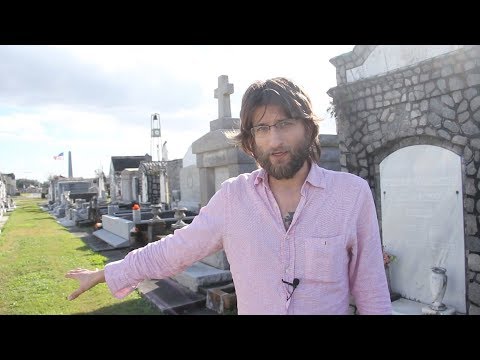
Video: How to Fit 85 Bodies in a New Orleans Above-Ground Tomb
Begin at approximately 1:04. The video illustrates how some traditional New Orleans family tombs accommodate multiple generations and how local burial practices differ from the permanent individual-grave model many Americans are familiar with.
As you watch, consider how a family tomb can simultaneously serve as a place of remembrance, a practical response to burial conditions, and an example of space being reused over time.
But What About Religious Requirements?
We've spent much of this lecture discussing creative ways to conserve burial space, but we need to acknowledge that not every solution is appropriate for every community.
For some religious traditions, burial of the intact body is an important requirement, and cremation may be prohibited or strongly discouraged. Many Muslim and Orthodox Jewish communities, for example, place particular emphasis on prompt burial and the respectful treatment of human remains. The specific expectations and interpretations vary, but these beliefs can significantly affect which disposition options are acceptable.
That means a community facing limited burial space cannot simply assume that encouraging cremation or constructing additional columbariums will meet everyone's needs. Public planning must also consider access to burial practices consistent with residents' religious and cultural traditions.
This is one of the reasons cemetery capacity is more than a land-use problem. It involves questions about religious freedom, cultural inclusion, public policy, and the equitable distribution of limited resources. Communities may need to consider how burial space is allocated, what different arrangements cost, and whether particular groups face disproportionate barriers to practices that are important to them.
We'll examine death rites and rituals in greater detail in Chapter 13. For now, I want you to recognize that an efficient approach to managing remains is not necessarily a culturally acceptable one.
What Does Population Aging Have to Do With This?
You might be wondering why we're spending so much time discussing cemeteries in a gerontology course. After all, cemetery planning might initially seem more relevant to urban planners, architects, or funeral directors than to people studying aging.
But consider the relationship between population structure and community infrastructure. When a population includes increasing numbers of older adults, communities must anticipate changes in healthcare utilization, housing needs, transportation, caregiving, and eventually mortality. The number of deaths occurring in a community can increase as large cohorts reach advanced ages, even when people are living longer than previous generations.
Those deaths create practical demands for funeral services, crematories, cemetery space, and other forms of disposition. Communities that already have limited land may face additional pressures, particularly if residents strongly prefer burial arrangements that require substantial space.
At the same time, preferences are changing. Cremation has become increasingly common in the United States, and newer disposition methods are receiving greater attention. These developments may alter future demand for cemetery land, but they don't eliminate the need for planning. Cremated remains may still be interred, and different communities will continue to have different expectations about how the dead should be treated.
Gerontology encourages us to examine aging at more than the individual level. Population aging affects institutions, infrastructure, markets, public policy, and the physical spaces in which communities function. Cemeteries are one more example of a system that must adapt to demographic change.
Who Gets to Rest in Peace, and for How Long?
Let's return to the assumption we started with: when someone is buried, their grave should remain theirs forever. For many people, that expectation feels natural, perhaps even morally necessary. But as we've seen, societies have developed very different approaches to burial space, and those approaches reflect their histories, resources, and beliefs.
Paris moved millions of remains into underground ossuaries. Hong Kong has developed large multistory facilities for cremated remains. European cemeteries have used limited-term burial rights and carefully regulated grave reuse. New Orleans family tombs demonstrate how a single burial structure can accommodate multiple generations.
None of these approaches is universally appropriate, and each involves compromises. Some conserve land but require families to reconsider ideas about permanence. Others preserve traditional practices but demand substantial resources or long-term maintenance. The challenge is not simply finding somewhere to put human remains. It is finding ways to manage burial space while respecting the people, families, and communities involved.
I want you to consider one final question: If a community has limited land available, how should it balance the needs of the living with its responsibilities toward the dead? There isn't an easy answer, and reasonable people may reach very different conclusions. But the question becomes increasingly important as communities grow, populations age, and expectations about burial and memorialization continue to change.
In our next lecture, we'll move from the problem of burial space to the growing range of environmentally sustainable alternatives to conventional disposition. Some approaches are surprisingly simple, while others involve new technologies and changing regulations. Together, they raise another question worth considering: Can we care for the dead in ways that better reflect our responsibilities to the living and the environment?