11.6.1 Greener Goodbyes: Reinventing What Happens to Our Bodies
Apparently, we can get creative about death, too.
For much of modern American history, the choices surrounding what happens to a body after death have been relatively predictable. You could be buried, usually in a casket in a cemetery, or you could be cremated. The arrangements might vary according to religious traditions, family preferences, and financial circumstances, but the basic options were familiar. Funeral homes knew how to provide them, cemeteries were designed to accommodate them, and most families didn't spend much time considering whether there might be another way.
Well, that's changing, and some of the innovations are genuinely fascinating.
Today, people are exploring everything from being buried in protected forests to having their bodies transformed into soil. There are biodegradable shrouds, mushroom burial suits, water-based alternatives to cremation, memorial reefs, and experimental technologies that sound as though someone combined a biology laboratory with a science-fiction novel. Some of these approaches are surprisingly simple, relying on practices humans used long before modern funeral homes existed. Others involve sophisticated equipment, emerging industries, and changing laws.
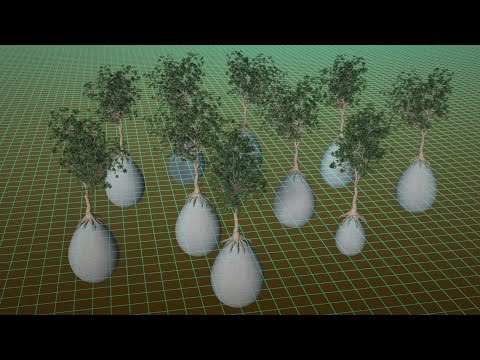
If you've spent any time on the internet looking at environmentally friendly funerals, you've probably encountered the famous tree burial pod. You know the one: an egg-shaped container holding a body, buried beneath a tree that eventually grows into a living memorial. It's a striking image, and it has been shared so widely that many people assume the product must be available everywhere. As we'll discover, the reality is a little more complicated.
What interests me most isn't simply the novelty of these ideas. It's what they tell us about changing attitudes toward death. For generations, many Americans associated a dignified burial with preserving the body, purchasing a substantial casket, and establishing a permanent place of remembrance. Increasingly, some people are asking whether dignity might mean something different. Perhaps they would rather return to the soil, preserve a natural landscape, or avoid using resources they consider unnecessary.
In other words, we're witnessing a shift from asking only “How should we dispose of the body?” to asking “What kind of environmental legacy do we want our final arrangements to leave?”
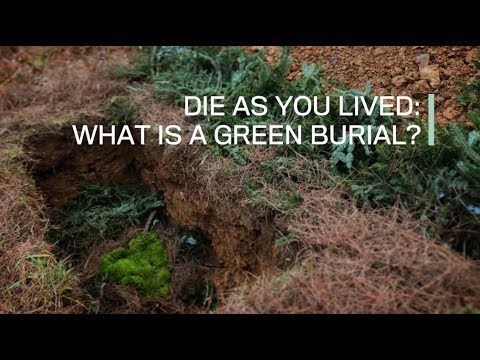
Green Burial: An Old Practice With a New Name
Let's begin with green burial, sometimes called natural or ecological burial. Despite its contemporary popularity, the basic idea is hardly new. For much of human history, people buried their dead without modern embalming chemicals, elaborate manufactured caskets, or concrete burial vaults. Bodies were wrapped in cloth, placed in simple wooden containers, or buried according to local customs and religious traditions.
Modern green burial draws on those earlier practices while emphasizing environmental responsibility. The body is generally buried without conventional chemical embalming, using a biodegradable shroud or container and without a concrete vault. The goal is to allow natural decomposition while reducing the materials and energy associated with conventional burial.
The container might be a simple unfinished wooden casket, a woven willow basket, a cardboard coffin, or a shroud made from cotton, linen, wool, or another suitable natural material. Some products are beautifully crafted, while others are intentionally simple. The important distinction isn't whether the container looks expensive or inexpensive, but whether its materials are appropriate for natural decomposition.
One misconception worth correcting is that green burial necessarily means being buried in the middle of a forest with no indication of where the grave is located. Some natural burial grounds resemble meadows or woodlands, while others occupy designated sections of conventional cemeteries. Depending on the cemetery, graves may be identified by natural stones, shared memorials, records, or geographic coordinates.
The Green Burial Council, an organization that develops standards and certifies qualifying providers and burial grounds, distinguishes among several types of green burial arrangements. These distinctions help consumers understand that a cemetery offering one environmentally focused option may operate differently from a burial ground dedicated entirely to natural practices.
Not All Green Cemeteries Are the Same
Imagine three families who all want environmentally responsible burial arrangements. One wants to remain in the local cemetery where generations of relatives are buried. Another prefers a natural meadow with minimal landscaping. The third wants their burial to contribute to the permanent protection of a forest or other natural habitat.
All three may be interested in green burial, but they are looking for different arrangements.
A hybrid cemetery is a conventional cemetery that offers natural burial in a designated area or through qualifying practices. This can be appealing to families who want a more environmentally conscious arrangement while remaining connected to a familiar cemetery or community.
A natural burial ground is dedicated to burial practices designed to minimize environmental impact. These grounds generally avoid conventional burial vaults and unsuitable materials, and their management practices emphasize the health of the surrounding landscape.
A conservation burial ground takes the concept further by connecting burial with legally protected land conservation. Under Green Burial Council standards, conservation burial involves a conservation partner, ecological management, and legally enforceable protections intended to preserve the land over time.
That last category introduces a particularly interesting possibility. Instead of thinking of a cemetery as land removed from other uses, conservation burial treats burial as one activity within a broader effort to protect habitat. Families may be supporting the long-term preservation of a natural landscape while also establishing a place of remembrance. <Cite refs={["turn605226search0","turn605226search1"]}/>
But we should be careful about assuming that every woodland burial automatically protects land forever. A cemetery's environmental promises depend on its management practices, ownership arrangements, and legal protections. A beautiful forest setting isn't the same thing as a binding conservation agreement.
Can You Really Become a Tree?
Now let's address one of the internet's favorite funeral concepts: becoming a tree after death.
The idea is certainly appealing. Instead of a traditional headstone, a tree grows above your remains. Family members might visit a woodland rather than a cemetery, and the tree becomes a living symbol of continuity and remembrance. It's not difficult to understand why this concept captures people's imaginations.
One of the best-known designs is Capsula Mundi, an Italian project involving biodegradable, egg-shaped burial containers. The proposed full-body version would position the deceased within a large biodegradable pod, with a tree planted above the burial site. The project also developed smaller biodegradable urns intended for cremated remains.
Here's the distinction that tends to disappear when these images circulate online: the creators sell biodegradable urns for cremated remains, but their famous full-body burial pod remains in development and is not a commercially available product. The beautiful illustrations represent a design concept, not a standard funeral arrangement that consumers can currently purchase. <Cite refs={["turn150206search4","turn150206search5"]}/>
That doesn't mean a living memorial tree is impossible. Some burial grounds may allow appropriate tree planting, and biodegradable urn products are available for families who want to combine cremated remains with a memorial planting. However, planting a tree above remains requires consideration of soil conditions, cemetery policies, tree species, and long-term maintenance.
There is also an important biological distinction. A tree doesn't simply absorb a human body and transform it directly into leaves and branches. Decomposition involves microorganisms, soil processes, and the cycling of nutrients through an ecosystem. The relationship between human remains and plant growth is more complicated than the appealing image of a person becoming a tree.
And perhaps that's part of what makes the idea interesting. The symbolism is powerful even when the biology is less straightforward.
Video: Ecological Burial Pod Turns Bodies Into Trees
https://www.youtube.com/watch?v=afc91CbdBzY
The Mushroom Burial Suit: Fashion Meets Decomposition
If the tree pod sounds unusual, let's talk about the mushroom burial suit.
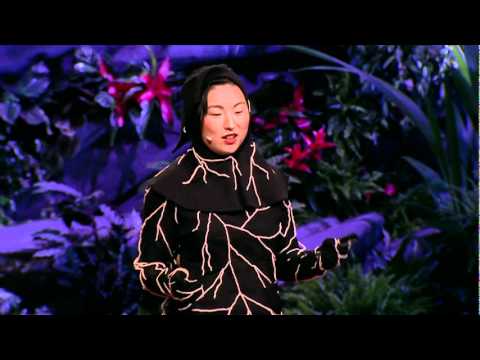
Artist and designer Jae Rhim Lee developed the Infinity Burial Project, which explored the possibility of using fungi as part of an environmentally conscious burial process. The project included burial garments incorporating mushroom mycelium, the network of fungal structures associated with mushroom growth.
The idea drew on a process called mycoremediation, in which certain fungi can help break down or transform particular environmental contaminants under suitable conditions. Lee explored whether fungal activity might assist decomposition and potentially reduce some pollutants associated with human remains.
It's an inventive intersection of design, biology, environmental concern, and our discomfort with decomposition. Rather than treating bodily decay as something that must be hidden or prevented, the project asks whether we might participate more deliberately in the natural processes that follow death.
But we need to separate the concept from the evidence. Although fungi play important roles in decomposition and some forms of environmental remediation, that doesn't establish that a mushroom burial suit reliably neutralizes toxins in a buried human body. The project's proposed environmental benefits have not been demonstrated sufficiently to treat the suit as a scientifically proven improvement over ordinary natural burial. <Cite refs={["turn150206search7","turn150206search8"]}/>
The mushroom suit is still an important example of how creative people are challenging conventional death-care practices. Lee's project extended beyond an artistic proposal and included actual burial products and documented use. But its strongest educational value may be the questions it raises about decomposition, environmental claims, and the relationship between scientific possibility and commercial innovation. <Cite ref="turn150206search9"/>
Video: Jae Rhim Lee, My Mushroom Burial Suit (TED)
https://www.youtube.com/watch?v=_7rS_d1fiUc
As you watch, consider the distinction between an innovative idea and a scientifically established environmental benefit. What evidence would you want before concluding that a new burial product is genuinely better for the environment?