Semester Project - Interviewing an Older Adult (Due the last week of class)
The Life Interview Project: A How-To Guide
Why You’re Doing This

The Life Interview Project: A How-To Guide
Why You’re Doing This
Every human needs to feel a sense of contribution, whether to their own life, their family, relationships, or the wider world. Contribution looks different for everyone, especially across the life course.
This project is designed to:
-
Build empathy through real connection
-
Increase understanding of what aging actually looks like
-
Challenge the idea that aging diminishes human value or relevance
You will do this by getting to know one person age 65 or older who, in your judgment, is aging successfully.
Step 1: Choosing Your Interview Subject
-
Your interviewee must be 65 years or older
-
You may interview a family member
-
You must approach the interview with academic seriousness, regardless of your relationship
-
It is your responsibility to find an interview subject
If you think you don’t know anyone over 65, you’re just not looking yet. They are everywhere.
What matters most is that you believe this person is aging successfully, whatever that means to you at this point in the semester.
Step 2: Interview Format & Logistics
-
Plan 3–4 interview sessions, about 45–60 minutes each
-
Multiple sessions matter. Older adults tire more easily, and better reflection happens over time
-
Interviews may be conducted:
-
In person
-
By phone
-
Via Zoom or video chat
-
-
Do not conduct interviews by email or text
Before each session:
-
Review the questions you plan to ask
-
Review the theoretical concepts we are covering that week
You may revisit earlier theories later in the semester. Real life does not follow a syllabus.
Step 3: Ethical Ground Rules (Read This Carefully)
At the start of your first interview:
-
Explain the purpose of the assignment
-
Emphasize that their experience may help others understand aging better
You must:
-
Use only a first name or a pseudonym
-
Allow the interviewee to decline any question
-
Respect their boundaries while maintaining academic inquiry
If one or two questions are declined:
-
Briefly explain this in your paper
-
You may politely ask why they chose not to answer
If many questions are declined, you should consider finding a different interview subject. Too many unanswered questions will negatively affect your grade.
Step 4: Interview Questions (How to Use Them)
You are not expected to ask every question listed below.
Think of these questions as:
-
Conversation starters
-
Prompts you can adapt
-
A menu, not a checklist
Strong Recommendation
Align your questions with the topic of the week.
For example:
-
During a week on identity or psychosocial development, focus on roles, meaning, and relationships
-
During a week on health, explore adaptation, routine, and coping
-
During a week on social relationships, focus on family, friendship, and contribution
This will make your final paper much easier to write.
My Favorite Questions (Start Here)
These are often the most revealing:
-
Tell me about your best day.
-
Tell me about your worst day.
-
What five words best describe you?
-
What moments in your life were most pivotal?
-
Tell me about something that went right. Now tell me about something that went wrong.
Question Categories (Choose What Fits)
Below are thematic categories. You do not need to cover all of them.
Family & Early Life
(questions about childhood, parents, siblings, family structure, stories)
Education & Growing Up
(schools, teachers, early lessons, interests)
Work & Contribution
(work history, volunteering, meaning, retirement)
Relationships & Romance
(partnerships, love, marriage, loss)
Health & Adaptation
(daily routines, chronic conditions, coping, control)
Mental Health, Spirituality & Creativity
(beliefs, resilience, creativity, faith)
Leisure, Lifestyle & Habits
(food, exercise, hobbies, pleasure)
Living Arrangements & Independence
(housing, autonomy, safety)
Financial Life
(retirement planning, satisfaction, reflection)
Social Connections
(friendships, isolation, belonging)
Meaning, Beliefs & Reflection
(goals, regret, death, satisfaction, advice)
You are encouraged to follow the conversation where it naturally goes.
Step 5: Writing the Paper
Once your interviews are complete, you will write a 5–10 page narrative paper.
This is a story, not a transcript.
Your paper must include:
-
A portrait of the person
-
Who they are
-
Key life experiences
-
What you learned from them
-
-
Connections to course material
-
Explicit links to theories, lectures, and readings
-
Where this person reflects, challenges, or complicates what we’ve studied
-
-
Your experience
-
What surprised you
-
What challenged your assumptions
-
What changed in how you think about aging
-
What I Do Not Want
-
A question-and-answer transcript
-
Yes/no responses
-
Surface summary with no theory
Writing Expectations & Grading
Your grade is based on:
-
Completeness
-
Clarity and organization
-
Strength of narrative
-
Integration of theory
-
Thoughtful reflection
Your paper must:
-
Have a clear introduction and conclusion
-
Use appropriate grammar and spelling
I will not correct grammar, but it will affect your grade. Careless writing is the fastest way to lower a strong paper.
Academic Integrity (Read This Once)
Your work will be submitted to plagiarism checkers and AI detection tools.
Yes, it is tempting to outsource this assignment.
No, it is not worth it.
If you choose not to do the assignment honestly, take the point hit and move on. Submitting fake work is how students create problems they did not need.
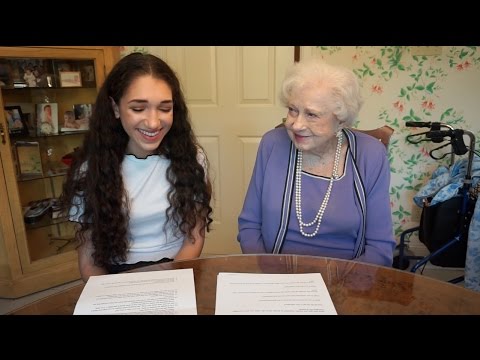
Here's a great video to get you started