🎓 ONLINE LECTURE: Social Theories of Aging
Examining Aging Through The Prism of Sociology
Since we examine aging through various prisms, we need to become familiar with the theoretical foundations from several schools of thought - biology, psychology, and sociology. Let's start with sociology.
Sociologists examine the patterns of behavior and explore both the individual within a given society AND society as the whole. We only started looking at aging as a discrete concept when we started having enough older people to warrant our attention. Living longer as a population is relatively new, so we are continually adapting our ideas. These theories developed to help us understand different models of "successful aging." Remember, "successful aging" is relative to a given society's standards and should be our goal.
The Disengagement Theory

Disengagement theory, developed by Cumming and Henry in the 1950s, in contrast to activity theory, emphasizes that older adults should not be discouraged from following their inclination towards solitude and greater inactivity. While not completely discounting the importance of exercise and social activity for the upkeep of physical health and personal well being, disengagement theory is opposed to artificially keeping the older person so busy with external activities that they have no time for contemplation and reflection (Cumming & Henry, 1961). In other words, disengagement theory posits that older adults in all societies undergo a process of adjustment which involves leaving former public and professional roles and narrowing their social horizon to the smaller circle of family and friends. This process enables the older person to die more peacefully, without the stress and distractions that come with a more socially involved life. The theory suggests that during late adulthood, the individual and society mutually withdraw. Older people become more isolated from others and less concerned or involved with life in general. This once popular theory is now criticized as being ageist and used in order to justify treating older adults as second class citizens.[4]
The Activity Theory

Developed by Havighurst and Albrecht in 1953, activity theory addresses the issue of how persons can best adjust to the changing circumstances of old age–e.g., retirement, illness, loss of friends and loved ones through death, etc. In addressing this issue they recommend that older adults involve themselves in voluntary and leisure organizations, child care and other forms of social interaction. Activity theory thus strongly supports the avoidance of a sedentary lifestyle and considers it essential to health and happiness that the older person remains active physically and socially. In other words, the more active older adults are the more stable and positive their self-concept will be, which will then lead to greater life satisfaction and higher morale (Havighurst & Albrecht, 1953). Activity theory suggests that many people are barred from meaningful experiences as they age, but older adults who continue to want to remain active can work toward replacing opportunities lost with new ones.[3]
The Activity Theory is based on the premise that we will experience the highest level of life satisfaction when we are active. Often called the "busy ethic," it comes from the Germanic work ethic and the old saying that "idle hands are the devil's workplace." It is one of the more dominant theoretical perspectives and implies that activity is the essence of all human life. The argument is that the busier we are, the happier we are. Research over the last 50 years has shown a positive correlation between activity levels and positive perceptions of aging. What remains a question is the definition of activity. Is mental activity as impactful as physical activity? Do we need to be in motion or interacting with others in order to find life satisfaction? In a study of life satisfaction, one researcher suggested that instead of the term "life satisfaction," we should substitute "momentary contentment." (Jacob & Guarnaccia, 1977)
The Age Stratification Theory
The Age Stratification Theory states that society prescribes specific tasks are "age-appropriate" as defined by our culture. (Macionis, 2012) . I want you to think about it in terms of the "3-P's." There are LOTS of them, but let's just pull out a few that have directly to do with age.
Permissions: A society grants certain rights and privileges at specific ages. Think of it as the "what you may do" standard. For example, you "may" legally drive at age 16; at 18, you are granted legal adulthood, can vote, and even go to jail! At 21, we tell you that you are now allowed to vote, gamble, or buy alcohol. Yet, you can't rent a car or hotel room until you are 25, and we won't let you run for the Presidential office until you are age 35.
Proscriptions - These are the things that you "must not do." For example, it is illegal in all states to marry before 13, even with parental consent. If you are over age 18, you must not have sexual relations, even consensual, with anyone under 18. (Yep, most of the proscriptive laws around age have to do with sex and marriage.)
Prescriptions: These are the "you must do" in our culture. The big one that many young men get caught forgetting is to register for the Selective Service on your 18th birthday.
Continuity & Role Theory

Continuity Theory
exists at an intersection between sociological and psychological theory because it proposes that the roles we play in life are the source of our self-concept. Researchers Paul Costa and Robert McCrae state that personality stability is crucial for successful aging. (Hillier, 2015) What does that mean? Consider the concept of traits and states. Traits are those enduring parts of our personality that stay consistent over time and in different contexts. States are those transient changes in our personality that may be influenced by our surroundings, peers, or situations. States changes. Traits do not. (Costa et al., 2001)
Successful aging means that we have taken our personality traits, adapted and accepted our new roles as they change. Those roles change as we age, and there are some losses as we transition. In many cases, there are "age norms" that are both legislated and assumed, each of which grants (or takes away) permission to behave in certain ways, perform particular tasks or participate in social exchanges.
As we age, we substitute old roles with similar new ones, maintaining continuity of personality and lifestyle. Successful aging means that we have adapted to new roles and lifestyles. With continuity of roles, individuals set their standards for self-esteem rather than adjust to the norm.
Continuity theory suggests as people age, they continue to view the self in much the same way as they did when they were younger. An older person’s approach to problems, goals, and situations is much the same as it was when they were younger. They are the same individuals, but simply in older bodies. Consequently, older adults continue to maintain their identity even as they give up previous roles. For example, a retired Coast Guard commander attends reunions with shipmates, stays interested in new technology for home use, is meticulous in the jobs he does for friends or at church, and displays mementos from his experiences on the ship. He is able to maintain a sense of self as a result. People do not give up who they are as they age. Hopefully, they are able to share these aspects of their identity with others throughout life. Focusing on what a person can do and pursuing those interests and activities is one way to optimize and maintain self-identity.
Role Theory
The way we arrive at old age, our attitudes, beliefs, and who we are when we get there is not only determined by social and cultural influences, but variables such as age, sex, income levels, and social class-- these also influence whom we become. The last stage of life is the result of all the preceding stages.
Because old age is not just a matter of destiny but one of choice, our aging process is dependent on what we do earlier in our lives; the choices we make, and the social institutions available to us.
Our educational level, work history, opportunities, and life circumstances are dependent on these choices and shape our old age. All of these factors create the available roles in our lives.
Let's talk about roles. A role is one of the basic concepts in the study of sociology. A role is "who we are" and "what we do," and is directly tied to the status that we hold in society.
Here are some examples of the roles one might play in life.
- worker
- mother/father
- golf player
- traveler
- caretaker
- driver
- home owner/renter
- friend
- wife/husband
- student
- credit counselor/race car driver/horseman/crook/nurse/runner/smoker
Each of these roles you play makes you who you are. The experiences you bring into old age are partly the result of these roles.
Each of these roles you play makes you who you are. The experiences you bring into old age are partly the result of these roles.
Our roles also determine the resources that are available to us in old age. For example, our occupation throughout life (our work role) will determine our income status when we retire, and the resources or help we can afford. The status derived from our occupation can open or close doors of opportunity throughout life. For example, educated people have more access to health care and a healthy lifestyle and, therefore, a longer, healthier life.
A retired judge might have more status when complaining about a noisy neighborhood than, say, a dishwasher. The judge would know whom to call to get a response from the police. He would call on his established contacts.
The resources we build and the relationships we establish might determine the level of personal care or friends available to us in our old age (since 80-90% of long-term care is provided by family members in the home). Other roles we develop in part determine what we will be like in old age.
The Subculture of Aging Theory
Most recently I've been reading about the Subculture Theory developed by Arnold M. Rose, which fascinates me. It's the idea that older people are a subgroup within our culture, not quite a minority, but a group that shares common interests and experience in a similar role change. This makes them different from the current majority under the age of 65, even though within that over age 65 subgroup, there are at least five different generational cohorts. It makes sense that this group would have very specific needs that are different from the overall cultural norm. (Rose, 1962)
The Feminist Perspective
Classic feminist theory recognizes race, class, and gender as the primary organizing principles of power; "age is rarely conceptualized as an additional master status that also provides advantages and disadvantages, benefits, and detriments." (Binstock et al., 2007). In their book, "Aging Matters," researchers Toni M. Calasanti and Kathleen F. Slevin assert that traditional feminist inquiry has substantiated ageist thought and has perhaps even fueled the development of a highly profitable anti-aging industry. So, now, researchers are asking questions.
- Why are women paid more poorly than men?
- What effect does that have later in life?
- What effect do women's Familia responsibilities have on their employment?
- Suppose I have to be at home taking care of my children. Then I'm expected to be at home taking care of my parents. I am supposed to be putting money into retirement to have a decent income when I'm old. I haven't married, or if my husband has not earned a high enough income, am I now destined for poverty later in my life?
Men and women experience aging differently. We have notions of masculine and feminine roles in the United States. Granted, they are changing and changing rapidly! But they are still there, and they are particularly impactful on the older adults of today.
Critical Gerontology
Critical gerontology looks at aging from a global perspective. How do the forces of the world influence older adults? Is everything that we know, everything that we publish, everything that we study, just retrospective? Maybe we need to be looking at things from a more global perspective. We tend to study aging from within our societies. Maybe we need to look outside of the box just a bit. The concept of Critical Gerontology has started to take root as a standard for examining global aging. Check out this article that discusses "The Next Stages in Critical Gerontology."
Exchange Theory
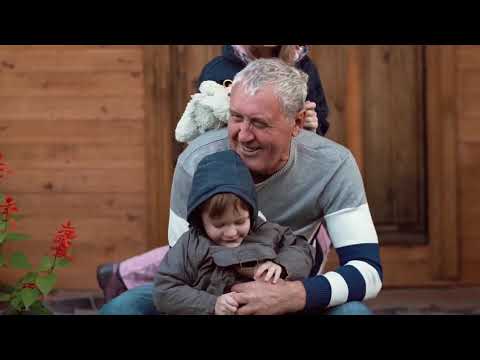
The Exchange Theory is based on the principle that individuals and groups act to maximize rewards and minimize costs in relationships, careers, and other major life decisions. (Dowd, 1975) We like balance and to feel like we are getting a return on our investment of emotions, energy, and resources. The idea centers on the concept of reciprocity and our desire to maintain balance in our relationships by paying for goods or deeds with equivalent goods or deeds - tangible or not.
The idea behind any social exchange is balance. The "norm of reciprocity" says that we prefer it when our goods or deeds are paid for with equivalent goods or deeds. It's the driving force behind our desire to repay a debt or return a favor. It's not necessarily time determined, but we require that an act of kindness be returned within a reasonable amount of time. (Burger et al., 1997). A study of women's relationships showed that the key elements of friendship (understanding, affection, trust, and acceptance) endured over time when there was a balance of the exchanges in their relationship over the long term. (Roberto 1998) What if we just want to do something nice for someone with no expectation of return? Sometimes we are unable to repay what we receive with anything but gratitude and love. These are examples of the "norm of beneficence," where the gift is given with no equitable exchange expectation.