🎓 ONLINE LECTURE: Sex and Intimacy
Sex & Intimacy
You will hear me say, frequently, that there are three "uncomfortable conversations" in life - one about money, one about death, and one about sex. This one's the sex one. Yep, even in a class about human aging, we have to talk about sex. Moreover, we need to talk about intimacy and how important it is - AT ANY AGE - to have emotional and physical intimacy with another human being. Sure, when we use the term "intimacy," we think it implies sex, but it implies connectedness at a deeper level. We can have sex with anyone, right? However, we cannot be intimate with someone we don't trust and have a vested interest in. I'm talking about hand-holding, sitting in a room for hours, and not needing to talk, contentedness with another human. The sex part, that's easy as long as the body is able. It's nice. It's fun. As long as we are careful (at any age), it's possible and quite pleasurable. When done right, though, sex can be an amazing expression of emotional intimacy. Let's talk about that....
Intimacy

You may have read about Abraham Maslow in other courses, but I think the theory warrants a review here since sexuality is very much related to life satisfaction. Sex is considered, by Abraham Maslow, to be one of our most basic human needs.
“Sexual expression can be seen as a quality of life issue. Once survival needs are fulfilled, for example, for food and shelter, the needs for intimate relationships and feelings of being loved are vital. In fact, studies show that babies who are deprived of physical touch and emotional stimulation suffer serious gaps in emotional and physical development." (Abraham Maslow)
The need for intimacy does not change in old age. In fact, the desire for intimacy can intensify. Let me clarify - we are talking about intimacy, not intercourse. As people lose their partners or peers, they become attracted to others (remember, a person's self-concept remains intact by taking part in activities that mimic middle age activities). Relationships develop, and sexual feelings may become activated. For many people, these feelings are a gift and bring a sense of pleasure and a feeling of “being alive.” (Fileborn et al., 2017)
Societal myths and stereotypes shape our views of older people and sex. These myths create sexual invisibility of older adults. For example: how many of you can imagine your parents or even your grandparents engaging in sexual activity? Did you get here by immaculate conception? Probably not. It's hard for us to imagine our parents or grandparents "DOING IT," yet studies show that if an elder is healthy, and has a mate, a large majority of them remain sexually active in late old age.
Many people want and need to be close to others as they grow older. For some, this includes the desire to continue an active, satisfying sex life. With aging, that may mean adapting sexual activity to accommodate physical, health, and other changes.
There are many different ways to have sex and be intimate—alone or with a partner. The expression of your sexuality could include many types of touch or stimulation. Some adults may choose not to engage in sexual activity, and that's also normal.
Here, we explore some of the common problems older adults may face with sex.
Sexuality
Intimacy is the most emotional connection that we have with another individual. Sexuality is the physical expression of a passion for another human being. Sexuality is an important part of our emotional and physical experience of being a human being. It's part of our culture. From the time we develop into our adolescence, we are aware of how important this particular component of our lives is. Certainly, the way we express sexuality and even our gender roles have had a major change in the last 30 years!
But while music and television would lead us to believe that we live in a hypersexual society, in reality, America is quite conservative. We don't like talking about sex except with our peers. We love thinking about it. We like laughing about it, but we don't want to talk about it in a serious way. We really do not want to talk about sexuality with older adults - let alone the sexuality OF older adults! It makes me giggle to see so many young people start squirming when I talk about someone over the age of 65 actually having sex - and enjoying it. Part of it has to do with a sense of privacy amongst the generation. Some of it has to do with societal myths about aging. (Ulhmann, et al, 2011; Masters & Johnson 1966; Hinchliff & Gott 2008)
Please read " Sex & Seniors - Seniors are still doing it" from the New Hampshire Magazine for a fun and enlightening expose on how older folk not only carry on having sex later in life, but they ENJOY IT!
 Welcome to the Taboo Lounge
Let's talk about sex and sexuality and explore what is fact, fiction, fantasy and reality. We know that the baby boomers are far more forthcoming and talking about their sexuality than their parents, but it's still largely taboo to talk about sex and older adults.
We know that seniors with high self-esteem have a high positive body image and have quite healthy sex lives. (Deacon & Plummer, 1995). That passion, that desire for togetherness – that doesn't change as you age. Most humans enjoy touch and really enjoy sexual gratification. The degree to which we want those things varies from person to person, but we do know that those with high sex drives in youth maintain that same desire into later life. Same for those with lower sex drives.
Society often views romance as something that's really for young people, and a lot of that comes back to the teachings of St. Augustine, who taught us that romance and sex were only mechanisms for reproduction. He believed it once we were old enough to not be able to reproduce, there was no need to have sex. There was certainly no need to talk about it!
It is a myth that physiological changes detrimentally affect how we function sexually. Even those who have chronic health problems and depression, and even those with some cognitive function, can achieve a certain level of sexual satisfaction. (Mulley, 2007). It just takes a little creativity!
Here are the three most common myths around sex and aging:
- Sex and being sexy is for younger people, not older people.” When we are confronted with older adults’ sexuality, we think it’s funny or cute for old people to have sexual interests and behaviors.
- Older people who are sexually active are often labeled as weird or deviant (he’s a “dirty ofd man,” or “she’s got something wrong with her head.”
- Many think that older adults are unable to have sexual intercourse.
Because of these myths, people poke fun at the sexual activities of older people or the supposed loss. Stand-up comedians make jokes about old age and sexuality. For example, consider this joke.
It's a Fairy Godmother joke:
Two statues, one of an old man and the other of an old woman, have been on an old building's entrance, facing each other for more than 100 years.
They are granted the wish of being human for 30 minutes. So they jump down and rush into the bushes.
The bushes shake, rattle, and roll.
After a few minutes, they come out.
The Fairy Godmother says, "You still have 10 minutes left."
The old couple look at each other, and the man asks, "Want to do it again?" The woman says, "Yes, but this time you hold down the pigeon and I'll poop on his head!
Why is this joke funny? Would it be as funny if the statues were young Romans aged 19 or 20? Probably not. It's funny because we can't imagine old people having sex...and if we do, it makes us uncomfortable.
Stereotypes of asexual behavior in older adults are ageist. These jokes affect older people. For example, older people seldom speak of enjoying sex for fear of ridicule.
Misinformation about older people and sexuality is passed from one generation to another. Today's older cohorts are more private about their sexual expression than younger cohorts -- can you imagine why?
Some of them were raised during a time when any form of sexual expression was not talked about openly. This attitude is left over from the repressive Victorian era (remember the society of women who proposed putting clothes on the legs of tables ?)
Inability to talk openly about sexuality results in ignorance. If we only get a little information regarding sexuality, how to express one's self, or what to expect in terms of performance in later life, how do we develop in a healthy way?
Take a moment to read "The Circles of Sexuality and Intimacy," published in 2019 by the American Society on Aging. Perhaps it will help give you some language to discuss healthy sexuality and aging.
Sexuality as More than Physical Contact
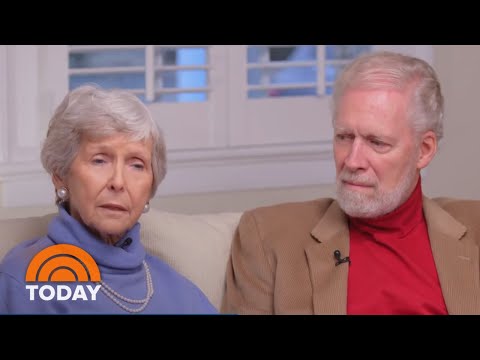
"First, we should keep in mind that sex is not only a biological drive for pleasure and reproduction. It is also a powerful way for human beings to relate to one another and to express intimacy. " Porter and Holmes
(Source: Today Show)
What is Sexuality?
Sexuality is an energy force expressed in our speech, our movement, our vitality, and is key to our expression of self. It is NOT just a biological function of intercourse and orgasm. Sexuality is an identity. Whether one is active in intercourse, we express sexuality in how we dress and interact. It starts early in our childhood (puberty or before) and continues throughout the life-cycle. It takes on different forms depending on the individual's physical condition, beliefs and norms, preferences, and opportunities to find a partner.
Sometimes, we may need to adapt to what our sexual behavior is. For example, if I have significant health problems like heart issues, the vigorous activity of intercourse may not be safe. That doesn't mean that I can't express myself in other ways. It is a reality that older people remain sexually active, and rather creatively so, to accommodate both physical changes and medication effects. There is a direct correlation between how sexually active we were when we were young and how sexually active we are when we are older. In fact, the research shows that as long as a partner is available, the rate of sexual behavior stays stable across the life course.
What Does the Research Say?
 Changes in Women (or anyone with ovaries)
Masters and Johnson's study found that women experience more physiological changes in sexual organs than men. Climacteric (cli-mack-ter-ick) and menopause usually begins around the age of 40 and is complete in most women by age 55. The time it takes for all of the productive changes to occur differs from woman to woman. The time in a woman's life that marks the cessation of her reproductive period is composed of three phases:
Pre-Menopausal - This usually begins around the age of 40. During this period, there is a drop in the estrogen levels, the primary female hormone.
This drop is responsible for many women's physical and psychological symptoms such as hot flashes, chills, headaches, and depression.
Menopause - Actual menopause is a time when monthly periods become irregular and eventually stop. Although some women stop menstruating around age 40, others may still be having regular periods in their mid-50's. Ovulation may continue for a year or two after the last period, and women should continue using contraceptives. Pregnancy at this time is possible, and people refer to these children as "menopause babies."
Post-Menopausal - During this time, women experience gradual changes in the vagina.
- The introitus of the vagina will shrink, and vaginal wall thinning occurs along with becoming dryer (diminished lubrication can make intercourse painful.
- There can be psychological responses to menopause - from the loss of childbearing years to feelings of joy and new freedom.
- Because the ovaries stop producing estrogen, skin changes occur. There may be a thinning of the skin, causing "crows-feet" at the eye and chin and vertical creases around the mouth.
- Breast tissue will become less dense, causing sagging.
There are also a host of psychological myths regarding sexuality in older women. (Neugarten, et al., 1963) Many can be the basis of sexual dysfunction. For example, in generations past (including my own), the messages that women received about sex and sexuality included:
- Sex is for procreation only.
- After age 50 (or even younger), "I'm too old."
- A woman's sex drive is not as strong as a man's
- It's unnatural to desire sex after menopause.
- Sex is only for perky young people, not me with my sags and bags.
- My spouse or partner will find me less desirable as I age.
- Sex is supposed to hurt when your body is done with needing it.
A woman may take longer to respond to sexual stimulation during this time. The pre-orgasmic phase (the phase where the sexual tension is building) is extended, so longer periods of stimulation may be required. It is a time when a woman can take time to enjoy herself. The pressure to respond quickly is relieved, and hugging and closeness can be enhanced.
Some physicians believe that the symptoms such as hot flashes and headaches that accompany the climacteric may be lessened by hormone replacement therapy (also known as HRT) in which women take a low dose of estrogen and progesterone. HRT is now recommended only for a short period of time as it may increase the likelihood of breast cancer.
Each woman must outweigh the risks based on her family history, lifestyle, and beliefs. Some women are not candidates for HRT because of other medical conditions or family history of certain types of cancers. The forms that estrogen is given include birth control pills, patches, creams, and suppositories. (Pearce & Blake, 1995)


 And the Men (or anyone with testes)
Reproductive changes in men are less dramatic. Sperm production declines gradually, but testosterone does not stop as estrogen does in women. A man may father children way into old age. At age 80, he may still be ½ as fertile as he was at age 25 (Zitzmann, 2013)
Most men need more time to get an erection and feel less of an urgency to ejaculate. They have better ejaculatory control. The penis may not be as firm, and most men experience a longer resolution phase, during which time an erection is impossible. This resolution phase can last from 12 to 24 hours or more. (Glass, et al., 2000) Most men become flaccid sooner after ejaculation. These changes might allow for a more pleasurable time. The pressure to perform can be less if the man and woman are educated about these physiological changes.
There are special concerns for men:
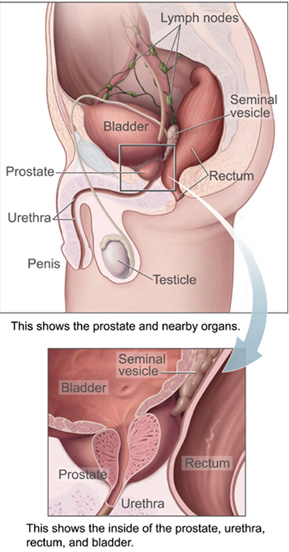 The prostate gland is often the problem when urinary problems arise. These difficulties are often due to nothing more than prostate enlargement or infection, but cancer is a possibility. Take any urinary irregularity as a signal to visit your doctor or urologist (Harvard.edu).
The prostate gland is located beneath the bladder and surrounds the urethra. It may become increased in size and stiffen as a man ages. This may make it more difficult to urinate.
The gland's purpose is to create fluid in semen that helps sperm survive in the acidic environment of the vagina. Unless the prostate gland gets infected, it is not a serious condition. If it becomes enlarged and blocks urination, it is treated by a procedure called a TURP, or transurethral repair of the prostate. Surgeons insert surgical repair instruments up through the penis. (MayoClinic, 2019)
Cancer of the prostate becomes a serious threat during middle age and peaks between ages 60-80. Enlargement of the gland does not cause cancer (we do not know what the cause is); however, enlargement may be misdiagnosed as cancer until further diagnostic tests are done.
Enlargement of the prostate gland for any reason can be misunderstood and stimulate fear of impotence. There is a fear that the risk of surgery for any reason might bring permanent dysfunction.
 Impotency and Erectile Dysfunction
Before Viagra, most erection problems were treated with penile implants. They are still used today for nerve damage or other erectile problems when Viagra is not indicated.
Most implants are inflatable prosthetic devices with a reservoir filled with silicone, implanted under the abdominal muscles. An inflatable cylinder in the penis uses a pump implanted inside the scrotum. (Not going to show THAT video, but if you really want to know, just ask and I can send you the link to the Mayo Clinic Pre-Surgery Video)
A man can compress the pump to fill the cylinders from the reservoir producing a penile erection. A small release valve in the lower portion of the pump bulb releases fluid to return the penis to a flaccid state. (Mulcahy et al., 2004)
For most men, especially those who watch lots of sporting events - because the advertisement is a killer - the fear of erectile dysfunction is real. I can tell you with 100% certainty that 100% of the men in this class will experience ED. It will only happen a few times in your life and is related more to your health and stress than anything else. There ARE factors that influence ED:
- diabetes - can affect the vascular system responsible for penile erection
- arthritis - can create painful positioning during intercourse
- alcohol and marijuana- affect desire and sexual response
- medication and illness may affect sexual expression (high blood pressure, sedatives, antidepressants antihistamines, pain medications that affect blood pressure)
- chronic illness affects self-esteem and self-worth and may cause men to question their sexual adequacy.
The Kinsey Studies
When Alfred Kinsey did his research, he found that while strenuous sexual activity decline with age, desire and capacity did not. Masters and Johnson found that while the sexual response cycle may slow, it does not stop. They found the developmental changes in our body and our brains do not diminish our desire or arousal. The Duke Longitudinal study found patterns to be very similar to the young. Some people have a higher sex drive; other people have lower ones. The people who have a higher sex drive but a lower level of sexual activity usually correlate their lack of activity to health issues, not desire. Star and Weiner found that elders remain interested and active and report that their sexual behaviors and their intimacy levels improve with time. The biggest factor to negatively impact sexual behavior later in life is the absence of an available partner.
What is sexual behavior? Well, I suppose that depends on your threshold. For some of us, sexuality is vigorous intercourse or genital stimulation. For others, it is masturbation or use of sex toys. What is “normal” ranges from high frequency/high intensity to low frequency/low intensity? It is highly dependent on levels of desire and physical ability. Research measuring sexual activity shows that older adults engaged in sexual behavior once a week or more in the last six months. Respondents report hugging and kissing, sexual touching and caressing, sexual intercourse, self-stimulation, and oral sex. (Zeiss & Kasi-Godley, 2001)

What Causes Sexual Problems?
Some illnesses, disabilities, medicines, and surgeries can affect your ability to have and enjoy sex.
- Arthritis. Joint pain due to arthritis can make sexual contact uncomfortable. Exercise, drugs, and possibly joint replacement surgery may help relieve this pain. Rest, warm baths, and changing the position or timing of sexual activity can be helpful.
- Chronic pain. Pain can interfere with intimacy between older people. Chronic pain does not have to be part of growing older and can often be treated. But, some pain medicines can interfere with sexual function. Always talk with your doctor if you have side effects from any medication.
- Dementia. Some people with dementia show increased interest in sex and physical closeness, but they may not be able to judge what is appropriate sexual behavior. Those with severe dementia may not recognize their spouse or partner, but they still desire sexual contact and may seek it with someone else. It can be confusing and difficult to know how to handle this situation. Here, too, talking with a doctor, nurse, or social worker with training in dementia care may be helpful.
- Diabetes. This is one of the illnesses that can cause ED in some men. In most cases, medical treatment can help. Less is known about how diabetes affects sexuality in older women. Women with diabetes are more likely to have vaginal yeast infections, which can cause itching and irritation and make sex uncomfortable or undesirable. Yeast infections can be treated.
- Heart disease. Narrowing and hardening of the arteries can change blood vessels so that blood does not flow freely. As a result, men and women may have problems with orgasms. It may take longer for both men and women to become aroused, and for some men, it may be difficult to have or maintain an erection. People with a heart attack or their partners may be afraid that having sex will cause another attack. Even though sexual activity is generally safe, always follow your doctor's advice. If your heart problems get worse and you have chest pain or shortness of breath even while resting, your doctor may want to change your treatment plan.
- Incontinence. Loss of bladder control or leaking of urine is more common as people, especially women, grow older. Extra pressure on the belly during sex can cause loss of urine. This can be helped by changing positions or by emptying the bladder before and after sex. The good news is that incontinence can usually be treated.
- Stroke. The ability to have sex is sometimes affected by a stroke. A change in positions or medical devices may help people with ongoing weakness or paralysis to have sex. Some people with paralysis from the waist down are still able to experience orgasm and pleasure.
- Depression. Lack of interest in activities you used to enjoy, such as intimacy and sexual activity, can be a symptom of depression. It's sometimes hard to know if you're depressed. Depression can be treated.
- Surgery. Many of us worry about having any kind of surgery—it may be even more troubling when the breasts or genital area are involved. Most people return to the sex life they enjoyed before surgery.
- Hysterectomy is surgery to remove a woman's uterus because of pain, bleeding, fibroids, or other reasons. Often, when an older woman has a hysterectomy, the ovaries are also removed. Deciding whether to have this surgery can leave both women and their partners worried about their future sex life. Talk with your gynecologist or surgeon if you're concerned about any changes you might experience with a hysterectomy.
- Mastectomy is surgery to remove all or part of a woman's breast because of breast cancer. This surgery may cause some women to lose their sexual interest or leave them feeling less desirable or attractive to their partners. In addition to talking with your doctor, sometimes it is useful to talk with other women who have had this surgery.
- Prostatectomy is surgery that removes all or part of a man's prostate because of cancer or an enlarged prostate. It may cause urinary incontinence or ED. If you need this operation, talk with your doctor before surgery about your concerns.
- Medications. Some drugs can cause sexual problems. These include some blood pressure medicines, antihistamines, antidepressants, tranquilizers, Parkinson's disease or cancer medications, appetite suppressants, drugs for mental problems, and ulcer drugs. Some can lead to ED or make it hard for men to ejaculate. Some drugs can reduce a woman's sexual desire, cause vaginal dryness or difficulty with arousal and orgasm. Check with your doctor to see if there is a different drug without this side effect.
- Alcohol. Too much alcohol can cause erection problems in men and delay orgasm in women.
Invisible Sexuality
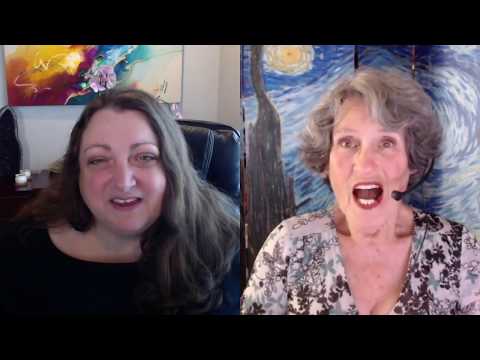
The sexuality of older adults is largely invisible. Part of it comes from the idea that sex is a private matter. Part of it comes with the idea that sexuality is really only for the young. If sex is only for the young, then any desire for sexuality later in life is shameful, or a waste. Another reason for the invisibility of the older adult's sexuality is the uncomfortable feeling of adult children and staff with parents and patients' sexual activity. Were you uncomfortable with the thought of your grandparents or parents being sexually active?
These attitudes make older people uncomfortable telling family members about their activities or reducing their behavior to sneaking and hiding. People often tease and ridicule older adults' sexuality, and facilities control relationships with other residents.
I have heard stories of adults in Florida who keep two apartments side by side, so children are not aware that they live together. Cell phones make it possible for them to live in one apartment but answer the telephone in another.
(Source: The Intimacy Dojo)
LGBTQ Sexuality and Aging
According to the American Psychological Association, more than 39 million people in the U.S. are age 65 years or older including 2.4 million people who identify as lesbian, gay, bisexual or transgender (LGBT) with the expectation that this number will double to over 5 million by 2030.
The characteristics of LGBTQ couples are much the same as those of heterosexual couples. Sexual expression is the one difference between heterosexual couples and LGBTQ couples. Less is known about LGBTQ relationships than heterosexual relationships because researchers have only just begun to examine this population's distinct and different needs. Inclusion in existing research is usually related to, or compared to, married heterosexuals. (Shankle et al. 2003). Because many older LGB adults have spent a majority of their lives “in the closet,” or masking their sexual orientation, their lives have remained largely silenced; thus, we are only beginning to understand the experiences and needs of these populations. (Fredricksen-Golsen & Muraco, 2010)
LGBTQ relationships, in many ways, are the least accepted form of cohabitation. Until quite recently, society condemned gay and lesbian behavior. It was considered morally wrong and unhealthy; before the 1960s, homosexuality was listed as a psychological disorder in the psychological journals. It was not until the 1960s, with the civil rights movements, the Stonewall Inn riots, and the start of the gay liberation movement that younger gay men and lesbians began to emerge from the closet. (Dworkin, 2006)
Beginning in the early 1980’s sex researchers and sex therapists started examining same-sex relationships and sexuality. One highly regarded study compared lesbian, gay male, heterosexual married and heterosexual single couples, and found that lesbian couples experienced far less frequent sexual activity than the others. They noted that sexual contact over time had become non-existent, with long term relationships becoming more of a “romantic friendship” than a passionate love affair. By the beginning of 1990’s the term “lesbian bed death” had become well known in the gay community as a source of jokes, conservation and intense debate (Fredricksen-Golsen & Muraco, 2010). Research on this population in continuing, and is seeking to determine if the results of these studies were cohort related, impacted by social policy, and will change as the LGBTQ population becomes more visible as participants in sexual studies.
Long-term care remains a problem for older LGBTQ. Even though many have been "out" before they entered LTC facilities, they must "go back in," so to speak. Take a moment to read “The Changing Culture of Long Term Care: Combatting Heterosexism.”
If you are interested in learning more about LGBT aging, start here - the National Resource on LGBT Aging is a wealth of information, research, and resources.
Keeping It Safe
If you were born any time after 1980, you have grown up with an awareness of safe sexual practices. We understand that condom use not only prevents pregnancy, but lowers risk of sexually transmitted diseases. It may surprise you to learn that the rates of STD transmission between older adults, over age 55, are rapidly growing. Incidence of syphilis, gonorrhea, chlamydia infections, genital herpes, hepatitis B, genital wards, and HIV/AIDS has almost doubled since 2012. Of all HIV/AIDS cases, persons 55 and over account for 10.5% of all new cases, and 31.2% of deaths. What is going on?
According to a Harvard research study, there are several possible reasons for the increase in STD transmission.
- The older adult doesn't get regularly screened for STDS - it's just not common practice, and unless the patient requests testing, most doctors will not suggest it.
- As we age, the changes in our immune system can make it difficult to fight off infection.
- After widowhood or divorce, it is not uncommon for an older adult to have multiple sexual partners. However, because pregnancy is not a concern, condoms are often an afterthought.
- Compared with generations that came before them, they have an easier time having sex at an older age because of ED medications, hormone replacement therapies and other interventions.
- The older population has not been included in STD prevention conversations.
- They may not consider oral or anal sex as a way of contracting or transmitting STDs. (Harvard, 2020)
As we have open and honest conversations about sex and aging, we need to include sexual health and safe practices. As divorce rates rise, and widowhood continues to be a factor in the social interactions after age 65, it is socially responsible to provide education, information and support for sustaining relationship in healthy ways throughout the life course.
Please watch this video:

(Source: TedX Talks)
What Can I Do?
You can do things on your own to maintain an active and enjoyable sex life across the lifecourse. If you have a long-term partner, take time to enjoy each other and to understand the changes you both are facing.
Don't be afraid to talk with your doctor if you have a problem that affects your sex life. He or she may be able to suggest a treatment. For example, the most common sexual difficulty of older women is painful intercourse caused by vaginal dryness. Your doctor or a pharmacist can suggest over-the-counter vaginal lubricants or moisturizers to use. Water-based lubricants are helpful when needed to make sex more comfortable. Moisturizers are used on a regular basis, every 2 or 3 days. Or, your doctor might suggest a form of vaginal estrogen.
If ED is the problem, it can often be managed and perhaps even reversed with medication or other treatments. There are pills that can help. They should not be used by men taking medicines containing nitrates, such as nitroglycerin. The pills do have possible side effects. Be wary of any dietary or herbal supplements promising to treat ED. Always talk to your doctor before taking any herb or supplement.
Physical problems can change your sex life as you get older. If you are single, dating and meeting new people may be easier later in life when you're more sure of yourself and what you want. If you're in a relationship, you and your partner may discover new ways to be together as you get older. Talk to your partner or partners about your needs. You may find that affection—hugging, kissing, touching, and spending time together—can be just what you need, or a path to greater intimacy and sex.
and the final thought....
(Source: Sexual Life)
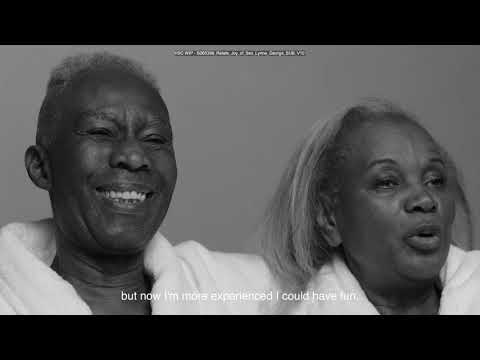
Like adults of all ages, older adults desire to continue sharing their life in a fulfilling intimate relationship. Lack of the ability to intimately express oneself is often associated with despondency and depression. Many older adults are as active today as they were in their younger years. This includes enjoying intimate relationships. A healthy intimate relationship can positively affect all aspects of life, including physical health and self-esteem.
Once our survival needs are met, no single aspect of our lives contributes more to our satisfaction with life or to our sense of psychological wellbeing than our intimate relationships.
Intimacy refers to a distinctively close level of communication between two people. Intimacy may be reflected in confiding or candid talk; meaningful shared silences; mutually enjoyed activities; or of course in sexual interaction. But "intimacy" is not a synonym for sex; rather, it should suggest the idea that sex is potentially a unique type of communication.
In an intimate or close relationship, you feel free to be yourself, to care for another person, to ask for what you need. These are the relationships that contribute to our happiness or, when they go wrong or fail, to our misery. Intimacy is also thought of as companionship and associated with emotional bonding.
Intimacy is a "warm friendship," while sexuality is the use of words, gestures, movements or activities that attempt to display physical affection. Sexual activity in healthy relationships helps people to stay in good physical condition and helps to reduce physical and psychological stress.
Facts EVERYONE should know about aging and intimacy:
- As one ages, the amount of sexual activity generally decreases, however, the amount of sexual interest and ability remains fairly constant.
- If one's sexuality is constant throughout life, the biological changes associated with aging are less pronounced and sexuality is usually less affected.
- Understanding that sexuality is normal and natural for older adults is important to realizing one's own sexuality and becoming more comfortable with sexuality.
- "Sexual health" can benefit an older adult's overall health. The physical exertion associated with sex is nearly the equivalent of walking up two flights of stairs. With this in mind, it is easy to understand that sex for the patient of a heart operation would rarely be dangerous.
- If you have concerns related to health and sexual function (including drug interactions, chronic health problems, or surgical procedures), discuss these concerns with your physician or seek counseling and education from a therapist.
- A healthy diet and regular exercise keep your body finely tuned. This will keep you ready for sex at any age. Eat a balanced diet with plenty of fruits and vegetables. Exercise for at least 30 minutes a day, most days of the week. Avoid alcohol, as excessive use decreases sexual function in both men and women.
For more information related to aging issues, visit the NDSU Extension Aging Well webpage.
Conclusion
It doesn't matter how old we are, humans need intimacy and social bonds with others. As we age, our ability to connect with our family and friends may be reduced, because of limited transportation or distance. The advent of technology has made great strides to enable a level of interaction and connectivity, and aging Americans can look forward to years of Zoom, e-mail and Facebook. However, these technological tools do not substitute for human touch. There is a direct link between life satisfaction and the quality of our human interactions. The importance of friends, intergenerational relationships with children and grandchildren, and the support and shared stories of siblings, all contribute to the well-being of the older adult. Our kin, whether ascribed or achieved, stay vitally important to us. Our church and other social outlets remain important to our sense of well being. Whether we are single or married, our desire for intimacy and connectedness, and even sexuality remains a part of our life-satisfaction. Being intimate, being touched and cared for are profoundly important and we take our sexual identify with us into later life. Regardless of our living arrangements, our marital status or our sexual orientation, our need to be connected remains a part of how we define ourselves regardless of age.
Image Citation
Image courtesy of Darius Sandowski underPixabay License
Image courtesy of Nika Akin under Pixabay License