🎓 ONLINE LECTURE: Culture, Creativity and Coping
Our cultural background influences our coping strategies. Culture plays a huge role in how we perceive stress, how we live our lives, how we interact with others, and how we behave daily. (Chun et al, 2006)
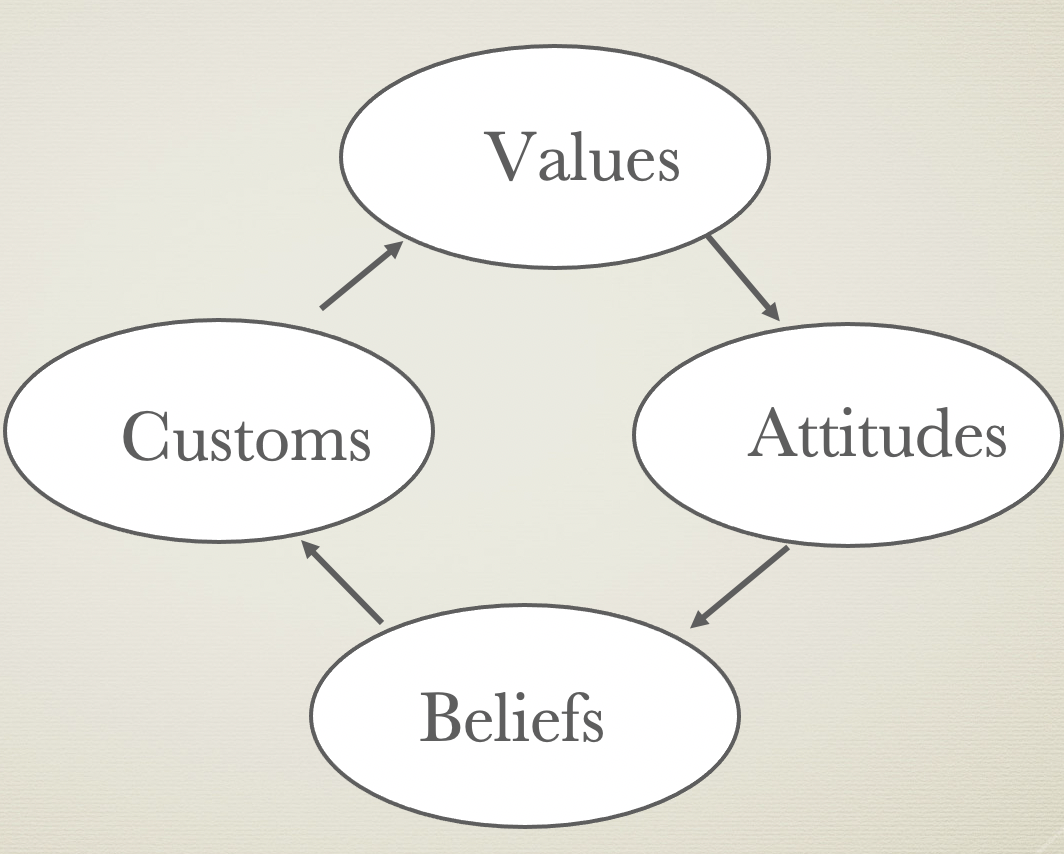
Think about how stressful it might be for someone to move from one culture into another and apply their learned coping mechanisms to the new surroundings. For example, let’s say I come from a culture whose coping mechanism is to pray - in fact praying is legitimate and encouraged. I find myself in a secular culture that believes praying should be reserved for a formal setting, on a special day. They may not accept my need to pray on an regular basis throughout the day. I may be denied the right to practice my ritual. This tension of cultural norms can cause both individual and institution stress. (Lonner, 2007)
It's kind of a lose-lose situation because someone's going to feel uncomfortable in either scenario. So we're trying hard as a nation to become more aware that religious expression is vital to wellness and life satisfaction at any age.
Rapid change can make you feel stressed if you come from a highly predictable culture.
If you come from a culture that values individualism, and find yourself in a situation where a hierarchy and structural confirmation is required, it will be stressful.
If a cultural values kind of emotion-focused coping, avoidance maybe seemed is less legitimate.
Consider the huggers of the world. I was recently at a party and I saw someone go in for a hug from a new arrival. This new person took a step back and said, “I really like you, but I'm not a hugger.” The host could have been hurt, but by combining words and actions, they understood that it was physical contact that the guest disliked, not the person himself.
It took an extra step to communicate those cultural needs. The hugger could have his need for touch met with a handshake and a smile, knowing the cultural parameters.
Think about your own culture and whether you're imposing to the point of making someone else uncomfortable. Then it is up to you to decide if you want to do something about it or not. I'm not going to tell you that you have to adapt your behaviors. Still, I advocate open communication, so you know what you're doing and don't offend anybody unintentionally.
Creativity
Creativity as a coping tool has only recently become a topic of interest, yet historically, the arts has distracted us from the stressors of our daily lives. Observing, participating and creating are all equally beneficial to our wellbeing. Studies have shown that moments of great creativity are as beneficial to our sense of well being as moments of great religious rapture. (Coleman, 1998)
Creativity and stress exist in tension with each other. We benefit the most from creativity when we are experiencing the highest levels of stress. Yet, when we feel the most stressed, we are at our least creative. If we can build moments of creativity into our routine, we can insulate ourselves from some stress reactions, because we have trained ourselves to use creativity as a tool. I know, it is a bit like the chicken-egg puzzle. We need to make time for creativity to help us not be stressed, but there are only so many hours in a day to accomplish everything we want to achieve that the idea of making time is stressful. However, the research shows that forcing a single focused shift toward a creative endeavor can interrupt our stress cycle. (Hoff & Buchholz, 1996)
The shift into creativity can disrupt our mental patterns of stress and anguish and focus by shifting our perspective from the stress and toward those creative acts. (Ceci & Kumar 2016)
We build neural pathways for creativity in the same way that we build pathways for kindness or patience. Eventually, it becomes a habit in the same way that we intuitively do something like holding the door open for someone with an armful of books. We don’t think about it. We just do it.
Consider when you feel the most creative, or most focused. What does it take for you to function at your peak levels of innovation. For some us pressure-positive people, that moment comes when we have outside pressure to perform. For others, we need quiet and a sense of limitless time.
Not feeling creative? Don’t get caught in the hype. Creativity is not about creating a great work of art, or the next musical trend. Maintaining a relationship requires creativity. Getting dressed every day sometimes is an equally creative exercise in problem solving. There are days when even tying shoelaces can be a creative endeavor if you have a young one that you are trying to teach!Pinterest pages require a certain amount of creativity, as does cooking, writing, and painting birdhouses.
Research shows that even if you love what you do, having a creative outlet away from your vocation is essential. (Ceci & Kumar, 2016) Getting outside of the familiar, even diving into nature can reset and ground us.
|
One colleague shared with me, “I love my job. It’s my calling. But, every weekend I set aside three hours for paintball and beer with my buddies.” It’s his outlet, and if he doesn’t do it, he is tense come Monday. He comes to work with a smile on his face and funny stories to tell if he does. It takes 3 hours out of a seven day week for him to feel that. It’s creative to him, and is so far away from anything he does intellectually or to be paid for, but it is vital to his mental health. It’s especially fun for the rest of us when he comes to work with purple streaks in his blonde hair and gives a lecture on ethics. |
|---|
What’s important is that you have routine, and that routine reinforces the neural pathways so that the more you work at the same process, the stronger it becomes. It is a habit that we can learn over the lifecourse, and bring into later life.
Ten minutes. That’s what research shows. Embrace your time constraints and set aside ten minutes a day. That’s the length of a life-changing TED talk. Sit in a room and do nothing. Pull out a notebook a doodle. Whatever you can do to break the stress cycle! For may of us, it takes no more than 10 minutes to stop the tiger.
Bloom's Taxonomy and Creativity
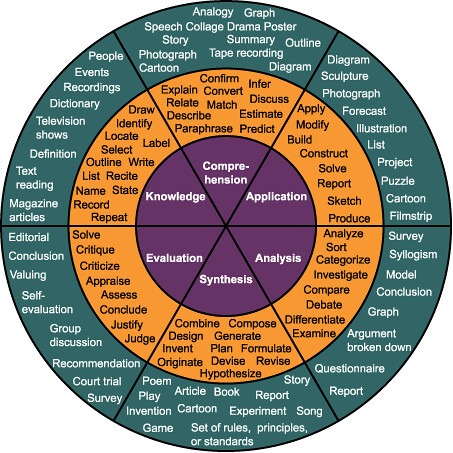
Bloom’s Taxonomy is a framework for learning that was developed in 1956 as a way to classify learning outcomes and objectives. Any student in any college will find it familiar, even if they've never actually heard of it. It is the principle behind almost every course, every textbook and every educational experience you've ever had. There are six levels of learning.
The most basic level of learning is our ability to remember - we sing the alphabet song, remember math formulas, and memorize state capitals on a map. Once we have that knowledge, we can move toward understanding , where we can organize our thoughts in a framework, or summarize the plot of a story. The next task of learning is to apply our understanding to a new situation. We can take that math formula and solve a problem, or create a design for a specific purpose
Once we have foundations of remembering, understanding and applying, our next level of learning is to be able to analyze. We dissect a policy, explain how two principles work together, or figure out why something isn't working. Once we've done that, we can evaluate what we have learned, make a judgement about a dilemma, or interpret a law or policy. The final stage of Bloom's Taxonomy is the ability to create. We take everything we know, understand and can apply, use our analysis and evaluation skills, and come up with a new solution or idea.
Why is this important to know in a course about human aging? Because the learning process and our ability to develop over the lifecourse is directly tied to our ability to adapt and thrive in our later life. The learning taxonomy is not age specific, but concept specific. As long as we can remember, understand, apply, analyze and evaluate, we can continue our journey of learning, and ultimately toward creativity.
Contrary to traditional belief, most creativity does not occur spontaneously. Instead, it is the result of accumulated knowledge and skill. It is not uncommon for a newly discovered artist to have decades of practice preceding their moment in the spotlight.
We develop creativity in a similar way to how we learn. Our first outbursts of creativity are often spontaneous and a little raw. According to creativity researcher Ted Hannemann, they are expressive in nature, unplanned and bursting forth without preparation or planning. We take that experience and build on it to reach the second stage, productive creativity that requires skill and talent. The third level of creativity, inventive creativity involves reimagining; of using old materials in new ways. The final stage of creativity, that very few actually ever achieve is innovative creativity, where we invent something completely new and world changing. Historical examples of innovative creativity include the Masters, daVinci and Michelangelo. Contemporary innovative creators might include Elon Musk and Bill Gates.
Creativity in Late Life
Some of us get started early in our relationship with creativity. Others take a bit longer, and that gives me great hope for the rest of us. In later life, we have accumulated such crystallized intelligence that we can start seeing connections that may not have been obvious to us during the years of generativity. We can shake them up and see them differently. Actually, if you are reading this college-level book, you have enough crystallized intelligence to do a bit of that shaking now. If we realign and make new connections, what amazing things might we be able to accomplish.
Older adults use creativity as tool for psychological expression and a way to process their experiences and stories. At any age, creativity gives us a sense of purpose and passion (Savishinsky, 2001) through fine arts, writing, music and other crafts. The act of being creative can reinforce connections for memory and information processing and improve mental fitness, (Hannemann, 2006) and ultimately improve our sense of well being. The process of journaling has been found particularly useful in reinforcing inner strength and capabilities. This act of introspective evaluation provides a platform for strengthening coping skills, exploring self discovery and nurturing the inner spirit. (Brady & Sky, 2003)
Countries around the world are recognizing the importance of late life creativity, and are developing programs that encourage older adults to participate and expand their inner worlds through art and music.
Being creative provides the opportunity to improve skills, seek out detail, become attuned to our surroundings. There is even evidence that late life creativity can improve health, improve self esteem, and reduce risks of heart attack, dementia and other serious conditions. (Hannemann, 2006)
Many artist report hitting their creative strides in their 60s and 70s, only seeing a drop off in productivity after age 80. Yet, the work these artists produced, they reported that it was their best. (Lindauer, Orwoll & Kelly, 1997)

Betye Sarr started sculpting when she was in her late sixties. By 2010, she had sculptures displayed at the National Art Museum. She was most known for her use of mixed mediums as a storytelling device. Her most famous works focus around the story and history of Black Americans. Her work can be visited at the Hammer Museum. (It's worth the click!)
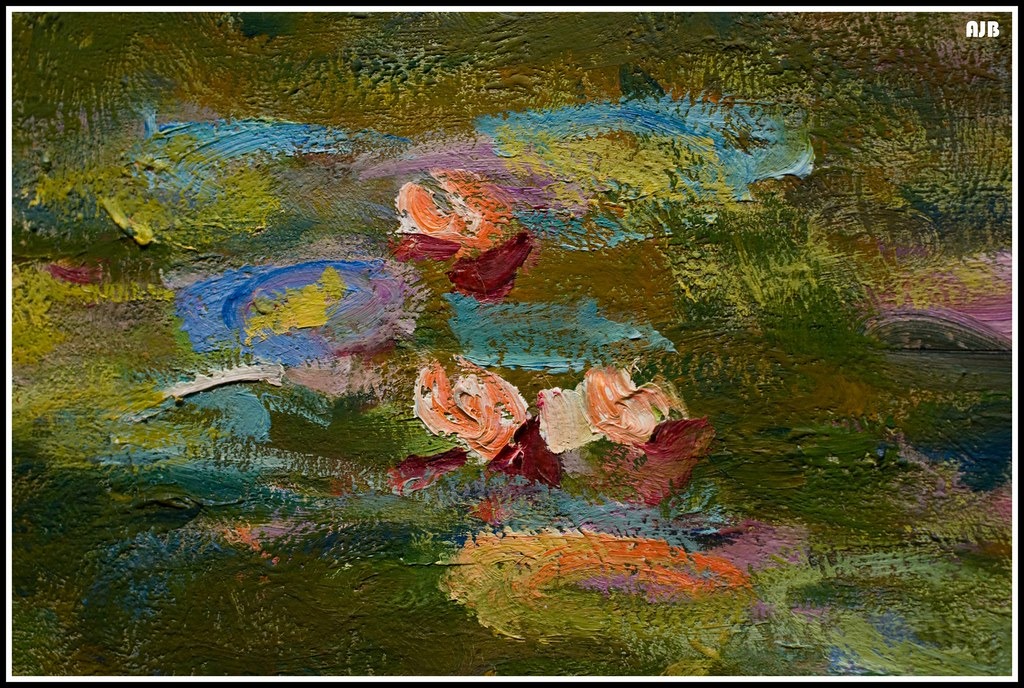
Most of you are familiar with the work of Monet. One of his most famous series was called Water Lilllies. He completed it from his home between the ages of 56-86. People don’t realize that he was blind with cataracts when he created this great work. He completed some of his most famous in the series in his last three or four years of life.
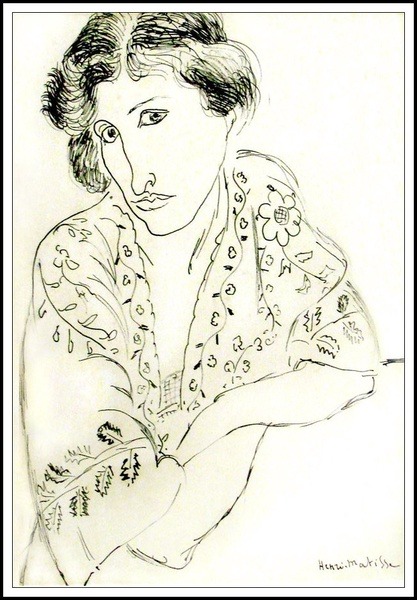
Matisse was a contemporary artist, confined to a wheelchair during the last 10 years of his life. He did some of his most famous work when most people thought he was done. They didn’t believe that anyone could be creative if they were old and left alone, disabled.

Georgia O’Keefe is recognized as the mother of American modernism. She specialized in Southwestern Art, but she had an absolutely historic series that she did of the inside of flowers. People thought it was erotic art, but it was the stamens and pistons of the interiors of orchids, dahlias and other big beautiful flowers. She lived to 98 and produced some of her most famous works in the last 10 years of her life.
If you’ve been to a Giant’s game, you’ve seen the work of Claes Oldenburg. He did the arrow & bow sculpture, "Cupid's Span," that is displayed in the field just outside of ATT&T Park in San Francisco. He was 84 years old at the time. No, he wasn’t up on scaffolding with a welding torch, but he did the design and supervised the artwork's construction and installation.

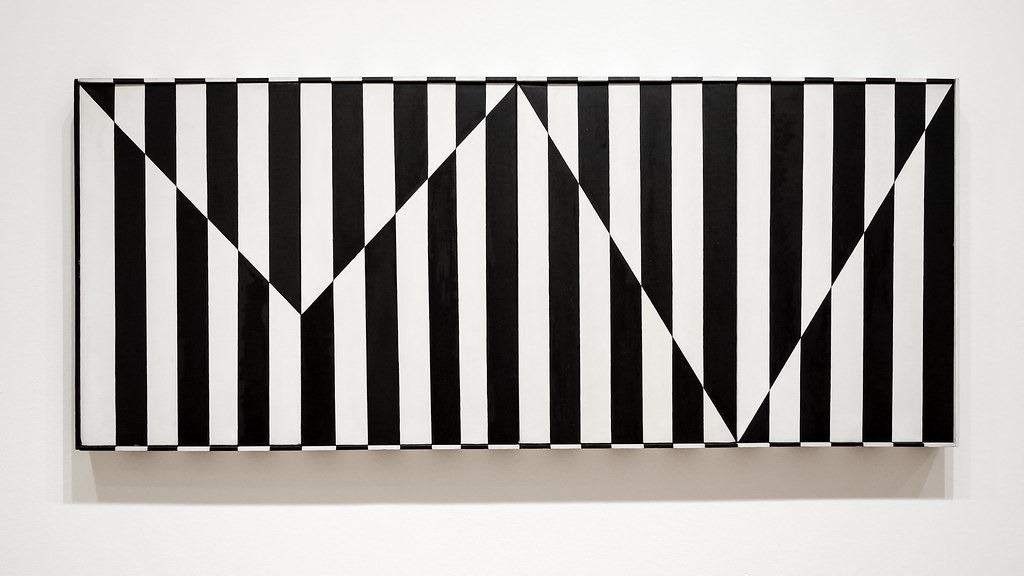
Carmen Herrera didn’t start painting until she was 80, and didn’t sell her first painting until 80. She lived to 98, and her work is shown in galleries all over the world.
It’s not just painters, though. Consider Pharrell Williams. He was a successful music producer in his 40’s when he released “Happy.” The song kickstarted an entirely new chapter of his career, and this “newcomer” took the charts, and The Voice, by storm.
Writers are frequently over age 50 before they see their first bestseller. James Michener published 40 books after age 40. Raymond Chandler, who wrote “The Big Sleep,” and six other novels, didn’t publish his first until age 44. Harriet Door was in her sixties when she finished her education, and at 74 won the National Book Award. And Millard Kaufman, who developed the cartoon character Mr. Magoo, was 90 when he decided to write his first novel.