🎓 Online Lecture: Aging and a Quest for Meaning
"Successful aging" is accepting what you are at this time. Not dwelling on what you could have been or forgot to do or couldn’t do or things you want to do that are no longer capable of it. Just being content. That’s not the right word either because contentment, I think, can lead to stagnation. But to be satisfied with where you are.” (Reichstadt et. al , 2010)
Gerotranscendence, Spirituality, and Religion
As we are all faced with an increasing life expectancy, many of us are realizing that age 50 is no longer the demarkation of the shift from young to old. It becomes a transition into a third (and perhaps extended) state of maturity that allows us to benefit from the work we have already done and progress into new arenas. This can be daunting. For many of us, the moment we were old enough to answer, we were asked what we wanted to do when we grew up. Some of us used that answer to help form our entire adult life. At a point in our later adult development, we realize that the period of being “grown-up” goes on long after we have reached those initial career and social goals. We are then faced with the question of what comes next; we experience a combination of anticipation and fear.
In a qualitative study done in 2010, it was reported that “older adults view successful aging as a balance between self-acceptance and self-contentedness and a desire to continue to grow and develop despite age.” The quest for that inner wisdom, or "life satisfaction," can take many paths. Some choose introspective processes, while others are more outward in their focus. There is no one right answer. There does seem to be a connection between the levels of life satisfaction and the ability to access a connection with a sense higher of purpose.
Think back to Erik Erikson's stages of adult development. According to Erikson, our task throughout the life course is to encounter challenges, and to develop the skills and tools with which we can overcome life’s obstacles, with the ultimate goal being that of transcendence into personal, spiritual satisfaction in late life.
One of the most important elements of Erkison’s theory relative to the 19 concepts of spirituality and creativity is that this period of midlife is when we have the greatest opportunity to pass along the wisdom of our accumulated years. If we have gained experience and knowledge, now is the time to flourish and contribute to the next generation. The sharing itself is beneficial to both the receiver and the giver of this knowledge. Northwestern psychologist Dan McAdams writes that “the truly generative adult wants to give of themselves to help others, a process that often involves a certain amount of pain and personal sacrifice. In return, they gain greater validation of their sense of self as well as benefitting from growth in their own generativity.”
Erikson’s final learning challenge is that of integrity vs. despair. This is the time in our lives when we take stock of our accomplishments and failures, and ask ourselves, “Did I live a meaningful life.” Can we look back on our lives with a sense of contentment and face the end of our lives with a sense of wisdom and no regrets? Will we come away with a sense of fulfillment from a life well lived or a sense of regret and despair over a life misspent?
Carl Jung believed that ‘individuation’ was the primary task of the second half of life. His research tells us that the move through midlife is a spiritual or religious journey, and embodies a search for a new and deeper meaning, value and purpose in life. He stated that in his treatment of patients in the second half of life “there has not been one whose problems in the last resort wasn’t that of finding a religious outlook on life.” The quest for our soul, embarked upon during midlife, can take us on some 23 unusual paths, from physical and spiritual pilgrimages to academic and intellectual exercises in faith finding. The goal is to “individuate,” or to become more fully who we are, to become more authentic.
Gerotranscendence
One theory that defines successful aging in terms of psychological well-being, instead of physiological functioning, is the theory of gerotranscendence. This theory is defined as “a shift in meta-perspective, from a materialistic and rational vision to a more cosmic and transcendent one” (Tornstam, 1989, p. 60). Looking through the lens of gerotranscendence, symptoms of depression and factors of life dissatisfaction, such as social withdrawal, role changes, and increased interest with the past are reframed as characteristics of successful aging (Wang, Lin, & Hsieh, 2011).
Religion and Spirituality
Formal spiritual practice creates a sacred space that reminds us of what we're doing, so we can find the still center in the eye of the storm. Then, within that space, we can live with chaos without freaking out. (Lama Surya Das)
While stress relief tools like diet, exercise, and interpersonal relationships are essential, many find stress relief through spirituality. There are many frameworks for understanding spirituality, so let’s spend a moment with some definitions. Religiosity and spirituality are not the same thing. (King & Crowther, 2004)

Spirituality is intrinsic. It is the belief structure you hold on the inside. It's your relationship with yourself and your neighbor, your God, your higher power, or your belief that no higher power exists.
It is possible to be highly spiritual but need no religious structure. It is also possible to adhere to a religious framework of ritual and form, but have little spirituality. Do you know someone who considers themselves a spiritual person, but never attends church? Have you known someone who goes to church and adheres to a highly religious structure, but outside of the church behaves in a way that is inconsistent with that doctrine? Does that inconsistency cause stress and tension?
Discussions about spirituality and how to define it, pursue it and experience it have been happening for at least 5000 years (Radhakrishnan 1989). Defining spirituality is a complex task. Most definitions are based on Western conceptions and lack cultural sensitivity. Studies have shown that there are two 26 pathways we can take to discuss how we fill our “spiritual cup.” The first path is one of spirituality, that inner experience and relationship that we have with our higher power. Religion, on the other hand is a way we organize around a particular belief structure or theology. Religious organizations vary widely, and have vastly different expectations, both of belief and behavior. The two paths are not mutually exclusive, in that many individuals use their religion as a pathway to find a relationship with their higher power. The term spirituality is frequently seen as a broader term, with religion as the way to organize spirituality into an every day context. Viktor Frankl suggested that spirituality is “the motivational and emotional foundation of the lifelong quest for meaning.”
Research shows us that both religiosity and spirituality are vital, and there's a direct correlation between those two components of the human experience and the ability to maintain hope and a positive mood.
But we use it differently.
Religiosity, or structured ritual practice like prayer, is used primarily as a coping mechanism. If we experience high levels of stress, rituals, rites, patterns and talismans are soothing and give us focus. The meditative space of prayer, rosaries, the attitude of supplication, are restorative. The community in which these rituals occur gives us reinforcement, communion, socialization and support. (Kwilecki, 2004)
Spirituality, the unseen internal mechanism of faith, can be experienced concurrently with religious rituals. It brings with it a sense of peace and wholeness.
We can be both spiritual and religious. A Gallup poll in 1999 reported that most Americans consider spirituality as “personal and individual” rather than as involving an “organized religion and church doctrine.” In the U.S. Census done in 2001, 80.4% of American adults reported an affiliation with some formal religious/spiritual group.
Research shows that religion gives people a sense of meaning in life. If we can explain why something negative has happened, or assign a level of intention to the act, we can find greater meaning in the suffering. There is a shared framework in a community of faith. (Nelson-Becker, 2005). Older adults demonstrate higher levels of religiosity, and report greater rewards from the ritual and social connectedness of organized religion.
The following video is one part of a larger training for gerontological nurses, but does a very good job at providing a glimpse into the spiritual and religious needs of older adults. The video runs about 9 minutes:
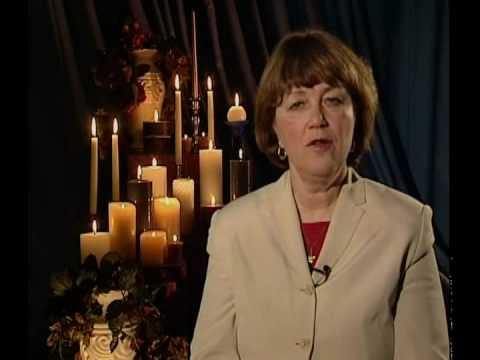
In his work developing the book “Spirituality and Aging,” Robert Atchley, PhD, found that subjects found spiritual experiences in a wide range of contexts. Some found spiritual experiences in religion, while others found a sense of connectedness through communing with nature, relating with others, doing service, and as part of their work. He became acutely aware that as Americans were aging, there was a growing interest in how spirituality influenced aging. His research showed that there was a clear connection between life satisfaction and spirituality. To that end, he developed a language to describe the qualities of a spiritual experience.
Pure being: deep inner space, silence, stillness, peace, equanimity
Discernment: clarity of seeing, interpreting, and meaning
Compassion: universal love in the face of suffering
Connection with the ground of being, direct and conscious
Transcending the personal self, “witness consciousness”
Wonder and inexpressibility, comfort with mystery and paradox Immateriality and intangibility
Confidence and trust in the spiritual process
Earnestness and motivation for a spiritual journey
Transformation
There are many pathways to finding meaning.

Single Focus meditation is something as simple as. (and your parents will hate me for this), playing a video game. It’s the act of blocking everything else out to the exclusion of one single focus. Perhaps it is reading a book, going for a walk or staring at a candle. For sewers, the thrum of a sewing machine, combined with the focus of not stabbing one’s finger, can be a soothing mediation. For runners or swimmers, meditation comes from the patterns of footfalls and breathing. Each allows our minds to clear the chaos,
Our meditations and rituals are a part of a psychological habit. You all know about muscle memory, and how the more you repeat a task like a batting cage or a bowling arm or a basketball throw can become automatic.
It is why we always put our military through boot camp and drill. The more I practice a ritual, the less I have to think about it. My actions become automatic, and my body conserves resources.
The same principle applies in the brain. If I repeatedly exercise the brain connections for forgiveness, love, or compassion, the more I use that neural pathway - either through religious ritual or spiritual thoughts - the more likely it will be my default. In times of stress or confusion, my brain will access the most reaction I practice most.
So if a religion or spiritual practice advocates compassion, the neural circuits involved in thinking about compassion get stronger and stronger and stronger over the life course. If you keep coming back to that. You will quickly access responses of kindness or compassion - picking up garbage, smiling at someone. You will have trained your brain to access positive actions and emotions, and experience lowered stress responses.
It is equally possible to make hate be our default characteristic. If your religion advocates hate of non-believers, or violence as a means to an end, the repeated exposure to those messages and rituals can program our default behaviors. If my scripture advocates hate, or teaches that if I don’t behave according to the rules, my God will smite me, I may live in a constant state of stress and anxiety. This can manifest itself into illness, heightened emotions, and cumulative stress that can cause an early death. The constant bombardment of stress hormones damages our bodies causes us to live in a stress state, but fear of talking about the stress makes us feel anxious. It can be a pretty intense negative feedback loop.
Many of you are too young to remember the Saturday Night Live skit featuring Stuart Smalley. The character is a motivational speaker who struggles with confidence and body image issues. Every morning before he left the house, he would stand in front of a mirror and repeat.
“I am good enough. I am smart enough. And, darn it, people LIKE me!”

This was his single-focused meditation and the act of developing a “self-fulfilling prophecy. The more we repeat positive messages, the more we can train our brain to believe our internal dialogue. (And this video makes me smile every time I view it!)
Think about the last dialogue you had with yourself. Looking at yourself in the mirror, most of us will see our flaws first. In this simple critical self-appraisal, we are training ourselves to see the flaws. Would you do that to your best friend? Probably not, because we wouldn’t want them to feel bad. So, why in the world would we do that to ourselves.
I take personal inspiration from the people featured in this next video - developed by Allure.com - that offers us a 100-Year old's Guide to Living Your Best Life. Enjoy!

Try flipping the paradigm. Science has shown that it is possible to reroute the negatives. Next time, smile at that face looking back at you. You ARE fabulous. You ARE smart. You CAN make a difference - so now, go DO it!