🎓 Lecture: The Changing Biology of the Aging Brain
 Our exploration of the aging brain needs to include conversations about aging changes that happen because of normal aging vs. that of a disease or other underlying biological change. How can we tell the difference between Normal Aging and Usual Aging ? What you see in the people around you who are aging may not actually be "normal aging." Biological changes may not be caused by the aging process alone. Sometimes, changes that are thought to be biologically related to aging are, upon closer examination, a result of social structures (institutions or attitudes), opportunities available, poor health habits, stress, or a number of other variables.
Under these conditions, many of the changes we observe in a human as they age may not result from just aging alone, but instead a complex interaction of beliefs, diseases, social structures, and values.
CONSIDER THIS:
Why are 50% of elders in nursing homes mentally impaired? Variables such as activity level, stimulation available (or not), prior social status and contacts, income, and gender must all be considered. In this case, aging may not be the clear cause of these mental disorders. What happens when the mind is not stimulated to prior expected levels? Could the mental impairment be caused instead by these social and environmental problems that can then create a biological illness and not the aging process per se? Think of it this way: What comes first, the changes in biology, then behavior, or do behavioral changes cause a change in biology? If the mind is a muscle and muscles waste when not use, could boredom or fear, or a number of other behaviors change biology? A social scientist must go beyond preconceived or obvious notions and expectations to conduct objective testing.
What Happens to our Cognition as We Age?
As we age, we experience changes in how our senses process the information around us. Our senses become less sharp, which makes it harder for us to notice details in our environment. These changes can impact how we live. If our hearing or our vision prevents us from communicating, enjoying our regular activities, or limiting our social life, our sense of belonging can deteriorate. Sensory changes can lead to us feeling isolate. We rely on our senses to inform us about our world, and it gives us a sense of safety and predictability. If we lose our ability to perceive sound, light, smells, taste, or touch, we can feel disconnected.
What can we do to offset any declines in our sense? We use technology! Prescription glasses can help with presbyopia. Yellow tints in those glasses can help with glare and even make it easier to drive at night. Hearing aids can help with sound amplification. Good dental work (and dental hygiene) can improve the taste of food.
What Happens to the structure of our brain as we age?
There are two ways to explore the changes that occur with the human brain during the aging process. The first is to explore the actual structure of the brain, and what "normal" vs. "degenerative" brain cells and structures look like. This course isn't designed to go into great depth about the biology of the human brain, but as you work with older residents, you will need to have a general understanding of how the human brain functions, and what can go wrong. Let's first look at the basic design of the brain as it experiences normal aging.
Please watch the video:
What Happens When Things Go Wrong?
The typical changes that accompany aging, both in our bodies and brains, can lead to some uncomfortable moments - physical discomfort and emotional embarrassment. My 54-year old body can tell you when it's been dancing too much because my knees swell. I also know how frustrating it is to walk into a room with great purpose and realize that I have no idea what I was looking for! These, however, are incidents of "normal" age changes.
It becomes necessary in healthcare (and life) to be aware of when something is going wrong. The problem can be acute - sudden onsets - like a burst appendix, a pulled or torn muscle, or a medication reaction that makes us suddenly confused or agitated. They happen quickly, unpredictably, and usually stand out as something OUT of normal.
The more insidious problems are the chronic issues that catch up with us slowly. They come on over a length of time, and we may not notice the problems until they become so intense that they get our attention. A good example of this is chronic pain. We start out with a small twinge in our shoulders, and by the time we really start paying attention to our pain, we can't lift our arms. (I speak from experience on this one.) . Maybe the symptoms are so subtle that we never notice them, and it is our friends or family who notice.
As our brains age, our mental abilities change. The first change occurs as we mature, developing strong neural connections while building brain tissue. The second change happens when those billions of complex interconnections start to decline. This is when we see movement and reflexes slow and a reduction in the capacity of sensory organs.
There are several neurodegenerative conditions that are more common among those over age 65. Parkinson's Disease, Huntington's Disease, Alzheimer's Disease, Multi-Infarct Dementia, Lewy Body Disease, and Multiple Sclerosis are all common degenerative diseases, and you will probably see patients with these diagnoses if you work in the field of aging.
If you look at the graphic below, you will see examples of four of these neurodegenerative conditions and the parts of the brain that they affect the most.
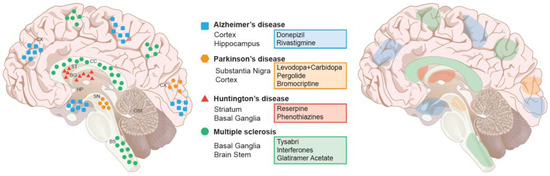
Different neurodegenerative diseases affect different parts of the brain. In order to understand what is happening in each kind of dementia, it is important that you know what each of these parts of the brain are used for:
The basal ganglia are group of subcortical nuclei responsible primarily for motor control, as well as other roles such as motor learning, executive functions and behaviors, and emotions.
The brainstem (brain stem) is the distal part of the brain that is made up of the midbrain, pons, and medulla oblongata. ... All of these brainstem functions are enabled because of its unique anatomy; since the brainstem houses cranial nerve nuclei and is a passageway for many important neural pathways.
The striatum is a subcortical structure in the forebrain that forms the major input to the basal ganglia. The striatum can be further subdivided into dorsal (caudate, putamen) and ventral (nucleus accumbens), and is implicated in regulating motor behaviors and responses to rewarding and aversive stimuli.
Substantia nigra is a relatively small yet very important structure in human brain. It is a motor nucleus present in the midbrain. Substantia nigra plays an important role in the regulation of movements.
The cerebral cortex is the brain's thin layer that covers the cerebrum's outer portion (1.5mm to 5mm). The cerebrum is the most highly developed part of the human brain and is responsible for thinking, perceiving, producing, and understanding language. Most information processing occurs in the cerebral cortex. The cerebral cortex is divided into four lobes that each have a specific function. These lobes include the frontal, parietal, temporal, and occipital lobes.
The hippocampus is a complex brain structure embedded deep into temporal lobe. It has a major role in learning and memory.
Why Do Things Go Wrong?
Nature or nurture- what is the source of mental illnesses?
We know a little bit about improving memory, but we know a lot about what makes it worse.
The biggest threat to our memory is Alzheimer's disease, which robs millions of people of their mental and emotional abilities (more about Alzheimer's later). High blood pressure, depression, and many other diseases also rob us of memory. Numerous drugs, particularly alcohol, can blunt our ability to remember. Some psychologists are supporting the notion that biological roots are the causes of many mental disorders. Others insist that the environment we are subjected to determines our mental health.
 I like to use the analogy of the sunflower seed to make this nature, nurture point. Say you have two sunflower seeds, a strong seed and a weak one. There are also two gardens in which the seeds can be planted. One has fertile soil and plenty of nutrients; the other is rocky and provides little of the nutrients the plant will need to grow. If a weak seed is planted in fertile soil, it may produce a more vigorous plant than if planted in rocky soil. But it will never be as healthy as the strong seed planted in the fertile soil. The healthy seed would not do as well in rocky soil. The best sunflowers are a combination of healthy seeds and rich dark soil.
We are not yet clear about what we can change about ourselves and what we cannot. That is when we can overcome our biology (nature), and when is our biology our destiny? Growing evidence suggests that heredity, and thus our biology, influences disorders like schizophrenia and bipolar illnesses. But we also live in an age of self-improvement, and millions are struggling to change. Many people make sweeping changes in their lives when faced with adversity. People work through phobias, depression, anger, alcoholism, stress disorders, and a host of other issues.
Aging does not cause mental disorders; however, because younger people with mental disorders eventually grow old, many older adults will have these disorders.
How do we decide just what is mental illness?
There are no clear-cut boundaries for defining what is and is not a mental disorder. We all experience common feelings when faced with another person with a mental illness. We may notice that someone's behavior is atypical or maladaptive, we might feel uncomfortable, sensing that the person is disturbed. We might even feel in danger. Our discomfort often stems from the unpredictability of the person's behavior. One definition of a psychological disorder is "behavior that is atypical, disturbing to others, maladaptive and unjustifiable" Many experts include the caveat that the behavior must interfere with your daily life.
A reference book by the American Psychiatric Association was designed to help us diagnose psychiatric disorders. The fifth edition of the Diagnostic and Statistical Manual of Mental Disorders is known as the DSM-5. It differentiates between function disorders (those with an emotional rather than physical origin) and organic disorders (those that have a biological origin).
Functional Disorders
Are mental processing and cognition changes more common among older adults? Yes, absolutely. However, in many cases, the condition itself may have been an underlying issue during the person's life that are exacerbated by conditions of life that can come with aging.
In any conversation, we have to ask about some changes that can come with normal aging. Let’s be clear, yet again, that aging is NOT a disease, and while some older adults may experience some decline in cognition and function, most will not.
Some conditions seem to increase in incidence as we age, and you must have a sense of each of them. Why? Because as the population ages, we will see more significant numbers of individuals being diagnosed with the conditions most frequently associated with the "older aging brain." You need to know what these conditions look like, how they develop, and how they are treated.
Anxiety Disorders
The diagnosis of "anxiety disorder" covers a wide variety of categories. Anxiety disorders are fairly long-standing disruptions of normal living patterns characterized by anxiety - there is a vague feeling of fear and apprehension. Anxiety Disorders include:
Panic Attacks are periods of extreme anxiety usually resulting from intense stress. Panic attacks look like hyperventilation. They experience heart palpitations, sweating, shaking, shortness of breath or choking sensations, nausea, and chest pain.
Phobias are also considered anxiety disorders. Patients with diagnosed phobias are usually able to function on a daily basis but have an excessive, irrational fear of something. Some common phobias include an intense fear of animals, height, water, closed spaces, crowds, blood, and needles.
Obsessive-Compulsive Disorders are characterized by repetitive thoughts or obsessions and uncontrollable constant urges.
Generalize anxiety - free-floating or constant tension, not knowing why. In today's world, many sources of fear, anxiety, and stress exist. Some can be considered a normal part of life; others can be the result of chronic long-term stress (such as war, poverty, conflict with parents, alcoholism)
Hypochondria - extreme concern with health issues that have no physical symptoms
Affective Disorders
Sometimes called "mood disorders," the DSM-V uses the term "bipolar disorder" to describe behaviors that fluctuate between depressive and manic.
Symptoms may range from moderate to severe. When mania is moderate, only people close to the affected person may be able to spot the symptoms. These symptoms may include:
- an excessively "high" mood
- irritability
- decreased need for sleep
- increased energy
- increased talking, movement, and sexual activity
- racing thoughts
- disturbed ability to make decisions
- grandiose notions
Personality Disorders
Personality is developed early in life and is based on inborn traits, relationships with others, and our environment. There are many types of personalities. One may be an extrovert or introvert, optimistic or pessimistic, accepting or suspicious, or a variation of many other traits.
Theory points to continuity in our basic personality throughout life. We are not likely to change who we are. Instead, we just fine-tune our qualities and become more fixed or inflexible. It is not impossible to change our personalities, but it is very difficult. For example, if one's personality is exceptionally assertive when young, that trait may develop into aggressive behavior when older. Or being thrifty with money may develop into the inability to purchase needed supplies when older.
As adults, personality disorders or antisocial behavior may manifest itself in an inability to hold down a job, marital and parental irresponsibility, or in criminal behavior.
People with personality disorders usually have long-standing, rigid, maladaptive, and inflexible ways of relating to stress throughout their lives. They exhibit patterns such as attention-getting or exaggerated self-importance that impairs a person's social functioning. Certain personality types in young adults lend themselves to disorders. These might include:
- paranoid personality- extremely suspicious and mistrustful
- introverted- solitary persons who lack the capacity for warm, close social relationships
- antisocial – un-socialized behavior that conflicts with society
It is important to remember that personality disorders are not the result of aging but the result of a lifetime of unresolved personality difficulties.
Schizophrenia
Schizophrenia is a cluster of disorders in which a split from reality shows itself in disorganized thinking, disturbed perceptions, and inappropriate emotions and actions. It is usually diagnosed in early adulthood. Often the person affected perceives things that are not there, and they hear voices from outside their head that give orders, which often causes withdrawn behavior.
These perceived things are called delusions (false beliefs such as "I am Napoleon") and hallucinations (an image or vision that is nonexistent such as, "Napoleon is here with me.") Hallucinations and delusions affect their speech and thoughts. These two dimensions were dramatized in the movie "A Beautiful Mind."
Word Salad: Many people with schizophrenia exhibit something called word salad. This is a language that, at first, seems like a normal conversation. However, upon close listening, it is evident that the ideas do not connect and the words used are not part of the language spoken.
Here is a close example of word salad: I was gonna, and my kettywamp got in there, but no one was there
One affected with this mental illness can often be suspicious or angry about supposed enemies. They may also feel tormented by these delusions and hallucinations.
The exact cause of schizophrenia is unknown, but the disease does run in families. A prenatal virus is suspected because babies born in winter are more prone. The theory is that they may be exposed to a flu virus while in utero. A neuro-transmitter called dopamine is excessive at the receptor site, causing the brain's signals to fire excessively. It is interesting that a lack of dopamine causes Parkinson's disease.
Depression
Feeling gloomy, despondent, broken-hearted, dejected, and sad are depressive emotional states. All of us experience depressive thoughts at times. Depression is not age-specific and is experienced by teenagers, young adults, mature adults, and older individuals. It is actually one of the most common mental disorders that we find among older adults, yet it is one of the most frequently misdiagnosed.
Depression affects 10-15% of the general population. Older adults living in skilled nursing facilities are more likely to be depressed than any other population segment. (Christmas, 2003).
Depression is more common in women than in men, but it is impossible to predict who will develop depression. Women show more symptoms of depression when they are young, but after age 85, the gender gap disappears. Is it that women truly experience more depression? No. It is that women are taught to address those symptoms, where men are taught to internalize them.
Because depression can look like other illnesses, with symptoms of headaches, back pain, joint pain, and stomach problems, most major depression of older adults is treated in the context of primary medical care, and the underlying depression often goes untreated. These physical symptoms are called somatic symptoms (meaning body symptoms).
When depressed, older people often speak of their physical problems rather than feeling anxious, tired, or sad. A mental health practitioner treats only a small percentage, and thus, the underlying problem is never treated. Because of this, somatic symptoms do not respond to treatment.
Older adults with long-standing, unresolved issues often act out their losses in later life. Un-grieved loss is pushed below consciousness, becomes a part of their personality, and resurfaces in full strength as they age.
These adults are often labeled as difficult by caregivers. Because gerontologists believe that all behavior in older adults has meaning, providers need to explore what losses the client may need to grieve.
What causes depression?
Studies show that isolation, medication, chronic poor health, and isolation are key triggers. Depression can be caused by illnesses (such as strokes, cancer, diabetes, or hormonal disorders), or it can be caused by medications to treat those illnesses (drugs used to treat high blood pressure and arthritis). It might be caused by genetics (depression runs in families), personality (low self-esteem or very dependent on others), or life events (death of a loved one, divorce, moving, money issues), or any sort of loss.
Sadness and grief are normal responses to loss, but experts warn that professional help should be sought if four or more symptoms last more than two weeks. It is important to note that depression can also present with confusion, distraction, and irritable outbursts, which may be mistaken for dementia.
There is a vast difference between "having a bad day" and having clinical depression.
Clinical depression is described as:
- A sense of hopelessness
- Feelings of worthlessness, helplessness, or guilt
- A loss of interest in activities that were once pleasurable
- Fatigue or lack of energy
- Challenges with decision making, short term memory, or detail
- Excessive sleeping or insomnia
- Loss of appetite
- Suicidal thoughts
- Pain - aches, headaches, cramps, digestive problems
Unfortunately, depression is often misdiagnosed as dementia and left untreated. Why? The beginning signs of dementia actually look a lot like depression. We may see the older adult not getting out of bed in the morning, or forgetting to take medications, being distracted, or losing worlds, and we say, "oh well, that's just Mom. She's getting old and developing dementia."
Another complication to diagnosis is that older adults may be embarrassed by physical changes/losses and find it easier to be aloof than to ask for help. They may be housebound due to health problems or their ability to drive. Increased isolation increases the risk of becoming depressed or paranoid. There is an increased risk of suicide among the elderly. In fact, approximately 1/3 of all suicides are by those over age 60. Suicide attempts by older adults are NOT cries for help, but a desire to end life.
How is Depression Different for Older Adults?
Recent studies reveal that roughly 15-20% of older people suffer from mild depression, and less than 2% are clinically depressed. (Kant, et al., 1997; Gouldner, 1960; Richardson & Hammond, 1996). However, it is important to acknowledge the link between chronic disease and depression. We know that most older adults have a chronic illness, which does increase risk factors for depression.
Of greater concern is misdiagnosis. Symptoms of depression may be mistaken as a natural reaction to illness or life changes. If the older adults share the belief, they may not seek treatment because they don't understand that their symptoms could be appropriately treated.
Additionally, the symptoms of depression often mimic those of early-onset dementia. If we assume that "all older people develop dementia," we may be overlooking a viable treatment option. Before making any dementia diagnosis, it is good practice to first screen for depression.
How Many Older Adults Are Depressed?
The good news is that the majority of older adults are not depressed. Some estimates of depression in older people living in the community range from less than 1% to about 5% but rise to 13.5% in those who require home healthcare and to 11.5% in older hospital patients. (Zeiss et al., 1996, CDC 2020)
Bi-Polar Depression-
Also called mania (or manic depressive disorder), people suffering from bi-polar disease experience extreme mood swings from deep clinical depression to high euphoric mania.
Symptoms may range from moderate to severe. When mania is moderate, only people close to the affected person may be able to spot the symptoms. These symptoms may include:
-
-
- an excessively "high" mood
- irritability
- decreased need for sleep
- increased energy
- increased talking, movement, and sexual activity
- racing thoughts
- disturbed ability to make decisions
- grandiose notions
Help for Depression
There are three major types of treatment for clinical depression:
Psychotherapy – cognitive therapy that looks at the person's thought process and flaws in thinking. This rarely works in the end stages of life. The goal then is to validate the person's feelings and the usefulness of their life.
Medication - medications are known as "mood stabilizers" usually are prescribed to help control bipolar disorder. A mineral called lithium, the first mood-stabilizing medication approved by the U.S. Food and Drug Administration (FDA) for the treatment of mania, may be used with other mood stabilizers.
Biological treatments (such as electroconvulsive or shock therapy for severe cases or surgery). Electroconvulsive therapy (also called ECT therapy) has been around for many years. It is the center of passionate debate about its usefulness in depression. Many say, without ECT their lives were unmanageable, others say it ruined their lives.
(Links to an external site.)
Suicide
Major depression is a predictor of suicide in older adults. Between ages 60-80, we see men commit suicide at staggering rates. In fact, per-capita suicide rates among white men in that age group are the highest in the nation. Nearly 5% of older primary care patients who are depressed are suicidal. That is almost double the number of the general population.
According to the American Association for Marriage and Family Therapy, "older adults make up 12% of the US population, but account for 18% of all suicide deaths." (ASI, 2020)
- White males are at the highest risk of suicide. Researchers think it is because aging often brings about a big step down in status.
- Men are more likely to kill themselves by violent means (such as using a handgun), and women are more likely to overdose with medications or poisons.
The danger period is when the patient seems to be coming out of the depression. Depressed people lack the energy level and motivation to carry out a suicide attempt. When the depression starts to lift, one might gain the energy to carry out well-laid plans to end his/her life. For that reason, experts suggest prevention strategies for severely depressed individuals when they seem to be regaining their strength.
Imagine, you are not feeling right. So, you go to the doctor. Think about the last time you went to the doctor. How long did you have to talk? On average it’s about 7 minutes. That just simply isn’t enough for a doctor to move from the diagnostic question of, “Okay, what’s going on?” The chief medical complaint is, “my stomach hurts,” or “I can’t sleep.” Instead of investigating the root cause of the complaint, the patient leaves with antacids or sleeping pills that just compound the depression. In fact, Ambien and Prilosec are two of the most frequently prescribed medications among our older population.
Unfortunately, many medical professionals do not diagnose depression but focus on the complaint that may bring the patient into the doctor's office. Startling statistics tell us that up to 40% of the older adults who commit suicide have actually visited their doctor for another complaint within one week of their suicide attempt.
Because of generation issues, fear, or other stigma attached to suicidal thoughts, these patients have created a reason to visit their doctors, who might have identified their condition had greater screenings been performed. Interestingly, depression is often diagnosed as dementia because major depression actually can mimic the symptoms of depression (cognitive impairment, memory loss, inability to function)
Please watch this video:
Chemical Dependency
The ease of access to prescription drugs has led to one of the fastest-growing epidemics in America. We have a late-life substance abuse problem.
Chemical dependency and substance abuse are problems for every age group, especially older adults. Chemical dependency includes additions to alcohol and legal, illegal, prescription, and over-the-counter drugs. The term "addiction" is defined as the overwhelming need or desire to continue using a substance at whatever cost, with a tendency to increase the dose over time.
Of the 3 million people over the age of 65 in the United States, it is estimated that 10% suffer from chemical dependency. This population is the least likely to be "found out" because alcoholism or chemical dependency symptoms are often misdiagnosed as a real medical condition. We are more forgiving of the older alcoholic in our society and simply expect grandma or grandpa to be taking a myriad of medications. (Simoni-Wastila, 2006) We simply don't question.
However, our lack of questioning can lead to serious medical conditions. If substance abuse influences our ability to care for ourselves and make good decisions about our healthcare, we will become sick. If we misuse our medication, we can worsen our conditions or even create new ones.
Misuse vs. Abuse
Sometimes medications are misused because of poor instructions or labeling or a misunderstanding of medication administration. This sort of misuse can certainly lead to a medical crisis but is not generally the result of an addiction. Medication and substance abuse are different. It is the deliberate use of a drug for non-medical reasons. Most often, people use substances to create the desired effect. Most common among older adults is the misuse of over the counter and prescription drugs. Considering the number of medications that are available and the effects of each drug, the combinations of symptoms and outcomes are virtually endless. Many hours of study are dedicated to the concept of "poly-pharmacology ," where doctors and other medical professionals are trained to recognize drug interactions.
Alcohol abuse is very common in our society, regardless of age. We see a huge population of elderly alcoholics. Why do older people drink? The same reasons that younger ones do! Physical ailments, limited financial resources, loss of a job, loneliness, depressions, the list can go on and on. We are also noticing an alarming problem with increased narcotics, particularly opioids, among our older population.
Alcohol abuse, depression, and delirium, are primarily caused by circumstances that are, I want to say within our control, but we may be able to mitigate more easily than those conditions that our bodies do to us organically. I've shared with you that I grew up with a parkinsonian, so I have firsthand knowledge of what can happen with an older adult whose brain functions just fine in terms of intellect and cognition, except in one tiny little area and that one tiny little area can't be fixed, and impacts everything else.
Organic Neurodegenerative Disorders
According to the Memory and Aging Care Center at UCSF, it is normal to have some mild cognitive changes as we age. Most of these changes are subtle and will primarily impact the speed of thinking and attention control. Let's first talk about organic mental disorders. They arise from physical origins that affect cognitive function. It is estimated that 11% of the older population experience some form of organic mental disorder (NIMH, 2009) and that 6% of the population over age 65 have severe mental decline based on physical sources. As age rises, the incidence also rises, with some estimates as high as 50% for those over age 85. (Zweig, 2008).
If the declines are substantial or sudden, we consider those changes "abnormal," and they get our attention. Rapid forgetting, difficulty navigating, problem-solving, verbal capacity, or behaving outside of social norms are all signals that something is wrong. Motor system changes can result in tremors, tripping, and increased fall risk.
It can be challenging to determine when we should be concerned about cognitive changes. Symptoms can look different from person to person, and what is normal for one may be abnormal to others. Medical providers and families need to have a sense of what is "normal" for an older adult so that they can determine when a significant change in cognition has occurred. This requires spending time and having a history with the older person, which is why most gerontologists support having long-term relationships with caregivers and family so that they can be aware of changes that might be out of a normal pattern for an older person.
Parkinson’s Disease
Parkinson's disease is among many progressive neurodegenerative organic disorders. It affects how we move. It is the second most common neurodegenerative disorder and the most common movement disorder amongst older adults. Tremors and rigidity of movement characterize the disease. It is progressive through stages, with some sufferers ultimately confined to bed or wheelchair.
What does Parkinson's look like?
If you see someone with Parkinson's disease, you will notice their structure and stature are different. Look at their posture and the way they walk. They don't swing their arms in a normal gate. If there's a tilt forward to the shoulders and what we call a Parkinson's mask that sort of looks like a blank facial expression, but it's really not. There are very slow speech and movement patterns, matched with muscle rigidity. The average onset is 60, but we do see younger people experience early onset. It is not fatal and does not affect cognition until very late in the progression of the disease.
What causes it? We don't know. We do know that it is rarely diagnosed before age 40, with an average age of diagnosis between 50-79. It is about 50 percent more common in men than women, and is more prevalent in developed countries. There is hypothesis that the increased incidence in developed countries is tied to increased exposure to pesticides and toxins. (NINDS, 2020)
How do we treat Parkinson’s Disease?
At this point, we have treatments for Parkinson's disease that can lower the outward symptoms caused by the deterioration of the substantia nigra, and the decrease in naturally produced dopamine. We don't have a cure, because we simply don't know what the cause is. Most recently, I have been having conversations about the efficacy of medical marijuana in terms of treatment for Parkinson's disease symptoms. I found a video showing the striking differences, and wanted to share it with you.
Isn't that fascinating? I am an advocate for non-manufactured treatments for anything, so the fact that something so organic can make such a difference is really exciting to me.
Sporadic Prion Disease (Creutzfeldt-Jacob Disease)
One neurodegenerative condition that is not age-related, but looks like it symptomatically, is Creutzfeldt-Jakob disease, which is actually the human version of mad cow disease. The symptoms look exactly like traditional dementia. The difference is, the trajectory of the disease is less than one year. So within one year of diagnosis, you have developed full-blown dementia, and death comes shortly thereafter. There are only 300 cases a year. But that onset looks just like dementia. It is imperative that you know that this is the diagnosis because it helps the family prepare. Do you buckle in for the long term, where a normal dementia progression can be between 5 to 10 years? If you know that you have one year, you know what you need to do. You know what to put in place. For more information on Sporadic Prion Disease, visit the USC Memory Care Program: https://memory.ucsf.edu/dementia/rapidly-progressive-dementias/prion-diseases Links to an external site.
(Links to an external site.)
Pick's Disease
Picks disease is another non-age specific neurodegenerative conditions. It is caused by a buildup of tao- proteins in the neurons that accumulate into something called a pic body that causes cells to be damaged. How do we know that it is Picks disease? One of the first things that happen is a loss of language and disorientation and memory loss symptoms. Picks disease progression is quite rapid, with deaths occurring between 2 to 10 years of diagnosis. (NINDS, 2020)
Please watch this video:
Huntington's Disease
Huntington's disease (HD) is a fatal genetic disorder that causes the brain's progressive breakdown of nerve cells. While not age-related, HD appears between the ages of 30-50 and worsens over a 10-25 year trajectory. Symptoms manifest like a combination of ALS, Parkinson's Disease, and Alzheimer's simultaneously. It is a degenerative condition that has no cure. Everyone has the gene for HD, but only those who inherit the gene's expansion will develop HD. However, every child of a parent with HD has a 50 percent chance of inheriting the faulty gene. Today, there are approximately 41,000 symptomatic Americans and more than 200,000 at-risk of inheriting the disease. (HD.org, 2020). Over time, HD will affect the ability to walk, talk, or reason. Causes of death include pneumonia and heart failure.
Please watch this video:
Amyotrophic Lateral Sclerosis (ALS), also known as "Lou Gherig's Disease
ALS, or amyotrophic lateral sclerosis, is a progressive neurodegenerative disease that affects nerve cells in the brain and the spinal cord. ALS affects individuals between the ages of 40-70. Over 5000 people are diagnosed each year, and only four drugs are currently available to treat the symptoms of the disease. The average lifespan after diagnosis is 2-5 years, and while 10% of incidents can be traced to a genetic factor, 90% of cases occur without a family history.
If we break down the name, it is easier to conceptualize the condition. "A-myo-trophic," in the Greek language, means "no-muscle-nourishment." This lack of nourishment leads to muscle atrophy. "Lateral" refers to the spinal region of the body that controls nerve signals and muscle control. "Sclerosis" is a hardening or scarring. So, what is happening is that the progressive degeneration of motor neurons leads to a loss of motor function, the ability to speak, eat, move, and breathe. Early signs of ALS manifest in voluntary muscle actions like walking, stepping off the curb, dialing a phone, or even slurring of speech. (ALS.org, 2020)
Please watch this video:
Delirium
By definition, an "acute disorder" is something that comes on quickly. In a category of its own, delirium can be caused by a number of factors. It is very quick to come on can be very frightening and disorienting to both the person experiencing it AND the people around them. Delirium is NOT an age-specific condition. In fact, you can experience delirium at any age. For the purposes of this class, though, let's just think in terms of an older person.
Delirium is most often seen as an abrupt, sudden onset condition that causes a reduced attention span and disorganized thinking. There is a marked decrease in the level of consciousness, and perceptual disturbances, including hallucinations and illusions. There may be an increase, or significant decrease, in psychomotor activities. Many patients with delirium experience disorientation to time and place.
Delirium falls under the classification of "acute brain disorders." It is a sudden onset condition that can last minutes or hours. Recovery from a delirium state is almost always complete, with generally slight or nonexistent permanent effects. There are many causes of delirium, including fever, nutritional deficiencies, medication reactions, even bladder infections, and dehydration.
Delirium is common in end-of-life elders and may be brought on by medication, poor nutrition, stress, or a heightened emotional state. Treatment for delirium MUST be provided under the direction of a physician.
Please watch this video:
and finally:
Mental Health Matters: Depression and Anxiety in Older Adults
licensed under a CC BY-NC-ND 4.0 license.
On June 8, 2016 the [McMaster Health] Forum hosted a public talk at McMaster Innovation Park featuring Michael Landsberg, host of TSN’s Off The Record and well-known mental health advocate. He and Dr. Doug Oliver, a family physician with a passion for supporting older adults' physical and mental health, engaged in an open discussion on depression, anxiety and other mental health challenges facing older adults.
Mental health issues impose an enormous disease burden on societies worldwide, with depression alone affecting 350 million people globally. One in ten Canadian adults will experience major depression at some time in their lives. For older adults living in institutions, the rate of anxiety and depression increases significantly. The social stigma around mental illnesses presents a serious barrier to diagnosis and treatment and acceptance in the community.
This public talk was organized by the McMaster Health Forum and was supported by McMaster University’s Labarge Optimal Aging Initiative.