✅ONLINE LECTURE: Old Age and Poverty
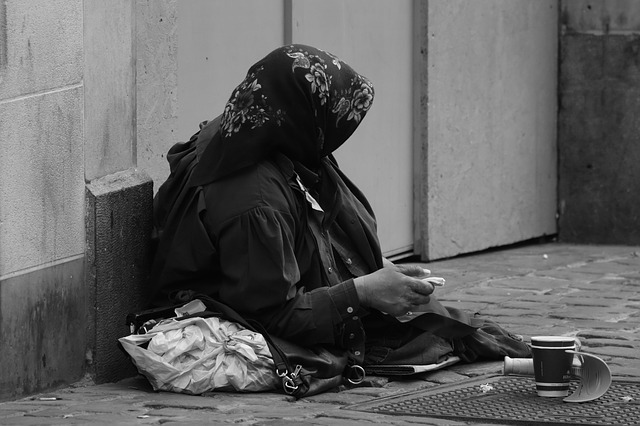
Aging Americans, like other age groups, are feeling the effects of the declining real estate and stock markets, as well as soaring fuel and food prices. Seniors’ economic security will only increase in importance as the U.S. population ages. Currently, 3.4 million seniors age 65 and older live below the poverty line. Millions more are barely making ends meet just above the poverty line. While 9.4 percent of seniors had incomes in 2006 below the poverty threshold of $9,669 for an individual, and $12,186 for a couple, nearly a quarter of older Americans (22.4 percent) had family incomes below 150 percent of the poverty line. If we had a better measure of poverty, the elderly poverty rate would be considerably higher.
Poverty - An Issue for the Aged
As costs for food, housing soar, and the real estate market and interest rates fluctuate, aging Americans feel the pinch as much as the rest of the population. Layer on the 2020 Pandemic, and we have a lot of people in crisis. Economic stability will only become more important as our population ages. It is estimated that 25 million seniors (age 65+) live at or below the poverty line. Millions more are barely making ends meet. In 2020, 2.1 million older adults were living on just $435 per month. (ncoa.org, 2020).
We have a poverty issue in the United States, yet, the population over the age of 65 has a lower poverty rate than any other age group. 90% of the population over the age of 65 living above the poverty line. As a discrete group, single, minority, female older adults have the highest poverty rate.
According to a 2020 report by the Center on Budget and Policy, the biggest contributor to keeping more older adults out of poverty is Social Security. It estimates that without Social Security, 21.7 million older people would be poor. In 1959, the poverty rate among older adults was 35 percent. By 1974, that rate had dropped to 15 percent. Much of the credit goes to a combination of Social Security and Supplemental Security Income. These two programs are vital to our lower-income elderly's welfare, especially among women and people of color.(americanprogress.org, 2020; Meyer & Wu, 2018)
Cumulative Disadvantage
I introduced a concept in an earlier lecture, but I want you to become familiar with, called cumulative disadvantage. The central premise is that inequality is not static, but is a cumulative process that unfolds over the lifecourse. (O'Rand, 1996). If we start out with less, we have reduced opportunities to gain. Women experience this at a higher rate than men at almost all points of their lives. (Crystal & Shea, 1990)
A disparity in earnings throughout our lifetime also impacts our financial fragility. Over an average work-life, women will earn $400,000 less than our male counterparts at the same job. A man's average Social Security benefit will be about $1600; the average woman's benefit is $13,000. Certainly, women are in the workforce more, and we're getting paid more for their labor. However, as a female population, we have also been expected to perform a greater proportion of unpaid work, including caregiving and house management. (O'Rand, 1996)
In contemporary America, we see men doubling the amount of time spent doing domestic work. However, it still seems to most frequently be the woman's work-life interrupted by caregiving or other familial responsibilities.
When it comes to Social Security laws, tax benefits and the law benefit the traditional household, where men are the primary earners. Can we fix that? Yes. We can fix that through gender recognition and by taking into account that there are differences. If we expect women to leave the workforce more readily than men, maybe we need to re-calculate how we compensate the Social Security program.
Historically, the population of older women did not work pensionable jobs. And if they did, they had their pension contributions interrupted by Familia responsibility, and therefore have less money in their pension to pull from.
Retirement Equity
In 1984, the Retirement Equity Act was passed. It mandated that pensions be split as a part of the divorce decree. Before that time, whoever was the primary earner kept his Social Security or other pensions. (Guin, 1985).After a divorce, the person who stayed at home and didn't have any wages earned was not permitted to access it. Can you imagine making a partnership where you agreed to stay home (regardless of your gender), and you found out that you were entitled to nothing if your marriage ended? No, thank you! Now, if you've been married for more than ten years, you are entitled to 50% of your former spouse's Social Security, and any states consider all post-marital earnings to be shared assets.
Social Security accounts for the non-working spouse in how it awards pension money. The working spouse received 100% of their earned entitlement, and as long as the working spouse is alive, the non-working spouse gets 50% of the worker's benefits.
Married
Worker - receives $1500
Spouse (assuming no work history)- receives $750
Total when married: $1250
Divorced or Widowed
Spouse (assuming no work history)- $750
If the marriage ends, the calculation is slightly different. In widowhood, the surviving non-working spouse receives the deceased's full benefit and loses their "spousal benefit." Total when widowed: $1500
If the couple was married for more than ten years, upon turning 65, the non-working spouse is eligible to receive 50% of the amount earned by their former spouse. Total when divorced: $750. (Note: this award does not reduce the worker's social security pension.)
Predictors of Poverty

What are some of the predictors of poverty? We know that being single, particularly black or Hispanic, and female with no working history is the greatest combination of factors to predict poverty in the United States. This group has historically low life Time earnings and relied on their spouses for public pensions. I think this will change as we have more and more people of non-white ethnicities getting education and training, and as women are encouraged to engage in the workforce. I also think it's going to change as more women have an opportunity to put money into pensions. Right now, however, that's the snapshot we are looking at.
We know that there are any qualities between gender and ethnicities. I'd like you to do some outside reading, including this particular article, elderly poverty, the challenge before us. You'll see that gender and ethnicity are indeed profound influencers of our well-being later in life.
Why is it that women and minorities have lower incomes? Well, they haven't had an opportunity because lower-income jobs don't allow us to develop portfolios of stocks and bonds in rental properties. Women are less likely to receive income from private work-related pensions, and their income is generated through Social Security. Social Security becomes more important and takes up a larger percentage of take-home pay for older women. According to the Centers for American Progress:
- Over 2.3 million women over the age of 65—11.5 percent—live at or below the poverty line, while slightly over 1 million—6.6 percent—of senior men live in poverty.
- Nearly one in five—19 percent—of single, divorced, or widowed women over the age of 65 are poor, and the risk of poverty for older women only increases as they age.
- Women ages 75 and up are over three times as likely to be living in poverty as men in the same age range. Only 416,000 men in this age range live at or below the poverty line, while over 1.3 million women ages 75 and up are poor.
- Among married women, longer female life expectancy makes it likely that they will outlive their spouses and be without any additional income sources they bring to the household.
Ethnicity
-
So let's add that to what you know about ethnicity. We know nationwide we are heading toward a majority-minority where no one ethnicity is the majority and that there will be almost equal spread between ethnic groups. These groups' financial needs are still the same, but how we adapt to this radical change is going to need to be different. We need to first be aware that within the population, we are radically diverse. Generations have immigrated to the United States with a certain amount of cultural expectation with any age group. There has been a level of enculturation to the United States' philosophies among the children of those immigrants. First-generation immigrants are very different from their children and their grandchildren.
If we look at our current population over age 65, we see that people of color are more likely to experience poverty. Because of employment history, they are less likely to receive private retirement benefits and rely on Social Security to offset savings. They are less likely to have asset income (interest, dividends, rental income). (Elmelech & Lu, 2004)
African American elders currently represent only 9 percent of older Americans, yet they represent 21 percent of the elderly living at or below the poverty line. Exclude social security from incomes, more than 6 in 10 African Americans and Hispanic Americans would be poor.
Acculturation - A Cautionary Tale
In Northern California, in a community called Hayward, we have a group of moms who were relocated when the United States military decided they wanted to use some of their islands in the Pacific ocean to practice dropping bombs on. Will be located them. They brought their children. Remember, this is a culture that take care of multiple generations at a time, through a cultural phenomenon called filial piety.
The children, in many cases second-generation immigrants, have enculturated, and decided that they don't want the caregiving responsibilities that their parents have counted on. So, we have an entire city that is desperate for senior care, because the children have moved away, and the seniors made no plans for their route on retirement. They are living in poverty, and at risk, because of acculturation.
Non-Pensionable Work
Hispanic origin groups historically had lower income and correlated higher property rates, particularly among Puerto Ricans and Mexicans. Many of the older immigrants worked in occupations that may not have been covered by Social Security, and they are therefore eligible for Social Security and Medicare. Maybe their work was irregular, so they didn't qualify for private pensions.
Red-Lining
African Americans are one of our largest minority groups but have experienced racial discrimination in housing and jobs and where homes can be purchased. Called "redlining," this practice occurs when someone of a different ethnicity is directed away from the more affluent community. So, by blocking real estate opportunities, they are blocked the possibility of accumulating equity in their homes.
Opportunity
Asian Americans seem to have transcended a lot of those barriers. Perhaps it's because of the strong value of education. We know that currently, among all of our immigrant groups in the United States, they are the most prosperous, second only to what I call the first wave of immigrants who were primarily northern Europeans.
Conversely, American Indians have the highest unemployment rates and the highest mortality rates. Certainly, the healthcare system has improved for them over the last 20 years, but we've got a population that has had to become very creative in how they develop their basic assets because there have been cultural, institutional, and in some cases, very bigoted actions against this group historically.
Location
Rural older adults have higher rates of poverty than urban elderly. Rural areas have higher concentrations of older adults. Why? It is a combination of factors, young people migrate to urban areas for work opportunities, and rural elders tend to stay "age in place." This can be problematic because rural residents may not have access to transportation, and services may be difficult to access.
Scarcity of Resources
So take all that information that you would already know about demographics and apply it here. We know that by 2050 more than 20% of the population will be over the age of 65, and will be wildly diverse. With each older adult will come a history of different experiences both personally and economically. And we will need to be very careful about how we create policies and programs that address this wide range of need.
Intergenerational Conflict
We know that America's policies become more fiscally conservative, the more hostile people get because we're fighting for those scarce resources. We have this idea that if we give to older adults, we're taking away from children. Or, if we give to children, we're taking away from older adults. (Walker, 1990) We actually are putting our most vulnerable generations against each other. Is it necessary? Read this page on the conflict perspective on aging and see if you agree.
The Conflict Between Generations
You'll see it in the media. We're always talking about the need for budget cuts. And we know that budget cuts over the last few years of college programs to be reduced and defunded in some cases. The Covid crisis has made us acutely aware of our economy's fragility and even more acutely aware of how vulnerable our children and our older adults are to economic shifts. We know that the radical reduction in personal wealth impacts our overall life satisfaction in economic downturns. This is the first time in my lifetime that I have seen social programs that rely on volunteers having to shut their doors because regardless of how much people want to help, the choice and opportunities being taken away from them for their own safety.
Homelessness
According to a recent study done by the AARP, 54% of the working population over the age of 50 have not prepared for retirement. They do not have the equity in their homes that their parents did, and only one and five have a savings account for retirement. This puts an entire generation at risk for poverty and homelessness. (Gonyea et al., 2010)
We expect just in our homeless population alone, to have a 33% increase in the next three years and a 100% increase by 2050. With poverty comes food insecurity. It is expected that we will have 50% more hungry seniors by 2025. What does hunger bring with it? Depression, heart attack, congestive heart failure, and an incredibly high rate of asthma. So when we're looking at poverty, the issues begin to look more like a complicated game of Tetris. Each part fits together but is a constantly moving target. Please read the following, which contains a video for your consideration: Seniors on the Streets.
Please watch the video:
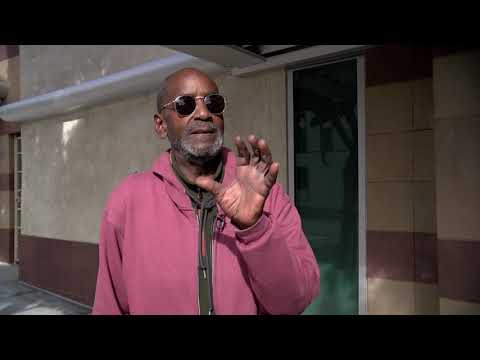
(Source: KPBS)
Food Insecurity
Nearly 8% of Americans 60 and older were "food insecure" in 2017, according to a recent study released by the anti-hunger group Feeding America. (Kuschner, 2020). That's 5.5 million seniors who don't have consistent access to enough food for a healthy life, a number that has more than doubled since 2001 and is only expected to grow as America grays."
Please spend a few moments reading the following article and viewing the attached video: Starving Seniors: How California's Aging are Falling Through The Cracks.
Five Things You Need to Know About Elder Hunger: Please watch the video:
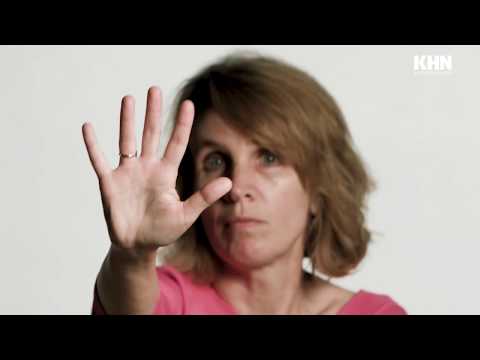
(Source: Kaiser Health News)
Health care
Elderly Americans’ limited budgets are stretched even further by higher expenditures on health care. Medical spending for those between the ages of 55 and 64 is almost twice the amount spent by those between the ages of 35 and 44. Health care costs have contributed to the rise in bankruptcy filings among the elderly.
Energy
Older consumers with the lowest incomes struggle the most to pay their utility bills—35 percent of older households have incomes of less than $20,000 and experience the greatest energy burden, or percentage of income spent on energy costs.
Transportation
We are a nation of drivers. There are some well-designed public transportation systems in the United States. Primarily found in well-populated urban areas, they are well utilized by older adults who can access them. When these systems do not exist, seniors may find it challenging to get around without a private vehicle. It is in these rural and suburban areas where rideshare companies are finding significant market share. Uber, one of the largest rideshare companies, has created programs that offer special rates for healthcare visits, and the ability to pay in advance for an older person's rides. Lyft, another rideshare program has partnered with home care agencies to organized rides for home care clients. Innovation is filling a need, but is not at a low cost. Typical Lyft and Uber rides are more than $5 per way, even for the shortest journey.
Predatory lending
Equity-rich and cash-poor elderly homeowners have been an attractive target for unscrupulous mortgage lenders, many of whom have capitalized on seniors' need for cash by offering high-rate and high-fee loans. Watch the video to see just one story about predatory lending, and you'll never forget it! (Census.gov, 2020)

(Source: KPBS)
I'd like you to think about how the Covid crisis has impacted your community's older adults. Spend some time reading current event articles to see what programs have been cut, what needs suddenly exist that may not have before, and consider what solutions might exist. Our population of older adults, particularly those at risk, still need the programs. What innovations can you imagine? Think outside the box! Here are a few suggestions to get you started.
Coronavirus and COVID-19: Caregiving for the Elderly (Johns Hopkins)
Rights Risk to Older People in COVID 19 Response (Human Rights Watch)
Conclusion
It's a lot. I know that. What does the future hold? I have no idea. I know that we're talking about my aging, your parents' aging, and your own aging. Your job right now is to continue your education, stay aware and read the paper, and look at policies that are being proposed and have an opinion take a position. I have great faith that the young people who will be coming to power in our businesses and government in the next 20 years will do so with great clarity because they're going to see what has worked and what hasn't worked. And they're going to want to fix it. I hope that you are a part of that!
As the demographics of the United States change and the older population takes a position as valuable consumers, there is potential for business, technology, and healthcare to come together and innovate. Gerontologists are striving to bring a message of positive aging to a new generation of older adults and shift the paradigm toward positive aging. Groundbreaking technology, well-developed social policy and vastly improved understanding of healthy aging can potentially impact the future of aging in America.
Image Citation
Image courtesy of Ben_Kerckx under Pixabay license
Image courtesy of geralt under Pixabay license
Image courtesy of Barrons/Merril Lynch/AgeWave