✅ONLINE LECTURE: Long Term Care Options

Historically we have considered long-term care "institutionalized care." In other words, long-term care meant that an elderly person was placed in a nursing home or other old folks home indefinitely at the end of their lives. Today, however, long-term care is come to mean institutional care and home care. Still, it includes all the services and programs designed to help anyone, but especially the elderly, remain in their homes during the last stages of life.
Long term care has come to mean two distinctly different kinds of care:
Community-based Long Term Care - provides services to someone who wants to remain in their home for as long as possible, with the help of community volunteers or paid services.
Institutionalize long term care - provided in an institution or skilled nursing facility (nursing home care.
As you saw in previous lectures, 80-90% of all caregiving is provided by families in their homes. Who are these caregivers? You and me. We are the daughters, sons, grandchildren, siblings, and extended family and friends. Fair estimates that 90% of this caregiving is done by unpaid caregivers, informal groups, and family. If these informal caregivers' work had to be replaced by staff, it would cost at least 60 billion dollars a year. (Moody, 2003)
Community-Based Care
In 1965 the Older Americans Act was first passed by Congress. It provides programs that benefit older Americans. The Older Americans act provide funds for many of the services you see in your community, such as home-delivered meals, transportation programs, health screenings, and many more services for older adults that allow them to stay in their homes for as long as possible.
At the time it was an acted, the stated goals for the OAA were to:
- Provide adequate income in retirement
- The best possible physical and mental health which science could make available without regard to economic status
- Suitable housing
- Fully restorative services for those who require institutional care,
- The opportunity for employment
- Retirement in health honor and dignity
- The pursuit of meaningful activity within the widest range of civic cultural and recreational opportunities
- Efficient community services in a coordinated manner from which they are readily available.
- The immediate benefit from proven research.
- Knowledge freedom, independence
- The free exercise of individual initiative in the planning and managing of their own lives.
After the Federal government passed the OAA, they needed a method of distributing funds to the states. So, states created aging networks, enabling them to receive federal funds for older adult services. In California, that led to the passage of the Older Californian's Act and the creation of today's California Department of Aging in Sacramento. (Fox-Grange & Ujvari, 2014).
For Californians, Federal monies from the Older Americans Act or administered by the California Department of Aging. The department then issues grants to the 33 area agencies that provide leadership and programs at the local level. Services for older adults vary from one community to the next because not every community needs the same services. Area agencies conduct surveys to individualized services to the needs of each community. The idea is that each geographic area has different and unique problems to solve. The largest portion of funding from the Older Americans Act goes toward State and local programs and services specifically designed to help the older population.
For example, residents of a rural community may need more transportation services in a metropolitan city. Researchers survey elderly residents to gather information on their needs. The surveys help to develop a plan for each area. Sites help seniors and families wade through the programs, so it often requires an inter-generational effort to navigate websites and technology.
Getting Care Where it's Needed
Currently, there is a gap in community-based long-term care. If an elderly person needs more constant care, such as help getting up at night or supervision 24 hours a day, seven days a week, oh AAA programs are not suitable. In other words, there are no programs that provide low to no cost 24 hour home care. The elderly are required to pay for the services, and the cost can be quite high. For example, home care aids cost between 15 and $25 an hour. An RN can cost as much as $50 per hour. Round-the-clock help at home can cost upwards of $700 a day. (Acl.org, 2020). Many older adults will go broke quickly, paying for long-term care.
In these cases, once the older adult has spent down their assets below the poverty line, they are placed into MediCal/Medicaid nursing homes, and the State will pick up the cost for that care. Whatever has been spent by the state does get recovered though, because the state becomes the first to retrieve any remaining assets from the estate after death. It is NOT free.
Paying for Long Term Care
Paying Long Term Care
The cost of a nursing home can easily exceed $100,000 per year. How are these costs paid?
After hospitalization, Medicare will cover the costs while the person is receiving rehabilitative care. Some people are not well enough to go directly home after they need hospital care. We have hospitals that provide a step-down level of care from acute care medical centers. (CMS.gov., 2020)
Although up to 100 days after hospitalization is technically covered, just 21 of those days are covered at 100%. After 100 days, the patient is responsible for 100% of the costs. Medicare will only pay a small cost of all nursing home expenses as an extension of hospital care under the Social Security program.
After that, we are left with few choices. We might have long term care insurance, which can help offset the daily costs of nursing home care (usually a percentage of the bill). We might have to pay cash for it. This can mean spending every penny in a couple's savings, emptying retirement funds, and even mortgaging a home to pay for that care. At that point, they will likely qualify for Medi-Cal, which will pay for long term care. By then, though, the surviving spouse is left destitute.
Long Term Care Insurance
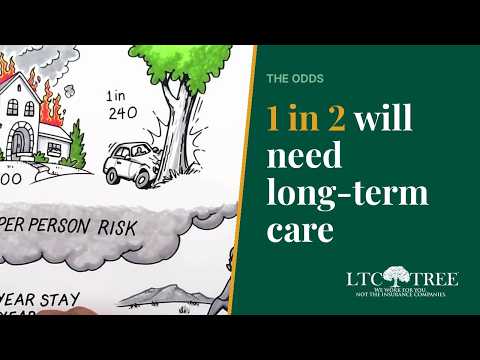
Long-term-care insurance can cover expenses for community or institutional-based long-term-care. Some policies pay for home care, homemaker services, respite care, and community-based programs. Premiums vary according to age, services covered, waiting periods before benefits kick in, and inflation protection ( if the cost of living goes up, so does the policy coverage). The rule of thumb for insurance cost is 5% of your annual income for premiums. Age 50 is suggested as the best time to purchase this insurance considering the balance between premiums and life expectancy. (Lankford, 2009)
One of my colleagues, Professor Renee Chevraux, currently works as a Social Worker in a rural area and has many years of experience working with older adults in their homes. Here is what she sees in the field about LTC insurance.
"I personally do not think LTC insurance is a good buy for most people. The insurance is generally expensive, it is difficult to get the claims going, and the companies tend to delay the claim process as long as possible, so they don't have to pay. There is a waiting period (usually 30 to 90 days), and the patients have to pay for care for the waiting period. Many people will not pay that much for care just to get their policy started. Most people also never use their policy, and some of the companies have gone out of business. There are some exceptions that I feel you should buy insurance............ If you are single and probably do not have any children, who would help you? Also, if one spouse is much older than the other or if you really want to protect your estate and CAN afford the costs of LTC. Another way to think about it-- consider a reverse mortgage to supplement your LTC costs later in life. You can always borrow against your home (the values will vary) if your home is paid off. The only LTC insurance that I believe is currently worth looking at is the Cal Partnership Plan."
Whether you buy a policy depends greatly on your age, health status, overall retirement objectives, and income. For example, if your only source of income is minimum Social Security benefits or SSI, the long-term care policy is not a good idea. You will probably benefit more from Medi-Cal if you meet the income limitations. Just remember, Medi-Cal has a five-year "look back," that will examine your financial records and check your assets going back five years from when you apply for help.
People with significant assets may wish to buy long-term care insurance if they want to save those assets for family members or if they want to maintain their independence and not burden their children with nursing home bills. Experts are questioning, given the cost of long-term care in the impoverishment rates, why aren't more families buying long-term care insurance?
Long-term-care insurance is not for everyone. If income and assets are low, it may be wiser to spend extra income so one can qualify for MediCal. This process is called divestment planning.
Divestment Planning
Because of the costs of long-term care and the requirements to qualify, many families are using a technique called divestment planning. This is an approach used by middle-class families to make it possible to qualify for Medicaid government coverage for nursing home costs. The technique is to make you appear poor by taking advantage of legal loopholes to avoid looking wealthy on paper.
Individuals spend down their lifetime accumulated assets until they become impoverished and are eligible for assistance. How can you do this? One technique is to transfer assets at least three years ahead of applying for Medicaid. Transferring assets between husband and wife in non-community property states; seeking protection through court orders; keeping assets in forms exempt from Medicaid, such as buying a large home. Setting up a trust account. One company describes a trust account as "providing a safe haven for your assets while you maintain control by limiting the duties of the trustee to precisely the extent to which you are comfortable." (Eddy, 2020)
Elder law attorneys help older people plan for protecting their assets. They specialize in financial and other issues for older adults. Something to remember about long-term care planning is that the State may attempt to recover the money that we used to pay for the skilled nursing facility. So, when the individual dies, the estate will receive a bill!
Objections to Divestment Planning
There are, however, those who oppose divestment planning on a social and ethical principle. Some say that it is equal to what corporations do to avoid paying taxes. Critics argue that this form of Medicaid planning is socially immoral and bankrupt an already overburdened system. Although legal, they feel it stands at the borderline of not being legally and socially moral. (Lieber, 2017; Crosby 1993(
Critics also feel the taxpayers should not pay to protect affluent families' inheritance since divestment planning often protects inheritances. For these critics, it seems wrong for some to preserve inheritance well; people who can't pay for attorneys are forced to impoverished themselves to pay for long-term care. Congress has tried to close these loopholes by allowing leans on living recipients' property and trying to recover the cost of long-term care from the estate of deceased recipients.
The intent was to use whatever assets remained to offset the cost of providing care. However, states have been lax in implementing this law. Can you guess why? It was politically unpopular with voting constituents, and because the elderly vote in record numbers, politicians could not afford to alienate a large section of voters. Although the law was full of loopholes, very few states have moved to close the loopholes.
We all agree that we should plan for long-term care, but is the transfer of assets ethical? Some say it's no different from planning to minimize taxes. Others say the transfer of assets is a very troubling practice. What do you think?
Affordable Care Act - NOT a Long Term Care Option
Did you know that the Affordable Care Act was originally designed to include long-term care? That entire section of the act was removed because Congress refused to pass legislation to assure long-term care for older adults. Why? I believe it is because they recognized that as the baby boomers age, the burden for paying for long-term care would be astronomical, and they did not want that cost to get passed on to the Federal government.
So we're left with a real choice because we know we cannot protect ourselves privately against the risk of long-term care, and we also know that the government will not provide us the necessary care. How can we find a balance?
How can low-income seniors pay for long-term care coverage? Many older adults or house rich and cash poor. That means that they bought their homes and have experienced increases in value. Their homes are their most valuable asset. Yet, many do not have large sums of cash to pay for healthcare and insurances. If children are faced with a potential loss of their inheritance, will they contribute voluntarily to where the cost of long-term care premiums? Would you? It can be upwards of $500 a month for one long term care policy. Would that offset your inheritance? Would that be a good investment for you?
Is LTC Insurance Worth it?
Is long-term care insurance a good investment? 82% of the general public say that they recognize that they could not afford to pay the cost of community or institutional long-term care. (nih.gov, 2020) Policies, though, have many exclusions and limitations that complicate comparison against competing products. For example, insurance companies generally will not write insurance for someone who has a pre-existing condition, which excludes many older adults who may have chronic conditions.
Policies generally set a "dollar rate" for every day of care, but do not factor in inflation. I had a family member take out an LTC policy in her late 70's. She paid upwards of $300 a month and didn't need to make a claim until she was 90. At that point, she had paid $72,000 in premiums. When she finally needed care, she was allocated $125 a day, even though her actual costs were far more. Oh, and she only needed help for about six months before she died. Yeah…..not such a great investment.
It is interesting to me that the ideal age to first buy a long-term care policy is in our late 40s early 50s. Yet, there is no way at that age to predict what our long-term health will be! What income level should we have in order to make insurance like this worthwhile? Generally, the rule is that if you can't use a divestment plan, you will need long-term care insurance.
The Impact of Long Term Care
Effects of Long Term Care on the Family
If families cannot continue to provide care for their loved ones in their homes, then moving the elder to a higher level of care may be the next option. This move is not made lightly by most family members. There is a lot of discussion within most families about what to do, what is "right", how to pay for the facility, and all the arrangements that need to be made when one is relocating from his or her home.
Any move should be toward the least restrictive environment. In other words, the family member should receive the appropriate assistance for their functional needs. If the elder is fairly independent and ambulatory, then a board and care or assisted care facility may be the best choice. If the elder is very dependent, uses a wheelchair, and is unable to feed or dress, they may need higher-level care, and a skilled nursing facility might be the best choice.
It is very important to match the elder's needs with the right level of care. Sometimes, the decision for institutionalization results in family conflict. The older person may experience fear, anger, or depression, while family members are often dealing with guilt and their own grief. It is especially difficult for adult children because they may have to be aggressive with their parents about the need for placement due to health and safety concerns. These discussions and resulting placement can result in the parent/family member feeling like they have been abandoned.
According to Jill Quadagno, author of Aging and the Life Course ( McGraw Hill, 2013), people who have lived independently in a community find the transition to institutional life difficult. Institutionalization can also be bureaucratic and involve legal and financial issues, which also may be difficult for the elder and the family members to discuss.
Additionally, minorities and immigrants who enter nursing homes face unique adjustment issues. Besides language barriers, the differences in food, cultural beliefs, and ethnic rituals add to the stress of adjustment to unfamiliar day-to-day institutional life.
Loss
The adjustment period to institutionalized life often begins with a feeling of loss, including the loss of home, possessions, privacy, personal routine, control over personal hygiene, food choices, independence, family, and friends. The idea of accepting help from people who the elder does not know, and often from a different ethnic background can be depressing. Often, in the beginning, stages of adjustment, the elder goes through a period of grief for these losses.
Sociologist Jaber Gubrium documented stories of people selling or giving away their possessions to move into a nursing home. The move severed ties with neighbors, close friends, and family. No longer could the elder be "host." Sometimes people weep to recall their loss of possessions and previous lifestyle. In an institution, the opportunity to make the simplest of decisions, such as what to eat for dinner or when to get out of bed, is determined by someone else.
As one resident explained to the researcher: "It isn't home here. I would have liked to have stayed with the children. We had a cat, and I miss that cat quite a bit. I miss my little radio and the window I had where you could see the dog in the yard next door. Sometimes I really miss that nice little carpet I had next to my bed. I was used to that." (Gubrium, 1995)
Strategies to Help with Adaptation
The number one predictor for a successful admission for an elder to a facility is if they want to move to a higher level of care. The following are ways to assist the elder in accepting and coping with the change in environment and institutionalized lifestyle. (Lagace, et al., 2012)
Personalized rooms with photos, paintings, cork boards with pictures and personal items.
Make their new environment feel as much like their own home as possible. Bring their personal belongings to them and decorate with their treasured and memorial items. If possible, bring in their favorite furniture or rocking chair. Put family photos within sight so that they can see their loved ones.
Cope with loss of control.
Encourage as much control and independence as possible. If they do not like the food, bring some of their favorite foods into them. Let them make decisions about their clothing, personal items, and the environment. Try and maintain old routines. Arrange for them to go to the same barber or hairdresser, the bank, or stores that they have visited for years.
Please watch this video:

Environmental Design
When Medicaid (MediCal) was created in 1964, it was not uncommon for care facilities to be unlicensed, unregulated, and unsupervised. Frail seniors were living in unsafe environments, and there were questionable if not down-right neglectful and dangerous situations. By providing a regulated entitlement program, Medicaid required that nursing facilities be licensed and regulated and guaranteed a baseline reimbursement for those with limited financial resources. In other words, if you qualify, Medicare would pay for your long-term care and ensure that you were safe.
However, because of these new regulations, the idea of taking care of an older person shifted away from the "family home" or small facility model and became medicalized. If you look at the architecture of a typical nursing facility, it looks a lot like a hospital wing. You'll see a nurse's station, corridors with doors to rooms equidistant on both sides. You'll see pre-plated meals on divided trays, medication carts, and lots of binders and charts. You'll hear buzzing and paging systems. It's efficient. It provides structure and accountability. (Buhler-Wilkerson, 2003)
We call them nursing "homes,' but they resemble nothing of what I would define as a "home."
In an acknowledgment that a "hospital-like" environment is about the last place an older person wants to be, many providers and regulators throughout the country have implemented environmental modifications that allow nursing homes to create more residential environments. We are starting to see changes in building codes that acknowledge that nursing facilities may not need to be limited to easily controlled large institutions. Instead, we are starting to see innovative use of smaller facilities and even smaller "households" set up within larger facilities.
Please watch this video:

(Source: ABC News)