8.3 When Place Reflects Need
In many gerontology courses, this section would consist of a list of housing options, a brief description of each, and perhaps a chart comparing services and costs.
While that information is important, it often misses the larger question.
Why do people choose one housing arrangement over another?
Housing decisions are rarely about buildings. They are about people. They reflect values, goals, resources, relationships, health needs, and personal preferences. The same housing option that feels ideal to one person may feel completely wrong to another.
My goal is not simply to introduce you to a list of housing choices. I want you to understand what exists, who is best suited to each option, how it works, why it might not work, and perhaps most importantly, to discover possibilities you may not have realized existed.
As you read through this section, I encourage you to think beyond stereotypes. Not every older adult dreams of a retirement community. Not every multigenerational household is the result of financial hardship. Not every person who downsizes is losing independence. Not every move represents a decline.
The reality, however, is far more interesting than the stereotypes suggest. Housing choices reflect changing needs, priorities, and opportunities throughout the life course.
Some people move to reduce responsibilities. Others move to gain community. Some move to be closer to family. Others move to create greater independence. Increasingly, older adults are exploring housing models that would have been unusual just a generation ago.
The question is not simply, "Where do older adults live?"
A more useful question is, "What problem is this housing choice trying to solve?"
When viewed through that lens, the wide variety of housing options begins to make much more sense.
When Maintenance Becomes the Challenge
One of the first reasons older adults begin reconsidering their housing situation has nothing to do with illness, disability, or dependence.
It has to do with maintenance.
The home that worked perfectly for a growing family at age forty may feel very different at age seventy-five. Extra bedrooms sit empty. The yard still needs mowing. The gutters still need cleaning. Appliances still break. Trees still grow. Roofs still leak. The work required to maintain a home often remains the same even as the people living in it age.
This reality has led many older adults to consider downsizing.
Downsizing simply means moving to a smaller, more manageable living environment. Contrary to popular stereotypes, downsizing is not necessarily a sign of decline. In many cases, it is a proactive decision designed to simplify life and reduce responsibilities.
Some individuals move from a large family home into a condominium or townhouse where exterior maintenance is handled by a homeowners association. Others choose apartments that eliminate concerns about landscaping, repairs, and property upkeep. Still others choose smaller single-family homes that better reflect their current lifestyle.
The benefits can be substantial. Reduced maintenance often means more time, energy, and financial resources available for travel, hobbies, family, volunteering, and community involvement. Many people report feeling relieved after reducing the responsibilities associated with homeownership.
Of course, downsizing also presents challenges.
As we discussed in the previous section, moving often requires sorting through decades of accumulated possessions. Family heirlooms, collections, furniture, photographs, and keepsakes must be evaluated. Decisions about what to keep, what to donate, and what to pass on can be emotionally exhausting.
In many ways, downsizing is not a housing decision as much as it is a life transition.
The process forces people to evaluate what remains important, what is no longer needed, and how they want to spend the next chapter of their lives.
For some people, a smaller home represents freedom from maintenance, responsibility, and the demands of a larger property. For others, it can feel like the loss of a family home, a neighborhood, or a chapter of life. Like many transitions associated with aging, downsizing often involves both gains and losses at the same time.
When Distance Becomes the Challenge
In some situations, the challenge has little to do with the house itself and much more to do with where that house is located
Let's return to Alice and Agnes.
Alice loves her home in rural Tennessee. The scenery is beautiful. The community is familiar. The house contains decades of memories. Yet the nearest grocery store is twenty miles away. Medical appointments require planning. Public transportation is virtually nonexistent. If Alice eventually decides she no longer feels comfortable driving, many of the activities she currently takes for granted become significantly more difficult.
Agnes faces a very different situation. Her home is located near grocery stores, pharmacies, healthcare providers, community activities, and neighbors who regularly check in on one another. Although she is the same age and has many of the same health conditions as Alice, the location of her home provides a very different set of opportunities.
This illustrates an important principle in environmental gerontology.
Sometimes the challenge is not the home itself but access to the resources that support everyday life. Healthcare, transportation, social opportunities, family connections, and community services all influence whether a particular location continues to support independence.
For this reason, many older adults choose to relocate not because they dislike their homes, but because they want easier access to the resources they need.
Some move closer to adult children or grandchildren. Others relocate to communities with better healthcare systems, public transportation, or social opportunities. Still others move from rural communities to suburban or urban environments where daily necessities are easier to reach.
Historically, researchers referred to some of these moves as amenity migration. Retirees often relocated to areas with desirable climates, recreational opportunities, lower taxes, or attractive lifestyles. States such as Florida and Arizona became famous destinations because they offered warm weather and retirement-focused communities.
Unlike previous generations, many contemporary older adults are seeking opportunities for lifelong learning, volunteer work, travel, cultural activities, and civic engagement. Retirement is increasingly viewed as a new life stage rather than a withdrawal from society, and housing choices often reflect those priorities.
Some are looking for walkable neighborhoods. Some want access to cultural activities, restaurants, and lifelong learning opportunities. Others prioritize proximity to healthcare providers or family members. Still others deliberately seek communities where they can remain socially engaged and active.
In many cases, relocating can increase independence rather than reduce it.
A move that places grocery stores, healthcare providers, public transportation, and social opportunities within easy reach may allow an older adult to remain independent longer than would be possible in a more isolated location.
The decision to move is rarely simple. Leaving a familiar community often means leaving neighbors, routines, and places that carry personal meaning. Yet for some individuals, the benefits of improved access outweigh the challenges of relocation.
The important lesson is that aging successfully is not necessarily about staying in the same place forever.
Sometimes it is about finding a place that better supports the life you want to live.
When Connection Becomes the Challenge
One of the most persistent myths about aging is that independence means living alone.
For some people, living alone is exactly what they want. They enjoy the privacy, control, and freedom that comes with maintaining their own household. For others, however, living alone may gradually lead to social isolation, loneliness, and reduced opportunities for engagement with the broader community.
As we discussed earlier in this module, aging successfully is not simply about remaining in a particular house. It is also about remaining connected to people, activities, and relationships that provide purpose and meaning.
For some older adults, maintaining a home is relatively easy. Maintaining a meaningful social life may be much more difficult.
This realization has led to the development of several innovative housing models designed to foster connection while still preserving independence.
Imagine three retired teachers purchasing homes around a shared courtyard, or a group of longtime friends intentionally choosing to age in the same neighborhood.
Shared Housing
Shared housing is exactly what it sounds like. Two or more unrelated individuals share a home while maintaining private living spaces and sharing common areas such as kitchens, living rooms, or outdoor spaces.
For some older adults, shared housing offers practical advantages. Expenses can be divided among residents, reducing housing costs and financial stress. Household responsibilities can also be shared, making day-to-day life more manageable.
Just as importantly, shared housing can reduce social isolation. There is often comfort in knowing that someone else is nearby, particularly during emergencies or periods of illness.
Of course, shared housing is not for everyone. Successful arrangements require compatibility, communication, flexibility, and a willingness to compromise. Living with another person, whether they are family or not, involves navigating differences in habits, routines, expectations, and personalities.
For the right individuals, however, shared housing can provide both companionship and affordability.
Cohousing Communities
Imagine a neighborhood intentionally designed to encourage interaction among residents while still preserving private living space.
That is the basic idea behind cohousing.

In a cohousing community, residents typically live in their own homes or apartments but share common spaces such as gardens, workshops, dining areas, recreational facilities, or community buildings. Residents often participate in community activities and may help one another with everyday tasks.
Unlike traditional retirement communities, cohousing is not based on providing care services. Instead, it is designed to foster relationships and social connection.
Some cohousing communities are age-restricted, while others are intentionally intergenerational. Residents may include families with young children, working adults, and older adults living side by side.
For many participants, the appeal lies in balancing privacy and community. Individuals maintain their own homes and independence while enjoying the benefits of a supportive social network.
Naturally Occurring Retirement Communities (NORCs)
Not every supportive community is intentionally created. In some cases, supportive communities develop naturally as residents age together over time.
A Naturally Occurring Retirement Community, or NORC, exists when a large number of older adults live within the same neighborhood, apartment complex, mobile home park, or housing development even though the community was not originally designed as senior housing.
Over time, residents age together.
Neighbors become friends. Informal support networks develop. Community organizations begin offering services targeted toward the population living there.
Please watch the video:
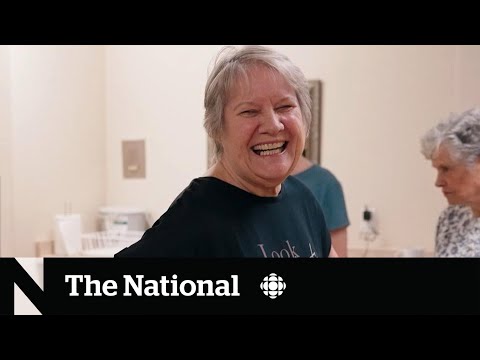
Many NORCs have become remarkably successful because they allow people to remain in familiar surroundings while benefiting from services and social connections tailored to their needs.
Rather than requiring older adults to move into a retirement-focused environment, the community itself evolves alongside its residents.
The Village Movement
Another innovative approach is known as the Village Movement.
Unlike a retirement community, a Village is not a physical place. Instead, it is an organization created by residents to help older adults remain in their own homes and neighborhoods.
Members typically pay annual dues and gain access to services such as transportation, home maintenance referrals, social activities, educational programs, and volunteer assistance. The goal is to help individuals remain independent while strengthening community connections.
In many ways, Villages represent a modern version of neighbors helping neighbors, supported by organized resources and shared responsibility.
Rethinking Independence
These housing models challenge a common assumption in American culture.
For generations, independence has often been defined as living alone and managing without assistance. Yet many older adults are beginning to redefine independence in different ways.
Increasingly, researchers and older adults alike are questioning whether independence should be defined solely as doing everything without assistance. A more useful definition may focus on autonomy, choice, and the ability to direct one's own life while accessing support when needed.
It may involve maintaining privacy while remaining connected to others. It may involve accepting support when needed while continuing to make your own decisions. It may involve building communities that reduce isolation rather than simply maximizing self-sufficiency.
As society continues to age, housing models that emphasize connection, collaboration, and mutual support may become increasingly important.
For many individuals, the greatest challenge is not locating housing, but finding an environment where they feel connected, valued, and part of a larger community.
When Family Becomes Part of the Plan
In the United States, we often assume that successful adulthood means living independently from our parents and that successful aging means remaining independent for as long as possible. While this perspective feels normal to many Americans, it is far from universal.
Around the world, multigenerational living arrangements are common and often expected. Grandparents, parents, and children may share a household, a property, or a family compound. Resources, responsibilities, and caregiving are shared across generations, creating a support system that benefits everyone involved.
Even within the United States, attitudes toward multigenerational living are changing. Rising housing costs, longer life expectancy, delayed marriage, caregiving responsibilities, and economic pressures have led many families to reconsider the idea that every generation must maintain a separate household.
For some families, bringing generations together is a practical decision. For others, it reflects cultural values, family traditions, or a desire for closer relationships. Whatever the motivation, multigenerational housing has become one of the fastest-growing housing arrangements in the country.
One reason these arrangements can work well is that support often flows in multiple directions.
Grandparents may provide childcare while parents work. Adult children may assist with transportation, technology, home maintenance, or healthcare appointments. Household expenses may be shared among family members, making housing more affordable for everyone involved.
This reciprocal exchange of support should sound familiar. Earlier in the course, we discussed the concepts of reciprocity and beneficence. Many multigenerational households function through reciprocity, with family members contributing in different ways according to their abilities and circumstances.
Of course, living together is not always easy.
Privacy may become a concern. Family members may have different expectations about finances, household responsibilities, parenting styles, visitors, schedules, or caregiving obligations. Generational differences that seem manageable during a holiday dinner can become much more noticeable when everyone shares the same roof every day.
Like any housing arrangement, multigenerational living is not inherently good or bad. Its success depends largely on communication, boundaries, expectations, and the willingness of family members to adapt to one another's needs.
Accessory Dwelling Units (ADUs)
One increasingly popular solution attempts to balance connection and independence. Accessory Dwelling Units, commonly known as ADUs, granny flats, in-law units, backyard cottages, or garage conversions, are smaller residential units located on the same property as a primary home.
Please watch the video: (you may need to click on the youtube link "Watch on Youtube" to open the video)

Portable elderly housing or “Granny Pods” are an affordable alternative to nursing homes and can be used for rehabilitation or long-term care.
In California, ADUs have become especially popular as communities search for creative ways to address housing shortages and support aging family members.
An ADU allows family members to live close enough to provide support while maintaining separate living spaces. Older adults can retain their privacy and independence while remaining near family who may be available to assist when needed.
For many families, ADUs provide the best of both worlds.
Adult children can check in on an aging parent without needing to drive across town. Grandchildren can visit regularly. Family members remain close enough to help with emergencies, transportation, or daily tasks while still maintaining personal space.
One of my favorite descriptions of an ADU came from a family who explained that they wanted to be close enough to help but far enough away that nobody could hear each other's television.
That may sound humorous, but it captures an important reality. Many families want connection without constant supervision, support without dependency, and proximity without sacrificing privacy.
Redefining Independence
Housing decisions often reveal our assumptions about independence.
For many Americans, independence has traditionally meant living alone and managing every aspect of daily life without assistance. Yet that definition may be too narrow.
A person living alone without transportation, social connections, or support services may technically be independent but still struggle with isolation and unmet needs.
Conversely, a person living near family, sharing resources, and participating in a supportive community may require occasional assistance while maintaining a high degree of control over their own life.
Perhaps independence is not simply about doing everything by yourself.
Perhaps it is about having choices, maintaining autonomy, and having access to the support necessary to continue living the life you want to live.
For some older adults, that support comes from neighbors and community organizations. For others, it comes from friends, family members, or multiple generations living side by side.
As society continues to evolve, housing arrangements that emphasize flexibility, reciprocity, and connection may become increasingly common. What once seemed unconventional may become one of the most practical housing solutions available.
The important question is not whether a person lives alone, with family, or in a separate dwelling on the same property.
The question is whether the arrangement supports the individual's goals, relationships, independence, and quality of life.
When Cost Becomes the Challenge
Throughout this section, we have explored a variety of housing options available to older adults. Some people choose to downsize. Others relocate closer to family, move into cohousing communities, build accessory dwelling units, or seek environments that better support their changing needs.
All of these options have one thing in common.
They cost money.
This reality highlights an important truth about housing in later life. Not every housing decision is driven by preference. Many are shaped by financial resources, fixed incomes, housing availability, and affordability.
Earlier in the course, we discussed wealthspan and the wide variation in financial circumstances among older adults. Some retirees have pensions, retirement accounts, home equity, and substantial savings. Others rely almost entirely on Social Security for their monthly income. These differences dramatically influence the range of housing options available.
Consider two older adults who both decide that their current homes no longer meet their needs.
One individual may have the resources to purchase a condominium near family, move into a retirement community, or renovate a home to improve accessibility. Another may have exactly the same housing challenges but lack the financial resources to make those changes.
Although both individuals may face the same housing challenge, the range of options available to them can be dramatically different.
This is one reason affordable housing has become an increasingly important issue as the population ages.
Many older adults live on fixed incomes that do not keep pace with rising housing costs, property taxes, insurance premiums, utility expenses, and maintenance costs. Even individuals who own their homes outright may struggle with the ongoing expenses associated with remaining there.
For renters, the situation can be even more challenging. Rising rents can force difficult decisions between housing, healthcare, food, transportation, and other necessities.
To help address these challenges, a variety of housing assistance programs exist.
Subsidized Senior Housing
Federal, state, and local programs provide housing support for older adults with limited incomes. One example is Section 202 Supportive Housing for the Elderly, a federal program designed to provide affordable housing specifically for low-income older adults.
Many subsidized housing communities offer rents based on income, allowing residents to pay a percentage of their monthly earnings rather than market-rate rents. Some communities also provide supportive services such as transportation assistance, social activities, meal programs, or connections to healthcare resources.
For individuals living on modest Social Security benefits, these programs can mean the difference between stable housing and housing insecurity.
Mobile Home Communities
Although often overlooked in discussions of aging, mobile home communities serve as an important source of affordable housing for many older adults.
Some communities are age-restricted, while others include residents of all ages. Mobile homes typically cost less than traditional single-family homes and may provide opportunities for homeownership that would otherwise be unattainable.
Like any housing option, they come with advantages and disadvantages. Lower purchase costs may be offset by space rental fees, maintenance expenses, or community regulations. Nevertheless, mobile home communities remain an important part of the housing landscape for many older adults.
Housing Insecurity in Later Life
One stereotype about aging is that older adults have somehow achieved financial stability simply by reaching retirement age.
The reality is far more complicated.

Older adults experience housing insecurity, eviction, homelessness, and financial hardship just as younger populations do. In fact, the number of older adults experiencing housing instability has increased in many parts of the country as housing costs have risen faster than incomes.
For these individuals, the question is not whether a particular housing option is desirable.
The question is whether safe, stable housing is available at all.
This reality reminds us that housing is not simply a matter of lifestyle preference. It is also a matter of social policy, economic opportunity, and access to resources.
As we consider the many housing options available in later life, it is important to remember that choice itself is often shaped by financial circumstances. The most creative housing solution in the world is of little value if it remains financially out of reach.
For this reason, discussions about housing and aging are ultimately discussions about equity as well as environment. The places people are able to live are often influenced by opportunities and resources accumulated across the entire life course.
Looking Ahead: The Future of Housing
If there is one lesson to take away from this section, it is that there is no single "right" way to age.
For much of the twentieth century, housing in later life was often presented as a predictable progression. People lived independently, perhaps downsized, and eventually moved into some type of senior housing if additional support became necessary.
Today's reality is far more diverse.
Some older adults remain in the same home for decades with the help of family, technology, community services, and environmental modifications. Others relocate to smaller homes, apartments, retirement communities, or walkable neighborhoods. Some choose multigenerational living arrangements. Others seek shared housing, cohousing communities, or innovative approaches designed to balance privacy and connection.
Increasingly, older adults are creating housing solutions that reflect their own goals rather than simply accepting traditional expectations.
This shift raises an interesting question.
What might housing look like fifty years from now?
The retirement communities of the future may look very different from those of today. Intergenerational housing may become more common as families seek creative ways to share resources and support one another. Technology may allow more people to remain independent at home for longer periods of time. Communities may become more intentionally designed to support people across the entire life course rather than separating generations from one another.
Some housing models that seem unusual today may become completely ordinary tomorrow.
Others have not yet been invented.
The important point is that housing decisions are not simply about where people live. They are about how people live.
The most successful housing arrangement is not necessarily the largest, newest, most affordable, or most luxurious. It is the arrangement that best supports a person's goals, relationships, health, independence, and quality of life.
As you move through your own life course, your housing needs and preferences will almost certainly change. The home that fits your life at age twenty-five may not be the home that fits your life at age fifty-five or eighty-five.
That is not a sign that something has gone wrong.
It is a reflection of the fact that people change, circumstances change, and environments change.
Perhaps the better question is not, "Where should older adults live?"
Perhaps the better question is:
What kind of environment allows people to remain safe, connected, independent, and engaged in the life they want to live?
There is no single answer.
And that may be the most important lesson of all.