6.4 Friendship, Love, and Intimacy
Why Relationships Matter
If I asked you to predict the ingredients of a long and happy life, what would make your list?
Most people mention the usual suspects. Exercise. Healthy eating. Financial stability. Access to healthcare. A little luck certainly doesn't hurt. All of these factors contribute to health and well-being, and researchers have spent decades trying to understand why some people seem to thrive as they age while others struggle.
One of the most remarkable answers emerged from a study that began in 1938 and continues today.
The Harvard Study of Adult Development is one of the longest-running studies of human development ever conducted. Researchers followed participants across decades of life, examining everything from careers and marriages to health, happiness, stress, and aging. While many factors influenced outcomes, one finding appeared again and again: the quality of a person's relationships mattered enormously.
People with strong social connections tended to experience better physical health, greater emotional well-being, and higher levels of life satisfaction. They were often more resilient during difficult periods and less vulnerable to loneliness and depression. Interestingly, the study found that it wasn't wealth, fame, or professional success that predicted who would be happiest in later life. More often than not, it was the strength and quality of their relationships.
This finding surprises many students because our culture spends a great deal of time talking about individual achievement. We are encouraged to build careers, accumulate experiences, improve ourselves, and become increasingly independent. Yet human beings have always been social creatures. We form identities through relationships. We celebrate with others, grieve with others, learn from others, and often discover meaning through our connections with the people around us.
Earlier in the course, we explored Laura Carstensen's Socioemotional Selectivity Theory. You may recall that the theory suggests people become more selective about relationships as they grow older and become increasingly aware that time is finite. Rather than investing energy into maintaining large social networks, many people begin focusing on the relationships that provide emotional meaning and genuine connection.
Think about your own life for a moment.
When we are younger, relationships often serve many purposes. Friends help us explore new interests, meet new people, discover opportunities, and navigate major life transitions. As people age, however, the focus often shifts. Many older adults report caring less about expanding their social circles and more about deepening the relationships they already value.
This does not mean older adults become antisocial. In fact, many remain highly engaged with family, friends, volunteer organizations, religious communities, and social groups. What changes is not the desire for connection but the criteria for how time and energy are invested.
In a world that often celebrates having hundreds of contacts and thousands of followers, aging research consistently points toward a different conclusion. The number of people who know your name matters far less than the number of people who would show up if you needed them.
That distinction brings us to one of the most important relationship types across the lifespan: friendship.
Friendship: The Family We Choose
How many of you are still friends with someone you've known since kindergarten?
There is something wonderfully simple about childhood friendships. Two children meet on a playground, discover a shared interest in dinosaurs, swings, crayons, or snack time, and by lunchtime they have become inseparable. Neither child is evaluating retirement plans, political beliefs, income levels, career trajectories, or social status. They are simply two people sharing a moment in time.
As we grow older, friendship becomes more complicated.
We become more distinct as individuals. We develop personalities, values, preferences, obligations, and expectations. Life scatters us geographically. Careers, marriages, children, aging parents, and everyday responsibilities compete for our time and attention. Developing and maintaining friendships requires far more intentional effort than it did when we were six years old.
Yet the need for friendship never disappears.
In fact, friendship remains one of the most important sources of social support throughout adulthood and later life. While family relationships are often shaped by biology, obligation, and shared history, friendships are largely voluntary. We choose our friends. We invest in those relationships because we want to, not because we are expected to.
This voluntary nature makes friendship unique. Friends become part of what many people describe as their chosen family. They are the people we invite into our lives because they provide companionship, support, understanding, humor, perspective, and connection. They are often the people who help us celebrate our successes, survive our failures, and remind us who we are when life becomes difficult.
Researchers often distinguish between two important forms of social support: confidants and companions.
A confidant is someone with whom we share our fears, concerns, hopes, frustrations, and personal struggles. This is the person we call when life falls apart. A companion, on the other hand, is someone with whom we share activities and experiences. We travel together, attend events together, work on projects together, or simply enjoy spending time in one another's company.
Sometimes the same person serves both roles. Sometimes they do not.
Take a moment to think about your own social network. Who is the person you call when you receive terrible news? Who is the person you call when you have concert tickets, want to take a road trip, or simply don't want to spend Saturday afternoon alone? They may be the same individual, but often they are different people who serve different functions in our lives.
Both relationships matter.
One of the challenges of adulthood is that friendships often require maintenance. Unlike family members who may continue to appear at holidays and major life events whether we make an effort or not, friendships can quietly drift away if they are not nurtured. We become busy. We move. We get married. We have children. We change jobs. Sometimes years pass before we realize that a friendship we valued has faded through simple neglect.
This is one reason friendship becomes such an interesting topic in gerontology. Older adults frequently report that friendships become increasingly valuable as they age. Earlier in the course, we discussed Socioemotional Selectivity Theory and the tendency to become more selective about relationships when we become aware that time is finite. Friendship illustrates this concept beautifully.
Many older adults report having fewer friends than they did in early adulthood, but the friendships they maintain tend to be deeper, more meaningful, and more emotionally rewarding. They become less interested in collecting acquaintances and more interested in investing in relationships that genuinely matter.
This does not mean older adults become isolated or antisocial. Quite the opposite. Many remain actively engaged in clubs, volunteer organizations, religious communities, hobby groups, educational programs, and social activities. What changes is not the desire for connection but the willingness to spend time on relationships that feel superficial or unfulfilling.
In a world that often encourages us to measure social success by the size of our contact list or the number of followers we accumulate online, aging research points toward a different conclusion. The number of people who know your name matters far less than the number of people who would show up if you needed them.
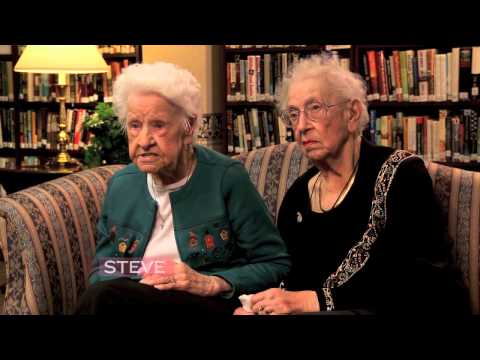
As we age, the question often becomes less about how many relationships we have and more about which relationships truly enrich our lives.
That brings us to another form of connection that plays a powerful role throughout adulthood and later life: love, partnership, and companionship.
Love and Partnership Across the Lifespan
If friendship is the family we choose, intimate partnerships are often the relationships through which we build our lives.
For most of human history, marriage was less about romance than practicality. It was an economic arrangement, a social contract, and a way to combine resources, raise children, and strengthen family connections. Love was certainly welcomed if it appeared, but it was not always considered the primary purpose of marriage.
Today, our expectations are very different.
Modern relationships are often expected to provide companionship, emotional support, intimacy, friendship, shared values, financial partnership, personal growth, and lifelong commitment. In many ways, we ask more of our romantic partners than any previous generation in history. We want them to be our best friend, trusted confidant, travel companion, co-parent, emotional support system, and romantic partner all at the same time.
That is a tall order for any human being.
Despite these changing expectations, the desire for connection remains remarkably consistent throughout the lifespan. Most people want to feel valued, understood, respected, and loved. The ways in which those needs are expressed may change over time, but the needs themselves remain surprisingly stable.
Please watch this video:

One of the myths about aging is that older adults somehow lose interest in close relationships. The research suggests otherwise. While relationship priorities may shift, the desire for companionship remains strong throughout life. In fact, many older adults report that companionship becomes increasingly important as they age.
Part of this shift occurs because life changes. Careers eventually become less central. Children grow up and establish lives of their own. Some responsibilities that once consumed enormous amounts of time begin to fade into the background. As a result, many people find themselves spending more time with their partners than they have in decades.
Retirement often provides an interesting example.
Many couples spend years imagining retirement as a period of relaxation and freedom. Then one day they discover that the person they previously saw for a few hours each evening is now sitting across the breakfast table every single day.
For some couples, this transition is seamless. For others, it requires a period of adjustment.
Researchers often find that relationship satisfaction in later life is surprisingly high. Older couples frequently report lower levels of conflict and greater emotional stability than younger couples. Having navigated careers, financial pressures, parenting, health concerns, and countless life transitions together, many couples develop a deeper appreciation for one another's strengths and limitations.
There is a certain freedom that comes with no longer expecting perfection.
After several decades together, most people have discovered that their partner is not going to magically stop leaving dishes in the sink, loading the dishwasher incorrectly, or telling the same stories at family gatherings. Acceptance often becomes easier than renovation.
This does not mean all long-term relationships are happy or healthy. Some couples continue to struggle with unresolved conflicts, communication problems, or incompatible expectations. Yet researchers consistently find that many long-term relationships become more emotionally focused over time. Older adults often place greater value on warmth, companionship, and shared experiences than they did during earlier stages of life.
Interestingly, marriage is no longer the only form that intimate partnerships take. Increasing numbers of adults choose cohabitation, long-term committed partnerships, or other relationship arrangements that do not involve legal marriage. What matters most from a gerontological perspective is not the specific label attached to the relationship but the quality of the connection itself.
The strongest relationships tend to share several characteristics. They provide emotional support during difficult times. They offer companionship and shared experiences. They create opportunities for laughter, affection, and mutual understanding. Most importantly, they provide a sense of being known.
Think about the people who have known you for decades. They remember versions of you that no longer exist. They remember the awkward teenager, the struggling young adult, the exhausted parent, the ambitious professional, and all the other identities you have occupied throughout life. Long-term partners often become witnesses to our personal histories.
They know the stories behind the stories.
They understand why certain songs matter, why particular traditions are important, and why some memories still make us laugh years later. They provide continuity across time, helping us maintain a sense of identity as life changes around us.
For many people, this may be one of the greatest gifts of a long-term relationship. It is not simply having someone to share life with. It is having someone who remembers the journey.
Of course, not all relationships last forever. Some end through divorce. Others end through separation, illness, or death. While these transitions can be profoundly difficult, they do not necessarily mark the end of connection, intimacy, or companionship. Human beings remain remarkably capable of forming meaningful relationships throughout life.
Before we explore those transitions, however, we need to address another persistent myth about aging: the belief that intimacy and sexuality somehow disappear as people grow older.
Intimacy and Sexuality Across the Lifespan
Let's begin by addressing the elephant in the room.
Whenever sexuality is discussed in an aging course, there is often an unspoken assumption that older adults either lose interest in intimacy or somehow become asexual. Popular culture certainly reinforces this idea. Movies, television, advertisements, and social media routinely portray romance, attraction, and sexuality as the territory of younger people. Older adults are often depicted as grandparents, retirees, patients, or caregivers, but rarely as romantic partners.
The reality is considerably more complicated.
"First, we should keep in mind that sex is not only a biological drive for pleasure and reproduction. It is also a powerful way for human beings to relate to one another and to express intimacy. " Porter and Holmes

Earlier in the course, we explored many of the biological changes that can influence sexual functioning across the lifespan. Those changes are real and can affect how individuals experience sexuality. However, sexuality is about far more than biology. It encompasses attraction, affection, identity, emotional connection, touch, companionship, and intimacy. While the ways people express sexuality may change over time, the desire for closeness and connection often remains remarkably stable.
One of the reasons this topic can feel uncomfortable is that many younger adults struggle to imagine older adults as romantic beings. Students often have no difficulty understanding that a seventy-year-old might enjoy travel, music, hobbies, friendships, or meaningful conversations. Yet for some reason, the idea that a seventy-year-old might still desire affection, intimacy, or a loving relationship can feel surprising.
Part of that reaction stems from a simple reality: most of us spend our lives viewing older adults through specific roles. We see grandparents, teachers, neighbors, healthcare providers, and community members. We rarely stop to remember that those same individuals were once young adults who fell in love, built relationships, experienced heartbreak, raised families, and developed intimate partnerships. Aging changes people, but it does not erase their humanity.
Research consistently shows that emotional intimacy remains one of the strongest predictors of relationship satisfaction throughout adulthood and later life. In fact, many older adults report that intimacy becomes less focused on performance and more focused on connection. Affection, companionship, trust, humor, shared experiences, physical closeness, and emotional security often become increasingly important components of satisfying relationships.
This does not mean that sexuality disappears. Rather, it often evolves.
The stereotypes surrounding sexuality and aging tend to fall into two extremes. One stereotype assumes that older adults have no interest in intimacy whatsoever. The other assumes that successful aging means somehow maintaining the exact same experiences and expectations people had at twenty-five. Neither perspective accurately reflects reality.
Most people adapt.
Just as individuals adjust to changing vision, hearing, energy levels, and physical abilities throughout life, they also adapt to changes in relationships and intimacy. What matters is not whether a person can replicate the experiences of early adulthood. What matters is whether they continue to experience connection, affection, pleasure, and meaningful relationships in ways that fit their lives and circumstances.
Perhaps the most important point is that intimacy is not defined by age.
The need to feel loved, valued, desired, respected, and emotionally connected does not suddenly disappear at sixty-five, seventy-five, or ninety-five. Human beings remain relational creatures throughout the lifespan. We continue to seek companionship. We continue to seek belonging. We continue to seek opportunities to share our lives with others.
When researchers ask older adults about the factors that contribute most to life satisfaction, the answers rarely focus on perfect health, youthful appearance, or physical performance. More often, people describe the importance of meaningful relationships, emotional connection, companionship, affection, and the feeling that someone genuinely knows and cares about them.
In the end, that may be what intimacy has always been about.
When Relationships Change
One of the few guarantees in life is that relationships will change.
Some changes are welcome. Children grow up. Friendships deepen. New partners enter our lives. Families expand through marriage, birth, and adoption. Yet relationships also change through conflict, distance, illness, divorce, and death. As we age, we inevitably experience both the joy of connection and the pain of loss.
One of the most significant relationship transitions many adults experience is widowhood. While the loss of a spouse is often discussed in the context of grief, it is also a profound relationship transition. Beyond the loss of a loved one, individuals often lose a daily companion, a confidant, a source of emotional support, and a partner in countless routines and traditions.
Some researchers describe this as the loss of a "witness to your life."
Think about that phrase for a moment.
Long-term partners often know our stories without needing explanations. They remember family vacations, difficult years, old friends, embarrassing moments, private jokes, and shared experiences. They understand the context behind our memories because they lived them with us. When a partner dies, people often describe missing not only the individual but also the shared history they carried together.
The same can be true when relationships end through divorce or separation. While divorce is often associated with younger adulthood, so-called "gray divorce" has increased significantly among adults over fifty. Some couples discover that after children leave home, careers end, or priorities change, the relationship no longer provides the connection it once did. Others remain together for decades before deciding to pursue different paths.
Whether a relationship ends through death, divorce, or separation, individuals are often faced with an important task: rebuilding identity.
Many of us define ourselves through our relationships. We become someone's spouse, partner, parent, friend, or caregiver. When those roles change, people frequently find themselves asking difficult questions about who they are and what comes next.
These transitions can be painful, but they also remind us of something we have seen repeatedly throughout this course: human beings are remarkably adaptable. People grieve, adjust, heal, and eventually create new routines and new meanings. The process is rarely quick or simple, but most individuals gradually learn how to move forward while carrying the memories of important relationships with them.
The goal is not forgetting.
The goal is learning how to continue living while honoring what has been lost.
New Beginnings
If there is one stereotype that aging research consistently challenges, it is the belief that later life is a period defined only by endings.
Certainly, aging involves losses. Relationships end. Health changes. Roles shift. People retire. Family structures evolve. Yet focusing only on those losses paints an incomplete picture of later life.
New beginnings continue throughout the lifespan.
People form new friendships after retirement. They join clubs, volunteer organizations, educational programs, faith communities, and social groups. They move to new communities and discover unexpected connections. They reconnect with old friends. They develop relationships with neighbors, grandchildren, and people they might never have encountered earlier in life.
Many people also form new romantic relationships.
The idea sometimes surprises younger adults, who often unconsciously assume that dating belongs exclusively to the young. Yet older adults continue to seek companionship, intimacy, affection, and love. Some remarry following widowhood or divorce. Others choose long-term partnerships without marriage. Increasingly, older adults are using online dating platforms and social media to meet potential partners.
The desire for connection does not disappear simply because a person reaches a certain age.
In fact, many older adults enter new relationships with a clearer understanding of themselves and what they value. Earlier in life, relationships may have been influenced by social expectations, career goals, financial concerns, or raising children. Later-life relationships are often shaped more directly by companionship, shared interests, emotional compatibility, and mutual enjoyment.
There is something refreshing about that.
Many older adults describe feeling less pressure to impress others and more freedom to be themselves. Having accumulated decades of life experience, they often have a stronger sense of what they need, what they value, and what they are willing to accept in a relationship.
Perhaps this is one reason aging can be both challenging and liberating. While certain opportunities narrow, others emerge. While some relationships end, new ones begin. Life continues to offer possibilities for connection, growth, and companionship.
The chapters may change.
The story continues.