4.3 Not Every Brain Disorder Is Dementia
By this point in the course, you have learned about normal cognitive aging and explored some of the medical, psychological, and social conditions that can influence cognition. As we move further into the study of the aging brain, it is important to address a common misconception.
Many people hear the phrase brain disorder and immediately think about memory loss. Popular culture has largely trained us to equate brain disease with dementia and dementia with Alzheimer’s disease. While dementia is certainly one important category of neurological disorder, it is far from the only one.
The brain is responsible for much more than memory. It coordinates movement, sensation, language, emotion, attention, judgment, sleep, balance, perception, personality, impulse control, and countless other functions that allow us to navigate everyday life. When neurological or psychiatric disorders develop, the symptoms depend largely on which systems are affected. Some disorders primarily affect movement. Others affect mood, personality, or communication. Some may eventually involve cognitive changes, while others leave memory and reasoning largely intact.
Understanding this distinction helps us appreciate the complexity of the brain and reminds us that neurological disease is not a single experience. There is no one way for the brain to become ill, just as there is no one way for people to experience aging.
Nature, Nurture, and the Aging Brain
One of the oldest questions in psychology, neuroscience, and gerontology is whether mental illness is rooted in biology, environment, or some combination of the two.
The answer, frustratingly enough, is usually yes.
Some psychologists and neuroscientists emphasize the biological roots of mental disorders. Genetics, neurotransmitters, brain structure, hormonal systems, inflammation, trauma exposure, and nervous system functioning may all influence risk. There is growing evidence that heredity plays a role in disorders such as schizophrenia, bipolar disorder, depression, anxiety, and certain neurodegenerative conditions.
Others emphasize the role of environment. Poverty, war, chronic stress, abuse, neglect, isolation, discrimination, grief, caregiving strain, substance use, and lack of access to healthcare all shape mental health. The environments we live in do not simply surround us. They enter the body through stress hormones, sleep patterns, immune function, nutrition, safety, relationships, and opportunity.
I like to explain this using a sunflower seed.
Imagine two sunflower seeds. One is strong and healthy. The other is weaker and more vulnerable. Now imagine two gardens. One has rich soil, plenty of sunlight, enough water, and room for the plant to grow. The other is rocky, dry, crowded, and lacking nutrients.
A weaker seed planted in rich soil may grow better than expected. A strong seed planted in poor soil may struggle. The healthiest sunflower comes from both a strong seed and good soil.
Human beings are not sunflowers, but the analogy helps. Biology matters. Environment matters. Neither tells the whole story by itself.
This is especially important when we think about aging. Aging does not cause mental illness. However, people who live with mental illness in youth and adulthood eventually grow older, which means many older adults will continue living with long-standing mental health conditions. In addition, later life may bring stressors that worsen existing vulnerabilities, including grief, chronic illness, pain, retirement, caregiving, financial strain, loneliness, or loss of independence.
The question is not whether nature or nurture matters more. The better question is how biology and environment interact across the entire life course.
How Do We Decide What Counts as Mental Illness?
There are no perfectly clear boundaries between ordinary distress, unusual behavior, personality differences, neurological disease, and mental illness. Human beings are complicated little weather systems, and not every storm is a diagnosis.
Generally, mental disorders are identified when patterns of thought, mood, perception, or behavior cause significant distress, impair daily functioning, or create serious difficulty in relationships, work, safety, or self-care. A person may behave in ways that seem atypical, disturbing, unpredictable, or difficult to understand. The key question is not simply whether behavior seems unusual, but whether it interferes with the person’s ability to live safely and meaningfully.
The Diagnostic and Statistical Manual of Mental Disorders, currently the DSM-5-TR, is used by clinicians to help classify and diagnose psychiatric disorders. It is not perfect, and diagnoses can change over time as research evolves, but it provides a shared language for identifying patterns of symptoms and planning treatment.
Historically, professionals sometimes distinguished between functional disorders, meaning disorders primarily involving emotion, behavior, or mental processing, and organic disorders, meaning disorders with an identifiable physical or biological cause affecting brain function. That distinction can be useful, but it can also be misleading because the brain is always biological. Depression affects the brain. Anxiety affects the brain. Trauma affects the brain. Parkinson’s disease affects the brain. Dementia affects the brain.
The more useful gerontological question is this: what is happening in this person’s brain, body, relationships, environment, and life history that might explain the change we are seeing?
Functional and Affective Disorders
Some mental health conditions are not caused by aging, but they may become more visible, more complicated, or more difficult to manage in later life. Many older adults have lived for decades with anxiety, depression, bipolar disorder, schizophrenia, personality disorders, trauma histories, or substance use disorders. Others may experience symptoms for the first time in later life because of illness, loss, stress, isolation, or major life transitions.
Anxiety disorders include conditions such as panic disorder, phobias, obsessive-compulsive disorder, and generalized anxiety disorder. Anxiety is not simply “worrying too much.” It can affect sleep, concentration, digestion, blood pressure, decision-making, social participation, and memory. Panic attacks may include heart palpitations, sweating, trembling, shortness of breath, nausea, chest discomfort, and a terrifying sense that something is very wrong. In older adults, anxiety may be mistaken for heart problems, cognitive problems, irritability, or “nerves,” depending on who is doing the observing.
Affective disorders, often called mood disorders, include depressive disorders and bipolar disorders. Depression can affect concentration, motivation, memory, appetite, sleep, and energy. Bipolar disorder may involve periods of depression as well as episodes of mania or hypomania, which can include elevated mood, irritability, reduced need for sleep, increased energy, racing thoughts, impulsivity, poor judgment, and grandiose thinking. In later life, these symptoms can be especially complicated because they may overlap with medication effects, sleep disruption, grief, medical illness, or neurological changes.
Personality disorders also matter in gerontology because personality tends to show continuity across adulthood. People do not usually become entirely different people simply because they age. Long-standing traits may become more pronounced under stress. Someone who was suspicious earlier in life may become more guarded when health problems or dependence increase. Someone who was rigid may become more inflexible when routines change. Someone who was highly assertive may be perceived as aggressive when they lose control over daily decisions. This does not mean aging causes personality disorders. It means later life can reveal or intensify patterns that have existed for many years.
Schizophrenia is another important example. It is usually diagnosed earlier in adulthood, but many individuals with schizophrenia grow old. Symptoms may include hallucinations, delusions, disorganized thinking, social withdrawal, and difficulty distinguishing internal experiences from external reality. Students sometimes assume hallucinations in an older adult automatically mean dementia, but that is not true. Hallucinations can occur in schizophrenia, delirium, Lewy Body Disease, medication reactions, substance use, sensory deprivation, severe depression, and other conditions. Context matters.
Organic Disorders and Neurological Change
Organic disorders involve changes in the brain or nervous system that affect cognition, movement, perception, behavior, or functioning. These conditions may be caused by neurodegeneration, vascular damage, immune system dysfunction, injury, infection, genetic conditions, tumors, toxins, or metabolic problems.
If cognitive or behavioral changes are sudden, substantial, or clearly outside the person’s normal pattern, they deserve attention. Rapid forgetting, difficulty navigating familiar places, changes in problem-solving, altered language, poor judgment, hallucinations, personality change, tremors, tripping, falls, or major changes in sleep and movement may all signal that something more serious is happening.
This is why knowing the person matters. A single test score or one awkward conversation rarely tells the whole story. Families, caregivers, friends, and long-term healthcare providers are often the first to notice when someone is no longer functioning in a way that fits their usual pattern.
Parkinson’s Disease: When Movement Becomes Difficult
Parkinson’s disease is the second most common neurodegenerative disorder after Alzheimer’s disease and the most common movement disorder among older adults. It occurs when neurons in a region of the brain called the substantia nigra gradually lose the ability to produce dopamine, a neurotransmitter that helps regulate movement and coordination.

Most people recognize Parkinson’s disease because of its physical symptoms. Tremors, muscle rigidity, slowed movement, changes in posture, shuffling gait, reduced arm swing, balance problems, and a masked facial expression are among the most visible signs. Tasks that once seemed effortless, such as buttoning a shirt, writing a grocery list, rising from a chair, or walking across a room, can become increasingly difficult.
What many people do not realize is that Parkinson’s disease does not usually begin as a memory disorder. In its early stages, an individual’s intellect, reasoning, personality, and long-term memory may remain largely intact. The person knows exactly what they want to do. The challenge lies in translating intention into physical action.
For families, this distinction can be difficult to understand. A person may appear physically frail while remaining intellectually sharp. Conversations, decision-making, relationships, and humor may remain unchanged even as mobility becomes increasingly limited.
I grew up with a Parkinsonian. Watching that experience taught me something that no textbook could adequately convey. Sometimes the brain functions remarkably well in terms of intellect, memory, reasoning, and personality, yet a change in one neurological system can ripple through every aspect of life. A disorder that begins with movement eventually influences independence, daily routines, social participation, identity, and relationships. Parkinson’s disease reminds us that the brain is responsible for far more than memory alone.
Parkinson’s is progressive, and some individuals eventually develop cognitive changes or Parkinson’s disease dementia. That does not mean Parkinson’s and dementia are the same thing. It means that neurological diseases can evolve over time and affect multiple systems as they progress.
Lewy Body Disease: When the Brain Sends Mixed Signals
Lewy Body Disease occupies a fascinating and often frustrating space within neurology because it does not fit neatly into a single category. The disorder is associated with abnormal protein deposits called Lewy bodies that accumulate within nerve cells. These changes can affect multiple systems of the brain simultaneously, leading to symptoms that may resemble both Parkinson’s disease and dementia.
Individuals with Lewy Body Disease often experience fluctuations in attention and alertness. Family members may describe days when the person seems relatively clear followed by periods of significant confusion. Visual hallucinations are also common and may occur early in the disease process. Unlike some forms of dementia, these hallucinations are often vivid and detailed.
Movement difficulties similar to Parkinson’s disease frequently develop as well. Tremors, rigidity, slowed movement, and balance problems may all be present. Sleep disturbances can also occur, including acting out dreams during sleep.
Because symptoms overlap multiple diagnostic categories, Lewy Body Disease is often misunderstood or misdiagnosed. It serves as an important reminder that neurological disorders do not always follow tidy textbook patterns. The brain, apparently, did not consult our lecture outline before developing symptoms.
Huntington’s Disease: When Genetics Plays a Role
Huntington’s disease is a hereditary neurodegenerative disorder caused by a mutation in a single gene. Unlike many neurological conditions that emerge from a combination of risk factors, Huntington’s follows a clear genetic inheritance pattern. A child of a parent with Huntington’s disease has a fifty percent chance of inheriting the mutation.
Symptoms often appear in midlife and gradually worsen over a period of years. Huntington’s disease affects movement, cognition, and behavior simultaneously. Individuals may experience involuntary movements, difficulty with coordination, changes in judgment, emotional instability, depression, irritability, and cognitive decline.
Please watch this video:
Because the condition is inherited, Huntington’s disease raises unique ethical questions. Advances in genetic testing allow individuals to learn whether they carry the mutation long before symptoms appear. Some choose to know. Others choose not to. There is no universally correct answer, only deeply personal decisions about information, planning, family, reproduction, and uncertainty.
For gerontologists, Huntington’s disease provides an important reminder that not all neurological disorders are the result of aging. Some arise from genetic factors that have been present throughout life, even if symptoms do not appear until adulthood.
ALS: When the Body Changes but the Mind Often Remains
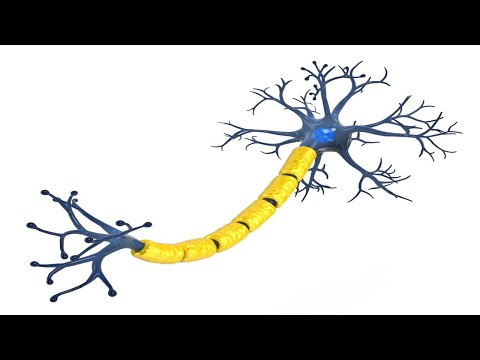
Amyotrophic Lateral Sclerosis, or ALS, is a progressive neurodegenerative disease that affects motor neurons in the brain and spinal cord. These neurons control voluntary muscle movement.
As motor neurons deteriorate, individuals gradually lose the ability to move, speak, swallow, and eventually breathe independently. The physical progression of the disease can be devastating. Early symptoms may include tripping, weakness, slurred speech, difficulty using the hands, or problems with fine motor tasks.
What makes ALS particularly striking is that cognition often remains largely intact, although some individuals do experience cognitive or behavioral changes. Many people with ALS continue thinking, reasoning, remembering, and making decisions even as their bodies become increasingly limited.
This distinction challenges a common assumption that physical decline and cognitive decline always occur together. They do not. ALS reminds us that the brain and body are interconnected, but they do not always change in parallel. An individual may experience profound physical disability while retaining intellect, personality, humor, relationships, and sense of self.
Please watch this video:
Multiple Sclerosis: When the Nervous System Attacks Itself
Multiple Sclerosis, or MS, is an autoimmune disease in which the body’s immune system mistakenly attacks myelin, the protective covering surrounding nerve fibers. When myelin is damaged, communication between the brain and the rest of the body is disrupted.
Symptoms vary tremendously depending on which areas of the nervous system are affected. Some individuals experience vision problems, muscle weakness, fatigue, numbness, balance difficulties, pain, or coordination challenges. Others may experience cognitive symptoms, including difficulties with attention, information processing, and memory.
MS is often diagnosed in early or middle adulthood rather than later life, but many individuals live with the condition for decades. As a result, gerontologists increasingly encounter older adults who have spent much of their lives managing the disease.
MS highlights an important lesson about the nervous system: not all neurological disorders are diseases of aging, and not all involve the same kind of decline. Some involve immune dysfunction, inflammation, or damage to communication pathways rather than progressive destruction of neurons themselves.
Prion Disease: When Dementia Progresses Rapidly
Some neurological disorders look like dementia but progress much more rapidly than typical Alzheimer’s disease. Creutzfeldt-Jakob Disease, or CJD, is a rare prion disease sometimes described as the human version of “mad cow disease,” although most cases are sporadic and not linked to contaminated food.
Prion diseases are rare, but they are important because they can cause rapidly progressive dementia. Symptoms may include confusion, memory problems, movement changes, personality changes, and coordination difficulties. Unlike Alzheimer’s disease, which often progresses over many years, prion diseases may worsen dramatically over months.

This distinction matters for families. If a condition is likely to progress over many years, families may prepare one way. If the expected timeline is much shorter, planning, caregiving, emotional preparation, and end-of-life decisions may look very different.
Frontotemporal Dementia and Pick’s Disease: When Personality and Language Change First
Some forms of dementia do not begin with memory loss. Frontotemporal dementia, sometimes associated historically with Pick’s disease, often affects personality, behavior, judgment, and language before memory becomes a major issue.
This can be especially confusing for families. A person may begin acting in socially inappropriate ways, lose empathy, become impulsive, struggle with language, or seem emotionally changed. Family members may think the person is being rude, selfish, careless, or difficult when the real issue is neurological change.
Please watch this video:

This is one reason education matters. If families expect all dementia to begin with memory loss, they may miss the significance of early personality or language changes. Frontotemporal disorders remind us that the location of brain change strongly influences the symptoms we observe.
The Brain Is More Than Memory
One of the recurring themes in gerontology is that we often talk about “the brain” as though it performs a single function. In reality, the brain coordinates movement, sensation, language, emotion, sleep, attention, memory, judgment, personality, and countless other processes that shape everyday life.
Because of this complexity, neurological and psychiatric disorders can look very different from one another. Some primarily affect movement. Others affect mood. Some alter personality. Others affect memory. A few affect nearly every aspect of functioning.
Understanding this complexity helps us move beyond the assumption that every neurological disorder is simply another form of dementia. Dementia is one category of neurological disorder, but it is not the only one. Appreciating that distinction helps us better understand both the remarkable complexity of the brain and the diverse experiences of the people who live with neurological and mental health conditions.
In the next section, we will focus specifically on dementia, a group of disorders in which memory, thinking, judgment, behavior, and everyday functioning become progressively impaired. Understanding dementia requires understanding the broader neurological landscape first, and now we are ready to do exactly that.