12.1 Loss and Grief
On any given day, we can turn on the television and see death. It appears in our news, our television, and our video game entertainment. However, does this kind of exposure prepare us for first-person loss and death? This chapter will address the fact that despite being bombarded by images of Hollywood death, we are essentially a death-denying society. We do not want to talk about it. We do not want to be around it. Yet, if we are experiencing the loss of a loved one or even our terminal diagnosis, how will we know if our grief and sadness are normal? Have we removed death so far from our daily lives that we don't know what to do in times of loss? Let's explore.
In life, we all experience losses. Some of our losses are more significant than others, but they all have an impact. We have to be careful not to compare losses because each of us experiences them in our own way. Loss of job, loss of home, divorce, death of a child, death of parent or spouse -it's all very personal. For most of us, loss through death is the most profound - because they are the most absolute. Depending on your perspective, death may represent the end. For others, it is perceived as the beginning of the next adventure. It really depends on your point of view.
Let's take some time to examine what we know about the loss & grief cycle.
Please watch the video:

(Source: Transform Grief)
Illustration from the original Canvas course (image not included in this lightweight export).Understanding Grief: Frameworks, Not Formulas
One of the challenges in studying grief is that every person's experience is unique. The loss of a spouse is different from the loss of a parent. The death of a child is different from a terminal diagnosis. The end of a marriage, the loss of a career, or a life-changing illness can create reactions that feel remarkably similar to those experienced after a death. Because grief is deeply personal, researchers have spent decades trying to understand why people react the way they do and what helps them adapt to profound loss.
As a result, numerous theories and frameworks have emerged to help explain the grieving process. Some focus on emotions. Others focus on tasks, coping strategies, or life transitions. None of these models is universally correct, and none can fully capture the complexity of every human experience. At the same time, each offers valuable insight into a process that often feels confusing, overwhelming, and unpredictable.
Think of these theories as maps rather than rules. A map can help you understand where you are, identify possible routes forward, and reassure you that others have traveled similar terrain. It cannot tell you exactly what your journey will look like. Grief rarely follows a neat sequence, and there is no single "right" way to experience loss. Sometimes, however, having a theoretical framework helps us make sense of the chaos. It provides language for experiences that can otherwise feel impossible to describe.
The following models represent several of the most influential approaches to understanding grief, loss, and adaptation. Rather than viewing them as competing explanations, consider them different lenses through which we can better understand one of the most universal experiences of being human.
The Four Tasks of Mourning
While many people are familiar with Kübler-Ross's stages of grief, contemporary grief counselors and bereavement specialists often find William Worden's Four Tasks of Mourning particularly useful because they focus on adaptation rather than emotional stages. Worden argued that grief is not something that simply happens to us. Instead, it involves active work. We do not move through a predetermined sequence of emotions. Rather, we gradually adapt to a world that has been changed by loss.
Importantly, these tasks are not completed in order, nor are they ever fully "finished" in a neat and permanent way. Individuals may move back and forth among them, revisit them years later, or experience several simultaneously. The goal is not to stop grieving. The goal is to learn how to continue living while carrying the reality of the loss.
Task 1: Accept the Reality of the Loss
The first task involves acknowledging that the loss has occurred and that life has fundamentally changed. While this may sound straightforward, acceptance often takes far longer than simply understanding the facts. A person may intellectually know that a loved one has died while emotionally expecting them to walk through the door, answer the phone, or occupy their usual seat at the dinner table.
Funerals, memorial services, religious rituals, and other mourning practices often serve an important purpose by helping individuals confront the reality of the loss. Even then, acceptance is rarely a single moment. It often unfolds gradually as people encounter the countless ways their lives have changed.
Task 2: Process the Pain of Grief
Loss generates a wide range of emotional, physical, cognitive, and even spiritual reactions. Sadness, anger, guilt, anxiety, loneliness, relief, numbness, confusion, and fear may all appear, sometimes within the same day. Grief can also manifest physically through fatigue, sleep disturbances, appetite changes, difficulty concentrating, and a sense that the world no longer feels familiar.
Worden believed that avoiding grief often prolongs suffering. Processing the pain does not mean dwelling endlessly in sadness, nor does it mean expressing grief in a particular way. Rather, it means allowing ourselves to acknowledge and experience the emotions associated with loss instead of denying, suppressing, or outrunning them.
Task 3: Adjust to a World Without the Deceased
Loss often requires practical adjustments that extend far beyond emotional adaptation. The death of a spouse may mean learning to manage finances alone, maintain a household, or make decisions independently. The death of a parent may alter family roles and responsibilities. The loss of a close friend may leave a gap in daily routines, social activities, or emotional support.
These adjustments occur on multiple levels. We must adapt externally to changes in our environment and routines, internally to changes in our sense of self, and socially to changes in our relationships with others. This task reminds us that grief is not only about missing someone. It is also about learning how to live in a world that no longer looks the same.
Task 4: Find an Enduring Connection While Continuing to Live
Earlier theories of grief often suggested that healthy adaptation required detaching from the deceased and moving on. More recent perspectives recognize that most people do not simply let go of important relationships. Instead, they find new ways to maintain a meaningful connection while continuing to engage in life.
People may keep traditions alive, tell stories, prepare favorite recipes, celebrate birthdays, display photographs, carry forward values, or share lessons learned from the person who died. These ongoing bonds allow the relationship to evolve rather than disappear.
This final task may be the most misunderstood. The goal is not forgetting. The goal is not replacing the person who has been lost. The goal is learning how to carry that relationship forward in a way that allows both remembrance and continued growth. Healthy grief does not require us to leave our loved ones behind. It asks us to find a place for them within the ongoing story of our lives.
Popular culture often speaks of "closure," but many grief specialists argue that grief is rarely resolved in such a neat fashion. Most people learn to integrate loss into their lives rather than bringing it to a definitive conclusion.
The Kübler-Ross Model of Grief and Dying
In 1969, Swiss-American psychiatrist Dr. Elizabeth Kübler-Ross published her groundbreaking book On Death and Dying. Based on years of interviews with terminally ill patients, she proposed that many individuals facing death experience a series of common emotional reactions. Her work challenged a medical culture that often avoided conversations about dying and helped bring discussions of death, grief, and end-of-life care into mainstream healthcare.
The resulting framework, known as the Kübler-Ross Model, became one of the most widely recognized theories of grief ever developed. Although it was originally intended to describe the experiences of individuals facing their own terminal illness, the model has since been applied to many forms of loss, including the death of a loved one, divorce, serious illness, job loss, and major life transitions.
Today, the model remains influential, but researchers generally view it as a way of understanding common reactions to loss rather than a roadmap that everyone follows. Some people may experience several of these reactions, others only one or two, and many move back and forth between them. Grief is rarely orderly.
Denial: "This can't be happening."
Denial often serves as a protective buffer that allows us to absorb overwhelming information gradually. Following a terminal diagnosis or significant loss, people may struggle to believe what they have heard. This reaction is not necessarily irrational. It can provide temporary emotional protection while the mind adjusts to a new reality.
Anger: "Why me?"
As reality begins to settle in, frustration, resentment, and anger may emerge. The anger may be directed at healthcare providers, family members, spiritual beliefs, circumstances, or simply the unfairness of the situation. Anger is often a response to feeling powerless in the face of a loss that cannot be controlled.
Bargaining: "If only..."
During this stage, people often search for ways to regain a sense of control. They may make promises, negotiate with a higher power, or focus on actions they believe might change the outcome. A person facing a terminal illness might hope to live long enough to see a grandchild graduate or attend an important family event. Bargaining reflects a natural desire to postpone loss and preserve hope.
Depression: "I understand what I am losing."
As the reality of the loss becomes clearer, sadness may deepen. This stage is often characterized by grief, withdrawal, reflection, and a recognition of what will be lost. For a dying individual, this may involve mourning future experiences, relationships, or life itself. For survivors, it may involve confronting the absence of someone who was deeply important. Kübler-Ross viewed this not as a disorder, but as a natural response to profound loss.
Acceptance: "This is my reality."
Acceptance is perhaps the most misunderstood stage. It does not mean happiness, approval, or the absence of sadness. Rather, it reflects a willingness to acknowledge reality and move forward within it. Some individuals find a sense of peace, reconciliation, or clarity. Others simply stop struggling against what cannot be changed. Acceptance may coexist with sadness, fear, gratitude, hope, or love.
One of the most important contributions of Kübler-Ross's work is the recognition that hope remains present throughout the dying process. Hope does not necessarily mean hope for a cure. It may become hope for comfort, meaningful conversations, reconciliation with loved ones, relief from suffering, or the opportunity to leave a legacy. Kübler-Ross believed that helping people maintain hope, purpose, and dignity was an essential part of what she called dying well.
Today, most grief specialists agree that people do not move through these stages in a predictable order, nor do they necessarily experience all of them. Nevertheless, the model remains valuable because it provides language for emotional reactions that can otherwise feel confusing or overwhelming. For many people, simply knowing that others have experienced similar feelings can be reassuring during times of loss.
The Living-Dying Interval Model
While Kübler-Ross focused on common emotional reactions to terminal illness, other theorists have argued that dying is less about moving through emotional stages and more about learning how to continue living in the face of mortality. One such perspective is the Living-Dying Interval Model, developed by David Copp and colleagues.
This model begins with a simple observation: there is no single "correct" way to die. Some people become highly emotional, while others become intensely practical. Some seek spiritual meaning, while others focus on relationships, unfinished goals, or simply making the most of the time they have remaining. Rather than viewing dying as a sequence of emotional stages, the Living-Dying Interval Model views it as a process of adaptation.
The central task is not preparing for death. The central task is continuing to live while recognizing that life may be limited.
This perspective is particularly relevant today. Advances in medicine mean that many individuals live for months or years with serious illnesses that would once have caused rapid death. A diagnosis of cancer, heart failure, Parkinson's disease, or another life-limiting condition often creates a prolonged period in which people are simultaneously living and dying. During this time, individuals continue to make plans, maintain relationships, celebrate milestones, and find meaning while also confronting their mortality.
The model identifies three broad phases that individuals may experience.
Acute Crisis Phase
The Acute Crisis Phase begins when an individual becomes aware of the possibility or inevitability of death. This may occur following a terminal diagnosis, a serious medical event, or a significant decline in health.
For many people, this period is characterized by uncertainty, fear, and anxiety. Questions often outnumber answers. What will happen next? How much time do I have? Will I suffer? How will my family cope? The future suddenly feels unpredictable, and individuals must begin adjusting to a reality they never expected to face.
At this stage, the unknown is often more frightening than the known.
Living-Dying Phase
As the initial shock begins to subside, attention often shifts from the abstract fear of death to the practical realities of life.
People may focus on relationships, finances, healthcare decisions, unfinished goals, family responsibilities, spiritual concerns, or legacy-building. Questions become more concrete: Who will care for my spouse? What happens to my children? How do I want to spend the time I have left? What conversations still need to happen?
This phase is often where some of the most meaningful work of dying occurs. Individuals may repair relationships, share stories, pass along family traditions, create advance directives, make funeral arrangements, write letters, record memories, or simply spend time with those they love.
Importantly, this phase is still very much about living. Many individuals continue to experience joy, humor, purpose, and connection even while facing a life-limiting illness.
Terminal Phase
The Terminal Phase involves a gradual shift away from the struggle to prolong life and toward acceptance of the dying process itself. Energy and attention often become focused on comfort, symptom management, and meaningful interactions rather than future planning.
For some individuals, this stage is marked by a sense of peace. For others, it may involve continued reflection, spiritual exploration, or time spent with loved ones. The emphasis becomes less about fighting death and more about achieving comfort, dignity, and closure.
This does not necessarily mean a person has "given up." Rather, it reflects an understanding that there comes a point when the quality of one's remaining life may become more important than the quantity.
One of the strengths of the Living-Dying Interval Model is that it reminds us that dying is not merely a medical event. It is also a social, emotional, practical, and existential experience. Even in the face of terminal illness, people continue to live, love, plan, hope, worry, laugh, and create meaning. The challenge is not simply learning how to die. It is learning how to live fully while recognizing that life is finite.
Processing the End of Life
The theories we have discussed thus far help explain how people respond to loss and grief. However, they raise a larger question: how do individuals come to terms with their own mortality?
One of the unique contributions of gerontology and geropsychology is the recognition that aging itself often creates opportunities for reflection. As people move through later life, they naturally begin to look backward as well as forward. They take stock of relationships, accomplishments, disappointments, regrets, and the stories that have shaped their lives. This process is known as life review or reminiscence.
Both Robert Butler and Erik Erikson recognized that reflection serves an important psychological purpose. Through life review, individuals organize memories, assign meaning to experiences, reconcile unresolved conflicts, and develop a sense of continuity between past and present. The process is not simply nostalgia. It is an attempt to answer some of life's biggest questions: Did my life matter? Did I make a difference? Who am I in the story of my own life?
For many older adults, this process can foster a sense of peace and acceptance. They begin to recognize that a meaningful life is not defined by perfection, but by the accumulation of experiences, relationships, challenges, and growth. Even difficult memories may take on new significance when viewed through the lens of an entire lifetime.
For family members and caregivers, these conversations can be an extraordinary gift. Listening to stories, asking questions, and encouraging reminiscence allows older adults to share their history, values, and wisdom while helping younger generations better understand the person behind the stories. In many cases, the simple act of listening becomes an important part of the end-of-life journey for both individuals.
Of course, reflecting on life often leads us to confront another reality: the awareness that life is finite. How people respond to that awareness varies tremendously, and much of it depends on their experiences, beliefs, relationships, and personal history.
Fear of Death
Despite the certainty of death, most people spend surprisingly little time thinking about it. When death does enter our awareness, the response can range from mild discomfort to profound anxiety. Understanding these reactions can help us distinguish between normal concerns about mortality and fears that interfere with our ability to live fully.
It is entirely normal to fear the death of a loved one. We form attachments, build relationships, and create lives intertwined with other people. The thought of losing someone we love can evoke sadness, fear, uncertainty, and grief long before a loss actually occurs. These reactions are part of being human.
Researchers often distinguish between fear of death and death anxiety. Fear of death generally involves a specific concern that can be identified. A person may fear pain, loss of independence, suffering, or the death of a loved one. The source of the fear is recognizable and understandable.
Death anxiety is broader and often more difficult to define. It refers to a generalized uneasiness about mortality that may not be tied to a specific threat. Individuals experiencing high levels of death anxiety may avoid conversations about death, struggle with uncertainty, become preoccupied with health concerns, or limit life experiences because of fears about loss, illness, or mortality.
At the opposite end of the spectrum is death competency, a concept describing an individual's ability to understand, discuss, and navigate end-of-life issues. Death-competent individuals are not fearless. Rather, they possess the knowledge, skills, and emotional capacity to engage with topics such as illness, caregiving, advance care planning, grief, and dying in thoughtful and constructive ways.
Death competency is not something we are born with. Like any other life skill, it develops through experience, education, conversation, reflection, and sometimes necessity.
Perhaps the goal is not to eliminate our fear of death entirely. Fear reminds us that life matters. Instead, the challenge is learning to acknowledge mortality without allowing it to dominate our lives. In many ways, understanding death can help us live more intentionally, appreciate our relationships more deeply, and place greater value on the time we have.
Grief
Grief is a normal and necessary response to loss. While we often associate grief with death, people grieve many kinds of losses throughout the lifespan, including the loss of health, relationships, identity, independence, employment, dreams, and future plans. Whenever something meaningful is taken from us, grief is a natural response.
When the loss involves someone we love, grief becomes the process of adapting to a world that has been changed by their absence. Earlier theories often described grief as letting go of a relationship. More recent perspectives suggest that healthy grieving involves finding new ways to maintain meaningful connections while continuing to move forward with life. We do not forget people we love. Instead, we learn how to carry their memory, influence, and significance into the future.
Because grief is a universal human experience, every culture develops ways to acknowledge loss and support the bereaved. Funerals, memorial services, religious rituals, celebrations of life, wakes, and mourning traditions serve important social and psychological functions. They provide opportunities to express emotions, receive support from others, honor the life of the deceased, and begin adapting to a changed reality.
Historically, death was often a family and community event. People died at home, surrounded by loved ones. Family members participated directly in caring for the dying person, preparing the body, and carrying out mourning rituals. These practices brought death into everyday life and created shared opportunities to process loss.
Today, death is often managed through healthcare systems, hospitals, hospice programs, and funeral professionals. While these services provide important benefits, they can also create distance between individuals and the realities of dying. As a result, many people reach adulthood with relatively little direct experience of death and grief. When a significant loss occurs, they may feel unprepared for the intensity and complexity of the emotions that follow.
One of the most important lessons grief researchers have learned is that grief cannot be rushed. It is not something to be fixed, avoided, or completed according to a schedule. The process requires time. Attempts to suppress grief, ignore it, or "stay strong" indefinitely often delay rather than eliminate the emotional work that must eventually be done.
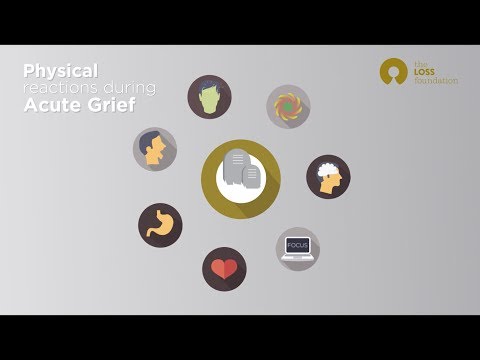
Grief affects more than emotions. It can influence the body, thoughts, behaviors, relationships, and even a person's sense of meaning and identity. Individuals experiencing normal grief may report symptoms such as:
-
Tightness in the throat or chest
-
Shortness of breath or frequent sighing
-
Headaches or physical tension
-
Fatigue and muscle weakness
-
Changes in appetite
-
Sleep disturbances
-
Difficulty concentrating
-
Feelings of sadness, numbness, disbelief, anger, or loneliness
These reactions can be unsettling, particularly for individuals experiencing a major loss for the first time. However, they are generally considered normal responses to significant grief.
Another common reaction is idealization, the tendency to remember the deceased in an especially positive light while minimizing their flaws or imperfections. Following a death, it is common to focus on a person's best qualities and happiest memories. In many cases, this serves a healthy emotional purpose. However, if idealization becomes extreme or persistent, it can make it difficult to fully integrate the loss or develop new relationships because no living person can compete with a perfected memory.
Perhaps the most important thing to remember is that there is no single "correct" way to grieve. Some people cry openly. Others become quiet and reflective. Some seek support from friends and family, while others process their emotions privately. Some experience intense emotions immediately, while others find that grief emerges gradually over time.
No particular symptom, behavior, or timeline determines whether grief is normal. What matters is not whether people grieve in the same way, but whether they are gradually finding ways to adapt, heal, and continue living while carrying the reality of the loss.
Please watch the video:
(Source: The Loss Foundation)
Anticipatory Grief
When most people think about grief, they think about the emotions that follow a death. However, grief often begins long before a person dies. Anticipatory grief refers to the emotional response that occurs when a significant loss is expected but has not yet taken place.
Anticipatory grief is particularly common in gerontology because many age-related illnesses develop gradually rather than suddenly. A diagnosis of Alzheimer's disease, Parkinson's disease, terminal cancer, heart failure, or another life-limiting condition can create a prolonged period during which individuals and families begin confronting the reality of future loss. In some cases, family members may feel as though they are grieving in stages as the illness progresses. They may mourn changes in personality, memory, independence, communication, or the ability to share familiar activities long before death occurs.
The person who is ill may also experience anticipatory grief. They may grieve the loss of health, mobility, future plans, independence, employment, relationships, or life milestones they had hoped to experience. For some individuals, these losses can be as emotionally significant as the prospect of death itself.
Anticipatory grief can serve an important purpose. It may allow individuals and families time to have difficult conversations, make practical plans, express love, resolve conflicts, and prepare emotionally for what lies ahead. At the same time, it can also be exhausting. Unlike grief following a death, anticipatory grief often unfolds over months or years and is accompanied by uncertainty. Family members may find themselves repeatedly adjusting to new losses while still maintaining hope for additional time together.
For many caregivers, anticipatory grief becomes part of the caregiving experience. They may simultaneously celebrate moments of connection, mourn what has already been lost, and worry about what the future may bring. Understanding anticipatory grief helps us recognize that grief is not always tied to a single event. Sometimes it begins the moment we realize that life is changing in ways that cannot be reversed.
Disenfranchised Grief
Not every loss receives the same level of recognition, support, or understanding from society. Disenfranchised grief, a concept developed by grief researcher Kenneth Doka, refers to grief that is not openly acknowledged, socially validated, or publicly supported.
Society tends to recognize certain losses as worthy of mourning. The death of a spouse, parent, child, or sibling is generally understood as a significant life event, and individuals experiencing those losses often receive sympathy, support, and opportunities to grieve. Other losses, however, may be overlooked or minimized because they do not fit cultural expectations about who has the right to grieve.
Consider the death of an ex-spouse, a former partner, an estranged parent, a coworker, a neighbor, or a close friend. The relationship may have been deeply meaningful, yet others may not recognize the significance of the loss. Similarly, individuals grieving a miscarriage, infertility, the loss of a pet, or the progression of a loved one's dementia may find that others underestimate the emotional impact of their experience.
Disenfranchised grief can be particularly difficult because the mourner is coping not only with the loss itself but also with a lack of social support. Friends, family members, and coworkers may unintentionally dismiss the grief by suggesting that the individual should "move on" or by failing to recognize that a meaningful loss has occurred. As a result, people may feel isolated, misunderstood, or even guilty for grieving.
In later life, disenfranchised grief can become especially common. Older adults often experience multiple losses within a relatively short period of time, including the deaths of friends, neighbors, former coworkers, and extended family members. While each loss may be significant, society does not always acknowledge the cumulative impact of these experiences. Yet grief is not measured by the legal status of a relationship or the number of sympathy cards received. It is measured by the meaning that relationship held in a person's life.
Recognizing disenfranchised grief reminds us that loss is deeply personal. Two individuals may experience the same event very differently, and grief cannot be judged from the outside. One of the most compassionate things we can do is allow people the space to mourn losses that may not be immediately visible or understood by others.
Bereavement and Mourning
As you have already learned, grief is a deeply personal experience. However, grief does not occur in isolation. Every society develops expectations, rituals, and customs that help individuals express loss and support one another during times of bereavement.
The terms loss, grief, bereavement, and mourning are often used interchangeably, but they describe different aspects of the experience.
Loss refers to the event itself. A death, divorce, illness, disability, or other significant change represents a loss.
Grief is the internal response to that loss. It includes the emotional, physical, cognitive, and spiritual reactions that occur as we adapt to a changed reality.
Bereavement refers to the state of having experienced a significant loss, particularly the death of someone close.
Mourning is the outward expression of grief. Mourning includes the rituals, customs, behaviors, and social practices that allow individuals and communities to acknowledge loss and support the bereaved.
Every culture develops ways to mourn. Some prescribe specific periods of mourning. Others use clothing, religious rituals, food, music, storytelling, or community gatherings to honor the deceased and support survivors. Even within the same culture, individuals and families may create their own traditions and practices.
In the United States, mourning often exists in tension with the demands of modern life. Most employers provide only a few days of bereavement leave regardless of the significance of the loss. Yet grief rarely follows a three-day timeline. Many people report feeling pressure to "move on" long before they have fully adapted to their loss.
For this reason, it is important to recognize that grief and mourning operate on different schedules. The funeral may last a day. The bereavement leave may last a week. The process of adapting to a significant loss may continue for months, years, or even a lifetime.
People frequently describe grief as feeling that something essential is missing. They may experience numbness, confusion, forgetfulness, disorganization, or a sense that the world no longer feels quite right. Others become intensely focused on tasks, cleaning, organizing, planning, or problem-solving as a way of creating order during a period of emotional upheaval. These reactions are often normal responses to a profound disruption in daily life.
Grief, Gender, and Social Expectations
Researchers have long observed that men and women often appear to grieve differently. Some of these differences may reflect biology, but many are shaped by culture, family expectations, social roles, and lifelong experiences. From an early age, people receive messages about which emotions are acceptable to express, how vulnerability should be displayed, and what it means to be "strong" during difficult times.
Historically, women have often been given greater permission to express sadness, seek emotional support, and discuss feelings openly. Men, on the other hand, have frequently been encouraged to solve problems, remain composed, and focus on action rather than emotional expression. These expectations can influence how grief is displayed, even when the underlying emotional experience is similar.
It is also important to recognize that women tend to experience certain losses more frequently than men. Because women generally live longer, they are more likely to experience widowhood, the deaths of siblings and friends, and periods of living alone in later life. Men, in contrast, are often more likely to lose a spouse later in life without having developed the same social support networks that many women maintain. These differences can influence both the experience of grief and the resources available for coping with loss.
At the same time, gender is only one influence among many. Personality, culture, family dynamics, spiritual beliefs, relationship quality, and previous experiences with loss may all play a larger role than gender alone. Some men grieve in highly emotional ways. Some women approach grief through action, planning, and problem-solving. Most people display a mixture of characteristics that do not fit neatly into traditional gender expectations.
For this reason, contemporary grief researchers often focus less on whether someone is male or female and more on how individuals process and express grief. Terry Martin and Kenneth Doka developed the concept of grief styles to help explain these differences. Their work suggests that the most important question is not whether someone grieves like a man or a woman, but how they naturally respond to loss.
How Do We Grieve?
One of the most common misconceptions about grief is that there is a correct way to experience it. Popular culture often portrays grief as an intensely emotional process marked by tears, sadness, and visible expressions of loss. While this is certainly true for some individuals, it is far from the only way people grieve.
Researchers Terry Martin and Kenneth Doka observed that people tend to process grief in different ways. These differences are influenced by personality, culture, family expectations, life experiences, social roles, and sometimes gender socialization. Understanding these differences can help us avoid judging ourselves or others during times of loss.
Intuitive Grievers
Intuitive grievers experience grief primarily through emotions. They often describe grief as a feeling that must be expressed and shared. Crying, talking about the deceased, seeking emotional support, journaling, participating in support groups, or openly discussing their feelings may help them process their loss.
Because their grief is highly visible, intuitive grievers are often recognized by others as "grieving." Their outward expressions tend to mirror their internal emotional experience.
Instrumental Grievers
Instrumental grievers experience grief more cognitively and behaviorally. Rather than focusing primarily on emotions, they often process loss through thinking, problem-solving, action, and activity. They may express grief by organizing funeral arrangements, researching information, repairing something meaningful, creating memorial projects, or focusing on practical responsibilities.
One father whose daughter died in a car accident found comfort in repairing the fence damaged in the crash. Years later he explained, "It was the only part of the accident I could fix."
Instrumental grievers often feel deeply, but they may express those feelings through action rather than words. Because their grief may be less visible, others sometimes mistakenly assume they are unaffected by the loss.
Dissonant Grievers
Many individuals do not fit neatly into either category. Dissonant grievers experience a mismatch between how they feel grief and how they believe they should express it.
For example, an individual may experience intense emotions but feel pressure to remain strong for family members. Another person may prefer a more practical approach to grief but feel guilty because they are not reacting in the way others expect. Social expectations, cultural norms, family roles, and personal beliefs can all contribute to this internal conflict.
When Grief Styles Collide
One of the most common sources of conflict after a death occurs when people misunderstand one another's grief style. The person who cries openly may wonder why a sibling seems focused on paperwork and logistics. The sibling managing funeral arrangements may wonder why everyone else appears unable to function.
Neither response is necessarily more healthy, more loving, or more appropriate than the other.
The emotional griever and the practical griever may both be experiencing profound loss. They are simply adapting to that loss in different ways.
Understanding grief styles can help us become more patient with ourselves and more compassionate toward others. The goal is not to grieve correctly. The goal is to find healthy ways to adapt to loss while respecting that different people may travel that path differently.