Why Do Our Bodies Age?
It's not enough to know that there are more older people in the United States or the aging population's demographics. It is essential to understand what happens when we age. Our bodies, our brains, our social networks….they all go through shifts.
Though, the reality is that despite our spiritual age, our bodies do experience a certain amount of decline. We need to remember that age is a natural progression that brings alterations in our cell structures. Age is not a disease, nor does age bring inevitable illness. Disease is just that. Dis – ease. It is when our bodies experience something going wrong, out of the ordinary. Some physiological changes are, indeed, associated with diseases. For example, the brain of a 90-year old may contain nerve cells that have plaques and tangles commonly associated with Alzheimer's disease, even though the person did not have the condition.
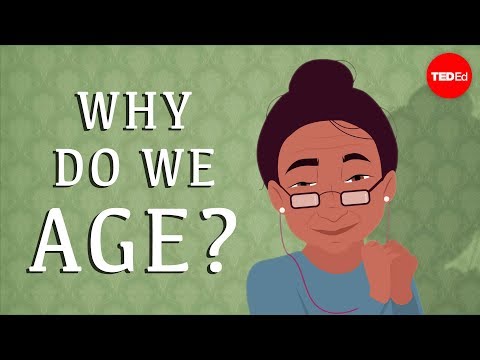
When we look in the mirror what do we see? I know that I see at 57 year old woman who occasionally colors her hair to cover the gray, who is carrying 20 or 30 extra pounds

around her lower body, and whose skin is starting to change texture. I also see a 20 year old woman looking out from behind bright blue eyes, who enjoys smiling and laughing, still has a great head of thick hair (despite the gray strays), is just curvy enough to still engage the opposite sex, and who walks with the confidence of someone 20 years her senior. I’m lucky. I actually like being me. I’m 57 chronologically, and have started to experience “normal age changes.”
My spirit is still young – and I challenge anyone to find an older person who actually “feels” as old as they are. My grandmother used to tell me what a surprise it was to look in the mirror and find an old woman staring back at her – her spirit, she says, is no older than 29! (By the way, that is NOT a picture of me...)
Dis-Ease
The reality is that despite our spiritual age, our bodies do experience a certain amount of decline. We need to remember that age is a natural progression through time that brings alterations in our cell structures. Age is not disease, nor does age bring inevitable disease. Disease is just that. Dis – ease. It is when our bodies experience something going wrong, out of the ordinary. All this must be said with the caveat that with age comes some physiological changes that are frequently associated with disease. For example, the brain of a 90-year old may contain nerve cells that have plaques and tangles commonly associated with Alzheimer’s disease, even though the person did not have the disease.
Acute vs. Chronic Disease
There are two different kinds of “disease” that we experience. Acute disease is sudden onset, usually short duration. Chronic disease is just the opposite. The onset may be sudden, but is more often quite slow and sneaks up on us. Chronic disease is long term, and sufferers may experience symptoms for the duration of their lives. We look at morbidity rates (the frequency of an illness within a population) and mortality rates (the death rate associated with an illness) to determine the seriousness of various acute and chronic illnesses. These rates help us determine where resources will be allocated to fight and/or treat various conditions.
The Baltimore Study
The Baltimore Longitudinal Study on Aging (BLSA, 2011) began in 1958 and has traced the aging process in 1,400 people from age 20 to 90. Researchers from the BLSA have found that the aging process varies significantly from individual to individual and from one organ system to another. Kidney function may deteriorate earlier in some individuals. Bone strength declines more rapidly in others. Much of this is determined by genetics, lifestyle, and disease. However, some generalizations about the aging process have been found:
- Heart muscles thicken with age
- Arteries become less flexible
- Lung capacity diminishes
- Brain cells lose some functioning but new neurons can also be produced
- Kidneys become less efficient in removing waste from the blood
- The bladder loses its ability to store urine
- Body fat stabilizes and then declines
- Muscle mass is lost without exercise
- Bone mineral is lost. Weight bearing exercise slows this down.
So, what's normal aging?
Classes can spend entire semesters exploring the fascinating changes that our bodies go through as we age. I have neither the time nor the intention to make you into an expert. However, I think it is important that you have a basic understanding of the physiological changes that your clients may be experiencing. So, hang onto your hats as you are exposed to the material that I offer in my upper-division gerontology courses as we cover some basic principles of aging changes. Do you need to remember it all? No. However, I expect that most of you will find this material interesting and particularly useful to you in your travels.
Normal is Relative
We need to consider various human function indicators as tools to determine the "normal" trajectory for aging. Each generation takes a different trajectory based on the cohort effect. What's that?
"The cohort effect is the effect that having been born in a certain time, region, period, or having experienced the same life experiences has on the development or perceptions of a particular group.
These perceptions and characteristics are unique to the group in question." (Atingdui, 2011).
What that means is that what we experience as we age influences how we age. For example, when we hear that 30 is the new 50, there's some truth to that! The extension of longevity and better health and nutrition has made it so that the declines that we might have seen in the 50-year-olds of the 1950s are often absent in the 50-year-olds of today.
What is Normal?
Healthcare providers need to be aware of which aspects of aging are reversible and which ones are inevitable. By keeping this distinction in mind, caregivers may be more objective and accurate when diagnosing and treating older patients. And a positive attitude can go a long way toward motivating patients to stick with a health regime. Unfortunately, stereotypes can lead to misdiagnosis. For example, it is estimated that about 10 percent of older patients diagnosed with dementia are actually depressed or suffering from some other psychological illness (Berger, 2005). The failure to recognize and treat psychological problems in older patients may be one consequence of such stereotypes.