Stress and Coping
Think about your life, right now. Is it more like a rollercoaster, with sequential conflicts and due dates one after the other. Or, is it chronic - always at a low level, with no break in between. Each of us experiences stress differently, and each of us requires different coping mechanisms to best deal with the physical and psychological results of that stress. How we cope with our stress can influence our mental and physical wellness.
There is a phenomenon called "Caregiver Stress Syndrome." Caregiver stress syndrome is a condition characterized by physical, mental and emotional exhaustion. It typically results from a person neglecting their own physical and emotional health because they are focused on caring for an ill, injured or disabled loved one.
Even without the added pressures of caregiving, life itself can be stressful. Is that bad? I leave it to you to decide, but watch what the Scientific American has to say about "normal" stress:

Do you ever feel like a symbolic tiger is chasing you? That fight or flight response that gets your heart racing and churns your stomach is a physical indicator of the stress response. For those who hate going on roller coasters, much of what we dislike is that physical manifestation of stress. For others, the release of stress hormones is cathartic, and we come off the rollercoaster both relieved and exhilarated.
hink about your life, right now. Is it more like a rollercoaster, with sequential conflicts and due dates one after the other. Or, is it chronic - always at a low level, with no break in between. Each of us experiences stress differently, and each of us requires different coping mechanisms to best deal with the physical and psychological results of that stress.
Eustress
We all need a little stress - the right kind. Yep. There is such a thing as good stress. It’s the stress that arises out of just living among family and friends and work and environment we need that stress. We require that stress to just make us and motivate us to get out of bed in the morning. Even though it is normal and transitory, that kind of regular life stress can be overwhelming, but we start learning how to deal with it at an early age. (Seyle, 1974)
Distress
Distress is, well, distressing! It’s the stress that causes peaks of anxiety and concern. It may be everyday life stress that is usually transitory, but it's perceived as out of our control either way. It feels unpleasant. (Selye, 1975)
Distress decreases our performance. It can lead to physical and mental problems without us realizing the danger before it is too late. I'd like to give you a sense of how stress can affect us. Let’s take a moment to measure your stress temperature. Have a pen and paper (or a calculator) handy, and watch the following video.

What was YOUR stress score? As you were running the numbers, did you find any particular category's point value to feel "off?" Do you agree with the appraisal about your stress level and how it correlates to your health? If not, do you think you fall into the Hardy or Thrill Seeker personalities that thrive on stress?
The human body simply doesn't like surprises. We're so busy protecting ourselves from the shocks that sometimes we're not taking care of ourselves. Those stages of anxiety and stress and worry and fear can have a cumulative effect on our bodies. (Cohen, et al.,)
Timing is Everything
Bernice Neugarten (1976) suggested that our culture determines our social clock and establishes norms and expected social behaviors throughout the lifespan. Events in our lives that unfold in the manner that they are expected and predictable cause us the least amount of stress. These on-time events may come with stress, like graduating from college, buying our first home, or getting married. These are exciting, require tremendous work and effort, but they are predictable in their trajectory, and meet cultural expectations. Even the stress of an empty-nest when children leave the home, or the death of an elderly parent are events that, while stressful and unpleasant, are not unexpected.
When life events do not follow a predictable pattern, they can cause distress. Like the death of a child or the end of a marriage, these off-time events carry both psychological and social distress.
Caregiving, especially when we aren't expecting it, can be one of those "off-time," high stress events.
Read: A Late-Life Surprise: Taking Care of Frail Elderly Parents (https://khn.org/news/a-late-life-surprise-taking-care-of-frail-aging-parents/)
Stress and the Body
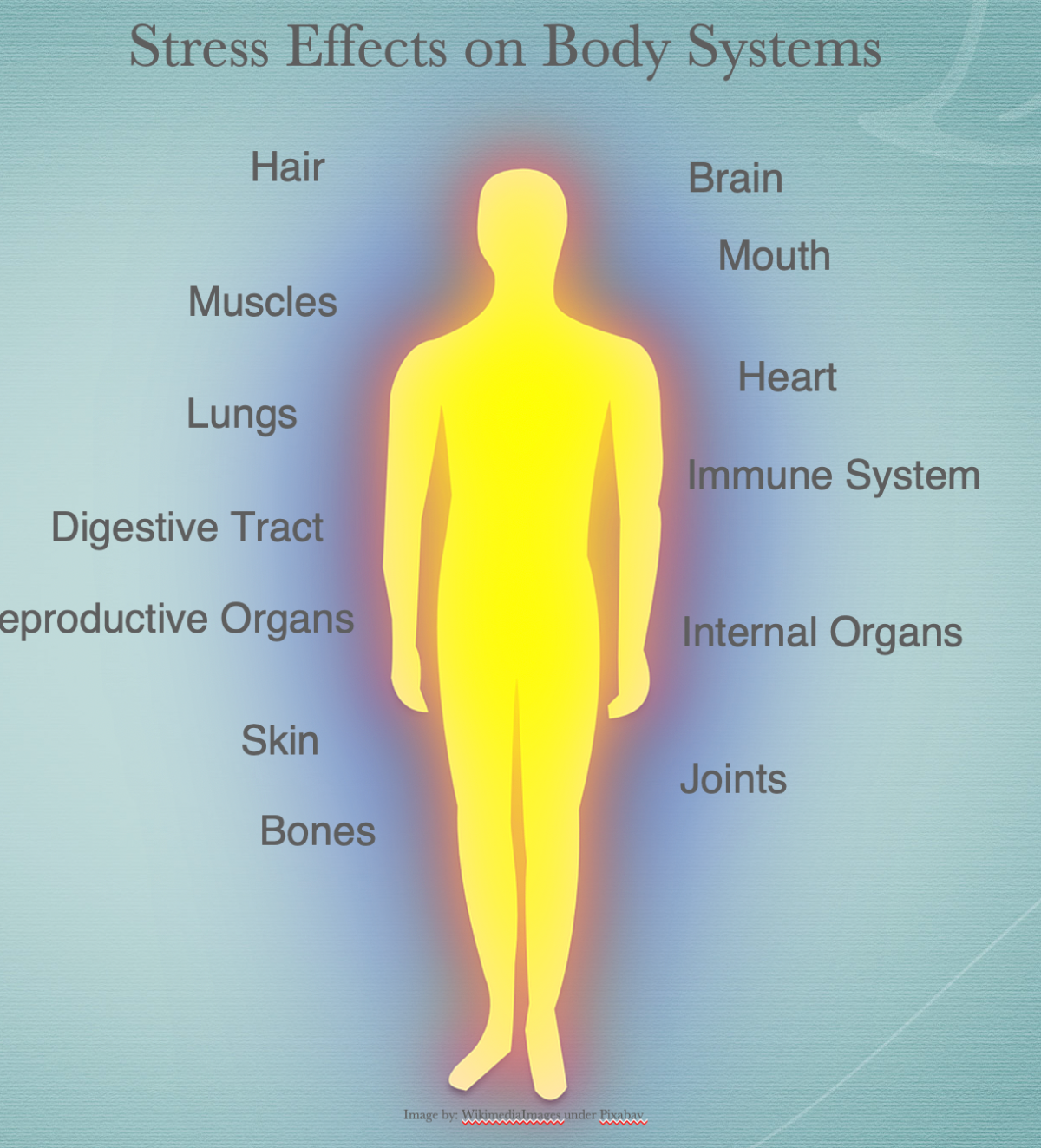 Stress causes our body to react in predictable ways. Almost everybody system can be affected by stress.
- Skin problems like acne, psoriasis, eczema, dermatitis, breakouts and skin rashes.
- Stomach problems like ulcers, IBS/IBD, food allergies, cramps, reflux, nausea, and weight fluctuations.
- Pancreas -elevated insulin can lead to diabetes, damaged arteries and obesity.
- Immune System can weaken, causing suppressed ability to battle and recover from illness. High levels of inflammation can cause chronic health conditions.
- Mental manifestations can include headache, mood swings, anger, depression, inability to concentrate, anxiety, panic attacks, and lack of energy.
- Intestines may have decreased nutrient absorption or metabolism, and an increase in inflammatory bowel disorders.
- Reproductive organs may produce less estrogen or testosterone, resulting in reduced fertility, sexual behavior, and loss of sex drive.
- Joints and muscles may experience aches and pains, inflammation, and tension. Lowered bone density (osteoporosis) and tightness in the shoulders and back may be present.
Stress and Gender
All of us are equipped to deal with a certain amount of stress. It's when those stresses are prolonged that we see the effects of cumulative stress. We hear about post-traumatic stress disorder, and know the psychological and physical impact of massive, one-time trauma. Research is only just uncovering the fact that cumulative stress can be equally taxing on our bodies. Cumulative stress evidences itself pretty early with fatigue and anxiety.
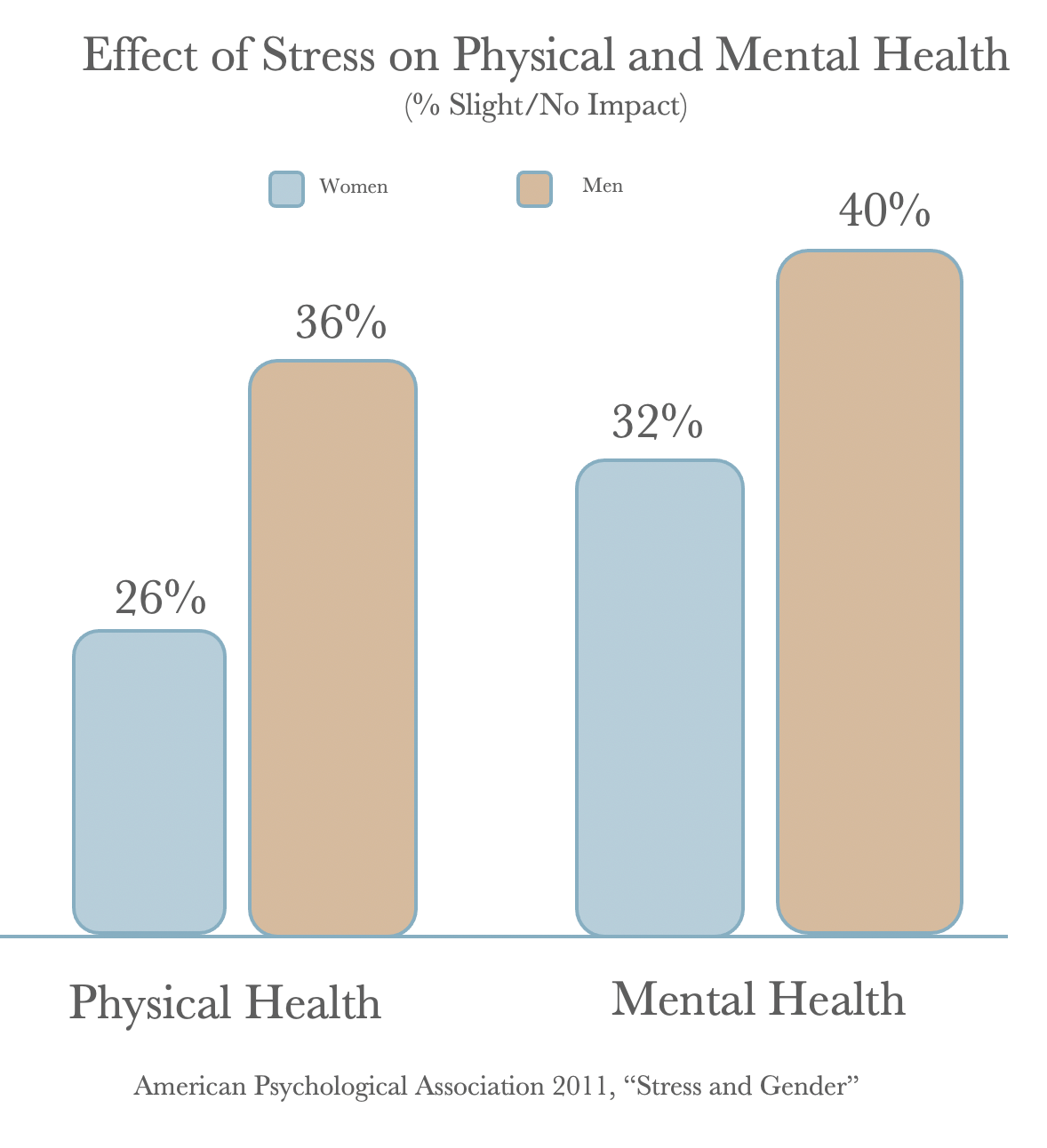
There is a gender difference in how we perceive stress. In a 2011 report by the American Psychological Association, men report higher impacts of stress on physical and psychological wellbeing.
Recent research has determined that gender influences how we cope with stress and what we perceive to be stressful. Gender also influences our perception of how important it is to manage that stress.
Women report that they are more likely to use multiple coping mechanisms, including spending time with family, going to religious services, shopping, getting a massage, or seeing a mental health professional. On the other hand, men were more likely to seek out stress reduction through sports and isolated physical activities.
Men are less likely to utilize professional counseling, and are less likely than women to report that they have made a conscious effort to recognize or reduce their stress. This results in men being more likely to be diagnosed with high blood pressure, type 2 diabetes, and heart disease. (APA, 2011)
Stress Patterns
Stress occurs on a continuum, beginning with mild pressure and ending with trauma. Continual exposure to higher levels of stress can cause cumulative stress. Early warning signs of cumulative stress include boredom, fatigue, anxiety, depression, and low concentration. As the stress impact grows, relationships may suffer. Signs of extended cumulative stress include increased drug/alcohol abuse, personality and performance changes, and even manifestations of isolation or fear of leaving home. (Godin et al., 2005; Horowitz, et al, 1980)
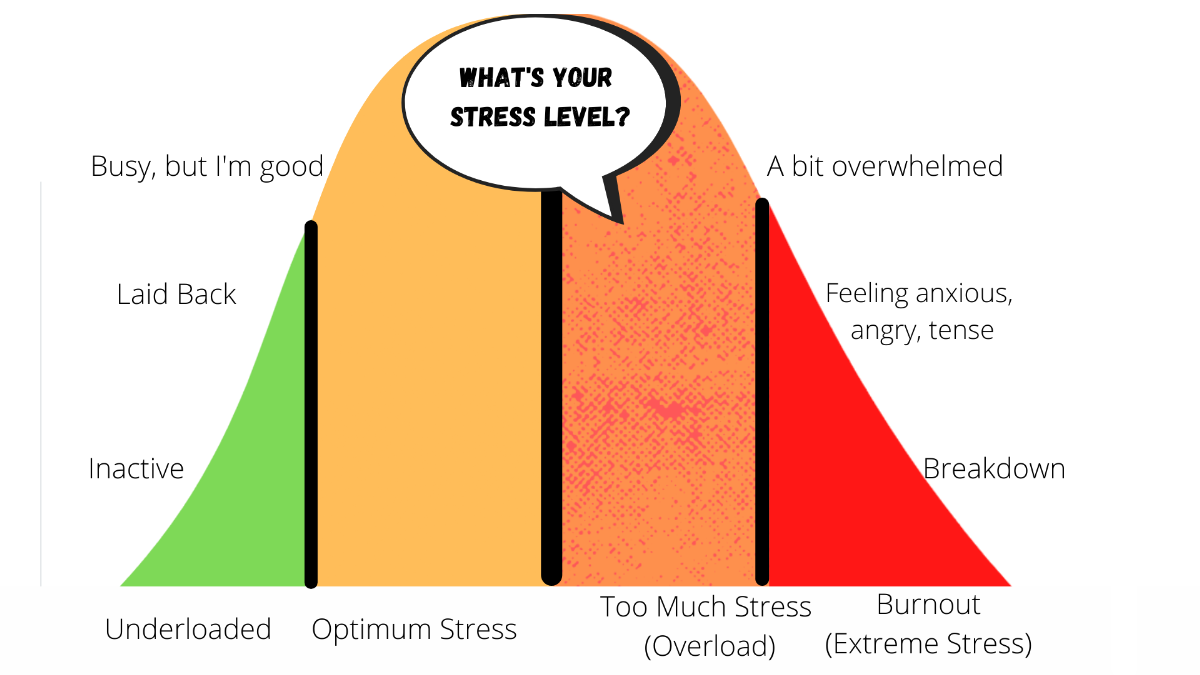
Don’t be scared of stress, though. At times, pressure motivates us to do things that are in our best interest. We need to get out of bed in the morning. We want to do well on our exams, make it on time to appointments and perform well at work. Stress can motivate us! In fact, a moderate amount of stress can serve us well in terms of motivation, improved motor response, and even improved memory. In one study, researchers introduced stress into a study environment and found that the subjects who were exposed to stress scored better on memory tests (Hupbach & Feieman, 2012). As stress increases, our performance improves in a pretty predictable way. When stress levels reach an optimum level, performance reaches its peak. When stress exceeds that optimum level, performance starts to deteriorate and ultimately is no longer a positive force but one that causes burnout and exhaustion. Continued exposure at that level can lead to an erosion of health. (Everly & Lating, 2002)
There is a wisdom to knowing the difference there's also a wisdom to finding balance if you can live at the end of your day tipping just between fatigue and exhaustion, you're actually doing things right.
Stress Management
Our reactions to stress are determined by many different factors: the trigger; the scale of the events themselves, the circumstances of life when they occurred, and how you manage stress. Essentially there are two different kinds of coping strategies, and most of us use both of them simultaneously.
Denial or Active Engagement.
Yes, sometimes it is a valid strategy to “put a pin” in something stressful, and put off dealing with it until you can gather your thoughts and resources. Tools that we may access at that time include alcohol, drugs, emotional withdrawal, sleep. While they may help in the short term, they tend to compound the stress in the long term. (D'Zurilla & Chang, 1995)
Active engagement with stress forces us to take responsibility for the situation by controlling how you respond to it. It is possible to change the nature of the stress experience and address how you're responding to the situation.
Learning stress management early in life allows you to take those skills into adulthood. When it comes to stress, practice does make perfect. As people age, they appear a little less worried. It’s not that they have less stress. It’s because they have had a lifetime of practice in how to manage their stress.
Consider the stress response cycle.
- Recognize that there is a stress.
- Appraise the level of stress.
- Consider the different coping techniques at your disposal.
- Try one. If it works, great! If not, try another one.
- Next time, remember the experience apply it, monitor and adjust.
As we age, we learn to manage stress in ways that work best for us as individuals.
It's a learning curve that takes place over our entire lives. Consider the things that used to stress your fifteen-year-old self. What has changed? What have you learned?
You've learned coping techniques. For the rest of your life, you will use that technique by applying different parameters to it. For example, I see most of you doing active coping on the first day of school. You're pulling out your calendars and you're marking everything so that you have no surprises. You're setting yourself up for eustress, not distress. Somewhere in your history, you have learned how to take care of yourself.
In Western culture, the busy ethic has made it almost sexy to be stressed. So, we must have some tools built into our routines that can minimize the impact of our high stress lifestyles. It requires some honest assessment of our internal patterns and recognizes that self-care is essential to wellness.
Social Supports - Perhaps the most effective way to reduce stress is social support. It is easy to retreat when we are stressed. Western culture seems to value rugged private suffering above collective well-being. Seeking out others requires a decision to trust and engage. (Blake & Vandiver, 198) Where do YOU go for social support? Where do your parents go? What mechanisms are available for social supports for older individuals?
- Exercise and nutrition- Frequent exercise and good nutrition are essential for reducing stress. If we are feeling run-down, our bodies crave sugar, fat, salt, and stimulants. We don’t need these substances, but they make us feel better at the time.
- Organizing Our Time- drawing up a schedule can be the difference between normal pressure and stress. Making time for relationships and hobbies. Yes, Sometimes, we may need to schedule those moments for ourselves and covetously protect them.
- Organize our Money - financial stress links directly to health problems like depression. Keeping track of money (however much or little you have); sticking to a realistic budget; drawing up a debt repayment plan. Use whatever strategy you need to keep your money stressors low.
- Take Time to Relax - Often we can be in “burnout” without even realizing it. Knowing this, regular relaxation is the MOST effective tool fo maintaining equilibrium and resilience. Slumping in front of the TV does nothing to relax your brain or metabolize the stress hormones that build up in your body during the day.
- Exercise: Do we need to exercise to manage stress? Sort of. We need to initiate a ‘relaxation response,” which is the opposite of the ‘fight or flight’ adrenaline surge that accompanies stress. We can do this by getting the heart rate up, or finding deep meditative states through deep breathing and stretching.
- Reflection - When we feel anxious, threatened, or generally stressed, we need to take time to center ourselves, or reflect. Writing a journal can allow us to process thoughts and feelings in an uncensored way. Talking to a friend without asking for advice. Reaching out to nature. Whatever you need to do!
- Fun - How often to you schedule fun? Having fun can become a distorted concept when you are stressed or traumatized. Don’t confuse avoidant behavior (drinking, eating, sex) for fun. Take the time to do something that you genuinely enjoy.
- Forgiveness - think of forgiveness as releasing negative feelings, emotions, and behaviors to an offender (even if YOU are the offender). Forgiveness correlates with lowered anxiety, depression, and other psychiatric disorders and overall better physical health. It is one of the best ways to reduce your stress and increase your quality of life.
Managing Stress - Tools for Coping
In Western culture, the busy ethic has made it almost sexy to be stressed. So, we must have some tools built into our routines that can minimize the impact of our high stress lifestyles. It requires some honest assessment of our internal patterns and recognizes that self-care is essential to wellness.
Social Supports
Perhaps the most effective way to reduce stress is social support. It is easy to retreat when we are stressed. Western culture seems to value rugged private suffering above collective well-being. Seeking out others requires a decision to trust and engage. (Blake & Vandiver, 198) Where do YOU go for social support? Where do your parents go? What mechanisms are available for social supports for older individuals?
-
Exercise and nutrition- Frequent exercise and good nutrition are essential for reducing stress. If we are feeling run-down, our bodies crave sugar, fat, salt, and stimulants. We don’t need these substances, but they make us feel better at the time.
-
Organizing Our Time- drawing up a schedule can be the difference between normal pressure and stress. Making time for relationships and hobbies. Yes, Sometimes, we may need to schedule those moments for ourselves and covetously protect them.
-
Organize our Money - financial stress links directly to health problems like depression. Keeping track of money (however much or little you have); sticking to a realistic budget; drawing up a debt repayment plan. Use whatever strategy you need to keep your money stressors low.
-
Take Time to Relax - Often we can be in “burnout” without even realizing it. Knowing this, regular relaxation is the MOST effective tool fo maintaining equilibrium and resilience. Slumping in front of the TV does nothing to relax your brain or metabolize the stress hormones that build up in your body during the day.
-
Exercise: Do we need to exercise to manage stress? Sort of. We need to initiate a ‘relaxation response,” which is the opposite of the ‘fight or flight’ adrenaline surge that accompanies stress. We can do this by getting the heart rate up, or finding deep meditative states through deep breathing and stretching.
-
Reflection - When we feel anxious, threatened, or generally stressed, we need to take time to center ourselves, or reflect. Writing a journal can allow us to process thoughts and feelings in an uncensored way. Talking to a friend without asking for advice. Reaching out to nature. Whatever you need to do!
-
Fun - How often to you schedule fun? Having fun can become a distorted concept when you are stressed or traumatized. Don’t confuse avoidant behavior (drinking, eating, sex) for fun. Take the time to do something that you genuinely enjoy.
-
Forgiveness - think of forgiveness as releasing negative feelings, emotions, and behaviors to an offender (even if YOU are the offender). Forgiveness correlates with lowered anxiety, depression, and other psychiatric disorders and overall better physical health. It is one of the best ways to reduce your stress and increase your quality of life.
And Now, Enjoy a Moment of Stress Reduction