Semester Long Project - Interview with an Older Adult
Be sure to click "done" when you view this page. That's all that is due on the 9th.
 A "How-To" Guide
Every human has the essential need to feel a sense of contribution, whether to their own lives, the lives of their family members, their relationships with others, and/or society. Contribution takes on a different set of meanings and forms for each person. This project is designed to provide students with the opportunity to connect with an older person, to improve empathy and to create awareness that age does not diminish the value of the human and their contribution.
COVID ANNOUNCEMENT: This interview process does NOT require any face-to-face contact, and should be conducted in a safe manner using telephone, e-mail, text or video chatting. Until otherwise notified, all Chaffey College students are expected to adhere to strict social distancing protocols according to State regulations.
The Assignment
The purpose of this assignment is for you to get to know someone over the age of 65 who is aging successfully in order to increase your knowledge of the aging experience. I know many are saying “I don’t know anyone over the age of 65,” but trust me, once you start looking you will find them everywhere. IT IS YOUR RESPONSIBILITY to find this interview subject.
Usually, the first question is, “may I interview a family member,” YES!! I do expect you to treat the experience with academic rigor. Regardless of your relationship with the person, what is most important is that you select someone who, according to YOUR perception is aging successfully.
There are a variety of tools available for you to utilize – the Tapestry (explained on the next page) is only one. There is a list of questions available for you to do a “straight out” interview if you prefer. You may also create your own format. The goal is to answer questions about life, social; biological; financial; political; religious and anything about family history or personal background that you find interesting and the person is willing to share!
I recommend scheduling three to four interview sessions for about 45 minutes to one hour each. Older people tire more easily and you will get more information if you give the person time to think about the topic coming up. You may do this interview in person, over the telephone, via Skype, but please do NOT do this via e-mail or text.
Before each interview session, familiarize yourself with the questions you are going to ask, and the theoretical concepts being addressed during that time. You may find that as the semester progresses that you want to revisit prior theoretical concepts in newer interviews, which is fine.
How to Interview
At the very beginning, explain to the individual the purpose and format of the interview. Stress the fact that he/she will be helping you with an assignment and also helping others by sharing his/her experience of and advice for successful aging.
Assure the individual that only a first name will be used on the report, or a pseudonym may be used if the person prefers. He/she may remain anonymous if they wish.
Also assure the individual that he/she should feel free to decline to answer any questions with which he/she is uncomfortable or choose not to answer for whatever reason. They have however, agreed to this interview and must expect some personal questions. If they do not answer one or two you must explain in your paper your conversation regarding any unanswered questions. Because they have agreed to do this interview it is ok to ask "why" they have chosen not to answer this question. It is very rare but if you find that more than one or two questions are objectionable to this person you should consider finding another person. too many unanswered questions can hurt your grade.
What are the Requirements
When your INTERVIEW QUESTIONS are complete, you will write the paper. You’ll be writing a narrative that provides a sketch of the individual’s life, and relate it to class material and your own experience doing the interview. Talk about what we learned in class and how your subject reflects (or doesn’t) the accepted theories and expectations of aging. This is your chance to tell me what you learned, so take time and really consider the experience.
Your end product will be a 5-10 page paper (inclusive of any photos you wish to share). The paper is designed to be a narrative (a story) that accomplishes three things:
- Tell me about the person, his/her life experience and what you learned from
- How does this person’s life correlate to the material we have talked about in class? Draw links between lecture, text and readings to show me that you see the
- What was YOUR experience with the process? Did you learn things that you did’t expect? What are your personal take-aways from the Interview experience?
What I do NOT want is a transcript of your interview. I do NOT want yes/no responses.
Your grade for this assignment will be based on completeness of information, clarity of the writing, how well you tell the story and how well you relate this to successful aging theory.
Your final paper must have an opening paragraph, closing summary, and have all the appropriate punctuation and spelling. I won’t do a grammar correction on your paper, but simply lower your points based on my impression of your care in writing. Lazy writing, typographical and grammar errors are the easiest way to go from an A to a C paper. You may have lots of great ideas and a wonderful story to tell, but unless you tell it in a style appropriate to a final project in a college course, you will not earn the grade you may think you should.
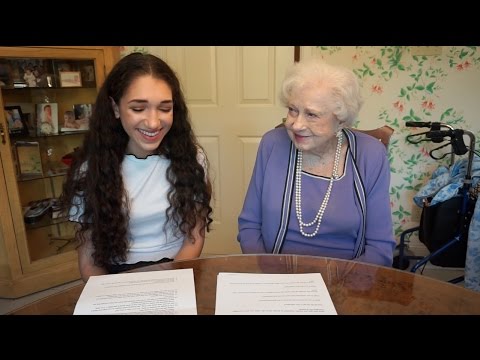
Here's a great video to get you started
A List of Possible Questions
Name of Interview Subject (or pseudonym if they wish to remain anonymous)
Please explain where you met this person? How many times you met for this interview, and where did these meetings take place?
Age:
Gender Identity:
Marital Status (number of years): Single Married Widowed Divorced Which Ethnic Group does the interviewee most consider his/hers
My favorite questions:
-
Tell me about your BEST day.
-
Tell me about your WORST day.
-
What are five words that you think best define you?
-
What are the moments of your life that were most pivotal?
-
Tell me about something in your life that went right. Now, what about something that went wrong?
____________________________________________________________________
Family
-
Tell me about your own childhood and
-
Where were you born? In what year were you born?
-
What were your parents’ occupations?
-
Did you have brothers and sisters? If so, how many?
-
What was life like in your parents' home?
-
If you are or were married, how did you meet your spouse? Do you have children? If so, how many? Are they all living?
-
Do you have grandchildren? If so, how many? Do you have great-grandchildren? How many of your children and/or grandchildren live close enough to visit easily? Do you have any sisters or brothers living? If so, how many visit?
-
How many members of your family keep in close touch with you? How frequently do you see members of your family?
-
Are you still consulted in your family’s decisions?
-
Do you think having a close family and/or close friends affects having a long life? What one or two stories do you remember most clearly about your childhood?
-
Are there any particularly happy, funny, sad or instructive lessons you learned while growing up?
-
What was it like where you grew up? Describe your most important friendships.
-
Where and how did news in your neighborhood usually flow?
Growing Up
Be sure to capture names and dates attended of grammar, high, colleges, trade or technical schools.
-
What are your earliest school day memories?
-
Are there any teachers or subjects you particularly liked or disliked?
-
What did you learn in those first years of school that you would like to pass along to the next generation?
-
Were you involved in sports, music, drama, or other extra-curricular activities?
Work life
-
Are you retired?
-
Do you currently work outside of the home?
-
What type of work did (do) you do?
-
Do you do volunteer work? Tell me about it.
-
What did you want to be when you grew up? What was your first job, and how did you get it?
-
What was your first boss like? What did you learn from him or her? Did you leave? Quit? Get promoted? Get fired?
-
Were you ever out of work for a long time? If so, how did you handle it?
Romance
-
What do you recall about your first date? How did you know you were really in love?
-
Tell me how you "popped the question," or how it was popped to you.
-
Tell me about your wedding ceremony. What year? Where? How many attended? Honeymoon? Tell me about starting your family.
-
Were you married more than once? How often?
Health
-
Tell me about your life now. What does your daily routine look like?
-
Do you take any medicine every day – either prescription or over the counter.
-
If so, what conditions are they for?
-
Do you take vitamins or other food supplements, such as herbs? If so, what do you take?
-
How often do you see a doctor or other health practitioner for a checkup?
-
How long ago was your last complete physical?
-
When were you last hospitalized?
-
Do you have any lasting or chronic health problems? If so, what are they?
-
What adjustment have you had to make to cope with these chronic problems
-
Do you believe you can personally control your health to a large extent? If so, how?
Mental Health and Spirituality
-
What do you do when things are not going quite the way you expect them to go? What do you do when you are feeling down or blue?
-
Do you follow any religious tradition? If so which one, and what is it like? Have you ever changed faiths?
-
Do you consider yourself creative or innovative?
-
Was there a time in your life when you felt particularly creative or productive? What were you doing at that time?
-
What would you tell your children about your faith?
Leisure, Exercise and Nutrition
-
What were the most memorable family vacations or trips you can recall?
-
What leisure time activities are you involved with?
-
What are your greatest accomplishments in this field?
-
In your life, what was the hard work?
-
How many years have you been doing this activity?
-
What does eating “right” mean to you?
-
Do you feel that a healthy diet has been a contributing factor to your successful aging?
-
Do you have any special dietary requirements or habits? If so, what are they?
-
How often do you drink alcohol? What type of alcohol do you drink?
-
Have you ever smoked? Do you smoke now? If so, how much?
-
If you have quit smoking, when did you quit? Why did you quit?
-
Have you ever used an alternative healing or relaxation method? (biofeedback, relaxation, massage, visualization, etc.)? If so, which ones?
-
Are you able to perform daily tasks physically without strain or being uncomfortable? If not, how do you cope with this situation?
-
How would you rate your overall health? (Excellent, Good, Average, Fair, Poor)
-
At what age did your father die? Your mother?
-
What advice would you give others on staying healthy in their later years?
Living Arrangements
-
Do you live in your own home or apartment? · If so, how many years?
-
Do other people share it with you?
-
If so, what is their relationship to you?
-
How long have your lived with them?
-
How do you feel about your living arrangements?
-
What places have you lived longer than 5 years?
Financial Planning
-
How old were you when you started saving for retirement?
-
Would you say that you were “satisfied” with your life in retirement?
-
If you could change any of your financial plans, what would you have done differently?
Social Contacts
-
Do you enjoy being involved with people?
-
Do you have someone you can trust and confide in? Who is that person?
-
Are you as socially active now as you were before you reached 60?
-
How has your social life changed in the past 10 years?
-
Do you see folks weekly, other than those you live with?
-
Do you feel your life is important to other people? If so, how?
Personal Beliefs
-
Do you feel you have achieved your major goals or plans in life? What are some of these goals or plans?
-
Are you still working on these or other plans and goals?
-
Do you feel basically responsible for how your life has turned out? If not, who was responsible for which events?
-
Have you had a “life well spent” without too many regrets?
-
What do you worry the most about?
-
Have you thought about death?
-
Have you talked with anyone in your family about your burial wishes? If so, who?
-
If not, why?
Personal
-
Do you care for a pet? If so, what kind? Do you tend a garden or plants?
-
Do you make your own decisions about your daily affairs? If not, who does?
-
Do you control or share control of your finances?
-
Do you feel you “live comfortably”?
-
Is your income adequate for the things you want to do?
-
Do you have an adequate source of private or public transportation? What type of transportation do you use most often?
-
Are you worried about some particular kind of crime in your daily life? If so, what type of crimes worries you the most?
-
What do you do to protect yourself from crime?
-
Do you feel that your life is still filled with interesting things?
-
Do you participate in activities just because you enjoy them? Which activities do you enjoy the most?
-
Would you tell me one or two accomplishments that you are especially proud of?
-
Would you say that you are happy at this time of life?
-
What makes you feel good?
-
Do you feel you’ve achieved most of what you really wanted in life? In general, are you satisfied with your life so far?
-
If you could go back and change something in your life, what would it be? Why?
-
Do you feel that you are aging successfully?
-
What advice would you give others so that they might age successfully?
-
What is your secret to aging successfully?
-
What advice would you like to give to young people today?
-
What was the best decision you ever made?