Protecting Vulnerable Older Adults
Older Adults At Risk
In 2016, persons over 65 represented 14.5% of the population, just under 50 million individuals. We predict that number to reach over 98 million by 2050. We will be diverse in terms of ethnicity and culture, economics, health, and disability. Age will bring one more layer that can prove challenging to our well-being. We must learn how to recognize when an older person is at risk and to be able to identify ways to protect support, or advocate.
If you think about it, there are two distinct groups that we have identified as being vulnerable in our population. The first is children. We put a considerable amount of public and private resources into educating our children about acceptable behaviors, creating laws to protect our children, and prosecuting those who violate those laws. We do so with the support of our community. Protecting our children is part of our top community values.
The other population that is most vulnerable is our elders, especially our frail elderly. The challenge lies with this idea that adults should be "smart" enough to avoid the pitfalls of abuse. We forget that as technology has advanced, and as we separate from our elders, paying others to provide services and support, we open them up to a world that they may not understand. We are acutely aware of the need to prevent child abuse, but how familiar are we with the concept of parent battering syndrome? It is mindboggling to learn how sophisticated and horrible some people can be when allowed to put their own needs first at the expense of our older population. As the population grows, so do the risk factors.
The Statistics
According to the National Council on Aging, approximately 1 in 10 Americans aged 60+ (Links to an external site.) have experienced some form of elder abuse. Some estimates range as high as 5 million elders who are abused each year. One study estimated that only 1 in 14 (Links to an external site.) cases of abuse are reported to authorities. Just as a frame of reference, the population of Louisiana is 4.6 million - so that is an entire STATE's worth of older adults who are being victimized, and that is inexcusable.

(Source: Witness)
At What Cost?
-
-
The direct medical costs of injuries alone are estimated to contribute more than $5.3 billion to the Nation's annual health expenditures. Estimates of fraud and elder abuse costs to older Americans range from $2.9 billion to $36.5 billion annually. Financial exploitation is self-reported at rates higher than emotional, physical, and sexual abuse or neglect. (Gough, 2017)
Abused older adults are 300% more at risk for death, are two times more likely to be hospitalized, and are at higher risk for:
- Psychological distress
- Depression
- Fear & Anxiety
- PTSD
- Chronic Pain
- High blood pressure/Heart Problems
-
Abuse Comes in Many Forms
Abuse can happen to anyone—no matter age, sex, race, religion, or ethnic or cultural background. Each year, hundreds of thousands of adults over the age of 60 are abused, neglected, or financially exploited. This is called elder abuse. (NIA.gov, 2020)
Abuse can happen in many places, including the older person's home, a family member's house, an assisted living facility, or a nursing home. (NIA.gov, 2020) Do you remember the movie "100 Ways to Die In Mexico?" Each scenario seemed to be worse and more far-fetched than the last. That's sort of what it feels like to talk about elder abuse. What qualifies as "abuse?" It's physical. It's sexual. It's psychological. It's financial and material. It's neglect. It's abandonment.
Please watch the video:
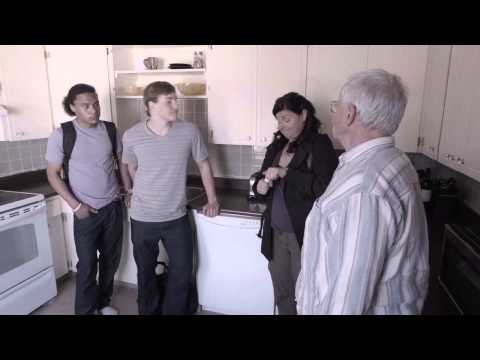
(Source: Your Alberta)
Physical Abuse

Perhaps the easiest to identify is physical abuse. We see it. We see the bruises. We see someone who is caged. We see someone tied down to a hospital bed or wheelchair. We see someone being hurt or shoved.
By definition, physical abuse is "the use of physical force that may result in bodily injury, physical pain, or impairment. Examples include shoving, pushing, hitting, shaking, hair pulling, unreasonable physical confinement.
There are some shades of gray. For example, in times past, if we had patients who were at risk of wandering, or falling out of their chair, we would use straps or a vest restraint. When that was deemed unreasonable confinement, it became standard practice to utilize chemical restraints. Sedatives were used to control the more combative patients, so essentially immobile, we wouldn't have to worry about them wandering. Actually, for many of us who grew up in the 1980s, the thought of a nursing home elicits a vision of hallways filled with wheelchair-bound, sleeping patients. Exactly where we do NOT want to be. Right?
Fortunately, we have progressed, and we utilize architectural tricks to create a safe environment for dementia patients who tend to wander. We do innovative things like paintings of bookshelves onto doors - because even in a dementia state, we know not to try to walk through bookshelves. Maybe I restructure a skilled nursing facility to be built with nursing stations in the center of a circular walkway. Rather than hallways, a person who likes to wander can do so in a safe and supervised environment. We realize that we don't need to confine our dementia residents. We don't have to sedate them or tie them down. We can let them move! Now, the only time that we do any sort of physical or chemical restraint is when the patient is a danger of harming themselves or staff members.
When we are talking about physical abuse, we are really talking about the intentional harm of another. The most common physical abuser is a family member. It's hard to imagine harming someone we love or being harmed by someone we love. Unfortunately, it happens, and we see episodes like this video at alarming rates. I'm choosing to NOT show you some of the more explicit training videos I've seen over the years. You don't need to see it, because you can imagine the worst.
How in the world does this happen? We can blame a healthcare system that puts a tremendous burden on the family members who are totally unprepared for the all-consuming task of caregiving. Part of the blame comes from a system that pays very little to those who are doing the hardest work. Part of the blame comes from a lack of mental health support for caregivers. Part of the blame is that there are too few of us who are looking and listening for signs of abuse. We may think that a patient is just ornery or complaining, but their issue isn't big enough for us to deal with, or we brush it off because we don't have the bandwidth to deal with it. Once we are aware of physical abuse, though, we are legally and ethically responsible for doing something about it. Maybe we can mitigate the stress on a caregiver by helping with training, support, and more resources.
(Source: St. Paul, MN, Police Dept.)
Sexual Abuse
Sexual abuse is a different thing. Sexual abuse is a crime of opportunity, but in the same way that crimes against children are not about sex, these attacks are about power. They're about getting away with something. I guess titillation, maybe? We are seeing more and more reports of older adults being touched inappropriately, particularly in their homes and institutional settings involving frail elderly. There are always going to be random attacks, and they tend to be more violent and spontaneous. I'm talking about humans who are sexually assaulting older individuals who are most often frail, frequently in a dementia state, and unable to defend or report the abuse.
Please watch the video:
(Source: CBS News)
Psychological Abuse
By definition, psychological abuse is the "infliction of anguish, pain, or distress through verbal or non-verbal acts. That can include verbal assaults, insults, threats, creating fear or isolation, or withholding emotional support.

(Source: Anishnabeck Police Services)
Neglect
By definition, neglect is the "failure to provide the needed care, supervision, or service necessary. There are three kinds of neglect - active, passive, and self-neglect.
- Active neglect is me knowing that you have a need and my intentionally not filling it - for example, food, medication, or affection.
- Passive neglect is if I don't know that you have a need, and I don't ask you about your needs, then I have plausible deniability and no responsibility.
- Self-neglect is when an elder refuses help but doesn't take care of themself.
Tell me what you think about this situation:
Please watch the video:
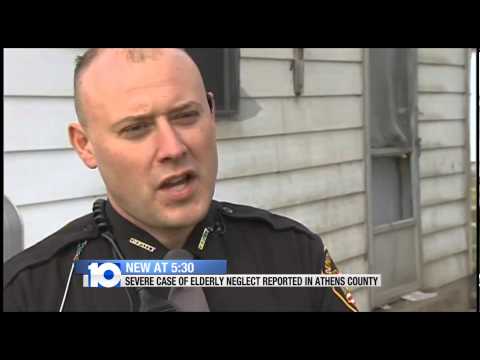
(Source: WBNS10TV)
Financial Abuse
The fastest-growing area of elder abuse is financial fraud. You and I know that no Nigerian prince needs help accessing bank accounts that can only be unlocked with your help. We know the IRS doesn't call our house and threaten us with arrest if we don't pay our back taxes with Itunes gift cards. But we know this information because we are trained to be aware and suspicious. Yet, we all know someone who got catfished. So, vulnerability and being naive isn't age-dependent.
Financial abuse of older adults happens when financial resources are misappropriated, or there is an abusive use of financial control by someone who has been entrusted with the welfare of that older person.
Adult Protective Services (APS) programs report that the number and complexity of reports involving financial abuse of vulnerable and older adults have risen over the past ten years and that financial exploitation has become widespread, expensive, and in some cases deadly. Here's a list of findings from a report by the National Adult Protective Services Association:
- One in nine seniors reported being abused, neglected, or exploited in the past twelve months; the rate of financial exploitation is extremely high, with 1 in 20 older adults indicating some form of perceived financial mistreatment occurring in the recent past.
- They are less likely to experience stress, or declare bankruptcy than their younger counterparts.
- Elder abuse is vastly under-reported; only one in 44 cases of financial abuse is ever reported
- Abused seniors are three times more likely to die, and elder abuse victims are four times more likely to go into a nursing home
- 90% of abusers are family members or trusted others
- Almost one in ten financial abuse victims will turn to Medicaid as a direct result of their own monies being stolen from them
- Cognitive impairment and the need for help with activities of daily living make victims more vulnerable to financial abuse (NAPS.org, 2020)
Please watch the video:
(Source: CNBC)
Stranger Danger
We've all received phone calls from the Social Security administration threatening us with jail time unless we pay our fines in Amazon dollars. The creativity that strangers put toward separating us from our money is quite astonishing. See if any of these seem familiar:
- Lottery & Sweepstake: The postcard arrives, telling you that "You've WON!" All you need to do is spend $2500 to cover the taxes.
- Home Repair: A knock on the door by a painter/handyman/driveway/roof repair who just "happens" to be in the area and can do work cheaply.
- Grandparent Scam: You get a call from your grandson who is in jail and needs you to send him bail money.
- Charity Scam: We all know about the fake "Go-Fund-Me" potential!
Scammer in a Snake Skin Suit
Sometimes scammers look like reputable businesses. Predatory lenders will pressure seniors to take out reverse mortgages or other loans with astronomically high-interest rates. They may pressure the older client into emptying their savings into annuities with great rates, but that won't mature until the older person is 120. There are investment schemes, pyramid schemes, and cyber crimes like phishing for bank account information or committing identity theft. Think about the latest phishing attempts on your own computers. Yes, most of us know better than to respond to the Nigerian Prince, or give our passwords to the Microsoft Update window that comes up on our screen when we click on the wrong URL. However, sometimes it looks legitimate. One of the fastest-growing and costliest in terms of dollar amounts is the scams around fake Medicare claims.
The Wolf in Sheep's Clothing
The most common abuse comes at the hands of the family and caregiver. If the older adult has trusted the family member with a Power of Attorney, that person has total control over the victim's finances, and in the wrong hands can be a license to steal. Unauthorized use of joint bank accounts, ATM cards can be a recipe for disaster. It's not just financial abuse, though. Family members are the most likely to hit or otherwise harm the victim, threaten abandonment, or to withhold medication, socialization, or affection.
Abandonment
Think back to the first lecture of the semester, when I talked about the concept of abandonment. In that context, we talked about tribal culture and how elders were revered as shaman or medicine-people, carrying the histories and wisdom of the tribe. However, when they became ill, or weak, or lost cognitive function, the tribe might elect to abandon them rather than transport them along with the tribe when they had to relocate for hunting.
These days, we are seeing elder abandonment happen when older adults become too much for a family or caregiver to manage or if care has become too difficult or expensive. In larger cities, we are seeing increased numbers of cognitively impaired older adults being deserted in a phenomenon we call "granny dumping."
The person who is responsible for the older person just can't do it anymore. Resources have run out, money and energy, spirit and ability are gone. The older person is stripped of all identification, put in clothes (often pajamas and a robe), and is left on a bench outside of a police department, emergency room, or fire department.
With no identification, and no ability to self-identify, the person becomes a John or Jane Doe. They are entered into the Medi-Cal system. They end their lives being cared for by strangers and ultimately buried in unmarked graves. The person who was responsible for caring for them? I guess they're off the hook, but I can't imagine the soul-crushing guilt that some must carry.
This abandonment isn't always done by individuals, though. During the floods a few years ago, an entire nursing home full of residents was abandoned!
Please watch the video:
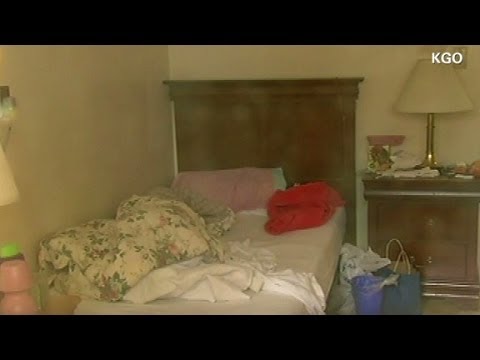
(Source: CNN)
Oh my gosh! That's amazing, right? I really appreciated the young man who said, "I stayed because it was the right thing to do." How in the world, though, can something like this happen? Well, unfortunately, it does. In fact, it happened in Spain at the height of the COVID-19 epidemic. Not because the administrators want to abandon the frail elderly, but because they see that they have no choice. It was truly heartbreaking.
Please watch the video:

(Source: France 24)