Lecture: Relationships between older adults and community youth.
Illustration from the original Canvas course (image not included in this lightweight export).The Family We Build - Intergenerational Connectedness WORKS!
Intergenerational non-kin relationships between older adults and community youth can have numerous benefits for both age groups and society as a whole. These relationships involve connections between individuals from different generations who are not biologically related but form meaningful bonds.
You find striking similarities in those at either end of the life course – the young and the old. We live in a society that values adulthood, and in turn doing – productivity and ongoing activity. The young and the old share a different rhythm. It focuses not only on doing, but on the power of being. It's the simplicity of playing with blocks or tending to flowers. The young and the old are most closely connected with the essence of living. They can exist in a moment that's the grand sum of past, present, and future. Rather than time being the enemy – rushing time or stressing to fit as much into time as possible – time becomes a comfortable companion, a circle rather than a line.
We divide our communities and activities by age – young people in schools, older people in retirement communities or facilities. We talk a lot about all the ways we need to help older people. But, perhaps, the old can help us. It's the experience of life in a multigenerational, interdependent, richly complex community that, more than anything else, teaches us how to be human.
Illustration from the original Canvas course (image not included in this lightweight export).Mutual Learning
Intergenerational relationships provide opportunities for knowledge sharing and learning from one another. Older adults can share their life experiences, wisdom, and skills with younger individuals, while youth can offer fresh perspectives, technological expertise, and current knowledge. This exchange promotes personal growth, broadens horizons, and fosters intergenerational understanding. These interactions can take place in various community programs that intentionally bring together individuals from different age groups.
Intergenerational learning centers across the United States unite children ages six weeks through Pre-K with seniors from the senior living community next door. These unique program provides purpose, connection and community for both children and seniors. I first read about "The Mount's Intergenerational Learning Center" in the Atlantic (which is, unfortunately hidden behind a paywall for students), but then spent some time searching for unique programs that linked the residents of senior centers and either the children of the workers, or the children of a local daycare or school - and the hits just kept coming! In fact, my quickie Google search of "Intergenerational Learning Centers" gave me 14,200 results!
In Callifornia, a Los Angeles program called "Jumpstart for Young Children" saturated 13 preschools with adult mentors over age 55 in underserved LA neighborhoods - Compton, South LA, East LA and Echo Park. As many as six senior volunteers were placed in preschool classrooms ranging in size from 15-22. Their goal was to demonstrate how students would benefit in terms of their literacy, and the seniors would benefit from having a sense of purpose. The result? It extended far beyond heightened test scores and improved health. It built intergenerational connectedness. One of the unintended consequences? The older volunteers reported being less resentful of paying their property taxes! Why? Because they got to see the direct results of their tax dollars in the schools, it directly impacted the young people they were invested with.
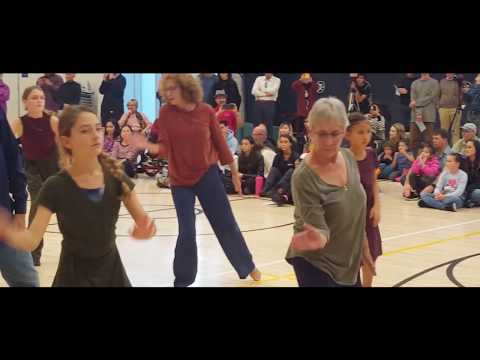
Successful intergenerational programs are scattered around the state — including ONEgeneration in Van Nuys, Dance Generators in San Francisco and Kids Connection at Eskaton Village senior living near Sacramento. A handful of intergenerational co-housing complexes also dot the state.
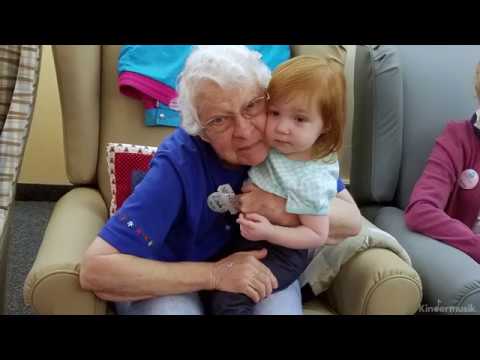
Yet nowhere has intergenerational programming been so successful as San Diego County, which launched its efforts a decade ago, in large part due to the pioneering efforts of its nationally renowned Aging and Independence Services – one of the state’s 59 Area Agencies on Aging. The county received Generations United’s Best Intergenerational Community Award in 2012.
San Diego County’s Workforce Academy for Youth has been named one of just 25 Programs of Distinction by Generations United. San Diego County is also home to a second distinctive program recipient – Sunshine Care assisted living in Poway.
“It took time and it took a lot of hard work and it took vision,” says Butts of San Diego’s efforts. “It’s become embedded in the way they think and work.”
Emotional Support
No matter our age, we all need connections and emotional support. Sometimes, that support comes from our family. Other times, it comes in surprising ways from our communities. I learned about Fountain House, a national mental health nonprofit whose goals are to increase opportunity and end social and economic isolation for people impacted by mental illness. They are in 40 states, and draw on more than 200 community based social rehabilitative programs. They offer support and services to any community member, regardless of age, with surprising results.
“I’m retired and on disability. I have a pension, luckily, but most of my friends are either still working or they already have their cliques,” she said. “Fountain House really helps with isolation, especially after COVID, which took a big hit. It’s very lonely being alone and older and not being in the workforce anymore, or having a group of friends that you can hang out with all the time," says one of the Fountain House participants. She's developed relationships with young adults at Fountain House, and it's had an unexpected result on her mental health. "“I feel comfortable with younger people. They know where I'm coming from without me having to explain myself,” said Stacey. “Sometimes, the relationships we have outside of our house —with our parents, other family members, or teachers — are with people who don't have our same experience, or who aren’t open-minded enough to just accept us as we are. Being with younger people, it's like a breath of fresh air. There’s a freedom to just be who you are, and not be worried about it.”
Despite all of this evidence, intergenerational relationships are relatively sparse in American culture. But members at Fountain House — having seen these perks happening in real-time —are working to take advantage of it.
A group of younger members, who have formed an unofficial group at Fountain House called the “Young Adults,” have recently been creating programming that connects young and older members. On any given night, you might see an intergenerational group of members taking part in a 70s-themed party, a trip to the park, or eating ice cream together on a hot summer day. These events have just begun, but there’s already been a noticeable impact.
“We realized so many similarities between our Silver Center members and our young adults. There’s that desire to discover, create, and build a community,” said Delaina Peek, a Social Practitioner at Fountain House, who helps coordinate intergenerational events. “Many people in the Silver Center have experienced serious mental illness for much longer than young adults. You might have someone in their 70s who has decades of experiences with mental health, and they have insight into what that looked like through the generations. And then you might have someone who's just coming to terms with their diagnosis for the first time. I think there's a lot of patience that exists within the Silver Center with young adults, and similarly, there's a lot of acceptance coming from the young adults.”
Precious, a young adult at Fountain House, has found the process healing and beneficial.
“Here, you can get an older person's perspective or advice about something, which I think is really cool,” she said. “I really feel like I belong when I’m here. I’ve struggled with opening up, but being at Fountain House has allowed me to be able to do that, and to get to know new people. I love that.”
The Benefits of Reciprocity
There can be beautiful back-and-forth reciprocity between all generations. Adults support elders, most often to address health or physical limitations. Elders, in turn, assist adults through experience, emotional support, and participation in the care of children. Elders can help socialize children, teach them empathy and character, and give them unconditional love they can't find elsewhere. Children, in turn, can be an endless source of joy for elders, share affection and play, and provide assistance with many simple tasks. Children can participate in the work of adults, and provide enjoyment and love. Adults, in turn, provide children with food, shelter, clothing, and nurturance. And so a strong, healthy, intergenerational web of community goes.
Many older adults today are better educated, healthier, and more able than elders of past generations. They can clearly be a tremendous resource. But what about the oldest, frailest of the old? They can be our greatest teachers. They can certainly instruct us with words and stories of times past, and share a lifetime of accumulated wisdom. But what they truly help us learn about is the world and ourselves as they teach us with their very selves, their being. Elders can also teach us about the end of life, which informs the whole of our lives.
Benefits to Children
Research shows children need four to six involved, caring adults in their lives to fully develop emotionally and socially. The problem today is that children often get too much peer socialization, too much mediated contact through computers and texting, and not enough one-on-one, personal time with mature adults.
The benefits to children of a close, long-term connection with older adults include:
-
Through grandparents, children better understand who they are and where they've come from. They have roots, a history, and a sense of continuity and perspective.
-
Intergenerational bonds need not be traditional or biological. Older adult mentors can make a significant difference in a child's life. The involvement of a reliable, caring adult helps children develop life skills, and builds self-esteem and confidence. One study showed that when a child is mentored by an adult, they are: 46% less likely to begin using illegal drugs; 27% less likely to begin using alcohol; 52% less likely to skip school.
-
In general, children develop higher self-esteem, better emotional and social skills (including an ability to withstand peer pressure), and can even have better grades in school.
-
Children feel special. Especially with grandparents, children are "spoiled" a little. Research tells us that, in moderation, this can be a good thing. Children know that being with their grandparents is special. They don't expect the rest of the world to treat them the way their grandparents do, so it's really not "spoiling." They experience an unconditional type of love that's not easily found elsewhere.
-
Children can get undivided time and attention from an older adult that tired, busy parents often can't give them.
-
An older adult can give children someone safe to talk with and confide in. While children may want to be different from their parents, they often don't mind being like their grandparents or other older adults. This gives elders a lot of power and ability to influence a troubled or confused child.
-
Children are introduced to new activities and ideas by sharing in an older adult's interests, skills, and hobbies. Through their life experience, older adults can often bring with them a tremendous amount of patience. Knowledge, skills, and attitudes children pick up from elders tend to stick with them through life more than those picked up from other sources.
-
By getting to know "real, live old people" children look beyond the ageist stereotypes. They become more comfortable with aging – which is really something we all do from the moment we're born. Children are also encouraged to look toward the whole of their lives. They have many models for adulthood, but far fewer for older adulthood. When they can see the whole of their lives, they are more motivated and see greater relevance between what they're learning in school and their future. Research shows that "planful competence" – the ability to understand the life course and work toward goals – is key to student success in school and in life.
Benefits to Older Adults
The benefits to older adults of a close connection with the young include:
-
Elders often feel a sense of "joyful freedom." As a grandparent, for example, they don't feel the pressure they felt as a parent. You get all the benefits and joys of parenthood without many of the drawbacks.
-
A relationship with a grandchild or young friend gives older adults a "second chance." Many people have regrets in their later years about time they didn't spend with their own children, or mistakes they made as a parent. A new grandchild or young friend is a fresh start.
-
Active, involved older adults with close intergenerational connections consistently report much less depression, better physical health, and higher degrees of life satisfaction. They tend to be happier with their present life and more hopeful for the future.
-
Young and old can fulfill the role of student and teacher for each other, and it's not always the older person who does the teaching. Children like to feel needed, and they can teach elders lots of things – like how to find some pretty cool stuff on the Internet! Children can also help older people, particularly those facing health challenges or other losses, see the world anew again, through a child's eyes.
-
Elders have an opportunity to leave a powerful legacy, to make a difference. They can send a message into the future through a grandchild or young friend. Relationships across generations can fulfill our desire for immortality.
Benefits to Young Parents
The benefits to parents when the "grand generation" is a part of their lives and their children's lives are also clear.
Today's parents are often stressed and overwhelmed. A loving, supportive grandparent or other older adult can give them someone to talk with – someone who's "been there" but now, with the benefit of hindsight, can help put issues into perspective.
It's also comforting for parents to know that other adults love their children and are looking out for them. Grandparents take some of the pressure off parents.
Finally, there is the tangible support of reasonable physical or financial help when it's needed. Grandparents can be a safety net in the highwire act we call the modern family.
Many people say their relationship with their parents improves when children enter the picture. For example, an overly strict parent suddenly becomes a "softie" as a grandparent. Adult children see their parents in a new light, and this can help heal relationships.