Lecture: Managing the Growing Diversity among Older Adults
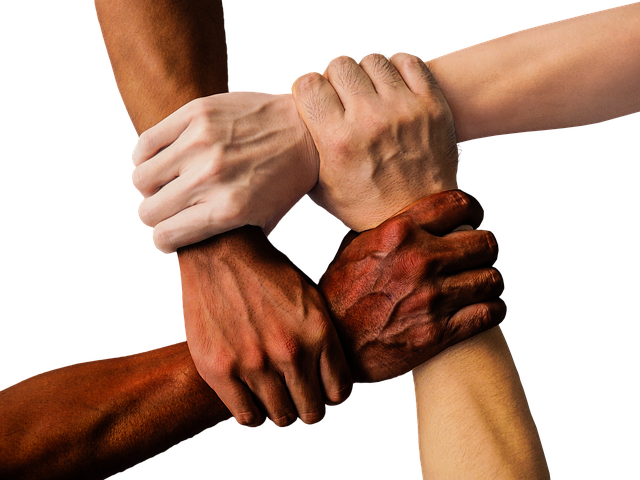
When we talk about the "aging population" of the United States, we aren't talking about one homogeneous population. The phrase that I've heard recently makes a lot of sense: "We are all on the same journey, but we aren't all on the same boat." Aging takes place in a world that is diverse, but many of the experiences are universal.
Americans live in opposites in economics, education, religion, lifestyle, and politics. Accessing services and resources may be a very different experience for an aging non-English speaking immigrant compared to a native English speaker. There are large groups of older adults experiencing food insecurity. There are older adults with disabilities that are living longer than expected, without services and support.
We are acutely aware that there are populations in the United States who are at risk. Our aging population is one more layer that can get lost in the mix. This chapter will address three key concepts: Diversity in our older population, elder abuse and neglect, special populations of older adults who are particularly at risk - and how perhaps how to make improvements to all three.
We are living in a time of great social and political fluctuation. The Covid pandemic has shed light on underlying inequities that have existed in our country for decades. I am convinced that part of the underlying tension comes from our reluctance to having a conversation about gender, race, age, and the myriad of other factors that make us all different. It isn't easy to do without making it feel that we are comparing and giving greater value to one individual condition over another. In order to have a conversation about equity, it is vital that we address the one thing that is utterly universal about us all, the fact that we are aging, and older adults have very different needs.
Diversity in an Aging America
American's older population is rapidly becoming more ethnically and racially diverse. Estimates project that between 2018 and 2060, the non-Hispanic white population is expected to drop from 77% to 55%. (ACL.org, 2020). This will create, for the first time in contemporary United States history a minority-majority, where there will be no one dominant race in the nation. (Angel, 2018)
Despite the increased diversity in the older adult population, the more rapidly changing racial/ethnic composition of the population under age 18 relative to those ages 65 and older has created a diversity gap between generations. (maricopa.edu, 2020)
Gerontologists know that culture and life events shape an older person's worldview. For example, many older minority members face disadvantages today due to their discrimination throughout their lives. We know that economic and cultural barriers can have negative impacts on healthy aging and life satisfaction. (Brewster, 2019). We also know how to tear down some of these barriers:
- Offering a service in a minority language.
- Using minority staff to deliver services.
- Locating services in settings that will attract minority members.
Who are the Minority Elderly?
Even in 2018, whites make up the numerical majority of the population. As the 'dominant group," they have historically held the most power, social power, and control of economic resources. Demographers predict that by 2050 we will have a pluralistic society, where many racial and ethnic groups exist side-by-side with no one predominant ethnic group.(Budiman, 2020). Early in the 20th century, the majority of immigrants came from Europe. Today, immigrants come from all over the world.
 With each wave of immigration, our country has become richer for the contributions to our culture. While retaining original cultures, immigrants bring new beliefs, new cuisines, and new customs to American society. Though an assimilation continuum exists with people, some folk retaining strong tradition with others assimilating to the dominant culture.
It can't go without saying that we do have tension between cultures. Anthropologically, these tensions actually make sense because we are a species that is essentially tribal, and we are loyal to our like groups. That argument withstanding, it is counterproductive from an AGING perspective to focus on the divisions between (and among) ethnic groups. Our focus must be both specific AND inclusive if we are going to meet the needs of a widely diverse aging population adequately.
We know that the entire population is aging. We know that in 2006, 5.3 million Americans were over age 65. New projections estimate that by 2050, this will increase to 21 million -a fourfold increase. Over this same time period, the number of oldest-old African Americans will, in case sixfold, and the oldest-old Hispanics will increase by 12 times. (Budiman, 2020) These dramatic increases in numbers may put a strain on informal supports. Old minority elders who rely on family support today may have to turn to formal support for help. Right now, minority elders tend to underuse formal supports. These supports may not suit their needs. Formal supports will have to adapt their service and modes of delivery to get the needs of this very old minority population.
To address diversity issues, let's break down our understanding of what actually makes us diverse.
Culture
By definition, “culture” is the shared values, traditions, norms, customs, arts, history, folklore, and institutions of a group of people. There can be different “cultures” within an ethnic group, and a “culture” can actually integrate members of many different ethnic groups. For example, there is a “college culture” that includes everyone on our campus. Huh? “NO! I’m my own unique person on this campus,” you say. Well, yes. Yes, you are. BUT, consider the campus and the shared values that we all have when we walk into class - you behave differently than you might at home or with your friends, you have the same mascot (even if it’s not the same one I had when I was a student here!), you wear the Sonoma State sweatshirts, or you join your greek associations and follow the expectations of that group. There are those of us who are deeply entrenched in the “college culture,” and those of us who sit on the outside and watch the behaviors. If you think there isn’t a “culture” on campus, just watch the behavior in the dorms on a Thursday evening when there are events. The groups move together, dress alike, listen to the same music, and even dance the same!
 Do we all need to be the same? Nope. In fact, it would be horribly boring if we were all one homogeneous group, wouldn’t it? The key is finding ways to acknowledge other cultural frameworks, hold on to our own, and to have respect for both. It’s challenging. What is required is a level of CULTURAL COMPETENCE . If we can make an effort, individually and organizationally, to “develop skills to recognize and honor the differences between us, we can then put into place behaviors, attitudes, policies and structures that enable us to work cross-culturally”. Wow. That was policy speak, wasn’t it? It makes sense that we value diversity, keep ourselves in check about our own biases, honor the really wonderful gifts that can come from the dynamics of difference, and ultimately sort out a way to adapt our differences in ways that allow us to find common ground.
Let’s get some terminology straight, though. There is actually a difference between CULTURAL COMPETENCE and CULTURAL SENSITIVITY.
The term CULTURAL COMPETENCE comes from business. The focus is to create systems and policies that allow organizations to operate effectively in different cultural contexts, and altering practices to reach different cultural groups. CULTURAL SENSITIVITY is a whole different animal. It’s what we “ideally” do in life. It’s cultural knowledge, sensitivity and awareness - being aware that differences and similarities between people exist without assigning them a value - positive or negative, better or worse, right or wrong. It’s challenging, but the goal is to understand and respect each other’s characteristics.
Consider this question (and it’s an uncomfortable one). Do you believe that your cultures the only “real” one, and you therefore tend to interact in homogeneous groups to stereotype everyone else? I bet you are screaming NO!!! I don’t do that. However, let’s flash back to the first night of class when we put all those terms on the board. Don’t you think your collective class culture expressed a pretty clear idea that “young” was good and “old” was…hmm. Let’s revisit: stinky, handicapped, slow, diseased…. See, cultural sensitivity (and cultural competence) isn’t just about ethnicity. It’s about age, too!
Ethnicity
Well, there's the perfect segue to discuss ethnicity. Our ethnic identity involves our sense of belonging to a group that shares culture, social status, and support systems. An ethnicity, however, does not predict homogeneity. Within most ethnic identities are very distinct differences. It's not about "majority" and "minority" identifiers in Gerontology. It's bigger than that.
We know that minorities in the U.S. (those who share a language, physical or cultural characteristics) experience unequal treatment in some segments of society.(Brewster et al., 2019). Layer on factors of gender and sexism, we've got our challenges. Now, add age and ageism as a factor, and all the issues with cohort effects and cumulative disadvantages. We face some pretty daunting social challenges, don't we? How can we create policies and programs to provide what people need? How can we, or can we, level the playing field in ways that are equitable?
Minority Group Aging - Three Theories
Gerontologists study the impact of minority membership on aging. We ask how a person's experiences throughout life affect the experience of old age. Three theories describe the effects of minority group membership on the older person: multiple jeopardies, leveling, and the life course perspective.
10.5.1 Multiple Jeopardy
Societies use age, gender, social class, and minority group membership to classify people. Young, male, upper-middle-class, and white place a person at the upper end of North American society. Old, female lower class and minority group memberships place a person at the lower end. The multiple jeopardy perspective says that a person with more than one of these characteristics - for example, a minority member over age 65 - will face multiple jeopardy. (Angel 2018). According to this view, people in multiple jeopardy will face an increased risk of death and illness, compared with whites, as they age. (Ferraro et al, 2019)
Multiple jeopardy exists when:
- the minority group has poorer health or lower income than the dominant group
- the minority group, compared with the dominant groups, show a greater decline in health and well-being with age.
This means that multiple jeopardy exists when age adds to the disadvantage already experienced by a minority group in middle age.
10.5.2 Leveling
Some studies find that multiple jeopardy describes only some characteristics of older minority members' lives. They say that ethnic identity can help a person adapt to the stress of living as a minority member and offer improved self-esteem and career opportunities.
The leveling perspective says that the health and incomes of minority and dominant group members look more alike as people age. ( Dowd & Bengston, 1978) For example, a pension rarely replaces a middle-class person's salary. Minority members with low incomes may see no decrease in income with age. Many of these people work past age 65 because they have no pensions. The lowest earners may even see an increase in income when they receive Social Security payments. These trends lead to a smaller income gap between minority and dominant group members as they age.
Both leveling and the multiple jeopardy theories have their place in the study of aging, but gerontologists have begun to take a much broader view of aging.
10.5.3 The Life Course Perspective
Think back to Chapter 2, when you were introduced to the Life Course perspective - the idea that life unfolds from birth to death in a social, cultural, and historical context. This perspective looks at the impact of social institutions, historical periods and events, personal biography, the life cycle stage, life events, and resources on the minority older person. It also looks at differences between minority groups, cultural subgroups within a minority group, and age cohorts among minority groups.
The cumulative disadvantage theory fits the life course perspective. It says that "inequalities throughout life lead to inequalities in old age." The more disadvantages a person faces in early life (poor education or poverty in youth), the more disadvantages they will face in old age.
The research shows that disadvantages have a "magnifying or feedback effect." They accumulate and reinforce one another throughout life. For example, poor education in childhood leads to lower income in middle age, which leads to poor health in later life. (Ferraro et al., 2009)
Is it hopeless for minority elders? No. Absolutely not! The challenge is to recognize, examine, and change what have been "structured inequalities" that may be built into the system. The potential exists for some really exciting innovations in the next 20 or 30 years.
Please watch the video:
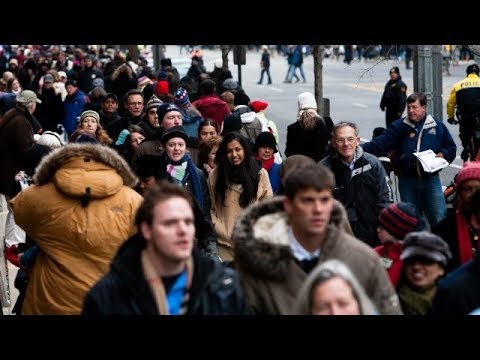
(Source: Newsy)
The Face of the United States is Changing
According to the American Society on Aging, gray is the new white. Eight in ten older Americans are non-Hispanic whites. Other groups are minorities claiming small shares of the older population.
Who is Diverse?
I spent some time exploring the web to answer this question…and wow, did I find a lot of material. For the purposes of this chapter, I thought it was prudent to look at legal definitions rather than personal perceptions.
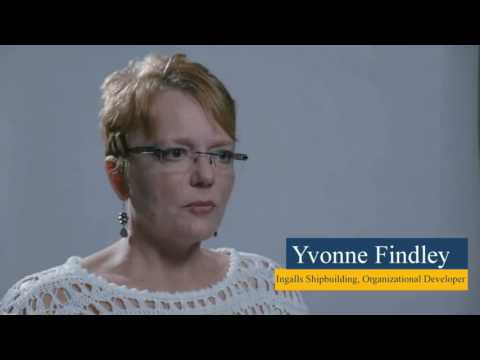
(Source: Huntington-Ingalls Industry)
I did appreciate one blogger who shared, "Diverse -- in the U.S. context I'm familiar with -- is used as a shorthand for women and non-whites in an organizational context, whether they are students, candidates for job openings, or employees. However, when we single out people as diverse, we may be calling attention to them as being not normal. While the speaker may not mean anything by it, the act of pointing out who's not like the others makes them highly self-conscious and more vulnerable to undeserved scrutiny." (quora.com, 2020)
For the purposes of this lecture, let's look at diversity through the prism of what we call protected classes.
A protected class is a characteristic of a person who cannot be targeted for discrimination. Under Federal laws, the following groups are protected (EEOC.gov, 2020).
Race
Skin Color
Religion
Nation of Origin
AGE
Sex/Gender
Pregnancy
Citizenship
Familial Status
Disability
Veteran Status
Genetic Information
And in some states, Sexual Orientation related to housing discrimination
Interested in learning more? Here is a link to the Equal Employment Opportunity Commission Fact Sheet: Federal Laws Prohibiting Job DiscriminationLinks to an external site.
What Makes YOU Diverse?
Each of us is unique, but are we as unique as we “think” we are? There are some social identifiers that we use to differentiate. How many of these do YOU use as a self identifier?
Ability (Mental or Physical)
Age
Ethnicity
Gender
Race
Religion
Sexual Orientation
Socio-Economic Status/Class
If you ask me to “self identify,” which is a scientific way of asking me to tell you about myself, I will probably describe myself thusly:
I’m a 55-year-old (age) woman (gender) of English/Scottish descent (ethnicity). I am an educator (implying that I am educated, and employed). I am married to a wonderful man (sexual orientation), and have a 23 year old son (reproductive pattern). I am an ordained minister (religion), and I enjoy reading, photography and science fiction (class implied by recreational pursuits).
Did I hit all the points? I am unapologetic for who I am because I am the culmination of a pretty hard-fought life - my personal battles are not reflected in the above categories, and without getting to know me, you'd never know my scar tissue. However, while I am proud of the "story of me," might someone from another background think poorly of me based on their own experiences and perceptions. Consider me entitled based on my description without considering my story? Accuse me of privilege as or support me as a minority? I guess it's all about the prism through which we are looking.
What if we take even more factors into consideration as we talk about "diversity." Recently, the National Association of Independent Schools has added the following CULTURAL IDENTIFIERS to the mix:
Body Image (“Look-Ism”)
Educational Background
Social/Academic Achievement
Family of Origin/Family Makeup
Geographic/Regional Background
Language
Learning Style
Belief Structure (political, religious, social)
Globalism/Internationalism
My rather simplistic interpretation of this list is that, perhaps, we spend a lot of energy in our society attempting to individuate (set ourselves apart as unique individuals -which is a good thing according to developmental psychologists). But, a side effect of this individuation is a potential to become averse to that which is not me. There's a great term I heard used recently, the tension of diversity. (Goldsmith, 2019) Since we all have traits that make us different, we have a potential for conflict and contention. The key, it seems, is to create an overarching culture where communication is encouraged, and people feel free to discuss (not yell) and to learn and grow.
Not to belabor the point, but I think it's super important that we all have an experience of realizing that we don't know as much as we think we do about diversity. - age, ethnicity, or any other identifier. To keep me honest, I did a little soul searching and realized that there is an area where I really lack understanding.
When the Teacher Becomes the Student
Whenever I want my students to have an "epiphany experience," I try to put myself through the same paces that I require from my students. So, I did the SAME assignment that I'm asking you to do at the end of this lecture. My topic, though, was unrelated to age. The area where I find myself lacking language or context is that of the "gender spectrum." I admit to being raised in a binary world, but I am striving to understand and change both my paradigm and vocabulary.
I sat myself down and did about two hours of research. I looked at website information. I went to the library and read gender-studies texts. Finally, I make a few Facebook contacts with people I trusted to be brutally honest with me about their own experiences.
Beyond what I learned about the gender spectrum, what I really learned was not being afraid of having an honest, non-judgmental dialogue about things that I didn't understand—learning how to ask the questions in a way that was not intrusive but asked in the true sense of wanting to understand. Equally important was my clear willingness to integrate my new learning into my world view. I find myself more comfortable with the new language, and I actually made a couple of really good friends -and they know that I get it -or at least I am trying to! What is important is to recognize that even though we might not know it, we all have some blind spots.
Image Citations
ImageLinks to an external site. courtesy of truthseeker08 under Pixabay License Links to an external site.
ImageLinks to an external site. courtesy of Republica under Pixabay License Links to an external site.
ImageLinks to an external site. courtesy of ubaidii under Pixabay License Links to an external site.
ImageLinks to an external site. courtesy of brb.org
ImageLinks to an external site. courtesy of the CultureWheel.org