Lecture - Fictive Kin
Godparents
In many cultures, godparents play a significant role in the lives of children. They are chosen by the parents and often have a spiritual or emotional connection to the child. Godparents may offer guidance, support, and even assume certain responsibilities in the child's upbringing. "Compadrazgo" is a form of fictive kinship that is rooted in Central Mexico history for many years. Literally meaning "co-parenthood", compadrazgo is a term to describe the set of relationships between a child, their parents, and their godparents. It has been hypothesized that these relationships evolved after the Spanish conquest in 1521 to help deal with stressful situations. I can speak to the importance to godparents, both in terms of my own "Aunt Gail," who is the epitome of a New York accented fairy godmother, and my son's godmother who has been a beacon of calm and kindness since the day my son came into the world.
Illustration from the original Canvas course (image not included in this lightweight export).Mentors
Mentoring and the role of mentor have existed as long as human beings have congregated together. There has always been a role for experienced individuals to draw on and share their experience and knowledge with others going through rites of passage and major transitions, for example, This guide focuses on one area of intergenerational work, namely ‘mentoring’. Mentoring has become a widely used term over the last decade with almost two thirds of the Scottish adult population now reporting having heard the term at work or in the media and feeling that they have an understanding of what it means. the transition into adulthood, married life, parenthood or community leadership. There has also always been a need to ensure that traditions, values and a sense of connection to ancestors is passed between generations.
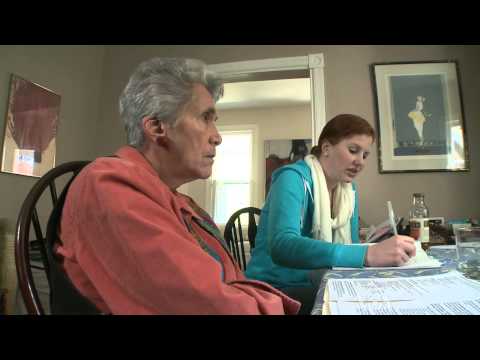
Mentors are individuals who provide guidance, advice, and support to someone, typically a younger person, in a specific domain or aspect of life. They take on a role similar to that of a trusted family member, offering guidance, knowledge, and personal development. Intergenerational mentoring and activity programs establish a relationship between an older adult (aged 50 and over) and a child or adolescent, often at-risk youth. Such intergenerational programs can also involve youth or college students who interact with older adults and help them learn computer-based skills or practice exercise. Intergenerational programs may have a variety of activities, including math and reading practice, art and music activities, health education, and cultural heritage activities. Intergenerational programs can be based in schools, community centers, faith-based organizations, or residential facilities such as nursing homes.
When community residents across age groups get to know and care about one another, they learn they have much in common, including a desire to live in a safe, fun community filled with opportunities to learn, grow and contribute meaningfully to the lives of other residents.
The most successful mentors have good listening skills, a supportive and non-judgmental approach, an ability to form and sustain positive, supportive relationships and an interest in the personal development of other people. They tend to have a style of communication that can be characterized as ‘person centered’. They find out what people value, get input into decisions about activities, and allow their partner to determine topics and the pace. In contrast, the least successful mentors tend to lecture or insist on their way of doing things. They are often less accepting of the individual’s style and capabilities.
Foster or Adoptive Families
Fictive kinship is often formed through foster or adoptive families. In these cases, individuals not biologically related to a child take on the role of a parent or guardian, providing love, care, and support as if they were a biological family member. in 2020, 34% of all children in foster care in the United States were placed with kin. That leaves 66% living with fictive kin. Many of these children have bonds with family friends that are just as strong as those others have with blood relatives, yet this fictive kin have no legal rights.
However, the "foster" role isn't just for the parental role. One of the coolest ideas I've come across in my studies of intergenerational relationships is the concept of "foster grandparents." Surrogate grandparents take on the social role of grandparents for nearby children (and sometimes, for adults), to the benefit of both parties. I love the term "spiritual grandparents," because the role of these older adults in the lives of young people can be magical! Sometimes these surrogate grandparenting relationships happen naturally with those children of friends who just happen to be around. If there aren't any young people in the immediate area, an older adult may need to take some initiative - there are facebook groups, and even the AARP has a website that can help match older adults with a younger person who needs support and nurturing.
It also goes the other way! Programs like "Adopt a Grandparent" at Duke University bring university student volunteers into the Durham Nursing and Rehabilitation Center (which, I assume is close to campus). Every Saturday, they come together to spend time with the residents, either in one-on-one or group activities like arts and crafts, baking and rousing games of bingo. It gives the younger people an opportunity to interact with an older person, and for both of them to get some perspective on life, or maybe to even be a bit silly together.
Illustration from the original Canvas course (image not included in this lightweight export).Caregivers
Most older individuals who are experiencing frailty or decline are cared for by their kin - mostly daughters. Most caregiving in the United States is provided by unpaid family caregivers, many of whom are balancing their own professional and family lives. Sometimes, it becomes necessary to hire help despite our desire to provide care for our own older adults. We don't want to do it. Our frail older family members don't want us to do it. So, how can we soften the blow? We can carefully research the caregivers we hire, and we can work toward developing personal ties with the caregivers.
According to researcher Tracy Karner, introducing professional strangers (homecare workers) into a sphere of intimacy can be accomplished by creating a familial relationship with the client. In this way, the tasks that might be considered too private for an outsider can be provided under a different framework. By "adopting" their homecare worker as fictive kin, the elder can maintain a sense of the cultural idea of family caregiving. It also enables the elder to place kin expectations on the homecare worker, which can be well behind a respite employee's "assigned" duties. This pattern seems to give the homecare worker a positive feeling and sense of meaning in her work. When elderly individuals require care and support, their caregivers may develop strong bonds with them, becoming like family. These caregivers often provide companionship, assistance with daily tasks, and emotional support, forming a deep connection that resembles family members.
Close Family Friends
Sometimes, close family friends become like family themselves. They may be involved in major life events, offer support during challenging times, and have a long-standing, trusted relationship with the family. This can lead to a sense of kinship and a designation as fictive kin. A study published in the Journal of Gerontology in 2013 examined extent to which older adults in the Netherlands include a nonrelative as part of their family (create fictive kin), and whether this process is similar in other age groups. It assessed the impact of the absence of close family ties and the divorce experience in the family network for the creation of fictive kin. The study found that the prevalence of fictive kin relationships was higher in older age groups. Both the absence of close family relationships and the experience of divorce within the family were related to having fictive kin, although the latter was only found in the youngest age group. For older adults never having married, being widowed or divorced were important predictors of having fictive kin relationships, because the absence of regular interactions with relatives required them to develop fictive kin relationships for both physical and emotional support as they aged.
Think back to our lectures on friendship and aging. Research has clearly indicated that social bonds are directly tied to life satisfaction. So, for those living away from family or those with no immediate kin relationships, it makes sense that we are better off developing our social network. A second study by Hazel Mac Rae expanded on the discussion of how important it is for older adults to create strong social networks. This 1992 study, found that these fictive-kin relationships appeared to be a salient and meaningful component of the social networks of elderly women. Evidence was found to support the substitution principle, or the notion that individuals who have no kin tend to substitute for missing relatives by converting close friends into quasi-kin. It is argued that fictive kinship ought to be given more research attention. "Because current demographic trends indicate that a sizable proportion of future generations of elderly people will have considerably fewer "real" family ties, fictive kin could become a very relevant research focus for social gerontologists."
Black families typically define “family” more broadly than White families, making fictive kin particularly important to Black children. The Black community has long traditions of fictive kinship care[18]––ethnographic researchers have found that relationships among fictive kin in Black families “are as strong and lasting as those established by blood.”[19] Black families often develop fictive kin relationships with their friends and neighbors and may even give them kinship titles such as “aunt” or “uncle.”[20]
The importance of fictive kin in the Black community has strong historical roots. During slavery, Black children were often left without parents but found fictive “aunts and uncles” who acted as parents to them.[21] Adult slaves relied on “networks of mutual obligations” for their children’s safety and nurturing.[22] When Black families began to move north in the second half of the nineteenth century, leaving behind their home communities and extended families, they again relied on fictive kin to help raise their children.[23] This system supported development of complex family structures and helped Black families advance financially and socially.[24]
Today, fictive kin relationships continue to be crucial to childrearing in the Black community. Black families often engage in “othermothering,”[25] relying on both relatives and fictive kin to meet their children’s physical and emotional needs.[26] Othermothering has occurred not only informally, but also through institutions such as churches, women’s clubs, and community service organizations.[27] While Black children make up 14 percent of children in the U.S., they make up 25 percent of children being raised in kinship arrangements, whether in or outside the child welfare system.[28]
Like Black Americans, LGBTQ+ individuals often have relationships with fictive kin that resemble those of relatives. Fictive kin are therefore likely to be extremely important to children raised by LGBTQ+ parents. Because same-sex marriage was prohibited in the past, lines between friendship and romance and between friendship and family are more blurred in the LGBT community than in heterosexual culture.[29] Families of choice in the LGBT community can include “lovers, ex-lovers, friends, co-parents, gamete-donors, and children brought into the family through adoption, foster care, prior heterosexual relationships, and alternative reproduction.”[30] Families of choice provide emotional support, economic cooperation, and socialization.[31]
Anthropologist Kathy Weston explains that LGBTQ+ people’s “chosen families” may consist of people in multiple households, giving an example of a lesbian couple and a gay man with whom they share childcare responsibilities considering themselves family.[32] It is common for members of the LGBTQ+ community to develop unique family formations to care for their children––children of LGBTQ+ people are often coparented by more than two parents or more than one couple.[33] Therefore, including fictive kin in the definition of “relative” would help ensure these children have the opportunity to be placed with a person with whom they have a strong relationship if they are not able to be with their parents.
Community
Volunteers already play a critical role in providing assistance to older adults, people with disabilities and family caregivers, and the need for volunteers is only expected to grow as our society gets older with less family support. However, community volunteers' role in the overall health and wellness of older adults in the United States cannot be overstated. In many cases, these volunteers serve as substitute family, advocating for older adults when they cannot do so for themselves. In a study conducted by the Administration for Community Living in 2019, volunteers in federal programs funded by the Older Americans Act, contributed over sixty-two million hours to deliver services for older adults. This is equal to approximately $1.7 billion. In that same study, the Adminstration for Community Living found that volunteers provided OVER HALF the total annual labor for these services.
The benefits of volunteering in general have been well-documented, and when combined with the aims of volunteer programs, they can provide compelling reasons to engage both older and younger volunteers in the act of service delivery. AmeriCorps Seniors programs, for example, engage older adults as volunteers in their community, often serving to support other older adults through acts like senior companionship, friendly calling, or meal delivery. They have found that volunteers experience decreased anxiety, depression, and loneliness. Other studies support the benefits to older adults in improved wellbeing through acts of volunteerism.