Lecture: Cohorts, Generations and Aging Norms
One of these things is not like the other...
Cohorts vs. Generations
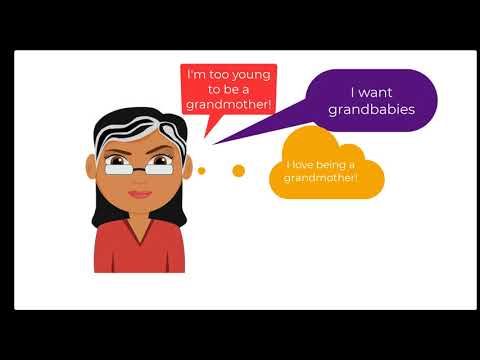
What is normal? What should we be doing in our lives at a certain period of time? Am I behind or ahead? Gerontologist study "age norms" as a way to measure how a culture answers these questions. The pressure to be "on time" can be exhausting. The fear of being "off time," can be even worse.
Age-effects, which are changes that occur due to advanced aging, can hit cohort members at the same time. It is kind of funny when I listen to groups of 70-year-olds sharing their physical maladies like bad hips and knees. They each know exactly what the other is experiencing!
Period-effects - are those changes in our lives that impact a group of people with a shared experience in history. My old example would be 9-11 and how it affected the lives of all Americans. These days, my new example is COVID-19, and how it is impacting the lives of the world and will change everything for the unforeseeable future."
Consider what historical events have shaped the perspective of an entire segment of the population. Children of the Great Depression and are known to be incredibly frugal and have a fear of scarcity. Those who came of age in the 1970s, during an era of the sexual revolution, were known for outward expressions of liberation and ownership of their bodies.
Cohort-effect refers to the social change that occurs as one cohort replaces another. I've got a weird cohort-effect going on in my life as I watch my students using (and improving) the technology that MY cohort invented, and there are days when I feel like I am running faster and faster to keep up. There are days when I get stuck, and I have to call my 25-year-old son to help me figure out a software or hardware issue - when I was the one who taught him how to use a computer in the first place!
Generations
(Source: Pew Research Center)
Let's talk just a little bit about "generations." The differences, similarities, conflicts and collaborations between generations utterly fascinates me. Right now on the face of our planet, we have more generations living together than ever before.
The Silent Generation (WWII) is our oldest.
Let's talk just a little bit about "generations." The differences, similarities, conflicts, and collaborations between generations utterly fascinate me. Right now, on the face of our planet, we have more generations living together than ever before. (Watch the video)

Next up, the famous Baby Boom(1946-1964) is the largest.
Born just after WW2 ended, this group helped define the face of America. They have been the force of economic, political, and social policy since their creation. Now, the hippies of the 1970s are leading our country and are often called the "Me First" generation! They grew up in a time of prosperity and an absence of world wars. They were the Flower Children, taking LSD and protesting the war in Vietnam.
Unlike their parents, who grew up during the Great Depression, Boomers became great consumers. They became famous for spending every dollar they earned. (Watch the video)

(Source: The History Channel)
Then comes me. I'm a pure-hearted Gen-X. We are also called the "Baby Bust."
We were born between 1965 and 1980, and are sort of the opposite of our Boomer parents. We created computers, we are known for being independent and less materialistic than our predecessors. We are a generation who was statistically more likely to have divorced parents, be latchkey kids, and be pretty cynical. We grew up watching Watergate, and saw the first missing children's photos on milk cartons. Yeah, we are also the first generation to expect NOT to earn as much as our parents, despite being the most educated generation in history. (Watch the video)

(Source: FutureNow)
Next, you guessed it. Millennials. Born 1981-1996, this generation is one of the most maligned.
In general, they’re better educated – a factor tied to employment and financial well-being – but there is a sharp divide between the economic fortunes of those who have a college education and those who don’t.
Millennials have brought more racial and ethnic diversity to American society. And Millennial women, like Generation X women, are more likely to participate in the nation’s workforce than prior generations.
Compared with previous generations, Millennials are delaying or foregoing marriage and have been somewhat slower in forming their own households. They are also more likely to be living at home with their parents, and for longer stretches.
And Millennials are now the second-largest generation in the U.S. electorate (after Baby Boomers), a fact that continues to shape the country’s politics given their Democratic leanings when compared with older generations. (Watch the video)

(Source: Let's Teach)
Then, along comes Generation Z. Hello!!!
Born after 1996 (Links to an external site.), most members of this generation are not yet old enough to vote, but as the oldest among them turn 23 this year, roughly 24 million will have the opportunity to cast a ballot in November. And their political clout will continue to grow steadily in the coming years, as more and more of them reach voting age. (Watch the video)

(Source: Time)
Born after 1996, the oldest Gen-Z (also known as i-Gen) turned 25 this year and were a major contributor to the 2020 election (Yay Voting!), the Black Lives Matter and Me Too movements. And their political clout will continue to grow steadily in the coming years. According to the Army and Navy Academy website, "The 74 million young Americans born between 1995 and 2012 comprise the most important generation in the nation's history, both in size and composition."
One of the I-gen's distinguishing factors, beyond their diversity, is that they never knew a time without the iPhone or other smart technologies. Unlike the Millennials – who came of age in the "Great Recession of 2009"– before COVID-19, this new generation was in line to inherit a strong economyLinks to an external site. with record-low unemploymentLinks to an external site.. That has all changed now, as COVID-19 has reshaped the country's social, political, and economic landscape. Instead of looking ahead to a world of opportunities, Gen Z now peers into an uncertain future.
Right now, there are potentially FIVE generations in the workforce, and they all operate very differently. Take a peek at this:

(Source: Iberdrola)
Age Norms
What is normal? What should we be doing in our lives at a certain time? Am I behind or ahead? Gerontologist study "age norms" as a way to measure how a culture answers these questions. The pressure to be "on time" can be exhausting. The fear of being "off-time" can be even worse. It is getting harder to think of behaviors that today are not appropriate at every age because we are moving towards an age irrelevant society- a change in society where there are no set age norms. It is becoming more and more acceptable to be a student at age 50, 60, or beyond. More acceptable to start a family in our 40's or even now in our 50's.
As a gerontologist, I have spent a considerable amount of time questioning age-appropriate behaviors and what people do. Because of my work, I am more open to socially unacceptable age-graded roles, but most of society has not challenged this practice.
As life expectancy increases, the age at which society expects to transition into and out of many roles is changing. For example, during the 1950s, a survey revealed that most people felt that the best age for a woman to marry was age 19 and age 20 for a man. Today, most of us would think that these ages are much too young. Biology can keep us alive longer, giving us more time to transition into new roles. How do we define those roles?
Age also affects our expectations. Not only does society expect certain behaviors at age-appropriate benchmarks, but for most of us, roles define our behavior and attitudes. People learn to define themselves and their behavior in terms of these age-appropriate roles.
- As a baby or child, the role is to be taken care of
- As a student, the role is to study, be with friends, find your vocation
- As a graduate, you are expected to find a job
- As a young adult, one usually marries and begins a family
- As a middle-aged adult, one might have grandchildren and build up a retirement income
- As a young old people often travel and enjoy life (ages 65-75)
When we are "old-old" (ages 75-85) or "Oldest-old" (ages 85 and up), there is a certain expectation of frailty and slowing down. YET... every day, the media reports about the accomplishments of adults who have reached these advanced ages. As a society, we still see them as news worth and not as being the norm. Somehow, being "oldest-old," our accomplishments are seen as rare and unique. Wouldn't it be lovely if they were just SEEN?
As you are watching the following video, think about times in your life when your age was a factor. Share your thoughts!