Lecture: Caregiving - Generational Obligation or Opportunity
We are experiencing a nation that is aging differently than ever before. There are challenges that are accompanying this aging population. The fastest-growing of which are over age 85, used to be considered remarkably old, yet we are seeing a growing number of 90 and 100-year-olds that are in considerably good health, and who require little outside support to remain vital and engaged members of the community.
In fact, there are some 90-year-olds whom I affectionately refer to as “energizer bunnies,” because they best me on an average day for energy and vitality. Gerontologists don’t know enough about this group to know what their physical needs are. They have simply not been well studied yet. Thus far, Thus far, society tries to make the very old dependent (remember functional dependency?), because we don't know what they need. Unfortunately, many times this becomes the self-filling prophecy and older people may lose functioning before they need to.
The Centenarians
You have seen many of the problems that categorizing people by age rather than physical functioning presents. Categories do not allow for premature aging. For example, how would we describe a 50 year-old who has heart and lung conditions and can not care for him/herself? There are no categories to describe elders in terms of their functional ability.
We know that the incidence and need for care increases with age but care needs also increase with premature aging. Perhaps "dependent elders" or "frail elderly" could be useful terms.
This group of vital older adults is growing, widening the spectrum of possibilities, both in terms of human potential and the need for services and resources to meet their myriad needs.
Before we dive into the lecture materials, I’d like to introduce you to some “vital elders,”
Supercentenarian Mary Sadler, who hails from Victoria, has seven children, 15 grandchildren and 17 great grandchildren. Born in 1908, the talented pianist gathered her family and friends for her 110th birthday celebrations - as she shared the secrets to her everlasting life.
(Source: Channel 7 News, UK)
According to Robert Young, director of the Gerontology Research Group Supercentenarian Research and Database Division, Lowe is believed to be Connecticut’s third-oldest living person and soon may join the world supercentenarian rankings.
The GRG defines supercentenarian as “anyone who has been validated to have lived to be 110 years or older.” Because of a backlog of applications for inclusion in the rankings, Lowe is expected to “join the world rankings in the coming months,” Young said.
Supercentenarians are going to be growing in numbers as our life expectancy gets closer to our projected lifespan of 120! We may need to readjust some of our expectations, eh?
How many of these women, though, are living alone at 100? How are they maintaining their quality of life? For most, it is with the assistance of others. We need to address the skill, compassion, and energy that caregiving requires, and understand the special and dynamic needs of our caregivers.
Caregiving
What was the first thing that you were ever responsible for keeping alive? For many of us, it was the county fair goldfish. The poor thing had a concussion from the moment that I struck it in the bowl with the ping-pong ball. I kept it alive and nurtured it for however long the county fair goldfish is actually supposed to live. I then had a very elaborate burial at sea, in the hall bathroom.

(Source: thanksproject.org)
Most of us practice caregiving on puppies and kittens and hamsters, and we experience their entire life course. We learn how to be responsible, feed, and care for them. The next person we may find ourselves being responsible for as a sibling, particularly the younger one the tags around behind us and tattles on us to our parents. For some, the most significant caregiving experience we will ever have is for our first child, and then those that follow. For others, it will be our spouses, our significant others, our life partners, our parents, and perhaps our grandchildren.
Another one of those universal truths is that during our lives:
You will HAVE BEEN a caregiver
WILL BE a caregiver
or
WILL NEED a caregiver
We know that caregiving is hard. We also know that caregiving can be profoundly rewarding. More and more, it is not a gender specific role.
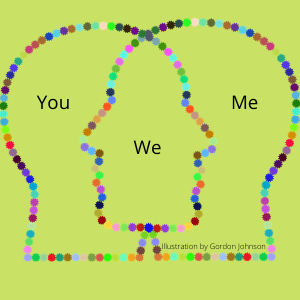 A Story of Reciprocity
Most people who marry have children. Caring for young children is seen as a normative function for adults. It is generally a planned for and anticipated adult stage. This begins a generally established pattern of reciprocal support between older and younger family members that continues throughout an individual's lifetime.
At various points, parents who are well and have resources provide all or substantial support, especially financial assistance, to their children and grandchildren. Older parents who are faced with chronic health conditions, and thereby lose valued exchange resources, are the most likely to become dependent on younger family members help. (Dwyer, et al, 1994)
So, the developmental shift goes from dependency of children to interdependency (depending on each other) for both parents and children, to a greater dependency of parents. This pattern of reciprocity begins to shift with a deterioration in either the financial or the health status of the elderly person.
A less common, or non-normative, example of caregiving is caring for adult children who are ill or handicapped either from birth or from an accident. The special-needs child and the physically disabled child remain dependent throughout their lives. Unexpected illness or accident can make an adult child dependent again.

(Source: In Holm Productions)
How many of you are caregivers right now? Many of you want to go into the field to be a caregiver because you are drawn to it. Caregiving can be incredibly rewarding and terribly frustrating and utterly exhausting. Caregivers get pulled in lots of different directions and can be some of the most important and influential human contacts that an older person can have in their lives. Caregivers report incredibly meaningful relationships with the families and the people for whom they are providing care. They report great satisfaction in knowing that they are giving back. They are demonstrating to their children how to treat people, not just all people, but people of all ages. They report a profound sense of personal growth and purpose and appreciate the opportunity to learn and grow from the experience. (Cohen, et al, 2002)
Who Provides the Care?
Caregiver research reports whether our parents or our children will spend at least eight hours a week providing care. 20% of us will spend more than 40 hours a week doing caregiving. (Abuglia et al., 2004) Most of us are not trained to be caregivers, but fall into the role as a part of the family support system.
Mostly, family and kin network. In fact, only 8% of caregiving in the United States is provided exclusively by formal care providers (agencies or institutions). Around 30% is provided by a combination of formal and informal care - hiring help for a few hours a day. Just over 60% of caregiving is done informally. There are three who are receiving care at home for every individual in a nursing home or other formal care environment. (BLS.gov, 2019)
While there is an expectation that family will care for older adults in some cultures, I think we can all agree that most of us want to stay independent as long as we possibly can. I don't know many older adults looking forward to having their children take care of them. As a parent myself, I can only imagine myself ever taking care of my child, not the other way around.
For the year 2050, there will only be four available caregivers for any one of us who needs them. Why? Part of it is because we have fewer children. Having fewer children means that we have a smaller caregiving pool. Those of you who have five brothers and sisters, you sort of win the caregiver lottery because you will spread out caregiving responsibilities. For those of us who are only children, there is only one of us to care for two parents.
Add on an interesting phenomenon. Because we have such increased longevity, it has made it possible for more and more adult children in their 70s and 80s to care for parents who are in their 90s and 100s!
Consider these scenarios:
A young man in his 20's employed as an engineer at Lawrence Livermore Labs runs his sports car under a truck. His passenger dies, but he survives as a quadriplegic with the I.Q. of a 7-year-old. His family makes the commitment to care for him at home. After about a year, his father can no longer cope, moves out, and seeks a divorce. The younger sister grows up and leaves home -- the mother remains as his sole caregiver. That was 12 years ago. He is in his late 30's now, and his mother is in her 70's. Who will last longer? And then what?
A 75-year-old man was being discharged after a stay in the hospital. The hospital staff was concerned and asked about who would care for him during his convalescence. "Don't worry." he said, "Mom will take care of me." The staff laughed, thinking him a witty character. The next day a 92-year-old woman came in and took her son home.
Finding Creative Solutions
What if children aren't around to do that caregiving, even if they wanted to? That is when we see social organizations, nonprofits, and church organizations providing options for care to their older members. These services allow older adults to stay in their homes for as long as they possibly can.
We easily associate the term caregiving with young children, but it is a term which now also applies to the other end of the life span, elderly caregiving- taking care of Mom and Dad, or Aunt Suzie, or Uncle Jim or a spouse. The average woman will spend 18 years caring for children and 20 years caring for aged parents. In between, or simultaneously, she may spend years caring for an ill or disabled spouse.
Elaine Brody of the Philadelphia Geriatric Center argues that parent care has become a normative but stressful experience for individuals and families and that its natural scope and consequences are not fully understood.
Lou Glasse, former president of the Older Women's League (OWL), says, "The empty nest is nothing more than a myth. If women's nests are empty at all, they fill again quickly with elderly parents or other relatives who need care and support." Just when many women on the "Mommy Track" thought they could get back to their careers, some are finding themselves on an even longer "Daughter Track," with their parents or their husband's parents growing frail.
Middle-aged couples may be just beginning to savor some freedom from family demands, perhaps to have a little extra money or to make plans to travel. And then the empty nest begins to fill again. Studies show that adult children provide 80% of their aging parents' health and social services.
Family Survival Caregivers Alliance Project (a San Francisco organization for families dealing with brain impairment members) surveyed 455 family caregivers in 1988 and found a great diversity in terms of their relationship to the patient. An 88-year-old husband is caring for his spouse with Alzheimer's disease; a 79-year-old woman is caring for her middle-aged son; a working woman is caring for her 92-year-old mother; a 27-year-old woman is caring for her sister, a stroke victim; a 40- year-old granddaughter caring for her grandmother with Parkinson's disease. These types of caregiving do not fit into any one period of adulthood. (Coleman, 2000)
These caregivers do not share a single developmental stage of life. The need for parent care may arise while adult children rear their own children, as they enter and advance through middle age, or as they adjust to the realities of their own old age.
A Walk in the Shoes of A Caregiver

Caregiving can be stressful for some, particularly for those caring for the profoundly frail or profoundly disabled individual. It can also be very difficult for someone who was never trained on how to be a caregiver. The typical caregiver is a 46-year-old working daughter who spent 18-20 hours per week caregiving.
They are most frequently working full-time and managing an additional 20 hours a week taking care of a chronically ill, for the most part, mother, who lives alone or nearby. (Guberman et al, 1992)
The American Association for Retired Persons have just published their report on Caregiving in The U.S. 2020 - here are the highlights directly from the publication. (AARP, 2020)
- 41.8 million Americans provided unpaid care to an adult age 50 or older in the prior 12 months.
- Family members devote an average of 27.7 hours per week to caregiving, with 68% reporting that they dedicate 1-20 hours per week; 32% providing between 20-41 hours per week.
- 61% of caregivers are women, 39% of caregivers are men.
- In general, the average age of a caregiver is 49 years
- 34% are aged 50-64
- 19% are over age 75
- While most caregivers of adults care for one person (76 percent), 24 percent care for two or more adults, suggests a nation of Americans who continue to step up to provide unpaid care to family, friends, and neighbors who might need assistance due to health or functional needs.
- There has been a shift in residence over the past five years, where more caregivers report their recipient lives with them, the caregiver, instead of living in their (the recipient’s) own home. About two out of five caregivers report their care recipient lives in the recipient’s own home (43 percent).
- The experience of caregiving is different for women than for men. Elderly women tend to find isolation and loneliness most stressful, while elderly men complain more about the physical strain and unfamiliar domestic work. (AARP, 2020)
- On average, caregivers provide help with three Activities of Daily Living (ADLs) , and fourInstrumental Activities of Daily Living (IADLS) with the most common being transportation grocery shopping, housework and meal planning.
- While the average is just over four years, more than 30% have been caregivers for more than ten years (National Alliance for Caregiving & AARP. (2020)
- Caregivers report that the caregiving experience has taken a toll on their health (23%) and had a negative impact on their finances (45%).
- While there has been a slight increase in policies toward paid time off for parent care, 53% report having to take unpaid time off to provide care.
Statistically speaking, daughters perform more direct care, where sons provide more financial support and home maintenance support. That may have more to do with the mother-daughter dynamic. If you know someone who is a daughter who is also a caregiver, take a look at everything else they need to manage in their lives. Remember, in many cases in contemporary economic structures; she is working as hard as her male counterpart.
I think we have this cultural myth that we all live in very isolated nuclear family units, and we have talked about the fact that younger people do move away from rural communities leaving older people behind. What we may put between us in distance, we make up for in frequency of contact and intergenerational connectivity. It is normal for a child to move away to college and not call their parents every day. No question, the shift from multi-generational housing has a detrimental impact on the frequency of contacts. There are many cartoons and sitcom bits about how children "never call, never write…". However, historically speaking, we actually do right, and we do call, and we do help.
HOW do we care?
Parent-child relationships can affect the tone of caregiving. We've actually broken it into three groups.
Mutuality
There is mutuality, where the child and the parent report that they function together pretty well. When you're younger, I actually recommend going on vacation with a parent that you are most likely to be caregiving for and see how you do in a longer-term, five or six week time together. See what dynamics develop. Often times it's a pretty good glimpse of what your caregiver relationship might actually be. If you're getting along great, and you are experiencing a mutually rewarding, minimally conflicted relationship, you're doing great! That's mutuality!
Ambivalence
If there is a little tension, but the costs and the benefits sort of way each other out, then you're in the category of ambivalent relationships. It's not hostile. It's just peaceful cohabitation.
Conflict
Then, there are the conflicted relationships. We all know what conflict looks like, and it is vital that any caregiver relationship acknowledge the challenges that come with an acrimonious relationship. Before going into a caregiving situation, it is highly recommended that you ask yourself questions. Do you actually want to be the person providing the care? Does the parent want you to be involved? In order to maintain healthy relationships, sometimes distance is the better option. We know that the greatest possibilities for elder abuse exist when the relationship between the caregiver and the person receiving care is unhealthy from the start. (Pietromonaco et al, 2004)
What about the relationships that you have with your siblings around caregiving? If there are sibling conflicts that already exist, you might have disagreements that rise of how to care for the parents. It is vital to get a sense of what you're getting into! Have the conversations about caregiving dynamics long before they become necessary.
Role Change vs. Role Responsibility
Caretaking, an older adult often involves changing how we interact with that person. These changes include:
- role change or social position
- role responsibility (tasks within that role)
Role change involves wearing a different hat. For example, Mom may have been the caretaker or grandparent who helped with child care. As a child, you may have relied on Mom or Dad to meet your needs. Now, you must help meet theirs. Or a spouse may have lost the hubby/wife team.
Role responsibility involves changes in the duties they perform within their changed role. For example, Wives may find it difficult to start paying bills, make financial decisions, keep up auto or home maintenance. For men, personal care for a woman's needs may be stressful. Shopping and cooking balanced meals are not familiar tasks, and many spousal caregivers are old themselves.
Besides role change and role responsibility, many caregivers are sandwiched in between caring for children and parents. (Lahaie et al, 2013)
Most pre-retirement caregivers are married women. The major difference between caring for a spouse and caring for a child or parent is that the caregiver is looking after his/her most "significant other." Caring is part of the marital relationship. In caring for an adult child or parent, the caregiving often interferes with and puts a strain on the central marital relationship. (Kramer & Kipnis, 1995)
Within the female kin network, a hierarchy of preference exists, based on the caregiver's relationship to the older person and on geographic proximity (how close they live to each other). Wives are favored over all others. If the older person is unmarried, widowed, or has an ill spouse, then an adult daughter or daughter-in-law is commonly the primary caregiver.
If a spouse or child is unavailable, then a sister is primarily responsible. If none of these are available, a female member of the extended family, such as a niece or granddaughter, most often assumes responsibility. Even when an older person moves in with the eldest son, the daughter-in-law is generally the caregiver in East Indian and Japanese cultures.
For elderly caregivers, caring is more likely to be the focus of their lives, while in the case of younger caregivers, caring may displace or distort the previously existing balance of relationships.
To sum up, a spouse caregiver may see the role as part of his/her primary relationship and focus of life. On the other hand, a child may find that the caregiving role interferes with his/her primary relationship and disrupts his/her lifestyle.
On the basis of the available evidence, therefore, it seems likely that in sound relationships, the long history of intimacy in the married relationship results in positive attitudes about caregiving.
The Spouse As Caregiver
Spouse caregivers are older, less likely to be employed, and often view care provision as a normative expectation of marriage. Because of this, they may be more committed than adult-child caregivers.
Young and Kahana (1989) looked at 183 older patient-caregiver dyads after discharge from hospitals for a confirmed heart attack and found less caregiving strain among husbands and wives, in comparison to daughters. They validated findings that show that caring for an ill spouse may be a normative expectation for older couples, and, for this reason, they perceive and express less of a subjective burden. Gratifications derived from helping a martial partner could provide another explanation for lower spouse burden.
We know that women outlive men and are statistically far more likely to be required to be a caregiver later in life. We also know that 40% of all caregiving is provided by spouses, regardless of their gender. Caregiving for a chronically ill spouse not only involves tremendous physical demand but is also an economic strain. Marital tensions may come out during the caregiving process. We see caregivers put their own care second and become increasingly frail as they make caregiving for the spouse the priority.
There are three different categories of caregivers.
The Worker:
they are the ones that do the schedules, the research, they read about the disease, and have a desk set aside just for insurance and paperwork. They are the logistics caregivers.
The Labor of Love:
There are caregivers who provide care purely as a labor of love, and devotion, not duty. I Collett caregiving from the heart.
The Reluctant Carer:
There are some of us who are simply not inclined to be caregivers, but because of circumstances beyond our control, whether financial or other, find ourselves in a position where we are suddenly forced to be caregivers.
Most of us fall into a category that is a crossroads between these three. We're trying to figure out how to be a caregiver. While it may not have been a role that we want, we may find that we transition from the "reluctant" to the "labor of love" and have great success. Although, I'm quite convinced that much like the Kubler Ross stages of loss and grief, there is no one set answer, and our transition back-and-forth between all three categories may actually be quite fluid depending on the situation and the day. (Harris 1994)
It's About Balance and Culture
Even the most loving, caregiving relationships can take a toll. By bringing a parent into a home, particularly if I have a spouse, young children who are at home, or other commitments, I have to remember that they are as important as the older person I am caring for. I need to make time for my significant other, or I run the risk I'm doing a great job of caregiving for my parents, who have the most immediate and pressing need and losing everyone else in the mix.
There is an inverse correlation between economics and family connectedness. Think back to the Modernization Theory -as income rises, there is a decrease in the number of family interactions. The more income we have, the more willing we are to pay for someone to do caregiving for us.
In a study by the Pew Research Center, it was found that African American/Black caregivers provide higher levels of care, stronger levels of self-control, and report lower levels of elder abuse and neglect or violence against elders. While they tend to be more economically disadvantaged, they are far more creative in terms of attracting alternate caregivers and balancing social interactions. Families take turns caring. Cousins and nephews, and nieces come in to provide care for the matriarch or patriarch. Rather than a cry for more money to pay for help, there is a rallying cry for the family to contribute time and energy. (Livingston, 2018)
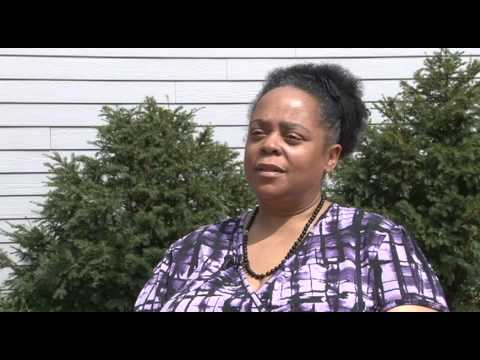
(Source: University of Wisconsin)
Twenty percent of Caucasians are caregivers but are more likely than any other ethnic group to utilize professional in-home services and to place elders in long term care. What strikes me the most is the tin cases of Alzheimer's Disease in the Black population, just 12% are institutionalized, compared to 85% of caucasian elders. (Livingston, 2018)
The Hispanic/Latino population is seeing an increased incidence of diabetes and obesity. This can really complicate the experience of being a caregiver. This population stays healthier for a considerably longer time than any other ethnic group. Unfortunately, what this means is when they get sick, they get BIG sick, and by then, the people who will be their primary caregivers are older themselves. Please read: In Hispanic Culture, placing Nana into an Assisted Home Feels Like A Failure. Links to an external site.
One of the greatest challenges we have, particularly in California, is that many caregivers in our Hispanic population do not have access to language accessible public health information about medical diagnoses or where services are available. We're starting to do a better job, but we have done a pretty poor job of educating about healthcare and other support services in our larger cities for both our Latino and Asian speaking citizens. We're getting better. I hope that it keeps getting better!
If you are caregiving for someone or have a family member who is caring for someone who is a non-native English speaker, it is important to direct them to the appropriate support services. They simply may not know that the services to support their healthcare exist or know how to access them.
One in 3 LGBTQ elders lives alone. They report that as they age, their network shrinks. Because of that shrinking full of like-minded caregivers, this group reports the highest level of difficulty accessing care. Because of health, lifestyle beliefs, religion, because of any other number of fear-related barriers that we have in our society, our LGBTQ caregivers struggle to find appropriate long-term care assistance, be that in the home or in a more institutional setting. (Grossberg & Grossberg)
Please watch this video:
(Source: University of Wisconsin)
Remember those elders who are most likely to experience poverty? Women without high school education, who are widowed, living in rural area. Well, in many cases they are also in a demographically regional waste land when it comes to healthcare services. If the family has moved away, there may be a reduced number of caregivers that are available. Often, family members have to come great distances to provide care, but have no other choice because rural, lower income areas may not have community services and supports available. It is in these cases where relocation may be the only option for an older person who is struggling with ADLS or IADLs.
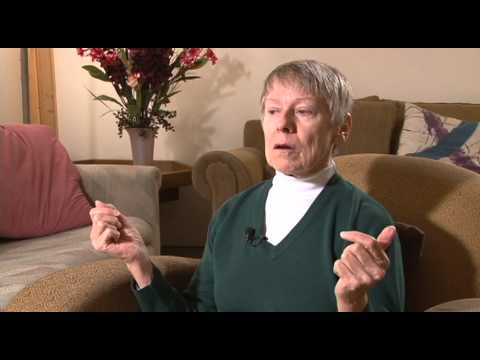
Finding the Best Fit
Being responsible for another human being is a healthy experience. What do we do to provide support for the people who are providing support and care? Fortunately, there has been an acknowledgment that we need to provide care for the caregiver. We seek groups developing to provide education and support. We see respite care, which are programs specifically designed to give a caregiver a day off. Sometimes it isn't formal; it's just a group of friends who decide to help give respite to a friend.
I am very frustrated these days with social media in general, but I see the incredible support that can come from Facebook groups and online chats and blogs, and the other electronic tools that we have. They make the difference between connectedness and isolation for the caregiver.
For those of you who are interested in pursuing careers in the field of aging, think about doing case management. You will come into a family environment and help the person responsible for care to coordinate and monitor. Geriatric care managers don't do direct care, but they make sure that the person who is doing the care is given the appropriate support and able to provide that care in the most efficient, cost-effective, at least physically and emotionally taxing way that they can.
Most family caregivers don't use those formal supports. I wonder whether it's because they just don't know that they're available or think that they can't afford them. We know that women in ethnic minorities are least likely to turn to former support services. But if you can reach out to those populations and show them what low-cost or no-cost alternatives exist, perhaps we could increase their longevity as caregivers.
Formal Supports
Most of us simply can't do it all by ourselves. We need support. There are programs that exist, like in-home support services. In our insurance and healthcare discussions, we talked about what in-home support can do, private nurses, home health aides, adult day services, as well as nursing homes. Unfortunately, the number of healthcare providers who are trained to care for older adults has not kept pace with the rate of the aging population, so we are experiencing an imbalance of supply vs. demand.
In-home support services (IHSS) are the formal name of a county program provided with state funds, designed for those eligible for Medi-Cal. I HSS workers are paid the area's minimum wage and are specifically trained and supervised by a county social worker. They can come into the home and provide support with behaving, dressing, and housework. It's usually like 10 to 12 hours a week, but in some cases, that is exactly what the caregiver needs. (cdss.ca.gov, 2020)
We can hire in-home caregivers through private agencies if we don't qualify for IHSS services. We can request CNA certification levels, LDN levels, and it is the case of someone needing invasive medical care, an R.N. can come into the home. If you're paying for it, there is no limit on the number of hours, but it's expensive. Paying through an agency can run up to $50 an hour. Can you hire someone privately? Yes absolutely! The difficulty is that you would then be responsible for Social Security and insurance and liability because of employment laws, and quite frankly, the paperwork can be overwhelming.
Another option that we need to consider is adult day services. There are two different kinds: social day programs and healthcare day programs. The needs of the older person determine the best fit. Is it just about socialization and company, meals, and recreation? That's a perfect candidate for a social day program. Or, do you need a program where the older person can access occupational or speech therapy? A healthcare day program will be a better fit if there is a specific medical condition diagnosis, like dementia.
Respite Care
Respite care's working definition is "Inpatient or outpatient care delivered to an elderly person in lieu of other regular caregivers."
This is care for the caregiver. Volunteers are trained to come in and take over for a day, or even an hour, often organized by nonprofit organizations. Catholic charities run respite programs where they specifically trained volunteers to work with dementia patients. Each volunteer is required to spend 60 hours training specifically on how to work with a population experiencing dementia symptoms. The organization sponsors weekends where the caregiver is given the opportunity to go to a resort or a spa and receive complimentary pampering, or even just some free time. The volunteer who is responsible for caregiving is then left with the dementia patient, with the knowledge that they know how appropriately care for this person, and have available resources if they get into trouble. It is a free service, and it can be a lifesaver. (Van Exel et al., 2008)
A study by the Veterans Administration shows that respite care is the number one requested service by caregivers, yet when the service is provided free or at a reduced cost, 30-50% of families fail to use it. The study found that many caregivers can't ask for help. In fact, they may even feel guilty for requesting outside help. There is a perception that "everyone" else is doing it; why can't I. (Berman & Hamilton 2003)
In the absence of a formal respite program, that break can come from something as simple as a friend coming in to do basic hygiene or help with basic homemaking. Maybe it's pinch-hitting in an emergency to give a caregiver a day off.
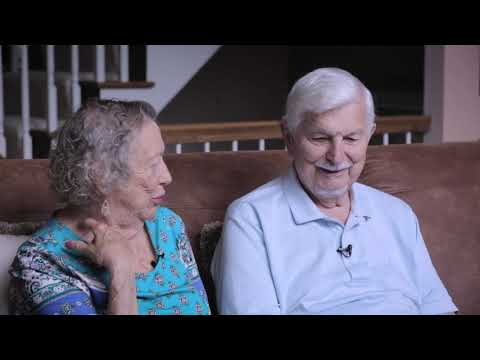
To learn a bit more about Respite Care, visit this site offered by the National Council on Aging: What is Respite Care. Links to an external site.
Formal Caregiving - When Home Care Just Isn't Enough
There may come a time when informal caregiving simply isn't structured enough, or the care required surpasses what the informal caregivers can provide. This is when we consider placement in long-term care facilities. Up until now, we have been discussing informal caregivers. They are usually unpaid, unskilled family or friends. Formal caregivers are paid and educated personnel who caretake the elderly.
Training for CNA, LVN, and R.N. caregivers focuses on geriatrics, not gerontology. Geriatric work with the elderly has historically been ghettoized- low status and low pay (that's not necessarily true for gerontologists). That is changing as more older adults demand knowledgeable caretakers who can attend to their special needs. Boomers are demanding that the caregivers they hire for their parents have a knowledge of aging. (Ramirez & Holmes, 2006)
Certified Nurse Assistants (CNAs) provide six times as much hands-on care as R.N.'s and are involved in the most intimate ways with residents. They are able to get an enormous amount of work done. Lacking even a basic education regarding aging issues, these aides can seldom draw from a body of established sociological knowledge. We require our CNAs to perform a range of duties in an 8-hour day. They bathe, dress, feed, help with toileting, linen changes, and getting residents up to the dining room before breakfast. Even with a rotating bath schedule (clients are bathed every three days), aides are hard-pressed to complete all their morning tasks before the breakfast trays arrive. (Pfeffferle & Weinberg, 2008)
They can find work in the institutionalization of a nursing home impersonal. Historically, with poor wages and heavy turnover, nurses aides' fragile optimism is often eroded. Their attitudes harden, and cynicism and indifference can result. Aides work hour after hour doing repetitive body and bed tasks while knowing that administration gives them little room for autonomy and decision making. Most say that their breaks are carefully watched, and they feel little appreciation for their work.
Some learn to keep their distance because they feel that administrators care little about their personal lives. Some suffer in the underclass of economic and social deprivation. One basic theme emerges: to get the required amount of care done expeditiously with compliant patients.
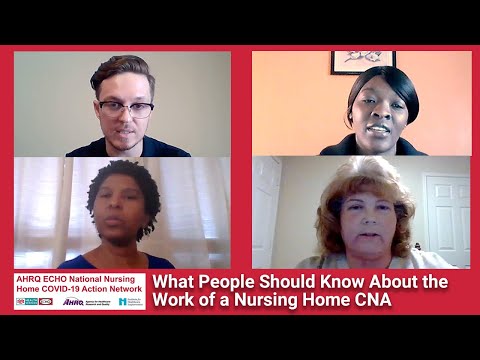
So Much Work, So Little Time, Such Short Staffing
The law requires that there be one director of nursing for every nursing facility. That means that there needs to be one registered nurse on staff present in the facility for every eight-hour shift. Most of the work that is done in nursing homes is done by Certified Nurse Assistants.
During the daytime, one CNA is responsible for six patients. During the course of an eight-hour day for each of those patients, they must be dressed, fed, taken to the toilet. The CNA must change sheets, change bedpans, deliver meals, pick up meals, and document everything that they have done.(Pennington & Magilvy, 2003)
During an evening shift, usually from 3 to 11 pm, the required ratio is one CNA to nine patients. They are usually responsible for giving the evening bath, the evening meal, preparing the patient for bed, making sure the toileting has happened, getting them settled into bed, and being available when needed. Oh, and also documenting their work.
At night, from 11 pm to 8 am, the state requires that there be one CNA for every 14 patients. The assumption is that most folks would be asleep, right? Well, I want you to think about when the tubs fire happened in Sonoma County. The alarms sounded at 1 am.

(Source: KPIX)
There are now lawsuits against a number of senior residential facilities and nursing homes that were right in the path of the fire. Residents were left in their beds until ambulance transport, and in some cases, we're never even notified that there was a fire and that they were in imminent danger. Imagine what it must've been like for that one CNA who was on staff and had to make evacuation possible for 14 people, all of who were in hospital beds in the rooms at the time. Just as a point of note, the fire leveled half of Santa Rosa within two hours. Can you imagine?
The Real Costs of Caregiving
When we talk about the cost of caregiving, we're not talking about real dollars. Formal federal care costs the federal government $83 billion annually. Formal home care costs individual families $33 billion a year. But for those of us who are providing care and not charging for it, estimates are that we are saving the federal government just under $522 billion annually. (Rand.org) And yes, we are saving money in terms of overall expenditures, but at what real cost?
As a woman, I stay home to take care of my children, then I stay home, and I take care of my ailing parents. During that time, I am not earning. I may have to use all of my leaves of absence. I am not contributing to Social Security. I am not contributing to my pension. I am at greater risk of injuring myself, and my health and well-being come into question. As a caregiver, I am at a higher rate for clinical depression.

The true costs? We estimate that Justin lost wages the average female caregiver takes a lifetime total hit of $143,000. When you add in loss of promotions, reduction in skills, reduction in lifetime earnings and pension and Social Security contributions, caregiving may save us out-of-pocket expenses, but it costs us individually over $300,000 over our lifetime.
And right now we haven't even hit the peak of the wave. We know that by 2031 and five will be at retirement age in the United States. In 1990, we had 11 caregivers to one recipient, and like I said in 2050 we're going to have four caregivers to every one person who needs one. And the greatest intentions of providing care, come at a huge social cost. We risk physical injury financial damage emotional damage to the individual and the family. All of that combines to make caregiving one of the most stressful experiences many of us will have an our lifetimes.

When we talk about caregiving costs, we're not really talking about real dollars. Formal federal care costs the federal government $83 billion annually. Formal home care costs individual families $33 billion a year. But for those of us who are providing care and not charging for it, estimates are that we are saving the federal government just under $3 billion annually. And yes, we are saving money in terms of overall expenditures, but at what real cost?
As a woman, I stay home to take care of my children, then I stay home and I take care of my ailing parents. During that time I am not earning. I may have to use all of my leaves of absence. I am not contributing to Social Security. I am not contributing to my pension. I am at greater risk of injuring myself, and my health and well-being come into question. As a caregiver, I am at a higher rate for clinical depression.
The true costs? We estimate that just in lost wages, the average female caregiver takes a lifetime total hit of $143,000. When you add in the loss of promotions, reduction in skills, reduction in lifetime earnings, and pension and Social Security contributions, caregiving may save us out-of-pocket expenses, but it costs us individually over $300,000 over our lifetime. (Ganapathy et al, 2015)
And right now, we haven't even hit the peak of the wave. We know that by 2031 and five will be at retirement age in the United States. In 1990, we had 11 caregivers to one recipient, and as I said, in 2050, we're going to have four caregivers to every one person who needs one. And the greatest intentions of providing care come at a huge social cost. We risk physical injury, financial damage, emotional damage to the individual and the family. All of that combines to make caregiving one of the most stressful experiences many of us will have in our lifetimes.
When we talk about caregiving costs, we're not really talking about real dollars. Formal federal care costs the federal government $83 billion annually. Formal home care costs individual families $33 billion a year. But for those of us who are providing care and not charging for it, estimates are that we are saving the federal government just under $3 billion annually. And yes, we are saving money in terms of overall expenditures, but at what real cost?
Caregiver Stress
Consider the conflicting emotions between loving the person you want to take care of and having frustration and guilt that you can't do what you need to do, combined with the sadness you're looking at the end of your loved one's life. Having multiple roles, for women, the rules of mother, wife, worker, community member, daughter, and caregiver, can be overwhelming. Similarly, for men, feeling the need to provide for a family and a parent, perform at work, and maintain social connectedness as a community member can take a toll.
We see caregivers experiencing burnout, exhibiting signs of clinical depression. Certainly, our coping abilities vary based on our personalities and the resources that we have available. But if you know someone who is a caregiver or are yourself a caregiver, seek out support networks. Security council, or agencies or groups that can help you with problems and emotional support. Because if we don't take care of our caregivers, they get sick, and we also run the risk of our caregivers turning into our elder abusers. (Gerain & Zech, 2019)
Please watch this video:

(Source: Aging & Disability Resources)
Nearly a third of all caregivers describe their experience in negative terms. Adverse immunological changes such as T-lymphocytes and helper T cells are decreased. This means that caregivers have a 50 times greater incidence of infectious diseases than the general population. Suppressor cells that keep tumors and cancer in check are reduced, leaving caregivers susceptible to illness due to stress, and 33% die sooner than the person they are caring for (Del Oro Resource Center).
The stress of caregiving is associated with depression, loss of social participation, and loneliness. Half lose time from work. More than 25% have work disrupted with productivity losses of $1,142 per year per employee. Businesses are beginning to offer daycare for children and parents, so employee loss of productivity is reduced. In fact, 20% leave their jobs, and 11% take leave of absence. (AARP, 2020)
Caregivers must receive support, both for their own welfare but that of the person who is receiving the care. Whether it is sharing the burden of care between family members or arranging for outside support, it is important to remember that in the long run, the caregiver might be the one who needs caregiving!
But, we DO care!
Contrary to the popular myth, most of us do not want to place our loved ones in a nursing home. We want to maintain a quality of life for their loved ones in the community for as long as possible, but we can't do it without a support system.
Filial responsibility, also called filial piety, refers to a son or daughter's duty to his/her parents. Although there are no clear guidelines nor specific models of behavior, most older parents expect that their children will:
- live close by
- take care of them when they are sick
- often visit if they live nearby
- call or write if they live at a distance.
A pervasive myth that a long time ago, people used to care for their elders, but now we callously abandon our parents in old age, just as our children will abandon us.
The persistence of this myth is remarkable because of overwhelming evidence that the opposite is true. Not only are more people, many of whom are old themselves, caring for their aged parents, but they are providing care for more difficult problems and for longer periods than ever before. Family caregivers provide between 80-90% of medically-related care, personal care, household maintenance, and assistance with transportation and shopping for older people.
Conclusion
The duration and extent of care have changed since the "good old days." Whereas people typically used to care for parents during an acute, ultimately fatal illness, people today live longer after chronic disease and disability set in. "It is long-term parent care that has become the norm. . ".
Experts believe the myth persists because at its heart is a fundamental truth.
- At some level, members of all generations expect that the young parent's devotion and care to the infant and child should be repaid, in kind, when the parent, now old, becomes dependent.
- But that level of devotion is not possible for most adult caregivers, and, consequently, they feel guilty.
- The good old days may not be an earlier period in our social history but an earlier period in each family's history to which we are slowly returning. Adult children are moving home because of the poor economy. Many can not pay back student loans or find jobs after college.
- Not only does the myth persist because the guilt persists, but the guilt persists because the myth persists. To quote Erma Bombeck: "Guilt is the gift that keeps on giving."
Why include all of this information on caregiving into a chapter on healthcare? It is likely that most of the healthcare you will need as you age will require some level of caregiving. Do you want it to be the responsibility of your family members to provide this care? Do you want to start thinking about ways to offset what it would cost to provide the kind of care that you would like to have in your later years?
Consider these staggering numbers, and recognize that the average woman needs caregiving for longer (3.7 years) than men (2.2 years), with an average of 3 years. And the price tag isn't cheap. National median costs per person are:
- Assisted Living Community: $48,000-$75,000 per year.
- In-home care: $3,861 per month for ($42,000 per year).
- Skilled Nursing: Private room $92,377 per year; the semi-private room is a much better deal at $82,215.
Financial advisors suggest that a special savings plan should be part of your financial plan - $250,000 in a healthcare saving account in addition to saving for your retirement lifestyle.
Image Citations
ImageLinks to an external site. courtesy of kterl.wordpress.com
Image courtesy of Dr. Pamela Abbott-Enz with Canva
ImageLinks to an external site. courtesy of geralt under Pixabay LicenseLinks to an external site.
ImageLinks to an external site. courtesy of thridway.com
ImageLinks to an external site. courtesy of Caregiving.com