Diversity - A Changing Nation
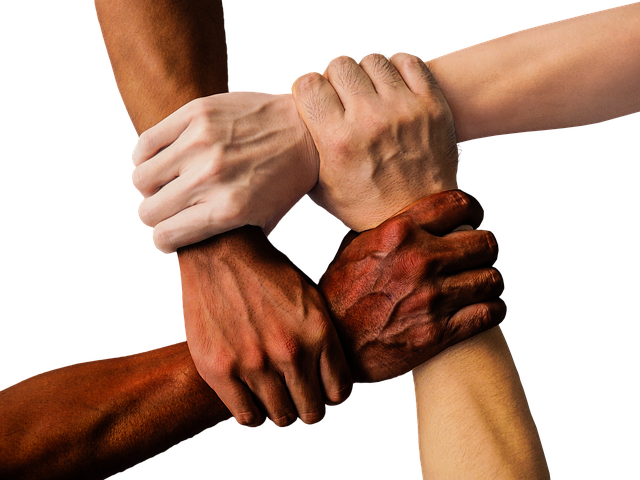
When we talk about the "aging population" of the United States, we aren't talking about one homogeneous population. The phrase that I've heard recently makes a lot of sense: "We are all on the same journey, but we aren't all on the same boat." Aging takes place in a world that is diverse, but many of the experiences are universal.
Americans live in opposites in economics, education, religion, lifestyle, and politics. Accessing services and resources may be a very different experience for an aging non-English speaking immigrant compared to a native English speaker. There are large groups of older adults experiencing food insecurity. There are older adults with disabilities that are living longer than expected, without services and support.
We are acutely aware that there are populations in the United States who are at risk. Our aging population is one more layer that can get lost in the mix. This chapter will address three key concepts: Diversity in our older population, elder abuse and neglect, special populations of older adults who are particularly at risk - and how perhaps how to make improvements to all three.
We are living in a time of great social and political fluctuation. The Covid pandemic has shed light on underlying inequities that have existed in our country for decades. I am convinced that part of the underlying tension comes from our reluctance to having a conversation about gender, race, age, and the myriad of other factors that make us all different. It isn't easy to do without making it feel that we are comparing and giving greater value to one individual condition over another. In order to have a conversation about equity, it is vital that we address the one thing that is utterly universal about us all, the fact that we are aging, and older adults have very different needs.
Diversity in an Aging America
American's older population is rapidly becoming more ethnically and racially diverse. Estimates project that between 2018 and 2060, the non-Hispanic white population is expected to drop from 77% to 55%. (ACL.org, 2020). This will create, for the first time in contemporary United States history a minority-majority, where there will be no one dominant race in the nation. (Angel, 2018)
Despite the increased diversity in the older adult population, the more rapidly changing racial/ethnic composition of the population under age 18 relative to those ages 65 and older has created a diversity gap between generations. (maricopa.edu, 2020)
Gerontologists know that culture and life events shape an older person's worldview. For example, many older minority members face disadvantages today due to their discrimination throughout their lives. We know that economic and cultural barriers can have negative impacts on healthy aging and life satisfaction. (Brewster, 2019). We also know how to tear down some of these barriers:
- Offering a service in a minority language.
- Using minority staff to deliver services.
- Locating services in settings that will attract minority members.
Who are the Minority Elderly?
Even in 2018, whites make up the numerical majority of the population. As the 'dominant group," they have historically held the most power, social power, and control of economic resources. Demographers predict that by 2050 we will have a pluralistic society, where many racial and ethnic groups exist side-by-side with no one predominant ethnic group.(Budiman, 2020). Early in the 20th century, the majority of immigrants came from Europe. Today, immigrants come from all over the world.
 With each wave of immigration, our country has become richer for the contributions to our culture. While retaining original cultures, immigrants bring new beliefs, new cuisines, and new customs to American society. Though an assimilation continuum exists with people, some folk retaining strong tradition with others assimilating to the dominant culture.
It can't go without saying that we do have tension between cultures. Anthropologically, these tensions actually make sense because we are a species that is essentially tribal, and we are loyal to our like groups. That argument withstanding, it is counterproductive from an AGING perspective to focus on the divisions between (and among) ethnic groups. Our focus must be both specific AND inclusive if we are going to meet the needs of a widely diverse aging population adequately.
We know that the entire population is aging. We know that in 2006, 5.3 million Americans were over age 65. New projections estimate that by 2050, this will increase to 21 million -a fourfold increase. Over this same time period, the number of oldest-old African Americans will, in case sixfold, and the oldest-old Hispanics will increase by 12 times. (Budiman, 2020) These dramatic increases in numbers may put a strain on informal supports. Old minority elders who rely on family support today may have to turn to formal support for help. Right now, minority elders tend to underuse formal supports. These supports may not suit their needs. Formal supports will have to adapt their service and modes of delivery to get the needs of this very old minority population.
To address diversity issues, let's break down our understanding of what actually makes us diverse.
Culture
By definition, “culture” is the shared values, traditions, norms, customs, arts, history, folklore, and institutions of a group of people. There can be different “cultures” within an ethnic group, and a “culture” can actually integrate members of many different ethnic groups. For example, there is a “college culture” that includes everyone on our campus. Huh? “NO! I’m my own unique person on this campus,” you say. Well, yes. Yes, you are. BUT, consider the campus and the shared values that we all have when we walk into class - you behave differently than you might at home or with your friends, you have the same mascot (even if it’s not the same one I had when I was a student here!), you wear the Sonoma State sweatshirts, or you join your greek associations and follow the expectations of that group. There are those of us who are deeply entrenched in the “college culture,” and those of us who sit on the outside and watch the behaviors. If you think there isn’t a “culture” on campus, just watch the behavior in the dorms on a Thursday evening when there are events. The groups move together, dress alike, listen to the same music, and even dance the same!
 Do we all need to be the same? Nope. In fact, it would be horribly boring if we were all one homogeneous group, wouldn’t it? The key is finding ways to acknowledge other cultural frameworks, hold on to our own, and to have respect for both. It’s challenging. What is required is a level of CULTURAL COMPETENCE . If we can make an effort, individually and organizationally, to “develop skills to recognize and honor the differences between us, we can then put into place behaviors, attitudes, policies and structures that enable us to work cross-culturally”. Wow. That was policy speak, wasn’t it? It makes sense that we value diversity, keep ourselves in check about our own biases, honor the really wonderful gifts that can come from the dynamics of difference, and ultimately sort out a way to adapt our differences in ways that allow us to find common ground.
Let’s get some terminology straight, though. There is actually a difference between CULTURAL COMPETENCE and CULTURAL SENSITIVITY.
The term CULTURAL COMPETENCE comes from business. The focus is to create systems and policies that allow organizations to operate effectively in different cultural contexts, and altering practices to reach different cultural groups. CULTURAL SENSITIVITY is a whole different animal. It’s what we “ideally” do in life. It’s cultural knowledge, sensitivity and awareness - being aware that differences and similarities between people exist without assigning them a value - positive or negative, better or worse, right or wrong. It’s challenging, but the goal is to understand and respect each other’s characteristics.
Consider this question (and it’s an uncomfortable one). Do you believe that your cultures the only “real” one, and you therefore tend to interact in homogeneous groups to stereotype everyone else? I bet you are screaming NO!!! I don’t do that. However, let’s flash back to the first night of class when we put all those terms on the board. Don’t you think your collective class culture expressed a pretty clear idea that “young” was good and “old” was…hmm. Let’s revisit: stinky, handicapped, slow, diseased…. See, cultural sensitivity (and cultural competence) isn’t just about ethnicity. It’s about age, too!
Ethnicity
Well, there's the perfect segue to discuss ethnicity. Our ethnic identity involves our sense of belonging to a group that shares culture, social status, and support systems. An ethnicity, however, does not predict homogeneity. Within most ethnic identities are very distinct differences. It's not about "majority" and "minority" identifiers in Gerontology. It's bigger than that.
We know that minorities in the U.S. (those who share a language, physical or cultural characteristics) experience unequal treatment in some segments of society.(Brewster et al., 2019). Layer on factors of gender and sexism, we've got our challenges. Now, add age and ageism as a factor, and all the issues with cohort effects and cumulative disadvantages. We face some pretty daunting social challenges, don't we? How can we create policies and programs to provide what people need? How can we, or can we, level the playing field in ways that are equitable?
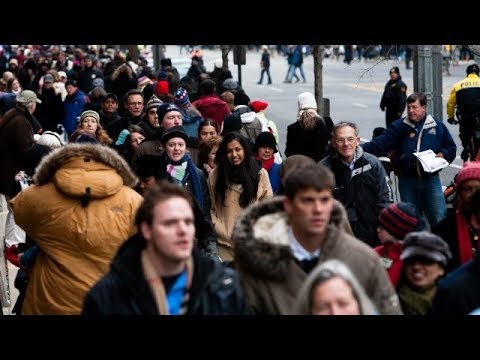
(Source: Newsy)