Communication in Caregiving
Have you ever been in a conversation with someone and realized that suddenly you were not really listening? Ever wondered how you could stare at someone's face while they talked and still not hear their words? Or have you ever sat in a classroom and minutes later realized you had no idea what the professor had just said? Well, you are not alone. But, in general, are you a good listener?
Listening and Communicating are the Keys to Caregiving
Communication and listening are at the heart of caregiving for older adults. To develop the skills needed to caregiver for the elderly you must first develop the art of listening and the sensitivity to assess the limitations in communication that might be present in the elderly.
 In all communication, are four key components:
- A sender
- A message
- A channel
- A receiver.
For the message to be interpreted by the receiver, it has to make its way through a lot of noise (internal or external) that can change the message. Good communication requires that the sender make the message as clear as possible, and for the receiver to be skilled at listening (above the noise) for the true meaning of the message.
By now, you have figured out that to really take good care of someone, you must listen, listen, and listen. This week we will explore current methods for communicating with older adults that are not only effective but that maintain dignity for the client and the helping professional. More importantly, you will learn skills that facilitate communication more about this later.
As a helping professional, the majority of older people you will serve in the Adult Day Health Care, Assisted Living Care, Board, and Care, Skilled Nursing, or even the home care setting probably have some problems with communication due to either normal or abnormal sensory changes, chronic physical impairments, cognitive deficits or cultural barriers.
To communicate effectively with older adults, we all need to think about how we feel about older people. Are we uncomfortable around older people? Do we think older people are unattractive, wrinkled, have poor hygiene, ignorant and get easily confused? When we look at older people, are we disgusted with the aging body? Is becoming an older person a frightening thought?
These questions may seem cruel but many people have similar negative feelings about the aging population. These negative feelings can sometimes result in discrimination to the older adult. It certainly can affect how you would work with elders.
Our first week together, we talked about ageism and feelings of prejudice against older adults. These are based on myths and misconceptions about people. Negative stereotypes end in discrimination. These stereotypes keep younger people thinking that older people are different than themselves.
Prejudices are often learned behaviors. That means that we were taught to feel that somebody who is different from ourselves or is somehow "less" than us.
Prejudices are often taught by families, cohorts and by our community values. We tend to develop our own misconceptions and myths based on our family and community myths about other people. In some families, older people are very revered and respected. In other families, the elders can be considered an obligation and they "take too much time."
Implicit Bias - Invisible Ageism and its Effects on Communication
Generally, the culture of the United States is a very youth-oriented society. Most of the images we see on the television, in magazines or movies are of young, very attractive people. In fact, only 4% of the images in the media are of older people although, those over 65 years old, representing almost 20% of the population. Usually, the images presented of older people are men and women who are unattractive, bumbling, silly, non-sexual or demented. We tend to be influenced by our cultural representations of older people and these negative images can influence our own ageist views.
We are becoming conscious of the concept of "implicit bias," (bias that occurs automatically and unintentionally, that nevertheless affects judgments, decisions, and behaviors) as we have open dialogue about diversity, equity and inclusion. We don't tend to add "age" into the conversation, though, and I really think we should.
Just consider a few of the following - gut reactions can be quite revealing:
-
Older women in bikinis at the beach are________________________________
-
Life after 80 years old ________________________________.
-
When an older person has an auto accident, I think________________________________ .
-
When a younger person has an auto accident, I think________________________________ .
-
When I am 75 years old I will feel ________________________________.
-
Older people having sex is.________________________________
-
The ideal age to be is because.________________________________
-
When an older person takes too much time checking out of a grocery store, I
-
An attractive, older man who is running for public office makes me feel________________________________
-
Watching a very old person use a wheel chair to get across the street makes me feel________________________
As you answer the questions, think about how you feel about aging and older people. Do your answers indicate that you are uncomfortable with older people and have certain expectations of what an older person is and should be? Do your answers indicate that you are fearful of your own aging?
After you complete the answers, you might recognize that you have some ageist views. The way to dispel the myths and misconceptions about aging is to learn about the realities of aging and older people. Knowledge is power. Hopefully, during this course and this semester, you will learn that older people are just young people who grew up and have had a much longer life experience!
Age Changes that Impact Communication
s we age most of us develop barriers that can affect our communication. Things like decreased hearing, physical pain or cognitive (mental) changes are some examples. These barriers can be categorized as either physical, sensory, cognitive or cultural.
Physical Barriers (or changes) (such as loss of muscle mass, bone density, digestion problems, heart disease, medications, chronic pain, etc)
Sensory changes (hearing, vision, smell, taste, and touch)
Cognitive (ability to process information in the brain)
Cultural Influences: (how different cultures communicate)
Physical Barriers
As people age, significant changes in our physical strength and function may result in dependency upon others for care. The elderly often lose physical strength because of loss of muscle size (known as muscle mass) and bone strength. They may also have functional losses due to disease or illness (i.e., stroke, Parkinson's disease, Multiple Sclerosis, osteoporosis, etc.).
The resulting weakness can produce feelings of frailty and vulnerability when the loss is significant enough to inhibit an elderly person's ability to walk about and move freely. These losses can make one dependent on others for their daily needs.
Dependency can greatly affect self-esteem and, thus, an elder's ability to communicate his/her needs. No one wants to feel like a burden to others and it's difficult for many elders to ask for help.
Sensory Barriers
What are the senses? Did you know that everything you take into your body from the outside world comes from one of your senses? They include hearing, sight, smell, taste, and touch. Aging affects all of these senses.
It is important to know that our senses loose sharpness as we age. Although there are individual differences, the old-old (over age 85) have the most noticeable declines.
People are able to compensate somewhat for these declines with assistive devices such as corrective lenses, hearing aids, larger print, or changing routines and habits.
Sight
Did you know that by age 70, fewer than 30 percent of elderly people have 20/20 vision?
Normal age-related visual impairments such as macular degeneration, cataracts and glaucoma can impact day-to-day functioning. They can affect our ability to drive, read prescription bottles, safely maneuver an uneven sidewalk, or recognize a friend at church.
Visual impairments can also affect our ability to communicate effectively with others. We observe our partners to see if they “get” what we are saying when we talk to them. Consider the visual clues that we look for during a conversation:
-
Facial cues, which indicate mood or emotion
-
Hand gestures, which can indicate size or direction
-
Turn-taking cues, including raised eyebrows
-
Feedback, such as head nodding
These types of non-verbal messages may be lost or misunderstood by people with poor vision. Both people in the conversation are then prone to misinterpretation. Imagine not being able to see someone roll his eyes when making a sarcastic remark. You might think that he is rude and he might think that you don’t have a sense of humor!
Here are some simple things you can do when talking to someone who has visual impairments
-
Identify yourself when going to visit. “Hi Grandma. It’s me, Mary.”
-
Describe what you mean with words in addition to hand gestures. “The fish was two feet long.”
-
Sit in a well-lit area, but avoid sitting directly in front of bright windows or standing in doorways. This “backlighting” causes a silhouette effect and people cannot see your face clearly.
-
Eliminate distracting background noise. When someone has poor vision, he may rely more on his sense of hearing to make up for the loss.
-
Use bright table or floor lamps whenever possible and ensure cords are out of the way to avoid falls. Overhead fluorescent lighting causes glare on linoleum and hardwood floors.
-
Install nightlights in hallways, the bedroom and bathrooms.
-
Offer your arm for support when you are out together and tell him or her about upcoming curbs or stairs.
These tips can help keep your loved ones involved in meaningful conversations and ensure their safety at home.
Hearing
Hearing aids are beneficial in many situations. However, there are some listening events where hearing aids alone cannot provide enough benefit. In those situations, communication partners can help the person with hearing loss be more successful in hearing. Remember, communication involves at least two individuals: a talker who sends the message, and a listener who receives the message. You, as a member of this communication pair, can improve the conversation by following a few simple strategies.
Gain attention
Gain the listener's attention before you begin talking, for example, by saying his or her name. If the person with hearing loss hears better from one ear, move to that side of the person. Also consider touching the listener's hand, arm or shoulder lightly to gain attention. These simple gestures will prepare the individual with hearing loss to listen and not miss the first part of the conversation.
Maintain eye contact
Face the person who has the hearing loss. Make eye contact. Your facial expressions and body language add vital information to the message being conveyed. For example, you can "see" a person's excitement, joy, confusion or frustration by watching the facial expressions or body language.
Keep hands away from face
When talking, try to keep your hands away from your face. You will produce clearer speech and allow the listener to make use of those visual cues by keeping your mouth and face visible.
In addition, most listeners can improve their perception by watching the talker’s face – also known as speechreading. Speechreading helps to improve speech perception. Many sounds can been seen that are hard to hear. For example, the sound /s/ is very difficult to hear but easily speechread. It is important to not over exaggerate your talking, talk with food in your mouth or chew gum when talking to a person with hearing loss. Keep in mind that heavy beards and moustaches can also hide your mouth.
Speak naturally
Speak distinctly, but without exaggeration. You do not need to shout. Shouting actually distorts the words. Try not to mumble, as this is very hard to understand, even for people with normal hearing. Speak at a normal rate, not too fast or too slow. Use pauses rather than slow speech to give the person time to process speech. Give clues when changing subjects or say “new topic."
Rephrase rather than repeat
If the listener has difficulty understanding something you said, repeat it once. If they are still having difficulty find a different way of saying it. Use different words with the same meaning. For example: “I am going to the grocery store." Repeat once and then rephrase. “I am going to the supermarket," If he or she did not understand the words the first time, it's likely he or she will not understand them a second time. So, try to rephrase it. Another option is to ask what the person did not understand and just repeat that phrase or word. For example, "grocery store" is what was not understood, so just repeat those words "grocery store."
Talk away from background noise
Try to reduce background noises when talking. Turn off the radio or television. Move to a quiet space away from the noise source. When going to a restaurant or making dinner reservations, ask for a table away from the kitchen, server stations or large parties.
Good lighting is important
A person with hearing loss can speechread to assist in hearing so lighting on your face is important. When in a restaurant or other social gathering, sit where there is good lighting so that your face can be more easily seen. Poor lighting may cause shadows on the face of the talker. Conversely avoid sitting with strong lighting coming from behind, such as through a window, as that will cause difficulty looking into the bright light.
Use an app to translate from spoken word to written word, or use texting
There are numerous apps that can be downloaded that can allow you to speak into a smart phone and have your words show up on the screen for the person with hearing loss to read. One such app is called Dragon. The use of texting is also an efficient use to supplement communication.
(Source: Cleveland Clinic)
Smell
Close your eyes and imagine what home "smells" like. Is there a scent that takes you back to a place, a person or a memory? Our sense of smell is so much more than a chemical interaction, it is a way that we connect to our environment. Good smells draw us in, which is why In & Out vents their grilled onions into the air around their restaurants, and real estate agents are encouraged to bake cookies right before an open house. On the other hand, pungent smells often repel us, warn us of danger, which is why natural gas in our homes is scented to smell a bit like sulphur. We smell it, and we evacuate. Smell communicates.
Smell is a chemical sense. The receptors are specialized nerves (olfactory sensory cells) in the nose that lead to the brain. The major nerve is called the olfactory.
Much research has been done on chemicals called pheromones which are highly volatile substances that affect either the behavioral or hormonal levels of an individual who perceives them. Although there is considerable controversy about the existence of these effects in humans, smells such as body odor, body heat or perfume certainly add to our perception of others.
It is thought that olfactory sensory cells are replaced by new cells as they die. If so, there should be no decrease in their number with age. However, some studies have reported such a decrease. Perhaps not all the sensory cells that degenerate are replaced.
For whatever reason, the sense of smell begins to decline in most people by middle age and continues to decline gradually into old age. This may explain the scent that younger noses often associate with being "old," like the sent of antiseptic spray, or even urine.
In fact, a 2012 study explored the question, "What do old people smell like?" Think about it. Your body odor can change throughout your life. Think of a newborn baby — they have that distinct, fresh scent. Now, think of a teenage boy. They, too, have a distinct scent that’s very different from a baby’s. Older adults are no different. Many describe their scent as being mildly sweet and musty. And despite what popular culture might try to say, the results of this study done by Mitros, et. al, suggest most people usually don’t mind this smell at all.The study’s authors believe people tend to find the scent more unpleasant when they know it’s coming from an older person. This suggests there’s likely some age discrimination at play in how people perceive body odor.
Taste
With aging, there is a general decrease in taste perception. It has been suggested that this decline is due to a decrease in the number of taste buds that begins shortly after maturity and continues into old age. However, other studies report little, if any, decline in the number of taste buds until after 75 years of age.
Rather, it is suggested that the diminished taste perception with aging may be due to changes in the processing of taste sensations in the brain (central nervous system).
Another factor that may contribute to the reduction in taste sensation in older persons is a decrease in the volume of saliva secreted. This could interfere with dissolving foods so they can not react with the receptor cells.
What is commonly considered to be "taste" actually involves the stimulating of olfactory receptors in the nose (smell). This is the reason why food does not have much taste when you have a congested nose and are unable to smell.
Some loss of taste and smell is natural with aging, especially after age 60. But other factors can contribute to loss of taste and smell, including:
-
Nasal and sinus problems, such as allergies, sinusitis or nasal polyps
-
Viral infections, including the common cold and the flu
-
Coronavirus disease 2019 (COVID-19)
-
Certain medications, including beta blockers and angiotensin-converting enzyme (ACE) inhibitors
-
Dental problems
-
Cigarette smoking
-
Head or facial injury
-
Diseases that affect the central nervous system, such as Alzheimer's disease and Parkinson's disease
Loss of taste and smell can have a significant impact on quality of life. It often leads to decreased appetite and poor nutrition. It can sometimes contribute to depression. Loss of taste and smell also might tempt you to use excess salt or sugar in your food to enhance the taste. This could be a problem if you have high blood pressure or diabetes.
Touch and Pain
The skin protects the underlying tissues in our bodies from harmful environmental influences and minimizes water loss. It is also important in maintaining the internal temperature of our bodies.
Age-related changes involve the thinning of the top layers (epidermis and dermis layers) of the skin. This results in less blood supply to the skin, fewer nerve endings, and pigment cells that cluster and produce age spots. The skin of an elderly person may also be drier and sweat less.
The fat that lies under these layers also decrease and the elderly lose important insulation from heat and cold.
Because of these changes, elderly people have a reduced tactile sense and thus may experience less pain and be less likely to notice injuries or other changes in environmental conditions such as changes in temperature. Declines in the sensation of touch may also result in a loss of balance and may increase the risk of falls.
It can be difficult for some elderly to maintain the temperature of their body (less insulation from fatty tissue and less blood supply), and the skin is more prone to tears and prolonged healing time.
We know that touch sensitivity may decrease with age. This is due to changes in the skin and the changes in the loss of nerve endings. There may especially be decreased sensitivity in the fingertips, the palms of the hands, and the lower extremities.
We all need to be touched or held to feel cared for and valued. Many of the clients you will work with may not have been touched in a long time due to the loss of a spouse or other family member. Sometimes, to just have someone hold your hand or place a hand on their shoulder can make all the difference in the world, emotionally, to a client. Be sure that the client is really open to touch. You should ask permission before you touch a client as some people are uncomfortable with being touched.
Touch can help with circulation and provide a sense of affection and belonging. Massage is very helpful for stress, pain, and relaxation. Even massaging a resident’s hands can be very relaxing and comforting.
We know that touch is important to every human being!
Cognitive Barriers that Affect Communication
Cognition or the ability to process and understand information may be compromised by various disease processes or damage to the brain resulting in dementia.
Dementia includes a variety of conditions caused by or associated with damage of brain tissue resulting in impaired cognitive function and confusion. The person with dementia experiences impaired intellectual capacity with loss of memory and the ability to reason. In advanced cases, the person may have problems with speech, personality and mood behavior. Dementia can affect young and old people. There are many different causes of dementia and some of the conditions can be reversible or may be irreversible. There at least 100 different diseases or conditions that may result in dementia. The cause of the confusion and cognitive impairment must be determined so the proper diagnosis and treatment can be initiated.
Alzheimer’s disease The most common form of dementia is progressive and irreversible. There is evidence that the presence of concentrations of neuritic plaques and neurofibrillary tangles in the brain are symptomatic of the disease.
Over time, the disease results in cognitive decline, memory impairment, personality changes and loss of physical function. Visit the Alzheimer's Association for detailed information: www.alz.org
Head injury or Traumatic Brain Injury: Any injury that results in damage to the brain. There is evidence that even an injury that occurred early in life may result in dementia later in life.
Lewy Body Disease: A combination of Alzheimer's disease and Parkinson's disease-like symptoms. The amyloid plaques may be present but are usually less dense than with Alzheimer's disease. The neurofibrillary are rare in this disease. The patient may exhibit motor symptoms with a walking pattern called a "Parkinson's disease gait" and often have vivid visual impairments and hallucinations. It is estimated that 17% of dementia cases are Lewy Body disease.
Frontotemporal Lobe Dementia: A type of disease that is frequently confused with those of Alzheimer's disease but does not have the characteristic plaques on the brain. The disease is characterized by shrinkage of the brain and the patient can develop behavioral problems, poor impulse control and compulsions.
Vascular Dementia: Caused by the disruption or lack of blood supply to the It can also be the result of numerous small strokes.
Anoxia: Loss of oxygen to the brain.
Huntington's disease: This is a hereditary disease that results in the progressive degeneration of the central nervous system
Alcohol Related Dementias: Usually a result of severe alcoholism.
Acquired Immune Deficiency (AIDS): Cognitive decline related to the AIDs virus.
There are at least 100 different conditions and causes of dementia and this list is just a few of the common causes of dementia.
Symptoms of Dementia that can influence Communication
Impairment in abstract thinking
-
Impairment in judgment
-
Loss of orientation
-
Disturbed Sleep
-
Changes in personality
-
Changes in visual perceptions
-
Language problems: verbal and comprehension
-
Time disorientation
-
'Social withdrawal or decreased inhibitions
-
Psychotic symptoms
-
Personality Changes
-
Hallucinations (seeing things that do not exist).
-
Delusions (believing in a reality that does not exist).
-
Agitation in the evening called "Sundowners Syndrome"
-
Memory loss

Aphasia
Aphasia is a language disorder caused by damage in a specific area of the brain that controls language expression and comprehension. Aphasia leaves a person unable to communicate effectively with others.
Many people have aphasia as a result of stroke. Both men and women are affected equally, and most people with aphasia are in middle to old age.
There are many types of aphasia. These are usually diagnosed based on which area of the language-dominant side of the brain is affected and the extent of the damage. For example:
- People with Broca aphasia have damage to the front portion of the language-dominant side of the brain.
- Those with Wernicke aphasia have damage to the side portion of the language-dominant part of the brain.
Global aphasia is the result of damage to a large portion of the language-dominant side of the brain.
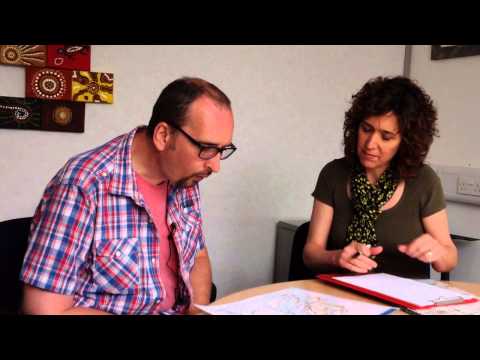
People with Broca aphasia, sometimes called an expressive aphasia, for example, may eliminate the words "and" and "the" from their language, and speak in short, but meaningful, sentences. They usually can understand some speech of others. Because the damage is in the front part of the brain, is also important for motor movements, people with Broca's aphasia often have right-sided weakness or paralysis of the arm and leg.
Those with Wernicke aphasia, sometimes called a receptive aphasia, may speak in long confusing sentences, add unnecessary words, or create new words. They usually have difficulty understanding the speech of others.
People with global aphasia have difficulties with speaking or comprehending language.
Living with aphasia
Some people with aphasia recover completely without treatment. But for most people, some amount of aphasia typically remains. Treatments such as speech therapy can often help recover some speech and language functions over time, but many people continue to have problems communicating. This can sometimes be difficult and frustrating both for the person with aphasia and for family members. It's important for family members to learn the best ways to communicate with their loved one. Speech therapists can often help with this. Suggestions might include the following:
- Include the person with aphasia in conversations
- Simplify language by using short, simple sentences
- Repeat key words or write them down to clarify meaning as needed
- Use a natural conversational manner at an adult level
- Encourage all types of communication, including speech, gestures, pointing, or drawing
- Don’t correct the person's speech
- Give the person plenty of time to express themselves
- Help the person become involved outside the home, such as through support groups
For some people, computers can be helpful for both communicating and improving language abilities.