7.6 Learning to Lose
Human beings spend their entire lives learning how to lose things.
Imagine being told you just lost your job. Most people do not calmly shrug and say, “Well, this seems reasonable.” First comes disbelief:
“This can’t be happening.”
Then anger:
“These people are idiots.”
Then bargaining:
“Maybe if I get more training…maybe if I work harder…maybe if I explain…”
Eventually, most people begin trying to construct meaning around what happened. Sometimes we reframe the loss:
“Honestly, I hated that job anyway.”
Sometimes we eventually recognize that multiple things were true at once. Maybe the situation was unfair. Maybe mistakes were made. Maybe the loss hurt more than we initially admitted. Maybe moving forward becomes necessary even when we did not choose the ending ourselves.
Now apply that same emotional process to a divorce. A breakup. A house fire. A serious diagnosis. The loss of health. The loss of identity after retirement. A child moving away. A friendship ending. The death of someone we love.
Different losses.
Similar emotional terrain.
In life, we all experience loss. Some losses alter us permanently. Others pass more quietly through our lives, but even smaller losses shape how we understand attachment, change, disappointment, uncertainty, and grief itself.
And honestly, we need those smaller losses.
The death of a goldfish is not emotionally equivalent to the death of a spouse or child, of course. But for many children, it becomes the very first encounter with absence. The first realization that loving something also means risking eventual loss. We build grief muscles gradually across the lifespan, often without realizing it.
That is part of what makes grief feel both familiar and shocking at the same time.
We also have to be careful not to compare losses too aggressively. Human beings experience grief through the lens of personality, attachment, culture, trauma history, coping style, spirituality, and circumstance. Loss of a job, loss of health, divorce, death of a parent, infertility, displacement, financial collapse, or the death of a spouse may all trigger profound grief responses depending on the meaning attached to the loss itself.
For many people, death-related grief feels especially overwhelming because death is so absolute. A broken relationship may reconcile. A career can be rebuilt. Financial circumstances may improve. Death forces confrontation with permanence.
And depending on personal belief systems, death may be experienced very differently. For some, death represents finality. For others, transition. Reunion. Spiritual continuation. Mystery. Relief from suffering. Fear of the unknown. The emotional meaning people attach to death profoundly shapes how they experience grief.
So before we begin discussing grief theories and psychological models, it is important to remember something very basic:
grief is not evidence that something has gone wrong in human life.
Grief is evidence that attachment existed in the first place.
Let’s take some time now to explore what we know about the psychology of loss, grief, and human adaptation.
Please watch the video:

(Source: Transform Grief)
Kubler Ross Stages of Death and Dying
One of the most widely recognized theories surrounding grief and dying comes from psychiatrist Elisabeth Kübler-Ross. In her 1969 book On Death and Dying, Kübler-Ross described common emotional reactions she observed while working with terminally ill patients. Her work eventually became known as the “Five Stages of Grief,” and whether people realize it or not, much of modern culture still references these stages constantly.
People casually say things like:
“She’s in denial.”
“He’s bargaining.”
“I think I’ve reached acceptance.”
The model became deeply embedded in the way we talk about grief, loss, illness, and emotional adaptation.
Kübler-Ross originally developed the framework while observing terminally ill individuals confronting their own mortality, but the theory was eventually applied more broadly to many forms of loss, including divorce, job loss, trauma, disability, and bereavement.
The five stages include:
Denial
“No. This can’t be happening.”
Denial acts as a psychological buffer. It gives the mind time to absorb overwhelming information gradually rather than all at once. Sometimes denial looks dramatic, but often it is subtle. People continue making future plans. They avoid conversations. They minimize symptoms. They intellectually understand what is happening while emotionally remaining unable to absorb it fully.
Anger
“Why me? This isn’t fair.”
Anger often emerges when reality becomes harder to avoid. Sometimes the anger is directed toward physicians, family members, religion, fate, or even healthy people simply continuing normal life. Grief can make people irritable, resentful, impatient, and emotionally raw. Honestly, anger is often easier to feel than helplessness.
Bargaining
“Yes, but maybe if…”
This is the negotiation phase. People bargain for more time, more options, another chance, another treatment, another holiday, another birthday. Bargaining may involve religion, magical thinking, promises, guilt, or attempts to regain a sense of control in situations that feel uncontrollable.
Depression
“What’s the point?”
At this stage, the emotional weight of loss becomes harder to outrun. There may be profound sadness, exhaustion, anticipatory grief, withdrawal, hopelessness, or silence. Kübler-Ross distinguished this from clinical depression. In many cases, grief-related sadness is not pathological. It is a normal human response to profound loss.
Acceptance
“This is happening.”
Acceptance is probably the most misunderstood stage because people often imagine it means peace, happiness, or emotional resolution. It usually does not. Acceptance may simply mean that the person stops fighting reality quite so hard. There can still be sadness, fear, anger, humor, love, and grief all existing at the same time.
And honestly, this is where people often misuse the model.
Human beings do not move neatly through grief like levels in a video game. There is no emotional staircase where we complete one stage and permanently graduate to the next. Grief is messy. People move backward, forward, sideways, and in circles. Someone may feel acceptance one day and rage the next. A person may intellectually accept a diagnosis while emotionally remaining in denial for months.
The stages are best understood as a framework for recognizing common emotional reactions, not as a strict developmental sequence everyone must complete correctly.
Kübler-Ross also emphasized something that often gets overlooked when people reduce her work to memes and charts:
hope matters.
Hope does not always mean hope for cure. Sometimes hope shifts. A person may hope for comfort, reconciliation, less pain, more time with family, spiritual peace, forgiveness, dignity, or simply one more meaningful conversation. Kübler-Ross believed that preserving humanity, connection, and meaning at the end of life mattered deeply. She referred to this as “dying well.” (Kübler-Ross, 2009)
And honestly, that idea may be the most enduring part of her work.
The Living-Dying Interval Model
While Kübler-Ross gave us one of the most recognizable frameworks for understanding grief and emotional adaptation, not everyone experiences dying as a series of emotional “stages.” Many scholars and clinicians argued that the reality of terminal illness was often much messier, more practical, and far less linear than the stage model suggested.
One alternative perspective that resonates strongly with many patients and caregivers is the Living-Dying Interval Model.
Honestly, I relate to this model deeply because it recognizes something profoundly human:
people continue trying to live while simultaneously confronting the reality that they are dying.
Life does not pause neatly while people process mortality. The dishes still need washing. The mortgage still exists. Grandchildren still have birthdays. Relationships still need attention. Families still argue. People still worry about who will take care of the dog, whether their spouse will be okay financially, and whether anyone knows where they hid the important paperwork.
The Living-Dying Interval Model moves away from the idea that there is one “correct” emotional progression through dying. Instead, it recognizes dying as an ongoing balancing act between living and letting go. (Copp, 1998)
The first phase is the Acute Crisis Phase, when a person first realizes the possibility or inevitability of death. This phase is often marked by intense anxiety because uncertainty is greatest at the beginning. Human beings are remarkably good at functioning inside ordinary stress, but uncertainty can be psychologically brutal. Suddenly life becomes divided into “before” and “after.” People may panic, dissociate, seek endless medical opinions, obsessively research diagnoses online at three in the morning, or become emotionally overwhelmed by questions they never expected to face.
The second phase is the Living-Dying Phase, and honestly, this may be where most of the real human work happens. Daily life continues, even while mortality becomes impossible to ignore. Practical concerns often move to the forefront:
How will my family manage financially?
Who will care for the people I love?
Will I lose my independence?
What unfinished business still exists?
How much suffering can I tolerate?
What memories do I want to leave behind?
This phase recognizes that dying people are not simply “waiting to die.” They are still actively living, loving, planning, worrying, adapting, remembering, and trying to preserve meaning and dignity while navigating decline.
The final phase is the Terminal Phase, when survival itself may no longer feel worth the physical or emotional struggle required to continue fighting. For some people, this phase involves exhaustion. For others, peace. Sometimes there is withdrawal, less interest in aggressive treatment, or a gradual shift toward comfort and letting go. Families often struggle deeply here because the emotional needs of the dying person and the emotional needs of loved ones are not always aligned.
And honestly, that tension can be heartbreaking.
Loved ones may still be fighting desperately for more time while the dying person quietly begins preparing to let go.
What I appreciate about the Living-Dying Interval Model is that it leaves room for contradiction. Human beings can experience fear, hope, gratitude, anger, humor, love, denial, exhaustion, and acceptance all within the same week, sometimes within the same conversation. The model recognizes that dying is not simply an emotional sequence to complete correctly. It is an intensely human process of trying to live meaningfully while gradually confronting the reality of ending.
The Four Tasks of Mourning
Some of us are planners. We like structure. We like frameworks. We like the feeling that there is at least some kind of map when life becomes emotionally chaotic. The idea of “tasks” resonates with many people because it frames grief not as something we passively endure, but as something we gradually work through while continuing to live our lives.
Importantly, though, Worden never suggested these tasks happen in perfect order or according to a neat emotional timeline. Grief is still messy. People circle backward, revisit old pain, avoid certain tasks temporarily, or spend years struggling with one part while functioning relatively well in another. The tasks are not boxes to check off neatly. They are ongoing forms of adaptation. (Worden, 2011)
The first task is accepting the reality of the loss.
That sounds simple until you experience profound loss personally. Intellectually knowing someone has died is very different from emotionally absorbing the permanence of their absence. For some people, funerals, rituals, memorials, and viewing the body help make the loss feel real. For others, acceptance arrives much more gradually through quiet moments of realization:
reaching for the phone before remembering there is nobody to call,
setting the table for someone who is no longer there,
hearing silence where another person’s routines once existed.
Acceptance is rarely one dramatic moment. More often, it arrives in waves.
The second task involves working through the pain of grief.
Unfortunately, modern culture is not especially patient with grief. People often feel pressure to “stay strong,” move on quickly, remain productive, or avoid burdening others emotionally. But grief does not disappear simply because we refuse to acknowledge it. Sadness, loneliness, guilt, anger, fear, numbness, relief, confusion, exhaustion, and even resentment may all coexist inside the same grieving person. Human emotions are complicated like that.
And honestly, avoiding grief entirely usually just delays it.
The third task is adjusting to an environment in which the deceased is missing.
This is where grief becomes intensely practical. Someone still has to pay bills, buy groceries, walk the dog, clean the house, remember passwords, manage finances, attend holidays, and continue daily life while carrying absence everywhere they go.
The adjustment process looks very different depending on the relationship involved. An adult child losing an elderly parent may experience grief differently than a spouse who shared fifty years of routines, meals, habits, arguments, vacations, inside jokes, caregiving responsibilities, and emotional companionship with the person who died. Loss reshapes identity as much as emotion.
Who are you when the person beside whom you built your life is suddenly gone?
That can take years to answer.
The fourth task may be the most psychologically important:
finding an enduring connection with the deceased while continuing to live.
Older grief theories sometimes implied that “healthy grief” required detachment or emotional closure. More contemporary grief models recognize that most people do not completely sever emotional bonds with loved ones after death. Instead, relationships often transform rather than disappear entirely.
People continue talking to deceased loved ones.
They cook family recipes.
Wear wedding rings.
Tell stories.
Visit gravesites.
Keep voicemail recordings.
Laugh at remembered jokes.
Repeat family sayings without realizing it.
Carry values, habits, traditions, and emotional connections forward into the next phase of life.
Worden’s model recognizes something deeply human:
the task is not forgetting.
The task is figuring out how to keep living while carrying love and memory forward without becoming trapped entirely inside the loss.
And honestly, that may be one of the hardest psychological tasks human beings ever face.
Processing the End of Life
One of the more fascinating aspects of geropsychology is the realization that human beings often spend later life trying to make sense of the life they have already lived. Both Erik Erikson and Robert Butler described a process called life review or reminiscence, where older adults revisit memories, relationships, successes, regrets, failures, identities, and major turning points across the lifespan. (Butler, 1963; Erikson, 1981)
And honestly, this process is about far more than nostalgia.
As people age, there is often a natural psychological pull toward meaning-making. Human beings begin trying to assemble the scattered pieces of their lives into some kind of coherent narrative:
Who was I?
Did my life matter?
What did I contribute?
What survives me?
What mistakes still haunt me?
What am I proud of?
Did I love well?
Was I loved well in return?
For some people, reminiscence becomes deeply healing. Telling stories allows them to revisit painful experiences, reclaim forgotten strengths, reconnect with identity, and bring significance to moments that once felt random or unfinished. Others struggle more. Regret, trauma, unresolved relationships, guilt, shame, or the sense that life moved too quickly can make reflection emotionally difficult.
Still, the process itself matters.
For those caring for a dying person, simply listening can become an extraordinary act of love. Not correcting. Not rushing. Not trying to cheer them up constantly. Just listening. Allowing another human being the space to tell the story of their own life out loud. Sometimes those conversations become gifts for everyone involved.
And honestly, many people wait too long to ask the important questions.
We inherit recipes but lose the stories behind them.
We inherit photographs with nobody left alive to identify the faces.
We inherit objects disconnected from the lives that once gave them meaning.
Part of healthy aging and healthy grieving involves developing the emotional capacity to engage with mortality directly rather than pretending it does not exist.
Fear of Death
In any conversation about grief and mortality, we also need to acknowledge that human beings experience death very differently psychologically. Our experiences with loss, trauma, religion, caregiving, illness, aging, and attachment all shape how we emotionally respond to mortality.
It is entirely normal to fear the death of people we love. We become attached. We build lives around one another. We imagine futures together. The possibility of losing someone important to us hurts because connection matters. That is part of being human.
But psychologists distinguish between several different responses to mortality.
Fear of death is generally considered a normal and identifiable apprehension surrounding death or dying. The fear usually has a recognizable source:
- fear of pain
- fear of suffering
- fear of losing someone
- fear of nonexistence
- fear of leaving loved ones behind
- fear of what happens after death
These fears may be uncomfortable, but they are also understandable.
Death anxiety, however, tends to be broader and more generalized. Rather than a specific fear, it often becomes an underlying emotional state that quietly shapes behavior. People experiencing significant death anxiety may avoid hospitals, funerals, aging relatives, conversations about mortality, long-term attachment, or even meaningful emotional vulnerability because somewhere underneath exists the persistent fear that loss is inevitable.
And honestly, modern culture often reinforces death anxiety by treating death as something abnormal, avoidable, or unspeakable.
We hide dying away institutionally.
We avoid conversations about mortality.
We worship youth.
We medicalize aging.
We speak about death in euphemisms.
We treat grief as something people should “move past” quickly.
The result is that many people reach adulthood with very little emotional language or psychological preparation for loss.
This is where the concept of death competency becomes incredibly important.
A person with death competency demonstrates knowledge, skill, emotional capacity, and practical ability surrounding end-of-life issues. That does not mean they are unafraid of death. It means they are able to engage with mortality in a functional, informed, compassionate, and psychologically grounded way.
Death competency may include:
- the ability to discuss death openly
- understanding end-of-life choices
- tolerating grief emotions without shutting down
- supporting dying individuals compassionately
- engaging in advance care planning
- recognizing normal grief responses
- navigating funerals, hospice, and caregiving systems
- sitting beside suffering without immediately trying to erase it
And honestly, developing death competency may be one of the most overlooked developmental tasks in modern society.
Because death eventually arrives whether we are emotionally prepared for it or not. The question becomes whether we approach it with avoidance, panic, and silence, or with at least some degree of emotional literacy, compassion, preparation, and humanity.

Grief, Ritual, and the Reality of Loss
Grief is a normal and necessary response to loss. That may sound obvious, but modern culture often treats grief like a problem to solve, a symptom to suppress, or an inconvenience to hurry along quietly so everyone can get back to functioning normally again.
It does not work that way.
Grief is emotional, physical, cognitive, social, and sometimes spiritual. When we lose someone important to us, we are not simply “sad.” We are trying to reorganize an entire internal world around the reality that someone who once occupied emotional space in our lives is no longer physically present.
One grief theorist described mourning as the process by which we gradually transfer a relationship into memory so that we can continue living while still carrying connection forward. (Bugen, 1977)
And honestly, that is one of the hardest psychological tasks human beings ever face.
Because grief asks us to do something profoundly unnatural:
continue living after something important has been torn away.
Every culture develops rituals surrounding death and grief because human beings need structure when emotions become overwhelming. Ritual gives grief somewhere to go. Funerals, wakes, memorials, mourning periods, prayer rituals, food traditions, music, storytelling, ancestor practices, and communal gatherings all serve psychological and social purposes. They provide opportunities to express emotion, acknowledge reality, receive support, and begin reorganizing life after loss.
Historically, death occurred much more publicly than it does now. People often died at home surrounded by family. Loved ones helped prepare the body, sat vigil, cooked meals, dug graves, wore mourning clothing, and openly participated in the rituals surrounding death. Grief was visible. Communal. Inescapably real.
Modern society changed much of that.
Technology and institutional care moved death out of homes and into hospitals, skilled nursing facilities, hospice centers, and funeral homes. Medical personnel often manage the dying process while funeral professionals manage the body afterward. In many cases, families are partially shielded from the physical realities of death itself.
And honestly, that distancing changes the grieving process too.
Modern funeral practices sometimes soften or sanitize death in ways that make mortality feel strangely unreal. Cosmetics restore appearance. Bodies are quickly transported away. Services may be brief or absent altogether. Sedation is sometimes used to help grieving family members cope emotionally. Social expectations often pressure people to “be strong,” remain composed, or return quickly to normal functioning.
But grief does not disappear simply because it becomes inconvenient.
One of the most important aspects of healthy mourning is allowing reality to register emotionally, not just intellectually. That takes time. It takes repetition. It takes conversation. It takes tears sometimes. Sometimes it takes anger. Sometimes silence. Sometimes storytelling. Sometimes dark humor around a kitchen table after a funeral while people eat casseroles and remember embarrassing family stories because human beings oddly need laughter too when reality becomes unbearable.
And honestly, one of the worst things we sometimes do to grieving people is try to remove the pain too quickly.
People mean well, of course:
“They’re in a better place.”
“Everything happens for a reason.”
“At least they lived a long life.”
“You need to stay strong.”
But grief is not a malfunction. It is a reflection of attachment. Delayed grief often resurfaces later through depression, anxiety, emotional numbness, physical symptoms, or unresolved longing because emotions do not simply disappear when ignored.
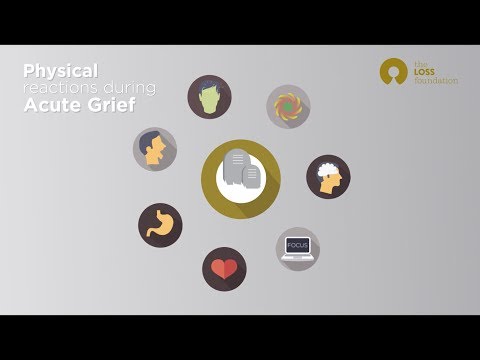
Grief also affects the body physically.
People experiencing normal grief may report:
- tightness in the throat or chest
- difficulty breathing deeply
- headaches
- stomach upset
- fatigue
- dizziness
- appetite changes
- insomnia
- muscle weakness
- crying spells
- difficulty concentrating
- emotional numbness
- disbelief or shock
And honestly, many grieving people briefly worry they are “going crazy.”
They are not.
The brain and body are trying to process profound emotional disruption while simultaneously maintaining ordinary life functions.
One particularly interesting psychological response to grief is idealization, the tendency to remember the deceased in overly purified or unrealistic ways. (Hill, 2019) Human beings often soften flaws after death, emphasizing only positive qualities while minimizing conflict, frustration, or complexity. To some extent, this is normal. Love and memory are selective. But if idealization becomes extreme, it may interfere with forming new intimate relationships because no living person can realistically compete with a perfected memory.
Importantly, there is no universal checklist for “normal” grief.
Some people cry constantly.
Others become task-oriented and practical.
Some need to talk.
Others become quiet.
Some return to work quickly.
Others struggle for months.
Some experience relief after prolonged caregiving exhaustion and then feel guilty for feeling relieved at all.
Human grief is deeply individual because attachment itself is deeply individual.
And honestly, grief never fully leaves us unchanged.
Loss reshapes people.
Sometimes painfully.
Sometimes meaningfully.
Usually both at once.
Please watch the following video as we continue exploring the psychology of grief, mourning, and human adaptation to loss.
Bereavement and Mourning and the Way Grief Becomes Visible
By this point, you’ve probably noticed that we use the words loss, grief, bereavement, and mourning as though they all mean the same thing. They overlap, but they are not identical.
Loss is the event or experience of being deprived of something or someone meaningful. Grief is the internal response to that loss. Bereavement usually refers to the condition of having lost someone through death. Mourning is the outward expression of grief, shaped by culture, family, religion, personality, community, and social expectation.
That distinction matters because grief is deeply personal, but mourning is often socially regulated.
In some cultures, mourning takes place over a specific number of days. In others, it is marked through clothing, prayer, food, visitation, storytelling, pilgrimage, hair cutting, public wailing, silence, or ritual obligations. Traditionally, black clothing served as a visible signal that a person was grieving and should be treated with care. The community could see the loss and respond.
In the United States, we have a much stranger relationship with mourning. We often expect grief to be profound, but brief. Regardless of whether someone has lost a spouse, parent, child, sibling, or close friend, many workplaces offer a standard three days of bereavement leave, which is almost comically inadequate if you have ever tried to bury someone, make phone calls, locate paperwork, comfort family members, manage shock, and remember where you put your own shoes.
Three days.
Apparently, by Monday you should be emotionally functional and replying to emails again. Civilization is a weird little machine sometimes.
But grief does not obey workplace policy.
People who have recently lost a parent often describe numbness, fog, disorganized thinking, or the strange sensation that something essential has shifted underneath them. Sanders described this sense of absence as feeling as though part of the self is gone. That may sound dramatic until you experience it. Then it makes perfect sense. Relationships become woven into daily identity, and when someone central dies, the survivor is not only grieving the person, but also adjusting to a changed version of the self.
It is also common for grieving people to try to regain control over their environment. Some clean obsessively. Some reorganize closets. Some make phone calls, sort papers, plan services, write thank-you notes, research grief, create photo boards, cook enough food to feed a small emotionally distressed village, or become suddenly very interested in labeling storage bins. Grief energy has to go somewhere.
I recognize this in myself. I tend to grieve intellectually. I process with words, structure, analysis, and meaning-making, which can sometimes make me appear colder than I feel. I am not detached. I am translating emotion into language because that is the way my brain keeps the lights on.
Other people grieve through the body. They feel loss physically, with chest pressure, exhaustion, nausea, tears, shaking, sleeplessness, or the complete collapse of ordinary functioning. For them, grief is not something to think through first. It arrives as a full-body weather system.
Both responses are real.
The trouble starts when people assume their way of grieving is the correct way. The intellectual griever may look at the emotional griever and think, “Please stop leaking feelings all over the furniture.” The emotional griever may look at the intellectual griever and think, “Do you even care?” Meanwhile, both people may be grieving deeply and simply speaking different grief languages.
That difference can become a real source of conflict in families, especially after a major death. One person wants to talk. Another wants to act. One wants to cry. Another wants to clean the garage. One wants ritual. Another wants privacy. One wants to remember every detail. Another wants to get through the logistics without collapsing in the funeral home parking lot.
Grief is personal. Mourning is social. Bereavement changes the shape of daily life. Loss is the rupture that starts the whole process.
Understanding those distinctions does not make grief easier, exactly, but it can make us less judgmental when grief shows up differently than expected.
How Do We Grieve?
One of the most important things to understand about grief is that there is no universally “correct” way to experience it. Human beings grieve through personality, culture, attachment style, life experience, family systems, gender expectations, spirituality, trauma history, and temperament. Two people can love the same person deeply and still grieve in completely different ways afterward.
And honestly, those differences can create enormous misunderstanding.
Women do statistically experience higher rates of bereavement across the lifespan simply because women tend to outlive men. But when we begin talking about grief differences between men and women, we need to be careful not to reduce people into simplistic stereotypes. Human beings are far more complicated than that.
Most people carry a mix of qualities that are traditionally labeled masculine and feminine. The more important question is not whether someone is male or female, but how they have learned to process emotion, vulnerability, control, expression, and support throughout their lives.
Culture teaches us grief rules long before we realize it.
Some people are taught:
express emotion openly.
Others are taught:
hold yourself together.
stay productive.
do not burden people.
keep functioning.
solve the problem.
And unfortunately, grief is one of the few human experiences that cannot actually be solved.
Researchers Martin and Doka identified several broad grief patterns that help explain why people often misunderstand each other so profoundly after loss. (Martin & Doka, 1999)
Intuitive Grievers
Intuitive grievers experience grief very emotionally and expressively. They may cry openly, talk frequently about the loss, seek emotional support, and experience grief intensely through feelings and physical emotional release. Their inner emotional experience tends to match their outward expression.
These are often the people others recognize most easily as “grieving” because their pain is visible.
But visible grief is not the only form grief takes.
Instrumental Grievers
Instrumental grievers experience grief more cognitively and behaviorally. They often process through thinking, action, structure, problem-solving, ritual, research, task completion, or physical activity rather than overt emotional expression.
Honestly, this is me.
Give me paperwork.
Give me a checklist.
Give me something to organize.
Let me clean a closet, write, research, build something, fix something, or create structure out of chaos.
That is not the absence of grief. That is grief.
One man whose daughter died in a car accident found himself obsessively repairing the fence she had crashed through. Later he explained:
“It was the only part of the accident I could fix.”
That line absolutely guts me every time because it captures instrumental grief perfectly. Sometimes action becomes the only place grief has somewhere to go.
Instrumental grievers may appear calm, intellectual, organized, detached, or even emotionally cold to others, but internally they may be carrying enormous pain. Many process through “doing” rather than emotional expression. Some read extensively about grief. Others throw themselves into caregiving, planning funerals, organizing finances, managing logistics, or maintaining routines because action creates temporary structure when the emotional world feels unstable.
Dissonant Grievers
Dissonant grievers experience conflict between what they feel internally and what they believe they are socially allowed to express.
For example, a man may feel grief very emotionally but believe open expression violates expectations surrounding masculinity. A woman may desperately need space to collapse emotionally but feel obligated to remain “the strong one” protecting everyone else. Some people feel grief intensely but have no safe environment in which to express it honestly.
And honestly, this happens all the time.
People perform functionality because families still need feeding.
Children still need rides.
Paperwork still needs signing.
Funerals still need planning.
Employers still expect attendance.
Life keeps moving even when someone’s emotional world has shattered.
One of the greatest sources of conflict after a death often comes from people misinterpreting each other’s grief styles.
The emotional griever may think:
“Why aren’t you crying?”
The instrumental griever may think:
“If I fall apart, nobody else is going to keep this family functioning.”
Meanwhile both people may be grieving deeply while quietly feeling judged by the other.
Neither style is inherently healthier than the other.
Some people feel first and act later.
Some act first and feel later.
Some alternate between both.
Many people move between styles depending on the situation, relationship, or stage of life.
Grief is not a performance competition.
And honestly, many people have never experienced a major loss before adulthood. They suddenly find themselves grieving without any idea what their own grief even looks like yet. That uncertainty alone can feel frightening. People often worry they are grieving “wrong” because their reactions do not match cultural expectations or the reactions of people around them.
Patience matters enormously here.
Support does not always mean forcing people to talk. Sometimes support means sitting quietly beside someone while they organize photographs. Sometimes it means listening to the same story repeatedly. Sometimes it means helping with meals, childcare, paperwork, errands, or simply tolerating another person’s sadness without trying to rush them toward emotional resolution.
Grief changes shape over time, but it rarely disappears completely. More often, people slowly learn how to carry it differently.
Gender and Coping Style

Gender, Cohorts, and the Social Shape of Grief
We still talk about gender differences in grief, but hopefully by now you can already see that this is far more complicated than:
“men grieve this way”
or
“women grieve that way.”
Human beings are shaped by personality, socialization, family roles, culture, generation, lived experience, and expectation. Gender absolutely influences grief, but not in some simplistic binary way where every man shuts down emotionally while every woman cries openly on a staircase wrapped in a blanket drinking tea.
Honestly, grief research has evolved alongside society itself.
Cohort effects matter here enormously. The expectations surrounding masculinity and femininity have changed dramatically across generations, and those changing expectations influence how people process vulnerability, emotional expression, caregiving, and dependence. As younger generations age, many of the older emotional “rules” around grief may continue shifting too.
Younger adults today are often more emotionally expressive than previous generations of men were socially permitted to be. At the same time, many women increasingly occupy roles historically associated with instrumental coping, financial management, leadership, problem-solving, and emotional containment. The result is that grief patterns are becoming more fluid, more individualized, and less tied to rigid gender expectations than they once appeared.
Still, conflict can emerge when people grieve differently.
One person needs to talk.
Another needs to stay busy.
One wants to revisit memories repeatedly.
Another needs distraction and structure.
One experiences grief through tears.
Another experiences grief through action.
Neither response is inherently wrong.
And honestly, these grief differences extend far beyond death itself. Human beings experience grief reactions during political upheaval, social unrest, community tragedy, environmental disaster, identity disruption, divorce, infertility, migration, chronic illness, disability, economic collapse, or the loss of the future they thought they were going to have.
Sometimes entire societies grieve together.
The mourning process, whether personal or collective, gives people space to recognize what has changed, react emotionally, reorganize meaning, and gradually adapt. Humans process loss through storytelling, ritual, memorialization, activism, humor, community gathering, social media, rebuilding routines, meeting new people, preserving memories, and sometimes simply repeating the same story over and over until the nervous system slowly catches up to reality.
Grief needs witnesses.
And while loss is a normal part of the life course, some losses tend to carry particular psychological weight.
The death of a parent, even in adulthood, can feel profoundly destabilizing. Most people lose one or both parents sometime during midlife or later adulthood, and many are surprised by the intensity of the experience. Regardless of age, losing a parent often creates the strange sensation that part of the emotional scaffolding of the world has disappeared. Even highly independent adults sometimes describe feeling suddenly “untethered.”
Research suggests that many individuals report the death of a mother as particularly emotionally disruptive, often because mothers historically occupied central emotional, relational, and caregiving roles within family systems. Fathers’ deaths are also deeply painful, of course, but people often describe different emotional meanings attached to each parental relationship.
The most profound and destabilizing loss in later life, however, is often the death of a spouse or long-term partner.
And honestly, widowhood changes nearly everything.
By late life, couples may have spent decades constructing shared routines, identities, responsibilities, finances, social relationships, habits, rituals, and emotional worlds together. When one partner dies, the survivor is not simply grieving the person. They are grieving an entire way of life.
This is where cohort and gender roles become especially visible.
Many older widowed women face significant financial strain, legal confusion, housing instability, or reduced economic security, particularly if their husbands managed finances or served as primary earners. Older women also face the demographic reality that there are simply fewer potential partners available in later life because women statistically outlive men.
Older widowed men often experience a different kind of disruption. Men from older cohorts were frequently socialized away from emotional intimacy outside the marital relationship and may have depended heavily on their spouse for emotional support, household management, social coordination, caregiving, meal preparation, and relational connection. When that spouse dies, many report profound loneliness alongside the sudden need to navigate domestic responsibilities they were never taught to manage independently.
And honestly, this is one of the reasons grief can expose the invisible architecture of relationships so powerfully.
Loss reveals not only who we loved, but how we lived.
The Widow Effect, Culture, and the Invisible Labor of Grief
There is an interesting and surprisingly well-documented phenomenon called the widow effect. Researchers have consistently found that following the death of a spouse, the surviving partner experiences a significantly increased risk of illness and mortality, particularly within the first few months after the loss.
And honestly, human beings have recognized this phenomenon long before medicine gave it a name.
People used to say someone “died of a broken heart,” and while that sounds poetic, there is actually physiological truth underneath it. Extreme grief and stress can profoundly impact the cardiovascular, immune, endocrine, and nervous systems. There is even a medically recognized condition called stress cardiomyopathy, sometimes referred to as “broken heart syndrome,” where severe emotional distress temporarily weakens the heart itself.
But the widow effect is probably about more than heartbreak alone.

Caregiving places enormous physical and emotional strain on people, particularly older spouses caring for one another through chronic illness, dementia, disability, or prolonged decline. Many caregivers spend months or years functioning on adrenaline, hypervigilance, sleep deprivation, stress hormones, interrupted routines, and deferred self-care. They keep going because somebody they love needs them to keep going.
Then the caregiving suddenly stops.
And sometimes the body crashes afterward.
Honestly, I understand this on a smaller scale every semester. I can hold myself together under enormous pressure for months at a time, functioning entirely on momentum and obligation, and then the second the semester ends, my immune system apparently files a formal grievance against me. That’s when the cold hits. Or the exhaustion. Or the collapse. The body waits until survival mode is no longer necessary.
Now imagine that process magnified through years of caregiving and profound grief.
The surviving spouse is not only mourning emotionally. Their body may also be responding physiologically to the sudden collapse of structure, stress, identity, purpose, routine, and companionship all at once.
And this is where culture and gender become deeply intertwined with grief.
Every culture creates expectations surrounding emotional expression, caregiving, mourning, and vulnerability. Some cultures encourage visible grief and communal emotional expression. Others value emotional restraint, stoicism, or maintaining social harmony. Even within the same society, men and women are often taught very different emotional rules.
In a 1976 study, Paul Rosenblatt and colleagues examined emotional expectations surrounding grief across sixty different societies. In roughly half of the cultures surveyed, there were no major gender differences in expectations surrounding crying or emotional expression. In others, women were granted significantly more permission to express grief openly. Men, meanwhile, were often expected to remain controlled, functional, or emotionally restrained.
And honestly, many of those expectations still linger even now.
That does not mean men feel less grief.
It does not mean women are “better” at grieving.
It means people are often socialized differently around vulnerability and emotional expression.
Some people externalize grief.
Some internalize it.
Some verbalize.
Some become silent.
Some seek support immediately.
Some isolate.
Some collapse emotionally.
Others become hyper-functional.
And because grief behaviors differ, people often misunderstand one another badly during times of loss.
The emotional griever may interpret stoicism as lack of love.
The instrumental griever may interpret emotional flooding as loss of control.
Meanwhile, both may be suffering profoundly.
Historically, women have often received more visible grief support because women were culturally permitted to mourn publicly and seek emotional connection openly. Support groups, grief literature, counseling resources, widow support networks, and bereavement communities have traditionally centered women’s experiences.
And honestly, that makes some sense statistically because women are more likely to outlive spouses and therefore more likely to experience widowhood.
But there is another side to this conversation that is worth noticing.
Many older men were socialized to rely heavily on their spouse for emotional intimacy, social planning, caregiving coordination, household management, and relational connection. When that spouse dies, some men suddenly find themselves emotionally isolated with very little support infrastructure and almost no language for expressing grief openly.
I once searched online for resources surrounding women and grief and found endless pages of support groups, articles, retreats, books, counseling services, and bereavement networks. When I searched for men and grief, the resources became noticeably thinner.
Interesting, isn’t it?
The group often socialized toward emotional self-sufficiency and internalization may actually have fewer culturally acceptable places to put their grief.
And honestly, I suspect future generations may look different.
As gender expectations continue shifting, younger cohorts may enter older adulthood with broader emotional vocabularies, more flexible caregiving roles, stronger emotional literacy, and fewer rigid assumptions about who “should” express grief in particular ways.
At least I hope so.
Because grief is already hard enough without forcing people to perform it according to somebody else’s emotional rulebook.