7.10 Spirituality, Religion and the Search for Meaning
Human beings have spent thousands of years trying to answer existential questions surrounding suffering, mortality, meaning, connection, and transcendence. Some people find those answers through organized religion. Others find them through deeply personal spiritual experiences outside formal religious systems.
And honestly, those two things are not always the same.
Religiosity is external. It is the visible structure of belief. It includes organized rituals, traditions, worship practices, sacred texts, denominations, symbols, ceremonies, and communities of faith. Religiosity is what we can observe people doing. It creates structure, predictability, rhythm, and social connection.
Spirituality, on the other hand, is internal. It is the deeply personal experience of meaning, connection, transcendence, purpose, morality, wonder, or relationship to something larger than oneself. Spirituality may involve God, nature, humanity, creativity, energy, meditation, service, love, or simply a profound sense of interconnectedness.
The two often overlap beautifully.
But not always.
It is entirely possible to be deeply spiritual and never participate in organized religion at all. Most of us know someone who would describe themselves as spiritual, reflective, connected, compassionate, and grounded, but who has no interest in formal religious institutions. At the same time, it is also possible to participate faithfully in religious rituals and structures while feeling little genuine inner spirituality, peace, compassion, or transformation.
And honestly, human beings notice that inconsistency quickly.
Most people have encountered someone who attends church regularly, speaks openly about religious values, and yet behaves outside that space in ways completely inconsistent with the beliefs they publicly profess. That disconnect often creates emotional tension, both internally and socially, because people instinctively recognize when outward ritual and inward transformation are not aligned.
At the same time, research consistently shows that both religiosity and spirituality can play enormously important roles across the lifespan, particularly in later adulthood. Both are associated with hope, emotional resilience, coping, life satisfaction, and the ability to tolerate suffering and uncertainty.
But they tend to function differently psychologically.
Religiosity often operates as a structured coping mechanism. Rituals provide predictability during periods of uncertainty. Prayer creates meditative focus. Religious communities provide social support, reinforcement, belonging, and shared frameworks for understanding suffering and loss. Even repetitive physical practices like lighting candles, fingering rosary beads, kneeling, chanting, singing hymns, or reciting prayers can become psychologically regulating because the body learns familiarity and rhythm.
And honestly, this matters enormously during periods of grief, illness, caregiving, or fear.
Human beings calm themselves through ritual all the time.
Hospitals have routines.
Families have traditions.
Athletes have rituals.
Children demand bedtime patterns.
Religious practice simply formalizes that deeply human tendency to seek structure during uncertainty.
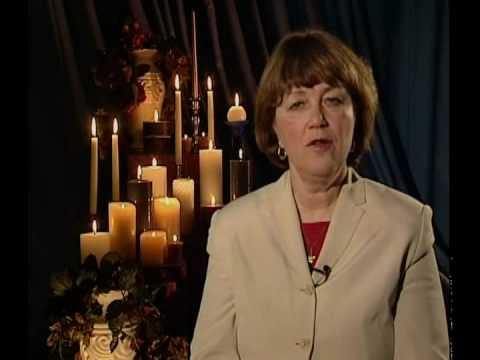
Spirituality works somewhat differently. Spirituality is often less about structure and more about meaning. It is the internal experience of peace, connectedness, wholeness, transcendence, compassion, awe, or purpose that can exist either inside or outside formal religion.
Some older adults experience spirituality sitting quietly in prayer.
Others experience it gardening.
Listening to music.
Walking in nature.
Meditating.
Creating art.
Holding a grandchild.
Caring for a dying spouse.
Watching the ocean.
Teaching students.
Volunteering.
Sitting silently with another human being in pain.
And honestly, many aging adults begin realizing they need some combination of both:
external structure and internal meaning.
That balance varies tremendously across cultures, personalities, generations, and life experiences. Some people crave ritual and communal worship. Others feel suffocated by institutional religion but still deeply hunger for transcendence, purpose, or spiritual connection. Some move toward religion as they age. Others move away from organized doctrine while becoming more contemplative and spiritually reflective.
There is no single developmental pathway.
What matters psychologically is whether human beings are able to create meaning strong enough to help them tolerate impermanence, suffering, uncertainty, grief, and mortality itself.
Researchers have found that older adults often report greater rewards from both religiosity and spirituality as they age. Organized religion may provide social connectedness, continuity, emotional support, caregiving networks, and frameworks for understanding suffering. Spirituality may provide peace, acceptance, transcendence, forgiveness, and comfort with uncertainty.
And honestly, this is where the earlier conversation about gerotranscendence quietly returns.
Not necessarily as a theory to memorize, but as something recognizable in real human behavior.
The older adult who becomes less interested in social competition and more interested in presence.
The caregiver who discovers profound meaning through service despite exhaustion.
The formerly achievement-driven executive who suddenly finds more peace sitting quietly in a garden than chasing another promotion.
The aging artist who no longer creates for recognition, but because creativity itself feels spiritually necessary.
The widow who continues speaking to her deceased spouse while learning to live forward at the same time.
The older adult who becomes increasingly comfortable saying:
“I do not know all the answers anymore, and strangely, I am more at peace because of it.”
Those are not simply religious changes.
They are shifts in perspective.
Researcher Robert Atchley found that spiritual experiences occurred across a remarkably wide range of human activities and emotional states. People described experiences of deep stillness, inner peace, wonder, compassion, clarity, transcendence, connection, trust, transformation, and comfort with mystery itself.
And honestly, I think that last one may matter most.
Comfort with mystery.
Because eventually adulthood teaches most people something difficult but necessary:
not every question receives a clean answer.
Some suffering remains unexplained.
Some losses never fully stop hurting.
Some relationships remain complicated.
Some uncertainty never disappears.
Yet many people still continue finding beauty, connection, meaning, humor, and peace inside an imperfect and temporary life.
Perhaps that is part of wisdom too.
I take personal inspiration from the people featured in this next video - developed by Allure.com - that offers us a 100-Year old's Guide to Living Your Best Life. Enjoy!

Try flipping the paradigm a little.
Science shows us that human beings really can reshape emotional patterns, thought habits, and the way we speak to ourselves over time. The brain is not static. What we practice repeatedly matters.
So next time you catch your reflection, maybe pause before immediately cataloging every flaw, ache, wrinkle, mistake, or insecurity. Most of us would never speak to another human being the way we speak to ourselves in our own heads.
You have survived things.
Learned things.
Loved people.
Changed people.
Made mistakes.
Started over.
Kept going.
That matters.
So maybe smile a little at the person looking back at you.
Not because life is perfect.
Not because aging is easy.
But because you are still here, still growing, still becoming, and still capable of contributing something meaningful to the world around you.
And honestly, that is pretty remarkable.