6.1 The Richness of Difference
When we talk about the “aging population” of the United States, we are not talking about one homogeneous group. One phrase I heard recently makes a lot of sense:
“We are all on the same journey, but we aren’t all on the same boat.”
Aging takes place in a world that is incredibly diverse, even though many human experiences remain universal. Americans live in opposites in economics, education, religion, politics, lifestyle, healthcare access, family structure, and opportunity. Accessing services and resources may be a very different experience for an aging non-English-speaking immigrant compared to a native English speaker. There are large groups of older adults experiencing food insecurity. There are older adults with disabilities who are living far longer than expected, often without adequate services and support.
We are also living during a period of enormous social and political fluctuation. The COVID pandemic exposed inequities that had existed in this country for decades. I suspect part of the tension underneath many of our national conversations comes from our discomfort discussing race, gender, age, disability, poverty, sexuality, and identity without turning those conversations into arguments over whose suffering “counts more.”
But from a gerontological perspective, these conversations matter because aging intersects with every other aspect of identity we carry throughout life.
Older adults do not all age under equal conditions.
They do not enter old age with equal protection, equal opportunity, equal healthcare access, equal safety, equal social visibility, or equal accumulated stress.
And over time, those differences matter psychologically.
Diversity in an Aging America
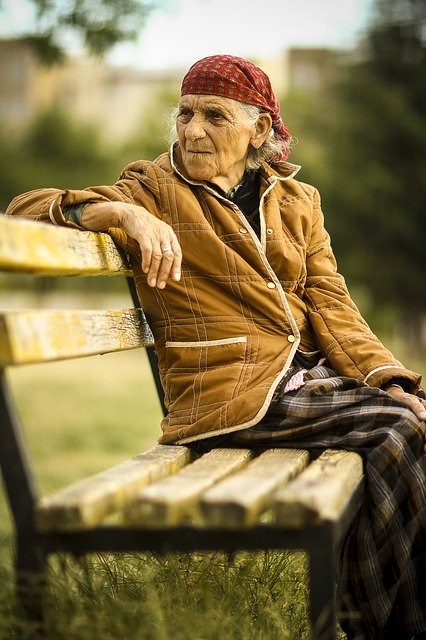
American's older population is rapidly becoming more ethnically and racially diverse. Estimates project that between 2018 and 2060, the non-Hispanic white population is expected to drop from 77% to 55%. (ACL.org, 2020). This will create, for the first time in contemporary United States history a minority-majority, where there will be no one dominant race in the nation. (Angel, 2018)
Despite the increased diversity in the older adult population, the more rapidly changing racial/ethnic composition of the population under age 18 relative to those ages 65 and older has created a diversity gap between generations. (maricopa.edu, 2020)
Gerontologists know that culture and life events shape an older person's worldview. For example, many older minority members face disadvantages today due to their discrimination throughout their lives. We know that economic and cultural barriers can have negative impacts on healthy aging and life satisfaction. (Brewster, 2019). We also know how to tear down some of these barriers:
- Offering a service in a minority language.
- Using minority staff to deliver services.
- Locating services in settings that will attract minority members.
Who are the Minority Elderly?
Even today, non-Hispanic white adults remain the numerical majority of the older population in the United States. In 2022, about 75% of Americans age 65 and older were non-Hispanic white, while 25% belonged to racial or ethnic minority populations. That older population is changing, though. Between 2022 and 2050, the share of older adults who identify as non-Hispanic white is projected to fall from 75% to about 60%, which means the aging population will become significantly more racially and ethnically diverse over the next several decades.

This shift matters because the phrase “minority elderly” does not simply describe numbers. It points us toward questions of power, history, access, and accumulated experience. White Americans have historically held dominant social, political, and economic power in the United States. That does not mean every white older adult has lived an easy or privileged life, because life is rarely that tidy. It does mean that institutions, policies, housing patterns, educational systems, employment opportunities, and healthcare structures were often built in ways that favored some groups while excluding or disadvantaging others.
That history does not vanish when people turn sixty-five.
Early in the twentieth century, many immigrants to the United States came from Europe. Today, immigration patterns are much broader. Since 1965, about half of U.S. immigrants have come from Latin America and about one-quarter from Asia, with large numbers coming from Mexico, China, India, and the Philippines. Each wave of immigration has brought new languages, beliefs, foods, traditions, spiritual practices, family structures, and ways of understanding aging itself.
That richness is one of the great strengths of American life.
It also creates tension.
Let’s be honest about that. Human beings are tribal creatures. We tend to attach to familiar groups, familiar language, familiar customs, familiar rhythms, and familiar assumptions about how life should work. Anthropologically, that makes some sense. Loyalty to one’s group probably helped humans survive for a very long time. The problem is that the same instinct can also make difference feel threatening when it should be understood as part of ordinary human variation.
From an aging perspective, getting stuck in division is counterproductive. If we are serious about meeting the needs of a diverse aging population, we have to be both specific and inclusive. Specific means we do not pretend every group has the same history, risks, cultural values, or support systems. Inclusive means we do not turn difference into hierarchy, stereotype, or competition.
That balance is the work.
The oldest-old population is especially important here. The number of adults age 85 and older is projected to grow dramatically in coming decades, nearly tripling by 2060 according to Census projections. As more people live into advanced old age, racial and ethnic minority elders will also increase in number. That has real implications for caregiving, healthcare, housing, transportation, language access, dementia care, end-of-life planning, and formal service systems.
This is where gerontology gets very practical very quickly.
Many minority elders have historically relied heavily on informal support from family, faith communities, neighbors, or ethnic community networks. Those supports can be deeply meaningful and protective. But as families become smaller, more geographically dispersed, more economically strained, and more likely to have multiple generations working outside the home, informal caregiving systems may be stretched beyond what they can realistically provide.
At the same time, many minority elders underuse formal services, often for very understandable reasons. Services may not be available in their language. Staff may not reflect their community. Programs may not be located in trusted spaces. Older adults may fear discrimination, misunderstand eligibility, distrust institutions, or find that available services simply do not fit their cultural expectations or practical needs. Your original point is exactly right: formal systems will have to adapt their delivery, staffing, language access, outreach, and trust-building if they are going to meet the needs of a very old and increasingly diverse population.
So before we talk about diversity as a broad ideal, we have to understand it as lived reality.
Who gets help?
Who trusts the helper?
Who knows how to access services?
Who has family nearby?
Who has been excluded often enough that formal systems feel unsafe?
Who ages with resources, and who ages with accumulated disadvantage?
Those are not side questions. They are central questions in the psychology and sociology of aging.
Culture
By definition, culture refers to the shared values, traditions, norms, customs, arts, history, folklore, and institutions of a group of people. But culture is much bigger, and much more complicated, than people sometimes realize. There can be multiple “cultures” within the same ethnic group, and a culture itself may integrate people from many different backgrounds.
For example, there is absolutely such a thing as a college culture on this campus.
“Huh? NO! I’m my own unique person,” you protest.
Well…yes. Yes, you are. But think about what happens when you walk into class. You behave differently than you might at home or with your closest friends. You recognize the mascot. You wear Sonoma State sweatshirts. Some of you join Greek organizations and adopt the expectations, rituals, and social behaviors of those groups. Some students are deeply immersed in campus life, while others sit more on the outside observing the behaviors of everyone else.
And if you truly don’t believe campuses have culture, go watch dorm behavior on a Thursday evening before an event. Groups move together, dress similarly, listen to the same music, use the same slang, and somehow even dance the same. Human beings are social creatures. We absorb group norms almost automatically.
Developmental psychologists would probably argue that part of adolescence and young adulthood involves balancing two competing psychological drives:
the desire to belong
and
the desire to be recognized as an individual.
That tension never entirely disappears.
Do we all need to be the same?
Absolutely not. Frankly, it would be horribly boring if we were.

The challenge is figuring out how to recognize and respect cultural frameworks different from our own while still holding onto the parts of our own identity that matter to us. That sounds simple until you actually try to do it. Then you discover how quickly humans become defensive, tribal, and emotionally attached to what feels familiar.
This is where the idea of cultural competence comes in.
In the most practical sense, cultural competence means developing the skills, behaviors, policies, and systems that allow individuals and organizations to work effectively across cultural differences. In healthcare and aging services, that might mean:
- offering services in multiple languages
- hiring diverse staff
- understanding cultural differences in caregiving expectations
- recognizing barriers to access
- adapting programs so they actually fit the communities they serve
That’s the organizational side.
But cultural sensitivity is a whole different animal.
Cultural sensitivity is what we ideally practice as human beings. It involves awareness, curiosity, humility, and the ability to recognize differences without immediately assigning value judgments to them:
better/worse
normal/abnormal
right/wrong
And honestly? That’s hard.
Human beings tend to interpret their own culture as the “normal” one. We often interact most comfortably with people who think, speak, worship, behave, vote, and communicate in ways that feel familiar to us. Most people do not consciously think:
“My culture is the only real one.”
But sometimes our behaviors suggest otherwise.
Here’s an uncomfortable example.
Think back to the first night of class when we brainstormed words associated with aging. Remember some of the terms that ended up on the board?
- frail
- slow
- lonely
- diseased
- handicapped
- dependent
That was culture talking.
Those assumptions did not appear out of nowhere. They were socially learned through media, family attitudes, social systems, advertising, and repeated exposure to stereotypes about aging. This is why cultural sensitivity and cultural competence are not just about ethnicity. They are also about age.
Ageism is cultural.
And in many ways, it may be one of the few prejudices directed squarely at our own future selves.
Ethnicity
Which brings us naturally to ethnicity.
Ethnic identity involves a sense of belonging to a group that shares culture, history, language, traditions, social experiences, and support systems. But ethnicity does not predict homogeneity. Within every ethnic group there are enormous differences involving religion, politics, education, economics, immigration history, language use, assimilation, and worldview.
Gerontology cannot afford to reduce people into simplistic “majority” and “minority” categories because human lives are far more layered than that.
At the same time, we do know that minority populations in the United States often experience unequal treatment in areas such as housing, healthcare, education, employment, and economic opportunity. Add gender and sexism into the equation, and the picture becomes even more complicated. Add age and ageism, along with cohort effects and cumulative disadvantage across the lifespan, and suddenly we are dealing with very real structural challenges.
This is why gerontologists spend so much time examining the life course perspective and cumulative disadvantage. Inequalities do not simply appear in old age. They accumulate over decades.
Poor education may affect employment opportunity.
Employment opportunity affects income.
Income affects healthcare access.
Healthcare access affects physical health.
Chronic stress affects both mental and physical functioning.
Over time, disadvantages reinforce one another.
The body remembers stress.
The psyche remembers exclusion.
Communities remember history.
And this is where aging becomes psychologically fascinating and socially complicated at the same time. The challenge is not simply helping people live longer. The challenge is figuring out how to create systems, policies, communities, and relationships that allow people from vastly different backgrounds to age with dignity, visibility, support, and meaning.
That is much harder work than simply adding years to life expectancy.
Minority Group Aging: Three Perspectives on Quality of Life and Aging
Gerontologists have long studied how minority status shapes the experience of aging. The question is not simply whether people age differently physically. The deeper question is how social experiences across the lifespan shape emotional well-being, stress exposure, resilience, identity, health, and overall quality of life in later adulthood.
Three major theories help explain these patterns: multiple jeopardy, leveling, and the life course perspective.
Multiple Jeopardy
The multiple jeopardy perspective argues that disadvantages may compound across the lifespan. Societies classify people according to characteristics such as age, race, gender, disability, and social class, and those classifications often influence access to opportunity, healthcare, education, safety, and social power.
In North American society, characteristics such as being young, male, white, economically secure, and physically healthy have historically been associated with greater social privilege and access to resources. Meanwhile, older adults who also belong to marginalized groups may experience overlapping stressors and disadvantages that accumulate across time.
Psychologically, this matters because chronic inequality creates chronic stress.
An older adult navigating racism, sexism, poverty, disability, or ageism simultaneously is not simply dealing with “social categories.” They may also be managing:
- increased vigilance
- chronic stress exposure
- financial strain
- barriers to healthcare
- reduced social power
- social invisibility
- discrimination fatigue
- reduced access to restorative resources
Over decades, these experiences affect both emotional and physical well-being.
Researchers studying chronic stress increasingly recognize that prolonged exposure to discrimination, instability, or social disadvantage affects the body as well as the mind. Chronic stress exposure has been associated with higher risks of depression, anxiety, cardiovascular disease, sleep disruption, inflammatory illness, and cognitive decline later in life.
The body remembers chronic stress even when people continue functioning through it.
Multiple jeopardy exists when age adds another layer of vulnerability onto disadvantages already experienced earlier in adulthood.
Leveling
At the same time, aging researchers discovered that the story is not always entirely negative or straightforward.
The leveling hypothesis argues that some inequalities may narrow in later adulthood. In some cases, retirement systems such as Social Security reduce income differences somewhat because middle-class individuals often experience sharper income loss after retirement than individuals who were already surviving on lower wages.
But psychologically, the leveling perspective becomes especially interesting because it also highlights resilience.
Researchers found that minority identity and community belonging may sometimes provide emotional strengths that help individuals adapt to lifelong stress. Cultural identity, family cohesion, spirituality, faith communities, humor, interdependence, activism, and community support can all serve as protective psychological factors.
This does not erase inequality.
But it does complicate the narrative.
Human beings are remarkably adaptive. People often develop resilience, coping skills, emotional flexibility, and strong social bonds while navigating adversity. Some older adults who faced hardship earlier in life may even demonstrate greater emotional coping abilities later in adulthood because adaptation became necessary long ago.
Again, both realities can exist simultaneously:
stress and resilience.
Burden and strength.
Human development is complicated that way.
The Life Course Perspective
Today, most gerontologists take a broader and more psychologically nuanced approach through the life course perspective.
The life course perspective argues that aging cannot be understood separately from the social, historical, cultural, and personal experiences that shape a person’s life from birth onward.
This perspective asks us to consider:
- historical events
- family structure
- education
- discrimination
- trauma
- social institutions
- economic opportunity
- healthcare access
- community support
- cultural identity
- life transitions
- historical timing
All of these factors influence how people experience aging emotionally, cognitively, socially, and physically.
This is where cumulative disadvantage theory becomes especially important.
Cumulative disadvantage suggests that inequalities across the lifespan tend to reinforce one another over time. Poor education may limit employment opportunity. Lower wages may reduce healthcare access. Chronic stress may affect physical and emotional health. Caregiving strain may limit financial mobility. Unsafe environments may increase vigilance and anxiety.
Over time, disadvantages accumulate.
The psychological consequences accumulate too.
People experiencing chronic instability often spend enormous emotional energy simply adapting to immediate stressors. Long-term planning, emotional recovery, rest, and future orientation become harder when survival consumes most available energy.
At the same time, the life course perspective also reminds us that people are not passive victims of circumstance. Humans continue adapting, rebuilding, caregiving, loving, creating meaning, and finding resilience even under difficult conditions.
So is the situation hopeless for minority elders?
Absolutely not.
But improving quality of life in later adulthood requires more than telling individuals to make better choices. It requires recognizing and addressing the structured inequalities that shape opportunity, stress exposure, healthcare access, safety, and emotional well-being across the lifespan.
And honestly, that may be one of the central psychological questions in aging today:
The Face of the United States Is Changing
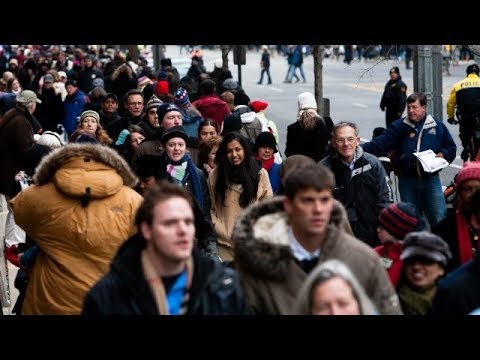
According to the American Society on Aging, “gray is becoming less white.” For much of modern American history, the older population was overwhelmingly non-Hispanic white. Even today, older adults remain less diverse overall than younger generations. But that is changing rapidly. As immigration patterns shift, birth rates change, and younger generations become more racially and ethnically diverse, the future older population of the United States will look very different from previous generations.
And honestly, this is where conversations about aging become fascinating.
Because aging does not happen in some sterile demographic vacuum. People grow older carrying:
- culture
- language
- religion
- migration stories
- historical trauma
- political beliefs
- family expectations
- identities
- social class
- community traditions
- experiences of exclusion or privilege
Every older adult arrives in later life with a personal and collective history.
Each new wave of immigration has changed the culture of the United States in meaningful ways. Early twentieth-century immigration patterns brought large numbers of Europeans to the United States. More recent immigration patterns have brought people from Latin America, Asia, the Middle East, Africa, and countless other regions of the world. With them came new cuisines, languages, customs, caregiving traditions, spiritual beliefs, family structures, and ways of understanding aging itself.
That richness matters.
And yes, sometimes it creates tension.
Human beings are tribal creatures. We naturally form groups, attach to familiar customs, and feel safest around what we recognize. Anthropologists would probably argue that this instinct helped humans survive for thousands of years. The problem is that tribal thinking can easily slide into stereotyping, exclusion, or fear of difference when people stop seeing each other as fully human.
From an aging perspective, though, division becomes deeply counterproductive. If the older population is becoming increasingly diverse, then healthcare systems, caregiving systems, housing systems, transportation systems, and social services must become capable of understanding and serving people whose lives may look very different from one another.
That means gerontology cannot focus only on “older adults” as one giant category.
We have to understand the richness of difference within aging itself.
Who Is “Diverse”?
I spent some time exploring this question online and quickly discovered that people define diversity in dramatically different ways. Some definitions focus almost entirely on race and ethnicity. Others include gender, disability, religion, language, socioeconomic status, sexuality, or political identity.
One observation I came across stayed with me:
“When we single people out as ‘diverse,’ we may unintentionally imply that they are somehow ‘not normal.’”
That’s worth thinking about for a minute.
The moment we label some groups as “diverse,” we are also quietly implying that another group represents the default setting.
That does not mean diversity language is useless. It simply means language carries emotional and social weight whether we intend it to or not.
For the purposes of this lecture, it makes sense to begin with the concept of protected classes, because these are categories legally recognized as vulnerable to discrimination under federal law. Protected categories include:
- race
- skin color
- religion
- national origin
- age
- sex/gender
- pregnancy
- citizenship
- familial status
- disability
- veteran status
- genetic information
And in some states, sexual orientation and gender identity receive additional legal protections as well.
But human identity is far more layered than legal categories alone.
What Makes YOU Diverse?
Each of us is unique, although perhaps not always in the ways we imagine.
When developmental psychologists talk about identity, they are referring to the complex internal understanding we develop about who we are, where we belong, and how we move through the world. Some aspects of identity are immediately visible. Others are invisible unless we choose to share them.
Think about how many identifiers people use to describe themselves:
- age
- race
- ethnicity
- gender
- religion
- sexual orientation
- disability
- body image
- class
- political beliefs
- language
- education
- geography
- learning style
- family structure
If someone asked me to “self-identify,” which is really just a scientific way of saying tell me who you are, I might describe myself this way:
I’m a middle-aged woman of English and Scottish descent. I’m an educator, which implies certain things about my education level and profession. I’m married to a wonderful man and have an adult son. I’m an ordained minister. I enjoy reading, photography, and science fiction.
Did I hit all the categories?
Technically, perhaps.
But none of those labels actually explain the complexity of my life. They do not reveal my struggles, losses, insecurities, fears, resilience, grief, or hard-fought experiences. Without knowing my story, someone else might make assumptions about me based entirely on their own experiences, biases, or worldview. They might see privilege where there was struggle. They might see familiarity where there was exclusion. They might admire me. They might distrust me.
It all depends on the prism through which they are looking.
And honestly, that realization becomes psychologically important because human beings spend enormous energy trying to individuate, to become unique and recognizable as ourselves. Developmental psychologists generally view individuation as healthy. Adolescents and adults are supposed to develop distinct identities.
But there is a strange side effect to all this identity-building:
sometimes people become deeply uncomfortable with anyone who feels “not me.”
I recently heard someone describe this as the tension of diversity, and I think that phrase captures something important. Diversity creates enormous richness, creativity, innovation, and perspective. It also creates friction because human beings carry different histories, beliefs, assumptions, and emotional experiences into shared spaces.
The goal is not eliminating difference.
The goal is creating cultures where people can communicate, learn, disagree, adapt, and grow without immediately retreating into hostility or stereotypes.
That sounds simple.
It is not simple at all.
When the Teacher Becomes the Student
Not to belabor the point, but I think it is incredibly important to have moments where we realize we probably do not know as much as we think we know about diversity, identity, aging, or even ourselves.
To keep myself honest, I did some soul searching and realized there was an area where my own understanding was limited.
And that’s where the next part of this conversation begins.
When the Teacher Becomes the Student
Whenever I want my students to have an “epiphany experience,” I try to put myself through the same process I’m asking of them. So, I completed the same assignment I’m asking you to do at the end of this lecture.
My topic, however, had nothing to do with aging.
The area where I realized I lacked both language and context was the gender spectrum. I was raised in a far more binary world, and while I considered myself accepting, I also realized that acceptance is not the same thing as understanding. There is a difference between saying:
“I support people,”
and being willing to genuinely examine your own assumptions, vocabulary, blind spots, and discomfort.
So I sat myself down and did about two hours of research. I explored websites. I went to the library and read gender studies material. Eventually, I reached out to a few people I trusted to be brutally honest with me about their own experiences.
And honestly, what I learned was bigger than the gender spectrum itself.
What I really learned was the value of not being afraid to have honest, respectful, nonjudgmental conversations about things I did not fully understand. I learned how to ask questions without making people feel like exhibits under glass. I learned that curiosity and respect can coexist. I learned that people are often far more willing to share their experiences when they believe you are asking in good faith rather than trying to “win” something.
Equally important, I realized that learning requires a willingness to let new information reshape your worldview.
That part is harder than people think.
Most adults like to imagine themselves as “finished.” We develop identities, opinions, routines, political beliefs, and assumptions about how the world works, and after a while those frameworks become psychologically comfortable. Developmental psychologists might argue that one of the signs of mature adulthood is not certainty, but the ability to remain cognitively flexible enough to revise our thinking when new experiences or information challenge us.
In other words, healthy adulthood may require learning how to tolerate uncertainty without immediately becoming defensive.
That applies to aging too.
One of the reasons ageism persists is because many people never challenge the assumptions they absorbed about older adults when they were younger. If we never question stereotypes, fears, or cultural narratives, they quietly harden into “truth” whether they are accurate or not.
What mattered most in this experience was not whether I mastered every new term perfectly. It was the willingness to remain open, curious, respectful, and teachable. Over time, I became more comfortable with the language, more aware of my own blind spots, and honestly, I made a couple of really good friends in the process. They know I may not understand everything perfectly, but they also know I am genuinely trying.
And perhaps that is the larger point.
All of us have blind spots.
Every single one of us.
The goal is not perfection.
The goal is remaining willing to learn.