4.8 Friendship
How many of you are still friends with someone you have known since kindergarten? There is something uniquely honest about those first playground friendships.
On the first day of school, everyone is uncertain, slightly intimidated, and trying to figure out where they belong. Nobody has a résumé yet. Nobody is leading with career titles, politics, income, relationship status, or carefully curated social media identities. One child offers another a crayon, invites them to swing, or asks if they want to play tag, and suddenly a friendship begins.
Developmentally, early friendships are often built on proximity and shared activity rather than deep compatibility or shared values. Yet there is also a simplicity to them that many adults nostalgically remember. As we age, friendships become more layered and, at times, more difficult to maintain. Adult life introduces competing responsibilities, geographic mobility, caregiving, work obligations, marriages, parenting, illness, and differing belief systems. The older we become, the more individualized our lives often become as well. Friendships require greater intentionality, honesty, and effort than they did when our biggest concern was whether someone would share the good crayons.
Even so, the human need for friendship does not disappear with age. In fact, social connection remains one of the strongest predictors of emotional and physical well-being across the lifespan. Friendships provide emotional support, validation, companionship, identity reinforcement, and protection against loneliness and isolation. Researchers often distinguish between two important forms of social support: the confidant and the companion. A confidant is someone with whom we share personal thoughts, fears, or emotional struggles, while a companion is someone with whom we share activities, routines, interests, or experiences. Sometimes one person fills both roles, but often different relationships meet different social and emotional needs. Both types of connection are valuable.
We have discussed relationships between parents and children, grandparents and grandchildren, and siblings. Friendships are different because they are voluntary relationships. Unlike family relationships, friendships are usually formed through choice rather than obligation. We choose who we spend our time with, who we trust, and who we allow into our emotional worlds.
But what actually makes friendship possible? Researchers have identified several important factors that contribute to friendship formation and maintenance:
Proximity
Friendships generally require some level of proximity. Historically, this meant physical closeness through neighborhoods, schools, workplaces, or communities. While technology and social media have expanded our ability to maintain relationships across distance, people still require opportunities for interaction and connection in order for friendships to develop. The more frequently people interact, the greater the likelihood that closeness and familiarity will grow. Of course, increased interaction can also reveal incompatibilities, which is equally informative. (Lussier et al., 2002)
Reciprocity
Healthy friendships tend to involve reciprocity, meaning that both individuals receive some form of emotional, practical, or social benefit from the relationship. Reciprocity does not require perfectly equal exchanges at every moment, but over time there is generally a sense of mutual care, support, and investment. Most people can identify relationships that feel emotionally draining or one-sided. These relationships may persist for many reasons, including history, guilt, obligation, or habit, but they can also raise important questions about boundaries, emotional labor, and the distinction between friendship and acquaintance.
Similarity
Friendships often form around shared interests, values, experiences, humor, or life stages. Similarity does not mean people must be identical, and many strong friendships exist between individuals with very different personalities. However, some degree of shared understanding or common ground usually helps sustain long-term connection. As people age and their lives become more complex, these shared experiences often become important anchors that help friendships survive transitions such as marriage, parenthood, career changes, relocation, illness, and retirement.
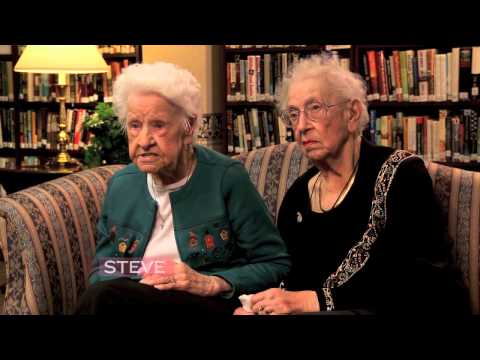
(Source: Steve Harvey Show)
Think about your own friendships during the pandemic and periods of social distancing. How did you maintain connection when traditional proximity was disrupted? Did you rely more heavily on texting, video calls, social media, gaming, phone conversations, outdoor gatherings, or other forms of communication?
Now consider the older adults in your life. How did they maintain relationships during this time? Were they able to adapt to technologies such as Zoom or FaceTime, or did technological barriers increase their risk for loneliness and social isolation? In your opinion, did technology help solve the problem of isolation, or did it simply reduce some of its effects?
Friendships, Life Satisfaction, and Facebook
Particularly during midlife, it is not uncommon for people to report lower levels of life satisfaction, increased stress, or feelings of emotional disconnection. One of the first questions many clinicians, counselors, and gerontologists ask is surprisingly simple: Who are your people? In other words, who do you rely on, spend time with, confide in, or feel emotionally connected to? If someone struggles to answer that question, it can signal an increased risk for loneliness, depression, social isolation, or declining well-being.
Research consistently demonstrates that meaningful social relationships are strongly associated with better physical health, emotional resilience, cognitive functioning, and overall quality of life across the lifespan. Human beings require connection, although the form that connection takes has changed dramatically in the digital era.
The Rise of Digital Relationships
Social media has fundamentally altered how relationships are initiated, maintained, and displayed. Platforms such as Facebook, Instagram, TikTok, and X allow people to maintain contact across geographic distance, reconnect with old friends, participate in communities of shared interest, and access social support that might otherwise be unavailable.
For older adults, people with disabilities, caregivers, rural populations, or individuals with limited mobility, digital platforms can reduce barriers to communication and provide meaningful opportunities for engagement and social participation.
At the same time, researchers increasingly describe social media as a “double-edged sword.” While it can increase connectedness, it can also intensify loneliness, comparison, anxiety, misinformation exposure, and feelings of exclusion. The number of online “friends” or followers a person has does not necessarily correlate with emotional intimacy or meaningful support. In fact, some studies suggest that passive social media use, particularly scrolling without direct interaction, may increase feelings of loneliness and lower self-esteem.
Friendship, Acquaintances, and Digital Oversharing
One of the challenges of social media is that it blurs the boundaries between friendship, acquaintance, audience, and surveillance. Historically, relationships developed gradually. People learned about one another over time through repeated interaction, shared experiences, and trust-building. Social media compresses this process by encouraging individuals to share highly personal information very quickly, often with large audiences that include strangers, coworkers, distant acquaintances, and algorithmically selected viewers.
Imagine meeting someone for the first time and immediately learning where they work, where they live, what their children look like, their political opinions, vacation habits, relationship conflicts, medical conditions, and daily routines. In face-to-face interaction, this level of disclosure would often feel socially inappropriate or emotionally unsafe. Online, however, many people disclose extraordinary amounts of personal information because the interaction feels psychologically distant or controlled.
This does not mean social media relationships are inherently false or meaningless. Many people develop authentic and deeply supportive relationships online. Individuals with rare illnesses, marginalized identities, caregiving burdens, or geographically isolated lives often find important emotional support through digital communities. However, it is important to recognize that visibility is not necessarily the same thing as intimacy. Seeing constant updates about another person’s life does not automatically create closeness, trust, or reciprocity.
Social Media During the Pandemic
During the COVID-19 pandemic, social media and video communication platforms became essential tools for maintaining social connection during periods of quarantine and distancing. For many older adults, learning to use technologies such as Zoom, FaceTime, and Facebook Messenger allowed them to maintain contact with family and friends in ways that significantly reduced feelings of isolation.
At the same time, the pandemic also exposed major inequalities in digital literacy and access. Not all older adults had reliable internet service, updated devices, technological training, or family members available to help them navigate rapidly changing communication tools. Some adapted remarkably well, while others became increasingly isolated as more social interaction moved online.
The Psychology of Curated Lives
Social media also changes how people compare themselves to others. Many users present highly curated versions of their lives, emphasizing success, attractiveness, happiness, productivity, or social connection while minimizing struggle, boredom, conflict, illness, or grief. Repeated exposure to these curated images can contribute to unrealistic expectations and distorted perceptions of what constitutes a “normal” life.
Older adults may compare their aging process, appearance, finances, or family relationships to idealized portrayals online, while younger users may feel pressure to publicly perform success, happiness, or constant social engagement. Researchers have increasingly linked excessive social comparison on social media to anxiety, depressive symptoms, body dissatisfaction, and reduced self-esteem.
Technology and Human Connection
Ultimately, social media is neither entirely harmful nor entirely beneficial. Its impact depends largely on how it is used, the quality of the interactions it supports, and whether online engagement complements or replaces meaningful human connection. Technology can help sustain relationships across time and distance, but it does not eliminate the human need for authentic companionship, emotional reciprocity, trust, and belonging.
Imagine meeting someone for the first time:
Hi my name is Pam. I like this website, and I liked these 300 pages, so you know everything that I'm interested in. I went to school here. I did this. This is my favorite color. This is the picture I took of my favorite food. Oh and by the way, I've been at this job for this many years, I drive this kind of car, this is what my friend's house looks like, you can actually see what my address is. This is the picture of my small child who lives at that house.
 If I were to divulge all that information in the first five minutes of meeting you at a party, you would be walking away slowly, because you would think I was drunk or a total creeper.
Just something to think about....
Friendship Patterns
Never minimize the importance of friendships, acquaintances, neighborhood relationships, and regular social interaction. These connections are just as important to older adults as they are to younger people.
In fact, when researchers ask older adults what they want from their social lives, the answers are often remarkably similar to those of younger generations.
Most people, regardless of age, prefer a social life that includes meaningful friendships, regular contact with others, participation in community life, and opportunities to feel connected and valued.
Contrary to common stereotypes, aging does not eliminate the desire for companionship, belonging, humor, shared activity, or emotional intimacy. Most older adults do not suddenly wish to become socially isolated simply because they have retired or grown older. Given the opportunity and access, many prefer active and socially engaged lives that include friendships, hobbies, community involvement, volunteering, religious participation, clubs, family interaction, or informal social routines.
The longer people remain in a community, the more socially grounded they often become. Over time, individuals develop layers of connection through repeated interaction with neighbors, coworkers, shopkeepers, faith communities, volunteer organizations, and local social networks. These relationships create familiarity, predictability, identity, and social support. Even casual interactions, such as greeting a neighbor, chatting with a cashier, attending a weekly class, or seeing familiar faces at a community center, can contribute significantly to emotional well-being and a sense of belonging.
Researchers sometimes refer to these weaker but meaningful social ties as informal social supports or peripheral relationships. While they may not carry the emotional depth of close friendships, they still help individuals feel connected to the broader social world. For older adults especially, these everyday interactions can reduce feelings of loneliness and reinforce a sense of inclusion within the community.
Who we choose as friends is often influenced by balance, familiarity, and shared experience. People tend to gravitate toward individuals with whom they feel psychologically comfortable or socially compatible. This common ground may emerge through shared interests, similar life experiences, cultural backgrounds, humor, values, hobbies, work histories, parenting experiences, or participation in social organizations and religious communities.
Friendships are often strengthened through repeated exposure and shared routines. Seeing the same people regularly at religious services, volunteer groups, fitness classes, senior centers, community organizations, hobby groups, or neighborhood gatherings creates opportunities for trust and familiarity to develop gradually over time. In many ways, friendship formation is less about dramatic moments and more about repeated small interactions that slowly build connection.
At the same time, friendship patterns often change throughout adulthood and later life. Work schedules, caregiving responsibilities, relocation, illness, widowhood, retirement, and mobility changes can all alter social networks. Older adults may maintain fewer friendships than they did earlier in life, but the relationships that remain are often emotionally closer and more intentional. Researchers describe this pattern as social selectivity, meaning that as people age, they often prioritize emotionally meaningful relationships over large social networks or superficial interactions.
This does not mean older adults stop valuing social participation. Rather, many become more selective about where they invest emotional energy and time. Quality frequently becomes more important than quantity. A smaller circle of trusted, meaningful relationships may provide greater emotional satisfaction than a large network of acquaintances without depth or reciprocity.
Who's in Your Convoy?

In military and trucking terminology, a convoy refers to a group of vehicles traveling together with a shared destination or purpose. In gerontology, the term social convoy describes the network of people who move through life with us, providing support, companionship, protection, and connection across the lifespan.
The Social Convoy Model, developed by researchers Toni Antonucci and Hiroko Akiyama (1995), helps explain how social relationships function as an evolving support system over time.
The model is often visualized as a series of concentric circles surrounding an individual. The people closest to the center represent those with whom we share the deepest emotional connections and strongest levels of trust. These are the individuals we would likely call first during a crisis, major life transition, or emotional hardship. Outer circles represent people who are still important but less emotionally intimate, such as neighbors, coworkers, social acquaintances, club members, or activity partners.
Whether we have friendships that span decades or relationships formed more recently, we are continually building and reshaping our social convoy throughout life. This convoy forms part of our broader social support system, the network of people who help us feel connected, understood, valued, and emotionally secure. Research consistently demonstrates that individuals who perceive themselves as socially supported report higher levels of life satisfaction, lower stress, better coping ability, and improved mental and physical health outcomes.
I sometimes think of convoy members as “bubble wrap people.” They form a protective layer between us and the harsher edges of the outside world. These are the people who celebrate our successes, sit beside us during losses, remind us who we are when life becomes disorienting, and occasionally tell us we are making terrible decisions with impressive honesty. Healthy convoys provide both emotional comfort and practical support.
Importantly, social convoys are not static. They expand, contract, and reorganize throughout the life course. Think about the number and type of friendships you had as a child, compared to adolescence, adulthood, parenthood, or later life. Social networks naturally shift as people move, marry, divorce, retire, change careers, develop illnesses, become caregivers, or experience losses. Some relationships deepen over time, while others fade because of distance, conflict, changing identities, or competing responsibilities.
Research suggests that most people do not require enormous social networks to experience emotional well-being. In fact, many older adults report feeling socially satisfied with a relatively small circle of trusted individuals. Having approximately five to nine people who can provide emotional support, companionship, practical assistance, or caregiving may be sufficient to create a strong sense of connectedness and security. What matters most is often the perceived reliability and emotional quality of those relationships rather than the total number of social contacts.
As people age, losses within the convoy become increasingly common. Friends, spouses, siblings, neighbors, and community members may disappear through death, illness, relocation, or changing life circumstances. The closer someone is to the center of the convoy, the more profound the sense of loss is likely to be. Later life can therefore involve repeated cycles of grief and social restructuring that younger adults may not fully recognize or appreciate.
Replacing relationships can also become more difficult with age. Retirement may reduce daily social exposure, mobility limitations may restrict community participation, and shrinking social opportunities can make forming new close relationships more challenging. Some relationships, such as those with parents, siblings, children, or lifelong partners, are fundamentally irreplaceable because they are tied to shared history and identity.
At the same time, many people create deep emotional bonds with individuals who are not biologically related to them. Close friends, neighbors, mentors, fellow community members, or caregiving partners may come to function as family in every meaningful sense. Gerontologists refer to these relationships as fictive kin, meaning socially constructed family-like relationships that provide emotional support, belonging, caregiving, and continuity. For many individuals, particularly those who are widowed, child-free, estranged from relatives, LGBTQIA+, geographically separated from family, or aging alone, fictive kin relationships become critically important sources of support and identity.
Care and Maintenance
Like any vehicle traveling a long distance, a social convoy requires regular maintenance, attention, and effort in order to remain strong and reliable over time. Relationships rarely sustain themselves automatically, and while people often complain that someone “never calls anymore,” meaningful connection depends on reciprocity because the phone, text message, email, or social media interaction works both ways.
Reach Out—Sometimes, maintaining a convoy requires action on your part. You must make the first move. There is risk involved—you may be rebuffed, you may decide this relationship isn't what you anticipated, and you will need to change the terms. But we have to keep taking risks if we are going to keep your convoy well populated.
Join In and Participate - Groups are often the best place to form new relationships, but your chances of that are directly proportionate to your degree of participation. If you function only on the periphery of the group, you will probably remain a wallflower. Don't be afraid to join in.
Volunteer - Opportunities are endless for sharing with others. Experts say that when you reach out and share yourself, others respond, and relationships begin. Don't be afraid to give of yourself. You will probably receive more than you ever thought possible.
Pets - Pets can provide a sense of being needed and appreciated and provide a common interest among people opening up new opportunities to develop human relationships. Caring for pets also keeps our people-caring skills in practice.
Be Flexible - let go of preconceived ideas, expectations, and all your old rigid rules about people. Rigid rules and unrealistic expectations place barriers to relationships.
Be Accepting and Nonjudgmental - learn to accept and appreciate people for who they are, not who you want them to be. You don't have to like everything about a person to like the person.
Be a Good Listener - most of us like to talk more than we like to listen, so if you can be a good listener, there will be no shortage of people who will be happy to talk to you. You learn a great deal about a person and life when you truly listen--not just to the words but also to the feelings. Words carry very little of the true meaning. We read meaning in the tone, voice volume, body language, and facial expressions. These non-verbal cues all convey much more and are all part of listening.
Be a Positive Person - positive people attract other people. Negativism pushes people away. People who love life and find it interesting never lack for others to share their joy. Concentrate on the good in each situation, maintain an active interest in life, and your convoy will be well populated.
Like kin keeping, women are more overt in their social convoy than are men across the life course. It doesn't mean that men are active; it just means they don't go in for the greeting card and birthday gift thing in quite the same way that women do.
Ponder This:
Who is in your convoy? Think about your life right now, and map back about 5 years. Then, project your life to five years in the future. Who do you think will have made the 10 year journey with you? You don't need to tell me their name, but please share a 100-200 word "journal style" entry (no specific format, just free-write) about these people - maybe there is only one, some of us are lucky and have more. The real exercise here is for YOU to really think about your relationships and how they've endured over time.
Achieved vs. Ascribed Relationships
How do we choose the people in our lives? In some cases, we do not really get a choice at all. These are referred to as ascribed relationships, relationships we are born into or acquire through family systems, marriage, or legal ties. Parents, siblings, cousins, in-laws, and extended relatives often fall into this category. These relationships may become deeply meaningful and supportive, but they originate through circumstance rather than personal selection.
In contrast, achieved relationships are relationships we actively choose and develop ourselves. Friendships, romantic partnerships, mentors, chosen family members, and many community relationships emerge because of mutual interest, emotional connection, shared values, or intentional investment. People often place tremendous emotional value on achieved relationships precisely because they involve choice. There is something psychologically meaningful about being selected, accepted, and valued voluntarily by another person.
Research suggests that relationship satisfaction is far more important to emotional well-being than simply the number of people within a social network. A person may know hundreds of individuals and still feel profoundly lonely, while another person with only a small number of close relationships may report high levels of life satisfaction and emotional security. The quality, trust, reciprocity, and emotional intimacy within relationships are what matter most. (Galupo & Gonzalez, 2013)
I often say that most people need at least three kinds of support in their lives:
-
Someone who will simply sit and listen without immediately trying to solve the problem.
-
Someone who will nurture, encourage, and provide thoughtful feedback.
-
Someone who will challenge us honestly and push us toward growth or necessary change.
Sometimes one person can fill multiple roles, but often these forms of support come from different individuals within our convoy. Together, they create a sense of emotional balance, accountability, and psychological safety. When people feel supported, understood, and valued by others, their sense of well-being tends to improve significantly.
This need for connection remains remarkably stable throughout the life course. Part of human self-concept is shaped not only by how we see ourselves, but also by how we believe we are seen and valued by others. Relationships help reinforce identity, belonging, competence, and emotional security.
For many older adults, however, the social convoy may still exist while becoming increasingly difficult to access. Chronic illness, disability, sensory changes, caregiving responsibilities, transportation limitations, retirement, or mobility barriers may reduce opportunities for regular interaction. In later life, individuals may also experience the deaths of spouses, siblings, neighbors, and lifelong friends, resulting in repeated losses within their support systems.
Isolation can gradually emerge under these conditions, even when meaningful relationships still exist emotionally. This is one reason why nurturing and maintaining social connections throughout adulthood becomes so important. Relationships require intentional care across the lifespan because they are one of the strongest protective factors for emotional and physical well-being in later life.

(Source: Cyber Senior Care)
I don't know about you, but these friendships inspire me.