3.8 Dementia and Major Neurocognitive Disorders
The Fear Behind the Word “Dementia”. (Note: this is another long one.)
When students hear the word dementia, they often immediately picture worst-case scenarios: someone wandering lost and confused, failing to recognize loved ones, sitting silently in a nursing home, or becoming entirely disconnected from reality. Popular culture has not exactly helped with this image. Dementia is frequently portrayed as a kind of living disappearance, a slow erasure of identity that leaves families emotionally stranded somewhere between grief and exhaustion.
And honestly, that fear runs deep.
Most of us occasionally forget names, lose our keys, walk into rooms and forget why we went there, or blank on a word that suddenly reappears three hours later while we are unloading groceries. The moment that happens, many people immediately panic:
“What if this is Alzheimer’s disease?”
Modern culture has created enormous anxiety around memory and aging. We casually joke about “senior moments,” while simultaneously fearing them. We use phrases like “losing your mind” as though cognition exists as an all-or-nothing switch. Historically, people used terms such as senility or senile dementia, reflecting the widespread but incorrect belief that severe cognitive decline was simply a normal and inevitable part of growing old.
It is not.
Normal aging may involve slower retrieval speed, occasional forgetfulness, increased distractibility, or needing more time to learn unfamiliar information. Dementia involves something much more profound: a decline in cognitive functioning severe enough to interfere with everyday life, relationships, communication, judgment, orientation, safety, and independence.
And importantly, dementia is not a single disease.
It is an umbrella term describing a group of disorders involving significant cognitive decline caused by abnormal changes in the brain. Memory may be affected, but so may language, judgment, spatial reasoning, emotional regulation, personality, planning, orientation, movement, or behavior.
One of the reasons dementia is so psychologically unsettling is that cognition is deeply tied to identity. Memory helps create continuity across the lifespan. It allows us to recognize loved ones, navigate familiar environments, tell stories, maintain routines, and understand ourselves in relation to the world around us.
So yes, people fear dementia.
And not irrationally.
But one of the goals of gerontology is to replace fear with understanding because dementia is far more complicated, varied, and human than the stereotypes suggest.
And before we move any further, let me reassure most of you with one of my favorite reality checks:
When you walk out of the grocery store and cannot remember where you parked your car, that is probably ordinary forgetfulness. When you walk out of the grocery store, look at your keys, and cannot remember what they are for, that is the point at which you should probably seek medical evaluation.
There is a difference between distraction and neurological impairment.
And understanding that distinction matters.
What Dementia Actually Is
Dementia is not a specific disease. It is a broad term used to describe a group of conditions involving significant decline in cognitive functioning severe enough to interfere with daily life. Memory is often affected, but dementia also impacts language, judgment, problem-solving, orientation, emotional regulation, abstract thinking, and the ability to perform familiar activities.
The word itself tends to create confusion because people often use Alzheimer’s disease and dementia interchangeably, even though they are not the same thing. Alzheimer’s disease is the most common form of dementia, but it is only one type among many. Vascular dementia, Lewy Body dementia, Parkinson’s-related dementia, frontotemporal dementias, traumatic brain injury, alcohol-related dementias, and other neurological conditions can all produce dementia symptoms through different disease pathways.
What these disorders share is damage to brain cells that interferes with communication between different regions of the brain. The brain is not one giant undifferentiated organ where all functions happen equally everywhere. Different regions are responsible for different tasks: memory, movement, language, judgment, emotional regulation, visual processing, coordination, attention, and executive functioning. When damage occurs in particular areas, the functions associated with those areas begin to deteriorate.
For example, in Alzheimer’s disease, the hippocampus, which plays a critical role in learning and memory formation, is often among the earliest structures affected. This is one reason short-term memory loss frequently becomes one of the first noticeable symptoms.
And honestly, one of the hardest things for families to understand is that dementia is not simply “forgetting.”

(Source: Alzheimers.org/UK)
It is the gradual disruption of entire cognitive systems.
A person may remember childhood stories in vivid detail while simultaneously forgetting that they already ate lunch thirty minutes ago. Someone may still sing every lyric to a favorite song from 1968 while becoming unable to manage a checkbook, follow recipes, organize medications, or navigate familiar roads safely. Another person may remember emotional experiences while losing the ability to retrieve names or sequence daily tasks appropriately.
This is because memory itself is layered.
Procedural memory, emotional memory, autobiographical memory, language, executive function, and spatial reasoning do not all deteriorate identically or at the same speed. Dementia affects cognitive architecture unevenly, which is one reason symptoms can initially appear inconsistent or confusing to family members.
One person may become disoriented first.
Another may lose language skills.
Another may show personality changes long before obvious memory impairment develops.
And early on, many people become remarkably skilled at compensating.
Individuals in the beginning stages of dementia often:
- write extensive notes to themselves
- rely heavily on routines
- avoid unfamiliar situations
- joke to cover memory lapses
- withdraw socially
- become defensive when corrected
- repeat stories because the emotional familiarity remains even when recall does not
Some recognize that something is wrong and become frightened.
Others lack awareness of the changes entirely.
Families frequently describe the early stages as confusing because symptoms may fluctuate. One day the person seems perfectly normal. The next day they become disoriented, suspicious, emotionally volatile, or unable to complete a familiar task they have performed for decades.
Imagine preparing a meal, then forgetting you already cooked it.
Imagine arriving for a standing Friday appointment on Wednesday morning because your internal sense of time has become scrambled.
Imagine balancing a checkbook your entire adult life and suddenly staring at the numbers as though someone handed you instructions in another language.
Those examples matter because dementia is not simply about memory loss.
It is about the breakdown of cognitive mapping.
Tasks we casually think of as “simple” actually involve astonishingly complicated neurological coordination:
- sequencing
- abstraction
- working memory
- judgment
- orientation
- inhibition
- visual-spatial processing
- attention
- language
- motor planning
Even something as ordinary as getting dressed requires dozens of coordinated cognitive processes operating simultaneously.
This is why dementia eventually affects everyday functioning so profoundly.
And importantly, not all dementias are irreversible.
Some conditions that mimic dementia can develop suddenly and may improve when the underlying cause is treated. Severe depression, dehydration, malnutrition, infections, medication reactions, thyroid dysfunction, vitamin deficiencies, alcohol abuse, sensory deprivation, stroke, tumors, or metabolic disorders can all produce significant confusion or cognitive impairment.
This is one reason accurate assessment matters so much in gerontology. Sudden confusion should never automatically be dismissed as “old age.” Sometimes the underlying problem is highly treatable.
Other dementias, however, are chronic, progressive, and irreversible because they involve ongoing deterioration of brain tissue itself. In those cases, the goal shifts from cure to support, adaptation, communication, safety, quality of life, caregiver education, and preserving dignity for as long as possible.
And honestly, that phrase matters:
preserving dignity.
Because one of the greatest dangers in dementia care is allowing the disease to completely overshadow the humanity of the person living with it.
Memory, Orientation, and the Breakdown of Cognitive Mapping
One of the reasons dementia can be difficult for families to recognize early is that memory loss rarely appears all at once like a light switch turning off.
Instead, people often begin losing very specific pieces of cognitive functioning while other abilities remain surprisingly intact. This creates situations that can feel confusing, inconsistent, and emotionally disorienting for everyone involved.
A person may forget recent conversations while vividly recalling childhood stories from seventy years ago. Someone may no longer remember what they ate for breakfast, yet still know every word to a song they learned as a teenager. Another individual may be unable to balance a checkbook or organize medications but still carry on a warm and emotionally meaningful conversation.
This unevenness is one reason dementia is so psychologically complicated.
For example, recent memory is often affected earlier in Alzheimer’s disease because the hippocampus, which is essential for learning and storing new information, is one of the first areas damaged. Older memories may remain accessible far longer because they have been deeply encoded and repeatedly rehearsed over decades.
Families often struggle with this contradiction.
They may think:
“How can Mom remember her childhood dog but not remember I visited this morning?”
The answer lies in how memory is organized neurologically. Older memories are often more deeply rooted and distributed throughout broader neural networks, while newer information requires active encoding and storage systems that may already be compromised.
Orientation also gradually becomes disrupted.
Most healthy adults move through the world without consciously thinking about orientation because the brain continuously tracks:
- time
- place
- sequence
- routine
- spatial relationships
- environmental familiarity
Dementia slowly interferes with those internal maps.
A person may become lost driving home from a grocery store they have visited for twenty years. Someone may wake up confused about the decade, season, or location. Another may begin arriving for appointments on the wrong day or wrong time despite maintaining the same schedule for years.
And honestly, imagine how frightening that must feel from inside the experience itself.
Most of us rely heavily on automatic cognitive routines we rarely notice until they stop functioning normally. We assume we will recognize familiar roads, understand calendars, remember steps in ordinary tasks, and orient ourselves naturally within daily life.
When those abilities begin slipping unpredictably, people often compensate quietly at first.
They may write increasingly elaborate notes to themselves.
Repeat routines rigidly.
Avoid unfamiliar places.
Withdraw from social situations where mistakes might become visible.
Laugh off memory lapses.
Become defensive when corrected.
Or accuse others of moving things because acknowledging cognitive changes feels terrifying.
One of the most emotionally painful realities of early dementia is that many people are at least partially aware that something is changing.
That awareness can create profound anxiety, embarrassment, shame, frustration, irritability, or withdrawal. Individuals may begin losing confidence in their own judgment long before families fully recognize the problem.
And tasks we casually label as “simple” are often neurologically incredibly complex.
Balancing a checkbook is not just math.
It requires:
- concentration
- sequencing
- visual-spatial processing
- working memory
- abstraction
- planning
- judgment
- organization
Cooking a meal involves:
- timing
- memory
- sequencing
- safety awareness
- attention
- sensory interpretation
- motor coordination
Even getting dressed requires orientation, decision-making, procedural memory, sequencing, and environmental awareness.
This is one reason dementia eventually affects activities of daily living so profoundly. The disease is not simply causing forgetfulness. It is gradually disrupting the cognitive architecture that allows people to move through life independently and automatically.
And importantly, emotional memory often remains surprisingly resilient even when factual memory declines.

A person may forget your name but still recognize your emotional presence.
They may not remember the conversation itself but still remember how you made them feel.
Music, rhythm, touch, emotional tone, prayer, ritual, and familiar sensory experiences may continue reaching parts of the person long after language or recent memory become impaired.
That distinction matters enormously in dementia care because it reminds us that communication does not disappear simply because cognition changes.
Human connection often remains possible long after logic and orientation begin to fade.
Different Dementias, Different Journeys
One of the biggest misconceptions people have about dementia is the belief that all dementias are essentially the same disease wearing different outfits.
They are not.
Different dementias affect different parts of the brain, progress at different speeds, disrupt different cognitive systems, and create very different lived experiences for both patients and families. While there is overlap among symptoms, the trajectory of the disease often shapes the psychological experience just as much as the diagnosis itself.
And honestly, this matters because understanding the pattern of decline helps families make sense of what they are seeing.
Not all memory loss looks the same.
Not all confusion behaves the same way.
Not all personality changes emerge from the same neurological process.
Multi-Infarct (Vascular) Dementia
The “Stepwise” Decline
Vascular dementia, sometimes called multi-infarct dementia, develops differently. Instead of gradual degeneration from abnormal proteins, vascular dementia results from impaired blood flow within the brain, often involving multiple small strokes or vascular injuries over time.
In some cases, these strokes are so small the person may never realize they occurred individually. But cumulatively, the damage interrupts communication between brain regions.
Unlike Alzheimer’s disease, which often progresses gradually and steadily, vascular dementia may appear more stepwise in nature. A person may remain relatively stable for a period of time and then experience a noticeable decline following another vascular event.
Families sometimes describe this as:
“He was doing okay, and then suddenly something changed again.”
Symptoms vary tremendously depending on which parts of the brain are affected. Some individuals experience more difficulty with:
- executive functioning
- organization
- decision-making
- attention
- emotional regulation
- mobility
- speech
Because vascular dementia is tied closely to cardiovascular health, it also creates opportunities for prevention and risk reduction through management of:
- hypertension
- diabetes
- smoking
- cholesterol
- obesity
- physical inactivity
This is one reason lifelong health behaviors matter so much neurologically.
The brain depends on blood flow the same way every other organ does.

(Source: Alzheimers.org/UK)
Alzheimer’s Disease
The Slow Erosion of Recent Memory
Alzheimer’s disease is the most common form of dementia, accounting for the majority of dementia diagnoses worldwide.
The disease is associated with abnormal protein deposits in the brain, including amyloid plaques and neurofibrillary tangles, which interfere with healthy communication between neurons. Damage often begins in the hippocampus, one of the primary centers involved in learning and memory formation.
This is one reason recent memory loss frequently appears early.
Families may first notice:
- repeated questions
- forgotten conversations
- misplaced items
- missed appointments
- confusion with dates or schedules
- increasing reliance on notes and reminders
And early on, many individuals become surprisingly skilled at masking symptoms.
People joke.
Compensate.
Repeat routines rigidly.
Write endless sticky notes.
Avoid situations where deficits might become obvious.
Some become anxious and socially withdrawn because they know something is changing long before formal diagnosis occurs.
As Alzheimer’s progresses, the disease gradually affects:
- orientation
- executive functioning
- judgment
- language
- sequencing
- visual-spatial abilities
- emotional regulation
Tasks that once operated automatically begin requiring conscious effort and eventually become impossible without assistance.
Families often describe the disease as emotionally exhausting because the progression is slow enough that adaptation happens continuously. Loved ones are repeatedly adjusting to new versions of the person over time.
And one of the cruelest aspects of Alzheimer’s disease is that moments of lucidity may continue appearing unpredictably throughout the illness. A person who seemed profoundly confused yesterday may suddenly recognize someone, tell a coherent story, or briefly return emotionally in ways that feel both beautiful and devastating. (More on this later in the lecture)
Lewy Body Dementia
Hallucinations, Movement Changes, and Fluctuating Reality
Lewy Body dementia is one of the most misunderstood and difficult dementias for families to navigate because the symptoms can fluctuate dramatically from day to day.
The disease involves abnormal protein deposits called Lewy Bodies that interfere with brain functioning. What makes this dementia especially complicated is the overlap between cognitive symptoms, movement changes, visual hallucinations, and Parkinsonian features.
A person with Lewy Body dementia may experience:
- vivid visual hallucinations
- confusion that fluctuates dramatically
- rigid muscles
- shuffling gait
- slowed movement
- impaired attention
- sleep disturbances
- episodes of staring or unresponsiveness
And unlike Alzheimer’s disease, hallucinations may appear relatively early.
Families are often deeply frightened by this because the person may seem completely rational one moment and then begin describing children in the room, animals in the hallway, or strangers standing nearby the next.
What makes it even harder psychologically is that some individuals partially recognize the hallucinations as unreal while others fully believe what they are seeing.
Imagine trying to determine whether to reassure, redirect, correct, or simply emotionally support someone whose reality keeps shifting unpredictably.
That uncertainty becomes exhausting for caregivers.
And because Lewy Body dementia overlaps with Parkinson’s disease neurologically, many individuals experience both cognitive and movement symptoms simultaneously. This creates complicated embodiment issues where the person may struggle not only cognitively but physically as well.
Parkinson’s Disease Dementia
When Movement Changes Come First
Parkinson’s disease itself is primarily a movement disorder caused by degeneration in dopamine-producing neurons, but many individuals eventually develop significant cognitive impairment as the disease progresses.
What makes Parkinson’s-related dementia psychologically distinct is the order in which symptoms typically appear.
Unlike Alzheimer’s disease, where memory often becomes the earliest visible issue, Parkinson’s patients usually experience movement changes first:
- tremors
- slowed movement
- rigidity
- shuffling gait
- balance problems
- reduced facial expression
Families spend years adapting to the physical disease before cognition becomes significantly impaired.
This creates a very different caregiving experience emotionally because loved ones often witness the gradual transition from primarily physical vulnerability into cognitive vulnerability over time.
And honestly, many Parkinson’s patients remain painfully aware of those changes as they occur.
Alzheimer's Disease
The Disease Families Most Fear
We’ve already introduced Alzheimer’s disease briefly as the most common form of dementia, but now we need to slow down and really look at what this disease actually does, not just neurologically, but psychologically, socially, and emotionally.
Because Alzheimer’s disease is not simply a memory disorder.
It is a progressive neurological disease that gradually alters cognition, orientation, judgment, communication, emotional regulation, and eventually the ability to navigate daily life independently. And honestly, part of what makes Alzheimer’s disease so frightening is the way it slowly destabilizes the ordinary mental routines most of us completely take for granted.
The disease process itself is extraordinarily complicated and still not fully understood. Researchers have identified hallmark abnormalities in the brain, particularly amyloid plaques and neurofibrillary tangles, which interfere with communication between neurons and eventually contribute to widespread brain cell death.

One of the earliest areas affected is often the hippocampus, which plays a critical role in learning and short-term memory formation. This is one reason recent memory problems tend to emerge earlier than older, deeply established memories.
And honestly, one of the most emotionally painful aspects of early Alzheimer’s disease is that many individuals are aware enough to recognize that something feels wrong.
Imagine beginning to lose confidence in your own mind.
Forgetting conversations you know you had.
Searching for familiar words that suddenly vanish mid-sentence.
Walking into a room and realizing you no longer remember why you are there.
Feeling increasingly dependent on notes, reminders, routines, and repetition while trying desperately not to let other people notice.
Many people compensate for quite a long time.
They joke to cover memory lapses.
They repeat routines rigidly because familiarity feels safe.
They avoid new situations.
They quietly withdraw from activities that suddenly feel cognitively overwhelming.
Some become anxious, defensive, embarrassed, or irritable because maintaining the appearance of normal functioning becomes exhausting.
Families often miss these early changes because the person may still appear largely functional much of the time.
And that inconsistency creates enormous confusion.
One day a person may carry on a completely coherent conversation, tell detailed childhood stories, and function relatively normally. The next day they may forget a recent conversation entirely, misplace important items, repeat questions several times, or become disoriented in a familiar environment.
This unpredictability creates tremendous emotional strain because families constantly question themselves:
“Is this normal aging?”
“Are we imagining this?”
“Should we be worried?”
“At what point do we intervene?”
Organizations such as the Alzheimer’s Association have identified common warning signs associated with dementia, but honestly, those signs make the most sense when we attach them to real human situations instead of memorizing them like flashcards.
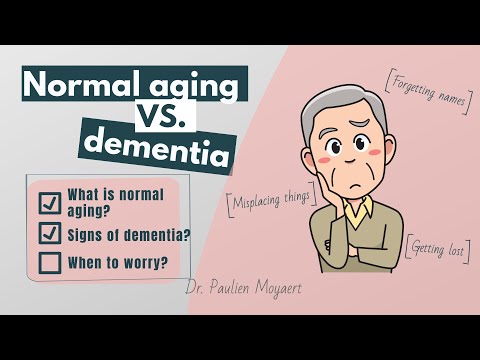
Please watch this video:

(Source: Alzheimers.org)
Memory loss in Alzheimer’s disease is not simply forgetting where you put your glasses occasionally. It may involve repeatedly forgetting important dates, conversations, obligations, or recently learned information despite reminders.
Difficulty completing familiar tasks may involve someone who cooked daily for forty years suddenly forgetting recipe steps, leaving burners on, or preparing a meal and then forgetting they already ate.
Language changes may appear as increasing pauses, substituted words, invented words, or visible frustration during conversation. Families often say:
“I know what she’s trying to say, but the words just won’t come.”
Disorientation becomes more profound than ordinary distraction. A person may arrive for appointments on the wrong day, confuse seasons or years, or become lost driving through neighborhoods they have known for decades.
Judgment may also become impaired in subtle but dangerous ways. Individuals may begin falling for scams, neglecting bills, dressing inappropriately for weather conditions, giving away money impulsively, or making decisions that seem dramatically out of character.
And one of the most heartbreaking symptoms for many families is the gradual loss of initiative and confidence.
People living with dementia often begin withdrawing from hobbies, conversations, organizations, volunteer work, friendships, or social gatherings. Sometimes this occurs because the disease itself affects executive functioning and motivation. Sometimes it happens because the person recognizes their own cognitive changes and becomes frightened of embarrassment or public mistakes.
Social withdrawal can become a form of self-protection.
The Clock Test
Draw the face of a clock and set the hands to a specific time.
But neurologically, the task is anything but simple.
To complete the clock correctly, a person must understand verbal instructions, remember the task, conceptualize time abstractly, organize numbers spatially, sequence information correctly, divide visual space appropriately, coordinate motor movement, maintain attention, and monitor errors simultaneously.
In other words, the test quietly evaluates multiple cognitive systems all at once.
And honestly, this is one of those moments where families suddenly realize how layered cognition actually is. Most of us think of a clock as an ordinary object because our brains learned to process it automatically decades ago. We no longer consciously think about number placement, spacing, sequencing, abstraction, or visual organization. The brain handles those tasks invisibly in the background.
Dementia gradually disrupts that automatic processing.
Some individuals crowd all the numbers onto one side of the clock face. Others lose sequencing entirely or place the hands incorrectly despite understanding the instructions conceptually. Some stare at the page in visible frustration because they recognize what a clock should look like but can no longer organize the task neurologically.
And honestly, watching someone struggle with the clock test can be emotionally difficult because it transforms invisible cognitive decline into something suddenly visible.
Families often describe this as the moment when the problem became “real.”
The clock test itself does not diagnose Alzheimer’s disease specifically, but it can reveal problems involving executive functioning, planning, visual-spatial reasoning, abstraction, and cognitive organization.
And importantly, dementia diagnosis never relies on a single test alone.
Despite major advances in neuroscience, diagnosing Alzheimer’s disease is still complicated. Physicians and neuropsychologists evaluate patterns involving memory, language, judgment, orientation, functional decline, medical history, neurological changes, imaging, laboratory findings, and behavioral symptoms over time. Other conditions such as depression, stroke, medication reactions, thyroid dysfunction, nutritional deficiencies, infection, or delirium must also be considered because many conditions can mimic dementia symptoms.
This uncertainty can become emotionally exhausting for families because early dementia often unfolds gradually and ambiguously.
People want definitive answers.
The brain rarely provides them quickly or cleanly.

(Source: Ohio State Wexler Center)