3.4 Gerotranscencence
The Quiet Reconstruction of the Self in Later Life
I know, I know. The word gerotranscendence sounds like something involving incense, moon water, interpretive dance, and at least one elderly man named River sitting cross-legged near a fire while explaining the secrets of the universe to unsuspecting hikers.
That is not what this is. (Note: I introduced this concept earlier, but I think it is worth diving a little deeper!)
Swedish gerontologist Lars Tornstam became interested in this shift after noticing that many older adults described experiences that traditional theories of aging did not fully explain. They talked about becoming less interested in superficial social interaction, less attached to material things, more reflective, more selective about relationships, and increasingly aware of connection across generations, memory, nature, and time itself.
Not depressed.
Not disengaged.
Changed.
And honestly, I think our culture often misreads those changes because we are deeply conditioned to interpret human worth through productivity and visibility. If someone becomes quieter, more reflective, less socially performative, we immediately worry that something must be wrong. We assume they are withdrawing from life, “losing themselves,” or becoming isolated.
But what if some older adults are not disappearing at all? What if they are finally becoming more fully themselves after decades of social performance, obligation, striving, caregiving, achievement, competition, and noise?
There comes a point in many lives where constant performance simply becomes exhausting. The need to impress people. The need to stay visible. The need to prove relevance. The need to endlessly accumulate things, titles, achievements, and approval. Some older adults begin quietly stepping away from those demands. They stop organizing their identities around applause.
American culture struggles with this because we are deeply attached to the idea that successful aging should look energetic, productive, socially vibrant, and endlessly engaged. Retirement communities advertise calendars dense enough to require tactical planning and orthopedic shoes. Everyone is apparently expected to age while enthusiastically attending wine mixers, educational seminars, line dancing, pickleball tournaments, watercolor classes, and something vaguely threatening called “sunrise cardio.”
And listen, some people genuinely love those things.
But others begin craving something else entirely. More quiet. More reflection. Fewer but deeper relationships. Less performance. Less noise. Not loneliness. Solitude. Those are not the same thing, although our culture often treats them as interchangeable.
Tornstam observed that many older adults became increasingly selective about where they placed their emotional energy. Superficial interaction often lost its appeal. Relationships became fewer but more meaningful. Small experiences began carrying greater emotional depth. Nature mattered more. Music mattered more. Silence mattered more. The world did not necessarily become smaller. It became more distilled.
Honestly, I understand this more every year.
There are days when I genuinely enjoy being around people, hearing stories, talking ideas through, laughing until someone snorts coffee through their nose. Then there are days when unnecessary conversation feels exhausting in a way my younger self would not have understood. Not sadness. Not isolation. Just a deep appreciation for quiet and for people who do not require performance in order to feel connected.
My grandmother used to say,
“Sometimes I sits and thinks. Other times, I just sits.”
At the time, I thought she was joking.
Now I think she may have been describing something our culture no longer knows how to tolerate very well: stillness. Reflection. The ability to exist without constantly proving your value.
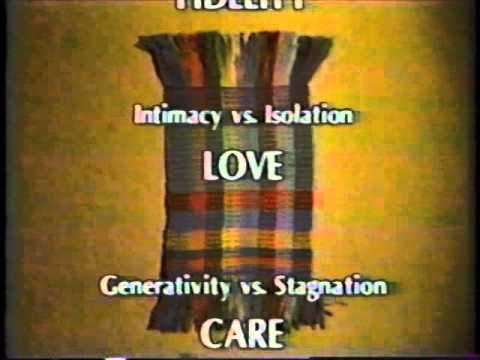
Do you remember Erik Erickson's theory of psychosocial development? Joan Erikson, his wife was the main collaborator in developing the eight stages we learned about earlier. However, late in life, she observed that the original work wasn't inclusive of those living much longer lives. So, naturally, she continued the work and developed a NINTH stage. She called it "Tact vs. Wisdom"
We live in a world obsessed with optimization. Improve yourself. Reinvent yourself. Market yourself. Explain yourself. Stay relevant. Stay visible. Even leisure has become strangely performative. People no longer simply take vacations. They “curate experiences,” which sounds suspiciously like resting with a branding strategy.
Silence starts feeling suspicious in a culture built on perpetual motion.
But gerotranscendence suggests that some older adults are not withdrawing from life at all. They are reorganizing their relationship to life. Tornstam described this as a gradual shift away from a purely materialistic and rational understanding of the world toward a broader and more transcendent perspective. The language sounds lofty, but the actual changes are often deeply ordinary and profoundly human.
People stop needing to win every argument.
They stop confusing busyness with meaning.
They become less interested in appearances and more interested in authenticity.
They become increasingly protective of their emotional energy.
They stop feeling obligated to participate in every social performance simply because the culture expects it.
And honestly, there is something psychologically freeing about no longer needing to constantly audition for your own existence.
One of the most fascinating parts of gerotranscendence involves the way older adults sometimes describe their relationship with time. When we are young, life feels relentlessly forward-facing. We are building, striving, chasing, planning, proving, accumulating. Time feels linear. The future dominates our attention.
Later in life, something shifts.
Childhood memories may suddenly feel emotionally vivid again. Earlier decades stop feeling distant and begin feeling strangely close, almost folded into the present. People become increasingly interested in ancestry, family stories, continuity, and the movement of generations through time.
When you are twenty, ten years feels enormous. When you are eighty, entire eras of life can collapse emotionally into a single memory.
I think younger adults often underestimate how psychologically strange that must feel. Imagine carrying eight decades of selves inside one body. The child you were. The young adult you were. The parent, partner, worker, caregiver, survivor, exhausted middle-aged version of yourself. None of those people fully disappear. They travel with you.
That realization alone changes the emotional architecture of a person.
Our culture often frames aging almost entirely as a problem to solve. Anti-aging. Age-defying. Successful aging. Productive aging. The language itself suggests that the goal is somehow to outmaneuver the process entirely.
Gerotranscendence offers a different possibility. Maybe healthy aging does not always involve preserving the exact self we constructed in early adulthood. Maybe some people gradually become freer by loosening their attachment to performance, status, busyness, competition, and the illusion of total control.
That freedom often looks quiet from the outside.
An older adult stops caring about impressing people.
They become more comfortable saying no.
They stop chasing trends they never cared about to begin with.
They spend more time noticing birds at the feeder than networking.
They lose patience for social theater.
They stop confusing constant activity with meaning.
Honestly, I think this may be part of why some older adults become calmer. They are no longer trying to carry every version of themselves simultaneously. Certain anxieties simply lose their grip.
Not all of them, of course. Aging still contains grief, fear, loss, illness, loneliness, dependence, and mortality. Tornstam was not arguing that older adulthood becomes emotionally easy or spiritually enlightened. Some people become more bitter with age. Some become more frightened. Aging amplifies unresolved wounds as often as it softens them.
Still, when gerotranscendence does emerge, it often feels less like enlightenment and more like release. A gradual release from the exhausting pressure to constantly perform adulthood.
One line from Sister Sherryl White’s writing on gerotranscendence has always stayed with me:
“The mistake we make in middle age is thinking that good aging means continuing to be the way we were at 50. Maybe it’s not!”
That idea unsettles people because American culture worships preservation. Preserve youth. Preserve appearance. Preserve productivity. Preserve relevance.
But human development may not culminate in preservation at all.
Maybe adulthood requires revision. Maybe there comes a point where maturity involves loosening our grip a little. Not giving up. Not disappearing. Not surrendering identity altogether. Just allowing ourselves to evolve beyond the roles, performances, and expectations that once organized our lives.
Not everybody reaches that place. Not everybody can. Some people become trapped by fear, rigidity, trauma, bitterness, or life circumstances that leave very little room for reflection. Aging does not magically heal people. In many ways, it amplifies whatever coping strategies already existed.
But when gerotranscendence does emerge, it rarely looks dramatic. Most of the time it looks surprisingly ordinary. A person becomes more comfortable inhabiting themselves fully. Not perfect. Not endlessly cheerful. Not spiritually transcendent in some cinematic sense. Just quieter inside themselves. Less frantic. Less dependent on applause. Less afraid of silence.
And honestly, there is something deeply human about that kind of evolution.