2.1 The Body Changes Faster than the Self
The Biology of Aging
It is not enough to know that the population is aging or that there are increasing numbers of older adults in society. To understand aging psychologically, socially, and culturally, we also need to understand what happens biologically as human beings grow older. Our bodies change. Our brains change. Our sensory systems, immune systems, social roles, appearance, and physical capacities all shift over time.
At the same time, aging is often experienced very differently from the inside than it appears from the outside.
One of the strangest aspects of adulthood is that many people report feeling psychologically continuous across decades even while their bodies visibly age. A sixty-year-old may still feel internally connected to the same person they were at twenty-five despite very obvious physical differences. This disconnect between internal identity and external aging is one reason aging can feel psychologically disorienting. The body changes publicly while the self often experiences continuity privately.
That tension sits at the center of the psychology of embodiment and aging.
Importantly, aging itself is not a disease. Aging is a natural developmental process involving gradual biological change over time. Disease, by contrast, involves dysfunction, pathology, or abnormal processes occurring within the body. Modern culture often confuses these two ideas constantly. We sometimes pathologize normal aging while simultaneously treating preventable disease as inevitable.
Wrinkles are not a disease.
Gray hair is not a disease.
Reduced flexibility is not a disease.
At the same time, diabetes, emphysema, heart disease, and Alzheimer’s disease are not “just old age.”
That distinction matters enormously in gerontology.
Some physiological changes occur normally across adulthood as part of senescence, the gradual biological aging process. Other changes are heavily influenced by environment, stress, nutrition, disease exposure, injury, healthcare access, genetics, and lifestyle across the lifecourse. Aging is universal. The rate and experience of aging are highly variable.
This variability helps explain why two individuals of the same chronological age may appear and function very differently.
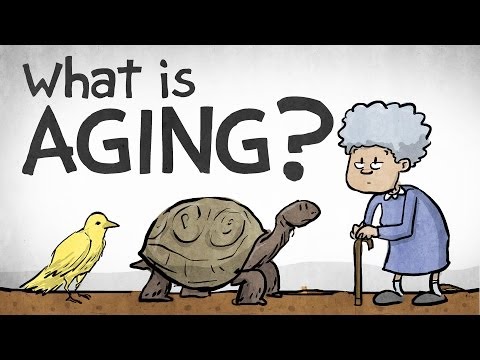
(Source: PHD Comics.com)
Acute vs. Chronic Conditions
Not All Illness Works the Same Way
When discussing aging, it is important to distinguish between acute and chronic conditions.
Acute illnesses generally appear suddenly and are often relatively short in duration. Examples might include infections, pneumonia, influenza, appendicitis, or injuries resulting from accidents. Individuals either recover, stabilize, or experience rapid decline over a shorter period of time.
Chronic illnesses develop differently. They are typically long-term conditions that may emerge gradually and persist across years or decades. Arthritis, cardiovascular disease, diabetes, osteoporosis, and many respiratory illnesses fall into this category. Chronic disease often becomes more common across adulthood partly because bodies become less resilient over time and because long-term exposure to stress, environment, behavior, and wear accumulate physiologically.
Researchers examine morbidity rates, the frequency of illness within a population, and mortality rates, the death rate associated with specific conditions, to understand how disease affects populations and where healthcare resources are most needed.
Importantly, longer life expectancy does not necessarily mean the aging process itself has been “cured.” Human beings have become increasingly successful at prolonging life through sanitation, medicine, nutrition, vaccines, safer environments, and improved healthcare. We have extended life expectancy substantially. We have not eliminated senescence.
Most researchers estimate the maximum human lifespan to be somewhere around 120 to 125 years under ideal biological conditions.
The Baltimore Study
Aging Is Not Identical for Everyone
One of the most important aging studies ever conducted is the Baltimore Longitudinal Study on Aging (BLSA), which began in 1958 and followed individuals across decades in order to examine how aging unfolds over time. Researchers studying participants discovered something that modern gerontology emphasizes repeatedly:
there is no single universal aging experience.
Different organ systems age differently. Some individuals experience earlier cardiovascular decline while others maintain strong heart function well into later life. Bone density may decline rapidly in one person while cognition remains strong. Another individual may maintain excellent mobility while struggling with hearing or vision changes.
Researchers found broad biological patterns associated with aging:
heart muscle thickening,
reduced arterial flexibility,
declining lung capacity,
changes in kidney efficiency,
loss of muscle mass without exercise,
decreased bone mineral density,
and changes in bladder functioning.
At the same time, the study also demonstrated enormous variability between individuals. Genetics matter. Environment matters. Nutrition matters. Disease exposure matters. Exercise matters. Stress matters.
Lifestyle influences aging, but not perfectly or predictably.
This is one reason aging stereotypes are so misleading. Chronological age alone tells us surprisingly little about how a particular person functions physically, cognitively, emotionally, or socially.

The Biology of Senescence
The Gradual Biology of Aging
When people talk casually about “the biology of aging,” they are often actually referring to senescence, the gradual biological changes that occur across the lifespan as organisms grow older.
Senescence is universal. Every living organism experiences some form of biological aging. The question is not whether aging occurs, but how rapidly, unevenly, and visibly it unfolds.
When we are young, many people assume aging is something distant that happens to “older people.” Eventually adulthood produces a rather rude realization that aging has actually been occurring continuously the entire time. Biological changes begin far earlier than most individuals expect, although those changes may remain subtle for decades.
For many people, visible signs of aging begin triggering psychological reactions long before major functional decline occurs. Gray hair, body composition changes, slower recovery after injury, altered sleep patterns, vision changes, menopause, or decreased stamina often become emotionally symbolic because they signal movement through the lifecourse visibly and publicly.
This becomes especially complicated in cultures heavily invested in youthfulness, attractiveness, productivity, and physical optimization. Aging bodies become socially visible in ways that younger bodies generally are not.
As a result, people often experience aging biologically, psychologically, and socially at the same time.
How Do We Measure Aging?

Chronological, Physiological, and Functional Age
One reason aging is difficult to define is because age itself can be measured in several different ways.
Chronological age is the simplest measure. It is simply the number of years a person has lived. Chronological age is objective and fixed.
Physiological age refers to how well the body is functioning biologically. Two individuals who are both sixty years old chronologically may have dramatically different physiological functioning depending on genetics, disease exposure, injury history, stress, nutrition, healthcare access, exercise, and environmental conditions across the lifespan.
Many people know individuals who appear physically “older” or “younger” than their chronological age because their bodies are aging at different rates physiologically.
Functional age refers to the ability to perform activities, maintain independence, adapt to daily demands, and participate meaningfully in life. Functional age may involve mobility, cognition, endurance, communication, problem-solving ability, emotional regulation, or social engagement.
An individual with chronic physical limitations may still function at an extremely high cognitive, emotional, or social level. Another individual may appear physically vigorous while struggling significantly with memory, emotional regulation, or independent functioning.
These distinctions matter because aging is multidimensional. Human beings do not age uniformly across all systems simultaneously.
They also help explain one of the most common experiences reported in adulthood:
many people do not “feel old” internally even when their bodies visibly age externally.
The self often experiences continuity while the body experiences change.
Biological Theories of Aging
Why Does the Body Lose Resilience Over Time?
Researchers have proposed many theories attempting to explain why biological aging occurs. None fully explains aging independently, and modern gerontology generally recognizes that aging is likely influenced by multiple interacting mechanisms rather than a single universal cause.
Still, these theories help researchers understand why the body gradually becomes less resilient over time.
Some theories focus on cellular senescence, the idea that cells have a limited capacity for replication before biological systems gradually lose efficiency. Researchers studying cellular aging discovered that many human cells divide only a limited number of times before entering senescence and no longer reproducing effectively. This finding helped launch decades of research exploring why cells lose regenerative capacity over time.
Other theories emphasize wear and tear. According to this perspective, biological systems gradually deteriorate through repeated stress, injury, environmental exposure, disease, toxins, and metabolic strain. Much like mechanical systems, bodies accumulate damage over time. Nutrition, stress, pollution, smoking, alcohol use, disease exposure, and physical strain all influence how rapidly this damage accumulates.
DNA damage theories examine how genetic material becomes altered through both normal metabolism and environmental exposure. Everyday processes occurring within the body produce reactive oxygen species, often referred to as free radicals, that may gradually damage cells and contribute to aging-related disease processes. Researchers have linked these mechanisms to conditions such as cardiovascular disease, cancer, diabetes, and neurodegenerative disorders.
Telomere theory explores protective structures located at the ends of chromosomes. Telomeres shorten slightly each time cells divide. Over time, this shortening may contribute to cellular senescence and reduced regenerative capacity. Although telomere research receives enormous public attention, scientists continue debating how directly telomere shortening determines lifespan itself.
Other researchers focus on immune and neuroendocrine theories of aging. As people age, aspects of immune functioning often decline, reducing the body’s ability to respond effectively to disease while sometimes increasing inflammatory responses or autoimmune dysfunction. Researchers continue exploring how hormones, immune regulation, inflammation, and stress physiology influence the aging process across the lifespan.
Researchers have also examined the effects of caloric restriction, nutrition, exercise, and metabolism on longevity. Some studies suggest reduced caloric intake may influence cellular stress processes and extend lifespan in certain organisms, although translating those findings cleanly into human aging remains far more complicated than wellness culture sometimes suggests.
What all of these theories ultimately share is the recognition that aging is not caused by one single process alone. Aging reflects accumulated biological change occurring across molecular, cellular, systemic, environmental, and behavioral levels simultaneously.
Aging Inside a Visible Body
The Psychological Experience of Biological Change
One of the more complicated realities of aging is that bodies change publicly while identity often feels internally continuous.
A person may still experience themselves psychologically as adventurous, attractive, capable, intelligent, sexual, creative, or energetic while simultaneously confronting visible physical changes that alter the way society responds to them.
This creates tension because aging bodies carry social meaning.
Wrinkles, gray hair, weight redistribution, mobility changes, hearing loss, menopause, hair thinning, posture changes, and visible signs of aging often trigger assumptions from others long before an individual internally identifies as “old.” In cultures heavily invested in youthfulness and appearance, visible aging may affect self-esteem, confidence, identity, visibility, employability, sexuality, and social treatment.
Women often experience this particularly intensely because female aging is scrutinized publicly in ways male aging often is not. At the same time, increasing cultural pressure surrounding fitness, appearance, masculinity, and performance has expanded these anxieties across genders.
The anti-aging industry thrives partly because many people are not actually afraid of wrinkles themselves. They are afraid of what visible aging symbolizes socially:
loss of relevance,
loss of attractiveness,
loss of status,
loss of competence,
loss of visibility.
Psychologically, however, the self often remains far more continuous than the body.
Many adults report feeling startled when encountering their own aging reflection because internally they do not feel dramatically different from earlier versions of themselves. The body changes more visibly and publicly than identity does.
This is one reason embodiment matters so deeply in the psychology of aging. Human beings do not simply age biologically. They experience aging through bodies that are interpreted constantly by society, culture, medicine, media, and by themselves.