1.7 The Myths of Aging
Much of what we think we “know” about aging is not based on direct experience at all. It is based on cultural shorthand, media portrayals, family narratives, jokes, advertisements, greeting cards, television characters, and the stereotypes we absorb long before we ever become old ourselves. We learn to associate aging with decline, forgetfulness, frailty, loneliness, irrelevance, or helplessness not because we have personally verified those ideas, but because we hear them repeated so often that they begin to feel true. Psychologically, stereotypes become mental shortcuts, allowing us to categorize people quickly without examining the complexity underneath. The problem is that these shortcuts often evolve into myths: oversimplified beliefs that shape expectations, fears, behaviors, and even public policy. How much of what you “know” about aging is actually based on evidence, and how much is inherited from assumptions you have rarely stopped to question? As we examine some of the most common myths about aging, consider not only whether they are accurate, but where those beliefs came from in the first place.
(Note: If you've taken Gero 18, this will look alarmingly familiar. Please note the slightly different approach to each myth)
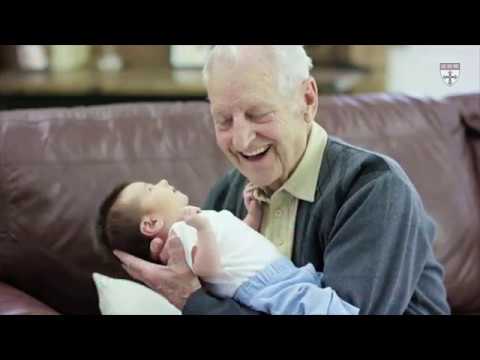
(Source: Harvard Chann School of Medicine - Captioning Provided by Harvard Chann School of Medicine)
Myth: Old Age Begins at 65
One of the most persistent myths about aging is the belief that “old age” begins at 65. While this age marker appears everywhere in modern society, from retirement policies to senior discounts, psychology reminds us that aging is not simply a chronological event. It is also deeply tied to perception, identity, cognition, social comparison, and self-concept. Age is subjective.
Think back to elementary school for a moment. Many people remember their kindergarten teacher as “ancient.” In reality, that teacher may have been twenty-six years old and simply possessed the magical powers of clipboard ownership and access to the laminator. Our perception of age changes depending on where we stand in the lifespan. A ten-year-old sees thirty as old. A forty-year-old sees sixty differently. An eighty-year-old often reports feeling internally much younger than their chronological age.
This difference between chronological age and psychological age is central to the psychology of aging.
Researchers use the term subjective age to describe how old people feel, rather than how old they actually are. Interestingly, most adults report feeling younger than their chronological age, particularly in later adulthood. A seventy-five-year-old may internally identify as fifty-five. The body changes, but identity does not automatically update like software after midnight on a birthday. Human beings carry a remarkably stable sense of self across the lifespan, even while roles, bodies, and social expectations evolve around them.
This is one reason comments like, “You look great for your age,” can feel psychologically awkward. The statement assumes that aging automatically means deterioration and surprise at competence, vitality, or attractiveness. Many adults do not experience themselves as “old” internally, even when society categorizes them that way externally. The disconnect between self-perception and cultural labeling can create tension, frustration, or even identity confusion.
Psychologists also note that age identity is socially constructed. We learn what “old” supposedly looks like through media, family systems, stereotypes, workplace norms, and cultural expectations. If older adults are consistently portrayed as frail, forgetful, technologically incompetent, or disengaged, people begin internalizing those expectations long before they reach later life themselves. This process is called stereotype embodiment, a theory developed by psychologist Becca Levy. Levy’s work suggests that the age stereotypes people absorb throughout life can eventually influence memory performance, confidence, physical health, stress responses, and even longevity itself.
In other words, the myth that “old begins at 65” is not harmless. It can shape behavior and identity in powerful ways.
From a developmental psychology perspective, adulthood is no longer viewed as a static stage that ends in decline. Contemporary lifespan theories emphasize continuous adaptation, growth, resilience, and psychological development across adulthood. People in their sixties and seventies today are often navigating entirely new careers, caregiving roles, educational pursuits, relationships, travel opportunities, activism, creative projects, and identity reinvention. Many psychologists now describe aging as a process of ongoing negotiation between gains and losses rather than a simple downward slope.
Even historically, the age of 65 was somewhat arbitrary. It became institutionalized largely because of social policy and retirement systems rather than biology or psychology. Otto von Bismarck selected age 65 in the late 1800s as a retirement marker in Germany during a period when average life expectancy was dramatically lower than it is today. At that time, relatively few individuals survived long enough to collect benefits. The number stuck culturally, even though modern longevity has transformed the lifespan entirely.
Psychologically, however, humans do not suddenly transform at 65. There is no magical expiration date where curiosity disappears, wisdom downloads automatically, or everyone suddenly develops an opinion about prune juice and early bird specials. Aging is uneven, individualized, and multidimensional. Two people of the same chronological age may differ dramatically in health, cognition, emotional regulation, personality, social engagement, resilience, and life satisfaction.
In fact, research in positive psychology and adult development consistently finds that many people experience improvements in emotional regulation, perspective-taking, and psychological resilience as they age. Older adults often report greater emotional stability and less distress over minor social conflicts than younger adults. After decades of surviving embarrassment, heartbreak, taxes, grief, parenting, bad haircuts, and workplace meetings that should have been emails, many people become psychologically more selective about where they invest emotional energy. That shift reflects development, not decline.
The psychology of aging therefore asks us to reconsider a simple but important question:
At what point do we become “old,” and who gets to decide?
The answer turns out to be far more psychological, cultural, and personal than chronological.
Myth: Age Makes Us Less Meaningful
Early American society actually placed tremendous symbolic and psychological value on old age.
In Colonial America, older adults were often viewed with reverence because longevity itself was rare. Under strong Puritan influence, living to advanced age was interpreted as evidence of divine favor and moral worth. If a person survived repeated epidemics, childbirth losses, dangerous labor conditions, brutal winters, and the general “everything might kill you” atmosphere of colonial life, people assumed God had clearly put a protective bubble around them for a reason.
Psychologically, this matters because cultures tend to assign meaning to whatever is scarce. In early America, old age represented survival, experience, spiritual endurance, and authority. Elders were believed to possess wisdom about morality, family, health, faith, and human behavior because they had successfully navigated the unpredictability of life itself. Aging symbolized achievement rather than decline.
This dramatically shaped self-concept across the lifespan.
Young people in colonial society often viewed aging as movement toward increased status, authority, and security. Each year of life potentially brought more land, greater influence, stronger family leadership, and deeper social respect. Developmental psychologists might describe this as a society where later adulthood represented anticipated psychological reward rather than feared irrelevance.
That expectation changes how people imagine their future selves.
Today, many individuals experience anxiety about aging because contemporary culture frequently links youth with value, attractiveness, employability, innovation, desirability, and visibility. In contrast, colonial society linked aging with power, wisdom, and legitimacy. The psychological message was entirely different:
Grow older and you gain importance.
Before industrialization, most businesses and farms were family-based, meaning older adults often maintained direct economic and social control for much of their lives. Property ownership shaped political influence, and authority typically remained concentrated in older male heads of households. Younger adults often depended on parents or grandparents economically well into adulthood.
As a result, aging carried aspirational meaning.
Young people did not necessarily fear becoming older because older people controlled resources, knowledge, inheritance, family decisions, and community leadership. In psychological terms, the aged occupied what we would now call “high-status social identities.”
That status even shaped appearance norms.
In one of history’s more fascinating image-management plot twists, people sometimes tried to look older on purpose. Men powdered wigs white to imitate gray hair. Clothing styles emphasized rounded posture and broader waists associated with mature adulthood. People occasionally exaggerated their ages to census takers because old age itself conveyed prestige.
Imagine modern twenty-five-year-olds fighting over the best faux crow’s feet filter on Instagram. History has a sense of humor.
Psychologically, this reveals an important truth: perceptions of attractiveness and desirability are socially constructed. What a culture labels as beautiful, respectable, or aspirational changes across time depending on what that society values most.
So what changed?
As America industrialized, urbanized, and modernized, social power gradually shifted away from elders and toward productivity, speed, technological adaptation, and wage labor. Economic systems increasingly rewarded physical mobility, innovation, and rapid skill acquisition. Families became less interdependent, work moved outside the home, and older adults gradually lost some of the social authority they once held automatically.
At the same time, modern psychology and media culture began associating youth with potential and aging with loss. Advertising industries amplified fears about appearance, productivity, sexuality, and relevance. Entire industries now profit from convincing people that normal aging processes require correction, concealment, or resistance.
This shift profoundly influences psychological development.
Instead of viewing aging as movement toward greater authority or respect, many people now internalize fears about invisibility, dependency, decline, or obsolescence long before old age even begins. Researchers in lifespan psychology note that age anxiety often starts surprisingly early, particularly in cultures heavily focused on appearance and productivity.
Ironically, the problem is not simply that America values youth. The deeper psychological issue is that modern culture often struggles to imagine later life as meaningful, complex, desirable, creative, sexual, productive, or psychologically rich.
That limitation affects everyone, including young people.
If aging is framed only as decline, then every birthday becomes psychologically loaded. The future self becomes something to fear instead of something to grow into. That creates a strange cultural paradox where people desperately want long lives while simultaneously dreading the visible evidence of living one.
The psychology of aging challenges this contradiction directly. It asks us to recognize that attitudes toward aging are learned, reinforced, and culturally constructed, not biologically inevitable.
In other words, America did not always worship youth. We built that value system over time, and humans built it means humans can also rethink it.
Myth: Old age is a disease.
Myth: All Old People End Up in Nursing Homes
One of the most emotionally loaded myths about aging is the belief that growing old automatically ends in institutionalization. For many people, the phrase “nursing home” immediately triggers fears of dependency, abandonment, loss of control, or becoming a burden. Psychologically, this myth tells us far more about cultural anxieties surrounding vulnerability and autonomy than it does about the actual realities of aging.
Psychologically, however, nursing homes occupy an outsized space in the American imagination because they symbolize several fears all at once: loss of independence, loss of identity, physical decline, separation from familiar surroundings, and confrontation with mortality itself. Humans are deeply attached to place and routine. Our homes often become extensions of memory, competence, identity, and selfhood. The thought of leaving that environment can feel psychologically threatening even to younger adults imagining their future selves.
Part of this fear is also shaped by what psychologists call the availability heuristic. We tend to assume something is common if it is emotionally vivid or culturally visible. Nursing homes appear frequently in media, political debates, healthcare discussions, and family crisis stories, leading many people to assume institutionalization is the inevitable outcome of aging even though statistically it is not.
This myth also collides with modern Western ideals of independence and self-sufficiency. From a psychological perspective, many people interpret needing help as weakness rather than recognizing interdependence as a normal part of being human. Yet humans are never truly independent. We begin life dependent on others, spend much of adulthood exchanging care and support, and may require greater assistance again later in life. Aging simply makes that reality more visible.
The mythology of rugged individualism crashes headfirst into the biological reality that eventually everybody needs somebody to help open a jar, drive after eye dilation, or explain why the television remote suddenly speaks exclusively in Portuguese.
Psychologists who study aging emphasize that dependency itself is not inherently harmful. What matters psychologically is whether people maintain dignity, choice, autonomy, meaningful roles, and involvement in decisions about their own lives. Needing assistance does not erase identity, humor, intelligence, sexuality, wisdom, or personhood.
This myth also erases the enormous emotional and logistical labor performed by caregivers. Much of long-term care is carried out quietly by spouses, adult children, siblings, friends, and neighbors coordinating appointments, medications, transportation, meals, finances, reassurance, and crisis management. Few people suddenly “become caregivers” overnight. More often, responsibilities accumulate gradually until someone realizes they are essentially managing a small healthcare system with a kitchen calendar and a pill organizer large enough to qualify as sporting equipment.
Psychologically, caregiving often contains contradiction. Love and exhaustion can coexist. Meaning and resentment can coexist. Deep connection and profound grief can coexist. Humans are complicated that way.
Most importantly, aging outcomes are highly diverse. Some people remain independent into their nineties. Others require support earlier because of illness, disability, injury, or socioeconomic inequities. Some thrive in communal environments. Others struggle with transitions and loss of control. There is no single pathway through later life.
The psychology of aging therefore asks us to move beyond catastrophic thinking about dependency and institutionalization. The real challenge is not simply where people age, but whether individuals, families, and communities create systems that allow people to age with dignity, flexibility, support, and humanity rather than fear-driven stereotypes.
Myth: Old age brings feeblemindedness
Myth: Old People are Essentially the Same
One of the biggest psychological mistakes people make about aging is assuming that everyone over a certain age belongs to one giant, identical category called “the elderly.” In reality, older adulthood is one of the most diverse periods of the entire lifespan.
Think about it this way: if someone grouped together every person between ages 20 and 77 and claimed they were basically the same, we would immediately recognize how absurd that sounds. A twenty-year-old college student living on ramen and caffeine bears little resemblance to a seventy-seven-year-old retired engineer raising orchids and yelling at squirrels for sport. Yet culturally, people often collapse everyone over sixty-five into a single stereotype.
Psychologically, humans naturally categorize people because it simplifies social thinking. Our brains like shortcuts. Unfortunately, those shortcuts often become stereotypes. When people stop seeing individuals and start seeing categories, complexity disappears.
The problem is that aging magnifies diversity rather than reducing it.
With current life expectancy patterns, older adulthood can span fifty or more years. That is not a brief developmental stage. It is an enormous stretch of human experience containing multiple transitions, identities, health trajectories, relationships, economic realities, and psychological adaptations.
A sixty-five-year-old and a hundred-year-old may differ more dramatically from each other than a teenager differs from a middle-aged adult.
This is one reason psychologists emphasize the concept of individual variability in aging. No two people age in exactly the same way because aging is shaped by an entire lifetime of accumulated experiences, including:
- genetics
- education
- trauma exposure
- occupation
- stress
- healthcare access
- nutrition
- personality
- socioeconomic status
- relationships
- culture
- discrimination
- resilience
- physical activity
- meaning-making
- opportunity
By later life, people are essentially carrying the compounded effects of decades of different pathways through the world.
Some older adults remain physically vigorous and highly active. Others live with chronic illness or disability. Some are wealthy enough to travel internationally on a whim. Others struggle to afford medication or housing. Some are politically conservative. Others become more radical with age. Some embrace retirement enthusiastically. Others experience profound identity loss when work ends.
Psychologically, there is no single “older adult personality.”
In fact, many researchers argue that individual differences often become more pronounced with age because people gradually gain greater freedom to live according to their authentic preferences, values, and temperaments. The social pressure to conform may loosen somewhat after midlife, allowing personality traits to emerge more clearly.
This helps explain why some eighty-year-olds become quieter and reflective while others become delightfully unfiltered chaos goblins who finally say exactly what they think at Thanksgiving dinner.
The psychology of aging also examines how stereotypes affect self-concept and emotional well-being. When society portrays older adults as one-dimensional, frail, boring, technologically confused, or resistant to change, people may begin fearing aging itself because it appears to threaten individuality.
That fear matters psychologically.
Humans want continuity of identity. We want to believe that the self we know today will still exist tomorrow. Stereotypes about aging suggest that uniqueness disappears with age and gets replaced by one bland cultural template involving orthopedic shoes and difficulty programming the television remote.
In reality, older adulthood often reveals enormous psychological diversity.
Psychologically, this creates both opportunity and uncertainty.
Previous generations often moved through adulthood with relatively clear social scripts. People generally knew what was expected at different stages of life: when to marry, when to work, when to have children, when to retire, and what “successful adulthood” supposedly looked like. Modern adulthood is far less predictable. Many people now spend decades improvising identities across changing careers, relationships, economic realities, technologies, and social expectations.
That flexibility can create freedom, but it can also create anxiety.
Humans generally prefer predictability because predictable lives feel psychologically safer. When social roles become less stable, people often experience uncertainty about whether they are “on time,” successful enough, productive enough, financially secure enough, attractive enough, or aging correctly at all. Social media intensifies this process by exposing people to carefully curated versions of other people’s lives, creating constant opportunities for comparison across the lifespan.
As a result, many adults now experience aging less as a clear developmental roadmap and more as an ongoing process of adaptation. People reinvent careers in midlife. Return to school at seventy. Become caregivers unexpectedly. Date after widowhood or divorce. Relocate across states or countries. Build chosen families. Navigate blended identities. Start over repeatedly.
The modern life course often looks less like a straight line and more like a constantly rewritten rough draft with caffeine stains and missing pages.
Psychologists increasingly emphasize that resilience in adulthood is not about perfectly controlling life transitions. It is about adaptation, flexibility, meaning-making, emotional regulation, and the ability to revise one’s identity across changing circumstances.
The psychology of aging therefore challenges the idea that there is one “correct” way to move through adulthood. Human development is shaped by history, culture, personality, opportunity, relationships, biology, timing, luck, trauma, resilience, and countless unpredictable experiences that no developmental chart can fully capture.
Aging is universal. The experience of aging never is.
Exploring the embedded "-isms" around age
If you were told that you were smart….for your age. Would you be complimented? What if you were told you were smart…for a woman/man. That wouldn’t feel so great, would it. So, WHY do we feel no hesitation to add that “for your age,” tag? (Note: You may have already viewed this in Module 1 if you started with the Video Link)
(Source: http://www.aarp.com)
What are YOUR images of aging? When you think of someone older in your family, who do you think about? How often are you interacting with someone at least 50 years older than you?
If we aren’t regularly interacting with real older-people, how are we going to learn how to be an older person? We learn how to “be” in the world from watching others, and we don’t have a great system in place for you to be training to be long lived. What NOW?
Applying Your Knowledge
Your job for this module is to do some investigative work. I want you to seek out the messages that you are being exposed to on a regular basis, and really think about how they influence your perspective.
Your job is to seek out examples of media that depict older adults.
Start out easy with an internet search (watch those parameters), but also step into the greeting card aisle and look for birthday cards. I bet you won’t find one that celebrates turning 60 that doesn’t have some hint of humor or sarcasm. Look in newspapers and magazines, scroll Instagram or whatever social media you frequent. What’s the ratio of older to younger?
Be prepared to share what you find!