1.13 Cohorts, Generations and Historical Influence
How History Shapes Human Development
One of the central ideas in lifespan development is that people do not age in isolation. Human development is shaped not only by biology and personality, but also by historical timing, social conditions, cultural expectations, technology, economics, education, healthcare systems, and major public events. In other words, when you are born matters because history influences development.
Gerontologists and developmental psychologists use several important concepts to help explain how historical and social forces shape people differently across the lifespan.
Cohorts
A cohort is a group of people who experience major historical or social events during roughly the same period of life. Cohorts are important because timing matters psychologically. Experiencing an event at age eight is very different from experiencing it at age forty-five or eighty.
For example, individuals who were children during the Great Depression often carried strong beliefs about financial caution, waste, and security throughout adulthood. People who entered adulthood during wartime, economic recession, or periods of major social upheaval may approach work, relationships, politics, or financial stability differently than those raised during more stable periods.
A cohort does not mean everyone becomes identical. It simply means shared historical experiences can leave developmental fingerprints across groups of people.
Generations
A generation is broader and more culturally constructed than a cohort. Generational labels such as Baby Boomers, Generation X, Millennials, and Generation Z are attempts to describe groups of people who share broad historical experiences and cultural reference points during development.
Modern society is deeply fascinated with generational identity. Entire industries use generational categories to explain consumer behavior, politics, technology use, workplace trends, communication styles, and social values. Social media amplifies these conversations constantly, often turning generations into caricatures or cultural stereotypes.
Some generational patterns reflect real historical differences. For example, individuals raised before widespread digital technology often approach communication differently than people who grew up entirely online. Millennials entered adulthood during major economic instability and rising educational debt. Generation Z has grown up within social media culture, political polarization, and increasing public awareness of mental health and identity issues.
At the same time, generational stereotypes are often exaggerated. Media algorithms reward conflict, outrage, and oversimplification, so “intergenerational turf wars” generate enormous attention online. Older adults may be portrayed as technologically incompetent or resistant to change, while younger generations are framed as entitled, fragile, or disconnected from reality.
Part of studying aging critically is learning to distinguish between legitimate historical influences and media-driven rage bait.
Not every member of a generation shares the same values, personality, opportunities, or worldview. Race, culture, gender, disability, religion, geography, family structure, and socioeconomic status all shape development alongside historical timing.
Generational labels may help identify broad patterns, but they should never replace critical thinking about individual human experience.
Generations
(Source: Pew Research Center)
Period Effects
Period effects occur when a major historical event influences large numbers of people across multiple age groups at the same time.
COVID-19 is one of the clearest examples of a period effect in modern history. The pandemic affected children, adolescents, adults, and older adults simultaneously by disrupting education, healthcare, employment, social relationships, caregiving systems, mental health, and perceptions of safety.
A period effect does not affect everyone equally, but it creates widespread social influence across society during a particular historical moment.
Other examples of period effects might include wars, economic collapse, technological revolutions, social movements, or major political upheaval.
Cohort Effects
Cohort effects occur when differences between groups are shaped by the unique historical experiences of their cohort rather than by aging itself.
For example, older adults today may differ from younger adults in their comfort with technology partly because they grew up during different technological environments, not simply because they are older. Similarly, attitudes toward marriage, work, gender roles, sexuality, parenting, or retirement often reflect cohort experiences tied to historical conditions.
This distinction matters enormously in gerontology because people sometimes incorrectly assume all differences between younger and older adults are caused by aging itself when many are actually rooted in history and culture.
In other words, some differences reflect development.
Others reflect historical timing.
Researchers must constantly ask:
Is this an age effect?
A cohort effect?
Or a period effect?
Those are not the same thing.
Modern society is deeply fascinated with generational categories. Terms like Baby Boomers, Generation X, Millennials, and Generation Z are constantly used to explain everything from work habits to politics, technology use, communication styles, parenting, social values, and even emotional resilience.
At this point, generational discourse has become a form of cultural shorthand. Entire industries use generational identity to market products, explain social conflict, analyze voting behavior, predict workplace trends, and generate media engagement.
The problem is that these conversations often drift quickly from observation into stereotype.
We are constantly exposed to intergenerational “turf wars” that frame generations as fundamentally incompatible with one another. Older adults are portrayed as technologically incompetent, rigid, or selfish. Younger generations are framed as entitled, fragile, lazy, overly sensitive, or disconnected from reality. Media algorithms reward outrage, so generational conflict often becomes exaggerated because conflict attracts attention.
In many ways, generational stereotyping functions similarly to other forms of social categorization. It simplifies complex human behavior into emotionally satisfying narratives.
That does not mean generational experiences are meaningless. Historical timing absolutely shapes development. A person who grew up during economic depression, wartime rationing, rapid technological change, or social revolution may carry very different assumptions about work, money, relationships, authority, or security than someone raised under different conditions.
However, it is important to distinguish between legitimate cohort effects and exaggerated cultural caricatures.
Not every member of a generation shares the same values, opportunities, politics, personality, or life experiences. Race, social class, geography, disability, religion, gender, education, family structure, and historical opportunity all shape development alongside generational membership.
Gerontology is interested not simply in generational stereotypes themselves, but in what those stereotypes reveal about cultural anxiety, shifting social expectations, power distribution, economic stress, and changing ideas about adulthood and aging.
As you watch these videos, try to separate legitimate cohort experiences from exaggerated generational stereotypes. Some differences between age groups reflect real historical conditions, economic realities, technological environments, and cultural expectations. Others are oversimplified narratives amplified by media, marketing, and social conflict. Part of studying aging critically is learning to recognize the difference between meaningful historical patterns and emotionally satisfying caricatures.
The Silent Generation (WWII) are our oldest.
Let's talk just a little bit about "generations." The differences, similarities, conflicts, and collaborations between generations utterly fascinate me. Right now, on the face of our planet, we have more generations living together than ever before.

Next up, the famous Baby Boom(1946-1964) is the largest.
Born just after WW2 ended, this group helped define the face of America. They have been the force of economic, political, and social policy since their creation. Now, the hippies of the 1970s are leading our country and are often called the "Me First" generation! They grew up in a time of prosperity and an absence of world wars. They were the Flower Children, taking LSD and protesting the war in Vietnam.
Unlike their parents, who grew up during the Great Depression, Boomers became great consumers. They became famous for spending every dollar they earned.

(Source: The History Channel)
Then comes me. I'm a pure-hearted Gen-X. We are also called the "Baby Bust."
We were born between 1965 and 1980, and are sort of the opposite of our Boomer parents. We created computers, we are known for being independent and less materialistic than our predecessors. We are a generation who was statistically more likely to have divorced parents, be latchkey kids, and be pretty cynical. We grew up watching Watergate, and saw the first missing children's photos on milk cartons. Yeah, we are also the first generation to expect NOT to earn as much as our parents, despite being the most educated generation in history.

(Source: FutureNow)
Next, you guessed it. Millennials. Born 1981-1996, this generation is one of the most maligned.
In general, they’re better educated – a factor tied to employment and financial well-being – but there is a sharp divide between the economic fortunes of those who have a college education and those who don’t.
Millennials have brought more racial and ethnic diversity to American society. And Millennial women, like Generation X women, are more likely to participate in the nation’s workforce than prior generations.
Compared with previous generations, Millennials are delaying or foregoing marriage and have been somewhat slower in forming their own households. They are also more likely to be living at home with their parents, and for longer stretches.
And Millennials are now the second-largest generation in the U.S. electorate (after Baby Boomers), a fact that continues to shape the country’s politics given their Democratic leanings when compared with older generations

(Source: Let's Teach)
Then, along comes Generation Z. Hello!!!
Born after 1996, most members of this generation are not yet old enough to vote, but as the oldest among them turn 23 this year, roughly 24 million will have the opportunity to cast a ballot in November. And their political clout will continue to grow steadily in the coming years, as more and more of them reach voting age.

(Source: Time)
Born after 1996, the oldest Gen-Z (also known as i-Gen) turned 25 this year and were a major contributor to the 2020 election (Yay Voting!), the Black Lives Matter and Me Too movements. And their political clout will continue to grow steadily in the coming years. According to the Army and Navy Academy website, "The 74 million young Americans born between 1995 and 2012 comprise the most important generation in the nation's history, both in size and composition."
One of the I-gen's distinguishing factors, beyond their diversity, is that they never knew a time without the iPhone or other smart technologies. Unlike the Millennials – who came of age in the "Great Recession of 2009"– before COVID-19, this new generation was in line to inherit a strong economy with record-low unemployment. That has all changed now, as COVID-19 has reshaped the country's social, political, and economic landscape. Instead of looking ahead to a world of opportunities, Gen Z now peers into an uncertain future.
Age Norms
The Pressure to Be “On Time”
Every society develops expectations about what people should be doing at different ages. Researchers refer to these expectations as age norms.
What is normal? What should we be doing in our lives at a certain time? Am I behind or ahead? Gerontologist study "age norms" as a way to measure how a culture answers these questions. The pressure to be "on time" can be exhausting. The fear of being "off-time" can be even worse. It is getting harder to think of behaviors that today are not appropriate at every age because we are moving towards an age irrelevant society- a change in society where there are no set age norms. It is becoming more and more acceptable to be a student at age 50, 60, or beyond. More acceptable to start a family in our 40's or even now in our 50's.
As a gerontologist, I have spent a considerable amount of time questioning age-appropriate behaviors and what people do. Because of my work, I am more open to socially unacceptable age-graded roles, but most of society has not challenged this practice.
As life expectancy increases, the age at which society expects to transition into and out of many roles is changing. For example, during the 1950s, a survey revealed that most people felt that the best age for a woman to marry was age 19 and age 20 for a man. Today, most of us would think that these ages are much too young. Biology can keep us alive longer, giving us more time to transition into new roles. How do we define those roles?
Age also affects our expectations. Not only does society expect certain behaviors at age-appropriate benchmarks, but for most of us, roles define our behavior and attitudes. People learn to define themselves and their behavior in terms of these age-appropriate roles.
There are expected timelines for:
starting school,
leaving home,
forming relationships,
building careers,
having children,
slowing down,
retiring,
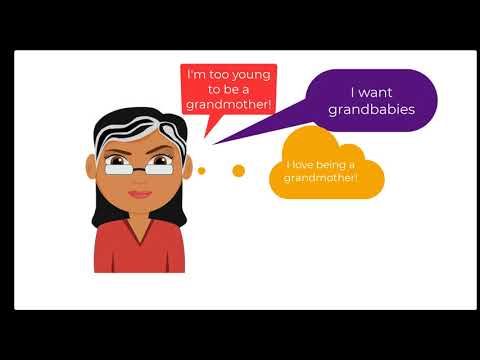
becoming grandparents,
and even behaving “appropriately” in public.
Most people absorb these expectations long before they consciously recognize them. As a result, individuals often compare themselves against internalized timelines throughout adulthood.
Am I behind?
Am I ahead?
Am I too old for this?
Am I too young for this?
The pressure to remain “on time” socially can be psychologically powerful.
People who move outside expected timelines often experience judgment, confusion, or self-doubt. Adults returning to college later in life may feel socially out of place despite succeeding academically. Individuals who marry later than peers may feel pressure even when satisfied with their choices. Younger adults who become caregivers for parents may suddenly feel disconnected from the life stage of friends their own age.
Importantly, age norms are socially constructed and historically variable. Expectations surrounding work, marriage, parenting, retirement, and independence have changed dramatically across generations because economic conditions, longevity, technology, and family structures have changed as well.
Today many traditional age norms no longer align particularly well with modern life. People change careers repeatedly, postpone retirement, delay parenthood, remain single longer, return to school later in life, or become caregivers unexpectedly. At the same time, society continues sending strong messages about what adulthood and aging are “supposed” to look like.
These contradictions create tension because cultural expectations often evolve more slowly than real life does.
Gerontology helps us recognize that many assumptions about “appropriate” aging are not biological inevitabilities. They are social expectations shaped by culture, history, institutions, and changing historical conditions.
As you are watching the following video, think about times in your life when your age was a factor. Share your thoughts!
And finally, one last assigned reading:
This last article that reinforces the importance of interpersonal connectedness throughout the lifecourse, but especially when we are older. Click the link to go to the next page: Required Reading: Social Isolation, loneliness in Older People NIA Article