Reading: Cultural and Religious Beliefs and Death Related Practices
Culture, Rituals & Death

Culture
Culture is comprised of the beliefs, values, customs, language, symbols, and artifacts that are shared by a collective of people (UofM, 2010), which includes religious beliefs and practices (Edara, 2017). These shared aspects of culture shape how we, as cultural beings, behave and think – even if we are unaware or unconscious of such influences (Bowman, 2000). Shared elements of culture enable us to have both a common understanding of the world around us, as well as a sense of purpose and collective identity (Bowman, 2000). The various aspects of culture are passed down from generation to generation, and subject to cultural shifts over time (e.g., regarding the acceptability of styles of dress, ways of speaking, sexual behaviour, substance use, etc.) (Bowman, 2000; Texas A&M, n.d., UNESCO, n.d.).
Despite wide cultural variation, in terms of behavioural norms or standards, there are some commonalities between cultures (Gire, 2014). These commonalties are often tied to life course or transition events, such as birth, marriage and death. For example, most cultures throughout human history have had ceremonies and rituals surrounding the death of a member of the community (Mitima-Verloop, 2019; O’Rourke, 2011; UofM, 2010), with funerals being “one of the most ancient known tangible signs of human social ritual” (O’Rourke et al., 2011, p. 743). The meaning attributed to death, and the practice and purpose of established death rituals or ceremonies that are used to mark this rite of passage, however, vary from culture to culture (Anderson & De Souza, 2021; Gire, 2014; Lowe, Rumbold & Aoun, 2021; Mitima-Verloop, 2019).
Rituals & Ceremonies
Cultural rituals, ceremonies, and practices are shared social activities that help structure and make meaning out of the lives of social groups (Irwin, 2015; UNESCO, n.d.). According to Anderson and De Souza (2021:34), “a ritual is the undertaking of specific activities or behaviours that express symbolic… meaning, whereby specific thoughts and feelings are experienced individually, or as a group.” Rituals reflect cultural norms and values. Whether performed alone or with others, they are an important part of a culture because they reaffirm individual and group identity (UNESCO, n.d.) and help us recognize and make sense of life transition events (Caswell, November 28, 2018).

There are a myriad of cultural rituals, ceremonies, and practices, including those tied to death. For example, the el Día de los Muertos (the Day of the Dead) is a traditional Mexican holiday, dating back to the Aztecs and Toltecs (PBS, October 31, 2019). It is celebrated each year between October 31 and November 2, a time when it is believed the dead can leave the spirit world to reunite and celebrate with their loved ones (History.com Editors, October 30, 2018). The Day of the Dead is “a joyous, ritualistically elaborate celebration of life” (Weiss, November 2, 2010, para. 2), with traditional rituals and celebratory activities like parades, donning of skeletal face painting, erecting of decorative alters for loved ones, feasting, etc., serving to remind participants that life is cyclical, and that death is not “the end of one’s existence, but simply another chapter of life” (PBS, October 31, 2019, para 1).
Click the link below to learn more about the Day of the Dead:
Day of the Dead (Dia de los Muertos)
Death Rituals & Ceremonies
Death Rituals
“Death ceremonies are rites of passage for both the deceased and for the living” (Irwin, 2015, p. 121). Ritualistic practices around death involve activities and behaviour that are performed or engaged in to mark the significance of the loss to the bereaved and the community. Death rituals commence the moment a person is declared dead, although definitions of death vary historically and cross-culturally (Palgi & Abramovitch, 1984). Depending upon cultural practices, many of which are tied to religious beliefs, such rituals can involve: preparing of the body (e.g., it may be washed by family or community members or professional funeral staff; it may be dressed, kept naked, or wrapped in a burial shroud; it may be embalmed; etc.); watching over the body (e.g., pre-burial vigils); a funeral and body disposal (e.g., burial, cremation, etc.); prayer; a mourning period; ritual providing of food (i.e., feasting); and celebratory events (Cohen, 2002). Death rituals provide bereaved individuals and the community with time to process their loss and acclimate to the dramatic changes associated with that loss, including alterations in status or identity, such as moving from the status of married to widowed after the death of a spouse.
Grief & Mourning Rituals

Grief and mourning rituals typically begin shortly after death. As detailed in the next chapter section, depending on culture and religion, grief rituals can take a variety of forms before, during, and after a funeral ritual and body disposal.
According to Irwin (2015), mourning and grief rituals serve several important purposes. They provide the bereaved an opportunity to acknowledge and share their experiences of loss, as well as their memories of the relationships they had with the deceased (Irwin, 2015). They facilitate the offering of support and comfort to the bereaved, and they serve as a means through which to express loss (Irwin, 2015). As part of death rituals, we often see the open unrestrained expression of grief through the release of emotion (Wojcik & Dobler, November 1, 2017).
Throughout history and cross-culturally there are numerous examples of ritualized public outpourings of emotion, many of which take oral and physical forms, as part of the process of meaning-making and coping with death (Gamliel, 2014a & 2014b; Mitima-Verloop et al., 2021). For example, loud vocal expressions of grief such as “death wailing”, “keening”, “lamenting”, and “chanting” can begin shortly after death and last until after the burial. Or they can occur at rituals that take place prior to funerals and body disposal and during the gatherings that often occur after these events. Such public rituals of sorrow are a “powerful way to give voice to the impact of the…loss on the wider community” (Wojcik & Dobler, 2017, para. 12) and can have a cathartic, grief releasing effect for participants and observers (McLaughlin, March 18, 2018; Sautter, 2017). An example of a traditional ritual emotional outpouring that is still practiced today, is the Haka chant dance of the Māori of New Zealand. The Haka is used for a variety of purposes, but it is “an integral part of the Māori mourning process…. Show[ing] love and compassion…and uplift[ing] the spirts of bereaved families (Māori Funeral Rituals, n.d.).
Click the link below to see the Haka being performed by friends and family, at the end of a funeral for a teenager from the Māori community.
Teenager Breaks Down in Tears During Memorial Māori Haka
Wailing, keening, lamenting performances, as traditional parts of expressing grief, are evident in various cultures historically and, to a lesser extent, today. A few examples include the keen, or lament for the dead that is at the core of traditional Irish wakes, and the ancient wailing practice of Yemenite-Jewish women (Mclaughlin, March 18, 2018; McLaughlin, 2019). These rituals are/were typically carried out by women, who are/were paid for their mourning services (Gamliel, 2014b; McGarry, August 19, 2021; Mendoza, February 15, 2018). Although there is much historical and cultural variation in the roles and styles of professional mourners, these individuals played an integral role in both pre-funeral events and funeral services (Natan-Yulzary, 2021).
VIDEO: Professional Mourners of Sardinia
The following video illustrates one form of professional mourning and the role it can play in a culture.
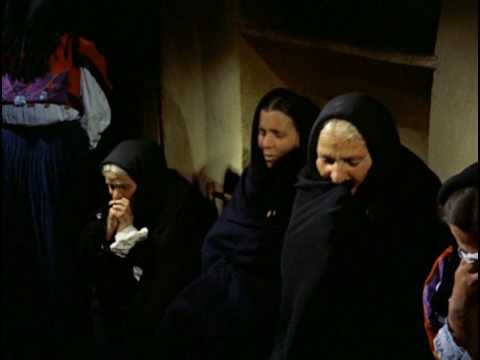
Today, professional mourners are still used in various parts of the world. You can rent a mourner in Essex UK, China, and even in the United States at the Golden Gate Funeral Home in Texas (Mendoza, February 15, 2018). Professional mourners are hired to provide the oral expression of emotion at a pre-funeral event and/or at a funeral (May, n.d.) and/or increase the number of people in attendance at a funeral (Mendoza, February 15, 2018). In cultures where public expression of emotions by the bereaved are viewed as inappropriate, such as in Taiwan, professional mourners may be hired to express emotions for the family (Dicken, 2021). Paid mourning services are, however, not always sombre and emotional, they can also provide entertainment through music, dance, etc., for funeral attendees as they celebrate the life of the deceased (Keyl, 1992).
Click the link to learn more about the role of professional mourners:
Paid for Their Tears: The Peculiar Profession of Professional Mourners
Death & Dying: Current Customs & Rituals
Cultures and religions around the world use a wide variety of different rituals, ceremonies and practices relating to dying and death. Despite diversity in form and style, there are some cross-cultural similarities in rituals and ceremonies, with many involving the sharing of food, expectations regarding appropriate attire, spending time with loved ones, and the use of song, prayer, and celebrations. The remainder of this chapter explores a sampling of some death and dying beliefs and practices around the globe.
VIDEO: Death & Dying: Cultural and Religious Perspectives
In the following video Rochelle Wong from Vanderbilt University’s School of Medicine discusses death and dying across cultures.

Click the links to learn more about funeral rituals associated with some religions of the world:
Buddhist Funeral Service Rituals

Christian Funeral Service Rituals

Hindu Funeral Customs and Rituals

Islamic Funeral Customs and Service Rituals

Jewish Funeral Service Rituals


Wiccan Funeral Service Rituals

Chapter Summary
Key Summary Points
- Cultural membership shapes how we perceive and respond to death.
- Vocal and physical expressions of emotion play an important role in end-of-life rituals and ceremonies, which includes the work of professional mourners.
- There is much historical, cross-cultural, and religious variation in death-related rituals, including funerals.
Additional Resources
National Funeral Directors Association (NFDA). (n.d.). Religious funeral customs. https://nfda.org/religious-funeral-customs