8.5 Organ Donation, Medical Research, and the Aging Body
The Gift That Outlives Us
We've spent much of this course examining what happens as people approach death. We've talked about medical decisions, suffering, dignity, family relationships, and the sometimes extraordinary efforts we make to prolong life.
But there's another side to this conversation that we haven't explored very much.
What happens when someone dies, but parts of their body still have the potential to help someone else live? And what happens when a body that can no longer sustain life becomes an opportunity for someone else to learn how to preserve it?
Organ donation, tissue donation, and whole-body donation raise fascinating questions about aging, medical science, personal autonomy, and the meaning we attach to our physical bodies. They also challenge an assumption that I think deserves some attention in a gerontology course: the idea that once a person reaches old age, their body has little left to contribute.
As it turns out, that isn't necessarily true.
Are We Ever Too Old to Be Organ Donors?
Let's start with something that surprises many people. There is no universal upper age limit for organ donation. People in their 70s, 80s, 90s, and beyond have donated organs that were successfully transplanted into other people.
That doesn't mean age is irrelevant. Our organs age along with the rest of us, and the likelihood of certain medical conditions increases over time. An older person's kidneys may have reduced function, their arteries may show signs of cardiovascular disease, and their lungs may have experienced decades of environmental exposure. These changes can influence whether a particular organ is suitable for transplantation.
But chronological age is only part of the picture.
Transplant specialists consider organ function, medical history, the circumstances surrounding death, and the needs of potential recipients. A healthy organ from an older donor may offer a recipient years of additional life, even if it would not be considered equivalent to an organ from a much younger person.
And here's an important distinction: being too old to donate a particular organ doesn't mean someone is too old to donate anything.
Depending on medical suitability, tissues such as skin, bone, tendons, and heart valves may still be useful. Donation possibilities vary considerably, and the final determination is made by medical professionals rather than by a person's age alone.
In fact, the federal government's organ donation information emphasizes that people should not rule themselves out because of their age or medical history.
Example One: A 98-Year-Old Man Who Gave Someone More Time
In May 2024, Orville Allen, a 98-year-old retired teacher and military veteran from Missouri, died following injuries from a fall.
His family agreed to donate his liver, which was successfully transplanted into a 72-year-old woman. At the time, Allen was recognized as the oldest known organ donor in the United States.
Think about that for a moment.
A man who had lived nearly a century was able to help extend the life of another older adult. His liver had been functioning for 98 years, and it still had something to offer.
The story challenges two assumptions at once. First, that an older body is automatically unsuitable for donation. And second, that the recipients of organ transplants are necessarily young people waiting to resume the lives they had before becoming ill.
Older adults can be donors, and older adults can be recipients.
Transplantation doesn't eliminate the biological realities of aging, and not every organ will be suitable for every recipient. But it reminds us that the value of a medical intervention cannot be determined simply by counting birthdays.
For students interested in the original story, you can read the Associated Press report about Orville Allen's liver donation at age 98.
Why Doesn't Everyone Who Registers Become an Organ Donor?
There's another misconception worth addressing. Many people assume that if they've registered as organ donors, their organs will automatically be available for transplantation when they die.
Unfortunately, the circumstances of death matter enormously.
For organs such as the heart, lungs, liver, and kidneys to be transplanted after death, medical teams must be able to preserve their function and recover them within appropriate time limits. This means that only a relatively small proportion of deaths occur under circumstances that permit deceased organ donation.
In the United States, organ recovery commonly follows either death determined by neurological criteria or death determined by circulatory criteria. These are different medical pathways, each governed by established requirements for determining death and protecting patients.
Organ donation does not authorize physicians to declare someone dead before they meet the applicable medical criteria. Decisions about a person's treatment and the determination of death must remain separate from the transplant team's interest in obtaining organs.
Tissue donation may remain possible in circumstances where solid-organ donation is not. That's another reason people should communicate their wishes without assuming that their medical history or age automatically disqualifies them.
The Goodbye Nobody Prepared Them For
I want to share two experiences from my own life that profoundly shaped how I think about organ donation, particularly the responsibility we have to prepare our families for what may happen after our deaths.
On two separate occasions, friends of mine had registered as organ donors through the DMV. In both cases, their families were unaware that they had made that decision. When my friends died, medical support was continued after death had been declared so that their organs could be preserved for transplantation.
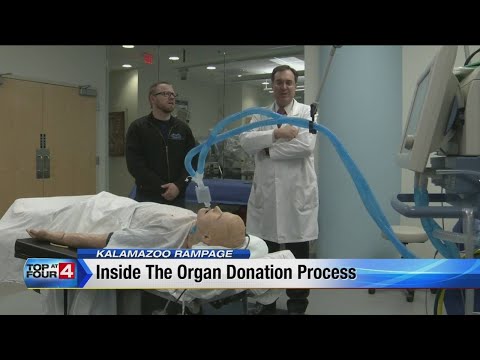
Now, there's an important medical distinction here. In cases involving death determined by neurological criteria, a person can be legally and medically dead even though a ventilator continues moving air into the lungs and circulation is maintained to preserve organ function. The body may still feel warm, the chest may continue to rise and fall, and monitors may continue displaying information. For a family that associates death with the heart stopping and the body becoming still, this can be extraordinarily difficult to understand.
In both of the situations I witnessed, the families were completely unprepared for what happened next.
They believed they had said goodbye to someone they loved, only to discover that the body would remain connected to medical equipment while preparations for organ recovery continued. Then, when the time came for the body to be released, they faced another separation. In their experience, they had to say goodbye twice.
What troubles me most about those experiences isn't that my friends had chosen to donate their organs. That was their decision, and I respect it. What troubles me is that their families had no idea what they had agreed to, and no one adequately prepared them for what the donation process would involve.
Organ donation is often described as a gift of life, and it certainly can be. But we need to recognize that the process can be emotionally complicated for the people left behind. Depending on the circumstances, organ preservation and recovery may involve continued mechanical support after death has been declared, additional waiting, and a different timeline for the family's final goodbye than they anticipated.
This does not happen in exactly the same way for every donor. The process differs depending on how death is determined, which organs or tissues may be donated, and the medical circumstances involved. Families should receive clear explanations from the healthcare team and the organ procurement organization about what to expect.
But my experiences taught me something that I wish every potential donor understood: Signing an organ donor registration is only part of the decision. Telling your family what you've decided, and helping them understand what donation may look like, is just as important.
If you want to be an organ donor, talk to the people who love you. Explain why you've made that choice. Let them ask questions, including the uncomfortable ones. Make sure they understand that organ donation may not look the way death is portrayed in movies or on television.
And if you're the person who may someday be standing at that bedside, you deserve to know what is happening, why it is happening, and what comes next.
I remain committed to organ and body donation. Those experiences didn't change my beliefs about the value of giving others the opportunity to live or learn. They changed my understanding of how much responsibility comes with making that choice.
A gift should not become an unnecessary source of trauma simply because nobody thought to explain what giving it would involve.
What About Donation After Medical Aid in Dying?
Because this chapter also examines euthanasia and medical aid in dying, we need to consider how organ donation intersects with those practices.
In some countries where clinician-administered euthanasia is legal, individuals may request organ donation following their deaths. This creates an especially sensitive ethical situation because two separate decisions are involved: the decision to pursue an assisted death and the decision to donate organs.
Those decisions must not become dependent on one another.
The possibility of helping transplant recipients should never be used to pressure someone toward an assisted death. Likewise, the availability of suitable organs must not determine whether a person is eligible for an end-of-life procedure.
In jurisdictions that permit this practice, protocols address consent, professional responsibilities, the determination of death, and the separation of the relevant clinical decisions.
There is also an important distinction between euthanasia and the self-administered medical aid in dying permitted under certain U.S. state laws. Their procedures and practical implications for organ recovery are not interchangeable.
This is an area where ethical safeguards are particularly important, because a person's desire to help others must never compromise the voluntariness of their own medical decisions.
Example Two: The Patient Who Becomes a Teacher
Now let's move away from organ transplantation and consider a different kind of donation.
Imagine a first-year medical student entering an anatomy laboratory. The student has spent months studying textbooks, diagrams, and three-dimensional models of the human body. They know the names of the major muscles, bones, nerves, and blood vessels, at least in theory.
But a real human body is not a perfectly color-coded illustration.
Anatomical structures vary from person to person. Muscles may be shaped differently, blood vessels may follow unexpected pathways, and previous surgeries or illnesses may have changed the body's appearance. Learning to recognize these differences is an essential part of medical education.
This is where whole-body donation becomes extraordinarily valuable.
Through anatomical gift programs, donated bodies help medical, dental, physical therapy, and other healthcare students understand human anatomy in ways that cannot always be replicated by a computer model or textbook.
A donated body may also help experienced clinicians learn or refine surgical techniques. In some programs, anatomical donations support research intended to improve medical procedures and patient care.
And the older body has particular educational value.
A student examining the body of an older adult may encounter joint replacements, surgical repairs, cardiovascular changes, variations in muscle mass, or evidence of diseases that become more common with age. These findings help connect anatomy to the actual patients healthcare professionals will eventually treat.
Aging doesn't make the body educationally irrelevant. In many circumstances, it makes the learning experience more representative of the people clinicians will encounter in practice.
Medical schools recognize the significance of these gifts. For example, Duke University's Anatomical Gifts Program holds an annual memorial service to honor donors and acknowledge their contributions to healthcare education.
The donor may never meet the students who learn from their body, but the knowledge those students acquire can influence the care they provide throughout their careers.
Organ Donation and Whole-Body Donation Aren't Always Compatible
Here's where things become a little more complicated.
Someone may want to donate every usable organ and tissue for transplantation and then donate whatever remains to a medical school. It's a generous intention, but it isn't always logistically possible.
Many whole-body donation programs require the body to remain substantially intact for anatomical study. Removing major organs for transplantation may make the body unsuitable for a particular program, although policies vary and some programs allow certain types of tissue donation.
Medical schools also have eligibility requirements. They may decline a donation because of certain infections, extensive trauma, the condition of the body, transportation limitations, or the program's educational needs.
And even someone who has completed all the necessary paperwork may not be accepted at the time of death.
This is why people interested in both forms of donation should contact their intended programs in advance, understand which types of donation can be combined, and make alternative arrangements in case their first preference cannot be fulfilled.
As with so many other aspects of end-of-life planning, having a clear intention is important, but understanding how the system actually works is equally important.
A Personal Perspective: My Pieces and Parts
I'm going to share something personal here, because I think it illustrates how complicated even a carefully considered decision can become.
As an educator, I've spent much of my professional life helping students understand the human experience, particularly the experience of aging. And I've decided that when my life ends, I'd like my body to continue contributing to that process.
If any of my organs or tissues can help another person live, I would like them to be used. And if my body can then contribute to medical education or research, I'd like future healthcare professionals to learn from whatever pieces and parts remain available.
I rather like the idea that I might have one final opportunity to teach.
My husband, however, is considerably less comfortable with the arrangement.
For him, my body isn't an educational resource or a collection of potentially useful organs. It's the person he has loved and shared his life with. And although he understands that these are my wishes, the emotional reality of imagining what happens to my body after death is very different for him than it is for me.
We've talked about it, and I've made my intentions clear so that he isn't left trying to figure out what I would have wanted while he's grieving.
We did, however, reach one agreement.
I'm not allowed to donate my eyes.
He told me that my eyes were what he first fell in love with, and that if I donated them, he'd spend the rest of his life looking for me again.
So, there are limits.
I share that story not because I think everyone should make the same decisions I have, but because it demonstrates something important about bodily autonomy, relationships, and end-of-life planning.
I have strong feelings about what I want to happen to my body after death. My husband has equally genuine feelings about the body of the person he loves. We've had to find a way to acknowledge both, and we've done that through conversation rather than leaving the disagreement for a moment when one of us can no longer participate.
Who Gets to Decide What Happens to Our Bodies?
Body donation raises ethical questions that go beyond medical suitability.
The first is autonomy. To what extent should individuals be able to determine how their bodies are used after death? Laws governing anatomical gifts generally recognize the importance of documented donor authorization, although the details vary by jurisdiction.
The second is informed consent. Someone agreeing to donate their body should understand what the donation may involve, how it may be used, whether tissues or specimens might be retained, and what arrangements will be made when the educational or research work is complete.
The third concerns the family. Even when a donor has clearly expressed their wishes, relatives may experience discomfort, grief, or disagreement. Some programs encourage extensive family communication because the people left behind may need to coordinate transportation, provide medical information, or carry out other arrangements.
And finally, there is the ethical obligation of the institutions receiving these gifts. Donated bodies must be handled with dignity, used for appropriate purposes, and managed according to applicable laws and the terms of consent. The fact that someone is deceased does not eliminate the responsibility to treat their remains respectfully.
These responsibilities are particularly important when bodies are used for research or educational purposes beyond traditional medical school anatomy programs. Donors and families deserve clear information about who will receive the body, how it may be used, and what oversight exists.
Does Donation Change the Meaning of Death?
For some people, organ or body donation provides a sense of purpose. The knowledge that someone else may live longer, or that future healthcare professionals may become better at caring for patients, can make death feel less like an absolute ending.
For others, donation may conflict with religious beliefs, cultural traditions, or deeply personal feelings about bodily integrity and what should happen after death.
Neither response should be dismissed.
We also need to be careful about describing donation as an obligation. People who choose not to donate are not necessarily less generous, less informed, or less compassionate. Bodily autonomy includes the right to decline donation, just as it includes the right to authorize it.
From a gerontological perspective, however, I think there is something especially meaningful about recognizing that older adults can continue contributing to others even after death.
We spend so much time discussing the costs and challenges associated with population aging that it's easy to overlook the extraordinary contributions older people continue to make.
Some of those contributions may occur after their lives have ended.
A Final Thought
We don't get to choose how long our organs will remain healthy or whether the circumstances of our deaths will allow them to be transplanted. We cannot guarantee that a medical school will accept our bodies or that every wish we express will be logistically possible.
But we can think about what matters to us, learn about the available options, and communicate our wishes to the people who may eventually be responsible for carrying them out.
And perhaps that's the larger lesson of this chapter.
Even at the end of life, our decisions exist within a network of relationships, medical realities, legal requirements, and personal values. What feels like a straightforward expression of autonomy to one person may carry a very different emotional meaning for someone who loves them.
For me, the possibility of helping another person live or helping a student learn is a meaningful final contribution. For someone else, a different choice may be equally meaningful.
The important thing is to make those decisions thoughtfully, understand their limitations, and have the conversations while everyone still has the opportunity to participate.