8.3 Assisted Dying
Imagine two people with similarly serious illnesses. Both are experiencing suffering that they consider intolerable. Both have discussed their circumstances with their physicians, considered their treatment options, and concluded that they want some control over how and when their lives end.
One lives in Oregon. The other lives in the Netherlands.
Although their wishes may sound similar, the choices legally available to them are quite different. Now imagine a third person living in Canada, a fourth in Switzerland, and a fifth in Australia. We have five individuals asking difficult questions about suffering, autonomy, and death, but their governments have developed different answers.
Why should geography play such a significant role in determining the choices available to someone approaching death?
That question is at the heart of this lecture.
We've already discussed what self-determination means and clarified the distinctions among refusing treatment, euthanasia, and medical aid in dying. Now we're going to look at how different countries have translated those concepts into law, and why there is still so much disagreement about where the boundaries should be drawn.
The Right to Die Movement
The modern right-to-die movement emerged from broader conversations about patient rights, medical technology, and the authority of individuals to make decisions about their bodies. As medicine became increasingly capable of prolonging life, people began asking whether the ability to continue treatment should always mean that treatment ought to continue.
Organizations advocating for greater end-of-life choice have helped bring these questions into public discussion. In the United States, the Death with Dignity National Center has advocated for laws allowing eligible terminally ill adults to obtain medication they may choose to self-administer. In Canada, Dying With Dignity Canada works on end-of-life rights, education, and access to medical assistance in dying.
These organizations have played important roles in public education and legislative advocacy, but they represent particular positions within an ongoing debate. Other organizations, including some disability-rights groups, religious communities, medical associations, and advocates for improved palliative care, have raised concerns about assisted-dying laws or specific aspects of their implementation.
Understanding this movement means understanding both its goals and the questions its critics raise.
Different Countries, Different Approaches
One of the most important things to understand about assisted dying is that there is no single international model. Countries differ in who may qualify, what kinds of suffering are considered relevant, whether a terminal diagnosis is required, and whether a clinician may administer the medication.
The following examples illustrate some of the major approaches.
| Country or jurisdiction | General approach | What makes it distinctive |
|---|---|---|
| United States (participating jurisdictions) | Patient self-administration of prescribed medication | Generally limited to eligible adults with a terminal illness and a prognosis of approximately six months or less |
| Canada | Medical assistance in dying, including practitioner administration | A terminal diagnosis is not universally required; different safeguards apply depending on whether natural death is reasonably foreseeable |
| Netherlands | Physician-administered euthanasia and physician-assisted suicide | Emphasizes unbearable suffering without prospect of improvement and established due-care criteria |
| Belgium | Regulated euthanasia | Permits access under specific conditions, including narrowly defined circumstances involving minors |
| Switzerland | Assisted suicide under specific legal conditions | Assistance is not restricted exclusively to physicians; direct active euthanasia remains prohibited |
| Australia | Voluntary assisted dying under state and territory legislation | Eligibility and procedures vary, with both self-administration and practitioner administration possible under applicable laws |
| France | A newly enacted assisted-dying framework in 2026 | Generally emphasizes self-administration, with practitioner administration permitted in defined circumstances |
These distinctions are more than technical details. They reflect different judgments about the relationship between suffering, medical responsibility, individual choice, and the government's obligation to protect vulnerable people.
The Netherlands and Belgium: When Suffering Is the Central Question
The Netherlands and Belgium were among the first countries to establish comprehensive legal frameworks for euthanasia in the early twenty-first century.
The Dutch law, which took effect in 2002, permits physicians to provide euthanasia or assistance in suicide when specific due-care requirements are satisfied. These include a voluntary and well-considered request, suffering that is unbearable with no prospect of improvement, an informed patient, no reasonable alternative, and consultation with an independent physician. Cases are subsequently reviewed.
An important distinction is that Dutch eligibility is not limited to people expected to die within six months. Serious physical illnesses, certain psychiatric conditions, and some circumstances involving dementia may be considered, although such cases require careful assessment and can be particularly complex.
Belgium also established a regulated euthanasia framework in 2002. In 2014, it extended eligibility to certain minors under exceptionally restrictive conditions. This remains a particularly controversial aspect of its law.
Consider how different these approaches are from the typical U.S. model. In much of the United States, the central eligibility question is whether a person has a terminal illness with a limited prognosis. In the Netherlands, the legal framework places greater emphasis on the nature of suffering and whether it can be relieved.
Neither approach eliminates difficult ethical questions. Instead, each draws the boundary in a different place.
Canada: A Changing Definition of Eligibility
Canada legalized medical assistance in dying, commonly abbreviated MAID, in 2016 following a landmark Supreme Court decision. The law has changed significantly since then, particularly through reforms adopted in 2021.
Unlike the U.S. model, Canada's federal law does not universally require that someone have a terminal illness or be expected to die within six months. Eligible applicants must satisfy several criteria, including having a grievous and irremediable medical condition, experiencing suffering they consider intolerable under the circumstances, and meeting applicable consent and assessment requirements.
Canada distinguishes between situations in which natural death is reasonably foreseeable and those in which it is not. Different procedural safeguards apply to these categories.
The expansion of eligibility has generated substantial debate. Supporters emphasize that suffering and autonomy do not always correspond neatly to a terminal prognosis. Critics question whether adequate protections and social supports exist for people living with disabilities, chronic illness, poverty, or inadequate access to care.
One especially contentious issue concerns mental illness. As of October 2026, people whose sole underlying medical condition is a mental illness remain excluded from MAID eligibility under federal law, with the current statutory exclusion scheduled to end in March 2027 unless legislation changes.
This is an excellent example of why assisted-dying laws require ongoing attention. Legal eligibility is not fixed, and changes often follow years of litigation, legislative debate, professional consultation, and public disagreement.
For current requirements, consult Health Canada's MAID overview.
Switzerland: An Unusual Legal Model
Switzerland occupies a distinctive place in international discussions about assisted dying.
Swiss law prohibits direct active euthanasia, but assistance in suicide is not criminalized under the relevant provision when it is not motivated by selfish interests and other applicable requirements are satisfied. The final act must be performed by the person seeking assistance.
Unlike many other jurisdictions, Switzerland's framework does not require that the person providing assistance be a physician, although medical involvement is ordinarily necessary to obtain prescribed medication and assess relevant medical considerations.
Organizations such as DIGNITAS have become internationally known for facilitating access within the Swiss legal framework. Because some nonresidents have traveled to Switzerland to seek assistance, the practice has sometimes been described as suicide tourism.
That phrase deserves some scrutiny. It captures the reality of people traveling across borders to access a service unavailable at home, but it can also trivialize intensely personal decisions and the circumstances that lead people to consider them.
It raises another important question: If a particular end-of-life option is legal in one country but unavailable in another, does the ability to travel create an additional inequality?
People with sufficient money, mobility, information, and support may have choices that others do not.
Optional reading: “Suicide Tourism” and Understanding the Swiss Model of the Right to Die, The Conversation.
Australia and France: Laws Continue to Evolve
Australia illustrates how a country can develop assisted-dying policy through state and territory legislation rather than a single nationwide system.
Victoria's voluntary assisted dying law took effect in 2019, and other Australian states subsequently introduced their own frameworks. By 2026, voluntary assisted dying was available in all six Australian states and the Australian Capital Territory. The Northern Territory had passed legislation but was still preparing for implementation.
Australian laws generally require an eligible adult to have a serious condition expected to cause death within a specified period, to have decision-making capacity, and to make a voluntary request. The exact requirements and processes differ between jurisdictions.
France offers a particularly recent example. In August 2026, France enacted legislation establishing a regulated right to assistance in dying for eligible adults under defined circumstances. Its framework generally provides for self-administration, while allowing administration by an authorized healthcare professional when the person is physically unable to perform the act.
These developments remind us that the legal landscape is not simply divided into countries that allow assisted dying and countries that prohibit it. There are multiple approaches, and those approaches continue to change.
The United States: Oregon's Influence
In the United States, Oregon helped establish the model that many other jurisdictions would eventually follow.
Oregon voters approved the Death with Dignity Act in 1994, and it took effect in 1997 after legal challenges. The law permits eligible adults with a terminal illness expected to result in death within six months to obtain medication they may choose to self-administer.
Oregon's approach differs from the Dutch and Canadian models because it does not authorize a clinician to administer the life-ending medication.
One important change occurred in 2023, when Oregon removed its residency requirement. This means that being an Oregon resident is no longer a condition of eligibility, although patients must still satisfy the law's other requirements.
Oregon also provides unusually extensive public reporting on participation. Its 2025 report, released in April 2026, documented 637 prescriptions and 400 reported deaths associated with ingestion during that year, with the death count subject to later revision as additional records became available.
The distinction between prescriptions and deaths matters. Not everyone who receives a prescription chooses to use it. For some people, having the option available may itself provide reassurance or a sense of control.
Other U.S. jurisdictions have adopted related laws, but the details are not identical. Because state laws continue to change, we'll use current government and legal sources rather than rely on a static list that may become outdated during the semester.
For Oregon's current requirements and reports, visit the Oregon Health Authority's Death with Dignity Act information.
The People Behind the Laws
It's easy to get caught up in legal language and forget that these laws concern people confronting difficult circumstances.
In 2014, Brittany Maynard, a young woman diagnosed with terminal brain cancer, became a prominent advocate for expanding access to medical aid in dying. Her story helped bring the issue to a national audience, particularly among people who had never considered how end-of-life choices might affect someone relatively young.
Video: Brittany Maynard, A Video for My Friends

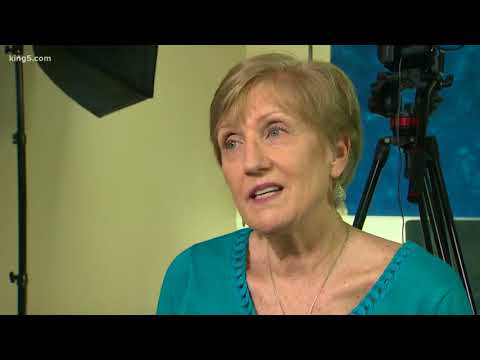
Another story comes from Oregon, where an older married couple chose to use the state's Death with Dignity Act on the same day. Their daughter documented their experiences, including the relationships and conversations surrounding their decisions.
Video: Oregon Couple Chooses Death with Dignity on the Same Day
Watch the Oregon couple's story
As you watch, pay attention to more than the decision itself. Notice how family members participate, what the individuals say matters to them, and how the stories are presented. These videos offer personal perspectives, not a representative picture of everyone who considers assisted dying.
What Do Safeguards Actually Protect?
Across jurisdictions, assisted-dying laws commonly address several concerns: whether a request is voluntary, whether the person has the capacity to make the decision, whether the medical circumstances satisfy the law, and whether there are procedures for independent assessment and oversight.
But the safeguards differ because societies disagree about which risks deserve the greatest attention.
Some emphasize preventing coercion or decisions made during temporary crises. Others focus on ensuring that people with serious illnesses are not denied choices simply because their suffering doesn't fit a narrow medical definition. Disability advocates have raised concerns about whether inadequate healthcare, poverty, social isolation, and insufficient personal assistance can influence decisions in ways that are difficult to capture through formal consent procedures.
Healthcare professionals also face difficult questions about their roles. Some regard participation as an extension of respecting patient autonomy and relieving suffering. Others believe intentionally assisting death conflicts with their professional obligations or personal convictions.
We'll examine the safeguards and their limitations more closely later in this chapter. For now, recognize that a legal framework reflects a society's attempt to balance competing responsibilities. Passing a law doesn't settle the ethical debate.
A Final Thought
Think back to the five people we imagined at the beginning of this lecture. They may share similar medical circumstances, but their options depend heavily on where they live and how their governments define eligibility, suffering, consent, and medical responsibility.
Some countries limit assistance to people approaching death. Others permit it under broader circumstances involving unbearable suffering. Some allow healthcare professionals to administer medication, while others require the person to perform the final act.
There is no international consensus, and the differences are unlikely to disappear anytime soon.
What I want you to take away from this lecture isn't that one country has necessarily found the perfect answer. It's that the laws governing assisted dying reveal what societies value, what they fear, and how they understand the relationship between individual freedom and collective responsibility.
And perhaps the most important question is not simply whether someone should have a choice, but whether that person has access to compassionate care, reliable information, adequate support, and meaningful alternatives before making it.
Additional Viewing
-
Living & Dying: A Love Story, a documentary expanding on the Oregon couple's experience.
-
Assisted Suicide: The Life and Death of Gloria Taylor, The Fifth Estate, examining a Canadian right-to-die advocate.
-
Documenting Her Wife's Death on Social Media, The New Yorker, exploring a family's personal experience.
These resources offer personal narratives and perspectives. They should be considered alongside the legal and public-health evidence rather than treated as comprehensive accounts of assisted dying.