6.2 Grief
The Many Ways We Experience Loss
In our previous lecture, we explored the many forms of loss that people experience throughout their lives. We considered how losing a person, relationship, job, home, physical ability, or sense of independence can affect far more than the immediate circumstances of that loss.
Now we're going to examine what happens when we grieve.
Most of us associate grief with sadness, crying, and missing someone or something we've lost. Those are certainly common experiences, but grief is much more complicated than an emotional response. It can affect how we think, sleep, eat, interact with other people, make decisions, and function in our daily lives.
And sometimes, grief doesn't look much like sadness at all.
Understanding the Experience of Grief
Grief is a natural response to significant loss. It can involve emotional, cognitive, physical, behavioral, and social changes, and those responses may vary considerably from one person to another.
Someone who has recently experienced a death might cry frequently, struggle to concentrate, and withdraw from social activities. Another person might become unusually busy, organizing paperwork, cleaning the house, making arrangements, or taking care of everyone else. Someone else might continue functioning much as they did before the loss, experiencing their grief privately or intermittently.
None of these responses, by itself, tells us how deeply the person is grieving.
We also need to recognize that grief rarely involves a single emotion. Sadness may coexist with anger, anxiety, loneliness, guilt, confusion, or relief. A person who has spent years caring for a loved one with a progressive illness may experience profound sorrow when that person dies while also feeling relieved that the suffering and demands of caregiving have ended.
Those feelings are not contradictory. They reflect the complexity of the relationship and the circumstances surrounding the loss.
How Grief Can Affect Us
Although everyone's experience is different, grief can influence several dimensions of everyday life.
| Dimension | Possible experiences |
|---|---|
| Emotional | Sadness, anger, guilt, loneliness, anxiety, numbness, relief, irritability, or unexpected moments of happiness |
| Cognitive | Difficulty concentrating, forgetfulness, confusion, repetitive thoughts, difficulty making decisions, or preoccupation with the loss |
| Physical | Fatigue, headaches, muscle tension, changes in appetite, disrupted sleep, stomach discomfort, or a sense of heaviness |
| Behavioral | Withdrawing from activities, becoming unusually busy, changes in routines, crying, restlessness, or avoiding reminders of the loss |
| Social | Changes in relationships, discomfort in familiar social settings, increased need for companionship, or a desire for privacy |
These responses are possibilities, not a checklist. A grieving person does not need to experience any particular combination of symptoms for their grief to be genuine.
Physical symptoms also deserve appropriate attention. While stress and grief can affect the body, we should not automatically attribute new or concerning symptoms to bereavement. Medical conditions can coexist with grief, particularly among older adults and people managing chronic illnesses.
When Grief Interrupts Everyday Life
Imagine a woman whose husband has recently died after forty-five years of marriage. She has always been organized and independent, but now she finds herself forgetting appointments, leaving groceries at the store, and having difficulty following conversations.
Her family notices these changes and becomes concerned. Perhaps they wonder whether she is developing cognitive impairment.
That concern may be understandable, particularly if the changes are persistent or worsening. But grief itself can interfere with attention, memory, and concentration. When someone is emotionally overwhelmed, ordinary tasks may require considerably more effort than they did before.
The same woman may also find that her daily routines have lost their meaning. Preparing dinner for one person feels different from preparing dinner for two. The quiet house may be comforting one afternoon and unbearably lonely the next.
These experiences remind us that grief is not confined to moments when someone is consciously thinking about the person who died. It can become part of ordinary activities, relationships, and decisions.
For someone grieving a non-death loss, the disruptions may look different but still be significant. A person who has lost employment might struggle with motivation and sleep, while someone adjusting to a disability may experience frustration, uncertainty, and changes in confidence.
The circumstances differ, but the effects of loss can reach into many aspects of daily functioning.
Grief Does Not Follow a Schedule
Earlier in the course, we discussed the limitations of interpreting grief through a predictable sequence of stages. That distinction becomes especially important when we look at how people actually experience bereavement.
Grief may be intense immediately after a loss, or a person may initially feel numb or preoccupied with practical responsibilities. Emotions can change from one day to another, and periods of relative stability may be interrupted by unexpected reminders.
A familiar song, a birthday, a holiday, a photograph, or an ordinary household object can bring back powerful feelings long after a death. These experiences do not necessarily mean that someone has stopped adapting to the loss or has somehow returned to an earlier stage.
Grief can also coexist with meaningful engagement in life. Someone may enjoy a family celebration, develop new relationships, laugh with friends, and still deeply miss the person who died.
Continuing to grieve does not mean that a person has failed to adapt, and finding happiness does not mean that the loss has stopped mattering.
We should be equally careful about assuming that everyone needs to express grief openly. Talking about a loss can be helpful for many people, but others find comfort through private reflection, practical activities, religious practices, creative expression, or simply maintaining familiar routines.
There is no universal requirement to cry, discuss every emotion, or revisit painful memories in order to adapt to loss.
Memories, Relationships, and the People We Have Lost
One interesting aspect of grief is the way memory can change after someone dies.
We may find ourselves remembering particular conversations, routines, or moments that seemed unremarkable when they occurred. We may also begin to think differently about the relationship itself, including experiences we appreciated, regretted, or never fully understood.
Sometimes people idealize someone who has died, remembering primarily their positive qualities. This can be part of how a person makes sense of a relationship and its loss. Other people may feel anger toward the deceased, particularly when the relationship was complicated or the circumstances of death were difficult.
Neither response is inherently abnormal.
Relationships do not suddenly become simple because someone dies. A person may mourn a loving parent while acknowledging years of conflict. Someone may grieve an estranged sibling while also feeling sadness about the relationship they never had.
The important point is that grief reflects the relationship as the individual experienced it, not necessarily the relationship that other people believed existed.
And remembering someone does not prevent us from continuing with life. For many bereaved people, maintaining a connection through stories, traditions, photographs, meaningful objects, or personal rituals becomes part of adapting to the loss.
When Grief May Require Additional Support
Because grief is so variable, it can be difficult to distinguish between an intense but expected response to loss and a situation in which someone might benefit from professional support.
There is no single timetable for grief. However, persistent and severe difficulties with daily functioning, profound isolation, inability to meet basic needs, or symptoms of significant depression may indicate that additional evaluation and support would be helpful.
Researchers and clinicians also recognize Prolonged Grief Disorder, a condition involving persistent, impairing grief following the death of someone close. It is not simply grief that lasts a long time. Diagnosis involves specific symptoms, significant distress or impairment, cultural context, and duration requirements. In adults, the DSM-5-TR requires that the death occurred at least twelve months earlier.
We should not use that diagnosis casually, nor should we assume that someone who continues to miss a loved one years later has a disorder.
At the same time, respecting grief as a normal human experience does not mean ignoring serious distress. Grief counseling, bereavement support groups, mental health services, medical care, and community resources can provide valuable assistance when someone needs additional support.
The goal is not to eliminate grief. It is to help people remain safe, supported, and able to live with the changes that loss has brought into their lives.
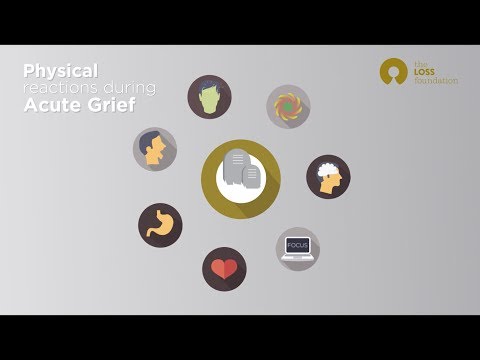
Video: The Experience of Grief
The following video from The Loss Foundation offers a perspective on the experience of grief and the ways it can affect people following a significant loss.
Watch the video from The Loss Foundation
As you watch, consider how the experiences described compare with the common assumptions people make about grieving. Notice particularly the differences between what a grieving person may be experiencing internally and what others can observe.
(Source: The Loss Foundation)
Understanding Grief Through Personal Experience
One of the challenges of studying grief is that academic descriptions can make it sound much more orderly than it feels to the person experiencing it. We can identify common responses, describe patterns, and examine research, but those explanations cannot fully capture what it means to live in a world that has changed because of loss.
There is no definitive set of criteria for the characteristics of grief. Important things to keep in mind when experiencing or helping someone through the bereavement process is that grief:
- Does not follow a linear process.
- Can include different types of change or loss that don’t involve death (e.g., loss of a limb, health/abilities, home, job, routine, etc.).
- Is an ongoing process. It does not have a timeline or expiration date.
- Never looks the same, even for the same person. Each person’s experience of grief is unique to them. (Haley, 2019; Phillips, 2021; Grief, n.d; Caddell, 2021).
Video: How Grief Feels | Robbie Stamp | TEDxLondon
Watch Robbie Stamp's TEDx talk
His perspective offers an opportunity to connect the concepts we've discussed with the everyday realities of bereavement.

For additional reading, you may also explore Grief Never Ends, and That's Okay, which discusses the continuing presence of grief and the ways relationships with people who have died can remain meaningful.
As we move into the next lecture, we'll shift from the internal experience of grief to its social expression. Families, communities, cultures, and personal expectations all influence how people mourn, what kinds of support they receive, and which expressions of grief are considered acceptable.