5.8 What is Hospice Care?
How a Different Way of Thinking About Death Changed Healthcare
Today, hospice is a familiar part of the American healthcare system. Physicians make referrals, insurance programs establish eligibility requirements, organizations employ interdisciplinary teams, and millions of families have encountered hospice services through the experiences of relatives and friends.
But hospice did not begin as an insurance benefit or a standardized healthcare program. It emerged from a growing concern that modern medicine had become increasingly effective at treating disease while often neglecting the needs of people who were dying.
Throughout much of the twentieth century, advances in surgery, medications, intensive care, and life-sustaining technology transformed the possibilities of medical treatment. Hospitals became central institutions for managing serious illness, and the ability to intervene medically expanded dramatically. Yet patients approaching death could experience poorly controlled symptoms, limited communication about their prognosis, separation from family, and a healthcare environment primarily organized around curing disease.
The modern hospice movement challenged the assumption that medicine had little to offer when a cure was no longer possible. Its advocates argued that dying people still required skilled medical care, but that the goals of care needed to change.
Cicely Saunders and the Origins of Modern Hospice
The modern hospice movement is closely associated with <Entity category="people" value="Dame Cicely Saunders"/>, a British nurse, social worker, and physician who recognized that the suffering associated with terminal illness could not be understood through physical symptoms alone.
Saunders developed the concept of total pain, which describes how physical discomfort can interact with psychological, social, and spiritual distress. Someone experiencing severe pain may also be frightened about the future, worried about leaving family members behind, distressed by financial problems, or struggling with questions about the meaning of their life. These experiences can influence one another, making effective care more complicated than simply prescribing medication.
In 1967, Saunders founded St. Christopher's Hospice in London. It combined skilled symptom management with emotional, social, and spiritual support, while also emphasizing professional education and research. This was an important departure from the idea that care for dying people was primarily custodial or that nothing meaningful could be done once curative treatment was no longer effective.
Saunders also emphasized that dying people remained individuals with relationships, preferences, and identities beyond their diagnoses. The hospice movement sought to provide professional care without reducing the patient to a collection of medical problems.
Florence Wald Brings Hospice to the United States
The American hospice movement developed during a period when the United States was beginning to confront the social and ethical consequences of increasingly technological medical care.
<Entity category="people" value="Florence Wald"/>, a nurse and former dean of the Yale School of Nursing, became a leading advocate after learning about Saunders' work in the United Kingdom. Wald believed that dying people and their families needed alternatives to healthcare arrangements that frequently left them with little control over the final stage of life.
In 1974, Wald and her colleagues established Connecticut Hospice, widely recognized as the first hospice program in the United States. The program initially emphasized care in patients' homes, supported by professional services and family involvement. Connecticut Hospice subsequently opened an inpatient hospice facility in 1980.
The early American hospice movement was not simply about providing a new location for dying. It was about changing the relationship between patients, families, and healthcare professionals. Hospice advocates emphasized communication, symptom relief, family participation, and the recognition that death is part of the human life course rather than necessarily a medical failure.
These ideas developed alongside broader changes in American healthcare, including the patients' rights movement, increased attention to informed consent, and growing debates about life-sustaining treatment.
When Hospice Became a Medicare Benefit
A major turning point came in 1982, when Congress established the Medicare hospice benefit. The benefit began operating in 1983 and became a permanent part of Medicare in 1986.
Federal coverage helped make hospice more widely available and brought greater consistency to the services organizations were expected to provide. It also helped establish hospice as a recognized component of the healthcare system rather than an alternative movement operating largely outside conventional medicine.
But incorporation into Medicare also changed hospice.
A philosophy built around individualized care now had to operate within eligibility rules, certification requirements, reimbursement systems, documentation standards, and regulatory oversight. These structures created important protections and expanded access, but they also shaped which patients could receive hospice and how organizations delivered services.
The six-month prognosis requirement is one example. It provides a practical eligibility standard for a publicly funded benefit, but it does not align neatly with the unpredictable course of every serious illness. Patients with advanced cancer may sometimes have a more recognizable pattern of decline, while people with dementia, heart failure, or chronic lung disease may experience years of gradual deterioration interrupted by medical crises.
Consequently, a program intended to respond to individual needs must also operate within administrative rules that cannot fully capture the complexity of dying.
The Growth of Hospice and the Changing Healthcare Marketplace
Hospice expanded considerably after the creation of the Medicare benefit. What began primarily as a movement led by nonprofit organizations and community advocates developed into a large healthcare sector that includes nonprofit, government-operated, and for-profit providers.
This growth has created opportunities to reach more patients, but it has also raised questions about how financial incentives influence care. Under Medicare's daily payment system, hospice providers receive reimbursement based on the level of care rather than billing separately for every service delivered. Organizations therefore have considerable responsibility for determining how staffing, visits, medications, equipment, and other resources are provided within the requirements of the benefit.
That arrangement can support coordinated care, but it also creates potential tensions between organizational costs and patient needs. Researchers, regulators, and policymakers have examined differences among hospice providers in staffing, service patterns, quality, and financial practices.
These concerns do not mean that for-profit hospice is inherently poor care or that nonprofit status guarantees better outcomes. They do mean that hospice should be evaluated as a healthcare service, not simply assumed to be compassionate because its stated mission emphasizes dignity and comfort.
Families benefit from understanding who provides services, how the organization responds to urgent needs, and what level of professional support is actually available. The quality of hospice care depends on the implementation of its principles, not merely the language used to describe them.
Whose Definition of a Good Death?
The hospice movement helped shift attention toward patient preferences, family involvement, and quality of life. But these ideas also raise an important cultural question: whose preferences are being represented?
Many descriptions of hospice emphasize open conversations about dying, individual decision-making, comfort-focused treatment, and the opportunity to remain in familiar surroundings. These may be important priorities, but they are not necessarily understood or expressed in the same way across families and cultural communities.
In some families, healthcare decisions are understood primarily as individual choices. In others, relatives, elders, or community members may play a central role. Religious beliefs may influence attitudes toward suffering, treatment, disclosure of prognosis, and practices surrounding the body after death.
Even the expectation that patients should openly discuss death may conflict with the values of some individuals and families. For some, direct discussion is reassuring and necessary for planning. For others, particular words or conversations may be experienced as distressing or disrespectful.
Culturally responsive hospice care does not mean assigning a fixed set of beliefs to someone based on their cultural identity. It means asking about the person's preferences, recognizing the importance of family and community relationships, and adapting care when possible without making assumptions.
In this video from Canadian Virtual Hospice, Indigenous people from different Nations and communities discuss end-of-life care in relation to cultural values, family responsibilities, and community practices.
Watch Indigenous Voices: Caring for the Patient and Family
The video offers an important perspective on the limitations of treating hospice as a culturally universal model. Indigenous communities are diverse, and the experiences described should not be interpreted as representing all Indigenous peoples. They do, however, illustrate why culturally appropriate care requires attention to historical experiences, relationships, spiritual traditions, and the role of community.
The video also comes from Canada, where Indigenous peoples' relationships with healthcare systems are shaped by specific historical and policy contexts. Those experiences should not be assumed to be identical to those of Native American communities in the United States, although questions of cultural safety, trust, and self-determination are relevant in both settings.
Hospice From the Family's Perspective
The history and organization of hospice tell us how the model developed, but they do not fully explain what receiving care feels like to the people involved.
For families, the transition to hospice can involve relief, uncertainty, disagreement, and considerable adjustment. A person may have spent months or years receiving treatment intended to slow an illness, making the shift toward comfort-focused care emotionally complicated. Family members may interpret that change differently, particularly when they disagree about whether additional treatment should continue.
Caregiving responsibilities may also change. Hospice professionals provide clinical guidance and support, but family members may become more involved in medication administration, personal care, symptom observation, and coordination of daily needs. The experience can be especially demanding when the person requires assistance throughout the day and night.
At the same time, hospice may provide something that has been missing during a long period of illness: a coordinated team that focuses on the person's daily experience rather than on a single disease or treatment. Families may benefit from having a nurse to call, guidance about symptoms, and support navigating decisions that previously felt overwhelming.
These benefits and challenges can exist simultaneously. A family can value hospice care while still finding the caregiving responsibilities exhausting. A patient can appreciate being at home while also feeling anxious about becoming increasingly dependent on others.
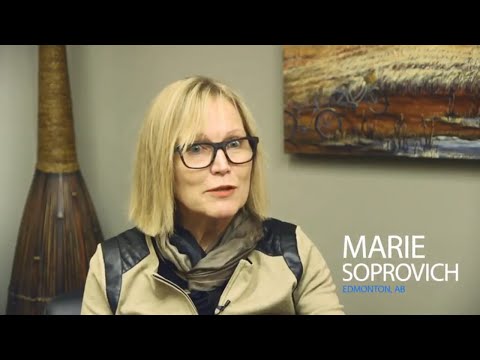
Although the video concerns home-based palliative care rather than necessarily describing enrollment in the U.S. Medicare hospice benefit, it provides a useful family perspective on the practical and emotional dimensions of serious illness care.
Individual stories can help us understand how services are experienced, but they should not be treated as representative of every family. The amount of support available, the responsibilities placed on caregivers, and the financial implications of home-based care vary across healthcare systems and individual circumstances.
Hospice as Both an Achievement and an Ongoing Challenge
The hospice movement accomplished something significant. It challenged the assumption that medicine had failed when a person could no longer be cured and demonstrated that skilled, coordinated care could improve the experience of serious illness and dying.
It also helped bring conversations about death, symptom relief, family support, and patient preferences into mainstream healthcare. Many of the principles associated with hospice now influence palliative care, medical ethics, advance care planning, and discussions about quality of life.
Yet the development of hospice into a major healthcare sector has introduced questions that its founders could not fully anticipate. Eligibility rules can make timely access difficult. Financial arrangements influence how services are organized. Families may be expected to provide more caregiving than they can realistically manage. Cultural differences and unequal access to healthcare can affect whether people receive services that align with their needs.
Understanding hospice therefore requires examining both its ideals and its institutional realities. Its history demonstrates how a social movement can transform healthcare, while its contemporary challenges remind us that a compassionate philosophy must be supported by effective policy, adequate resources, and accountable organizations.