3.2 Religion and Transcendence
How Beliefs, Meaning, and Legacy Connect Us Beyond Our Own Lifetimes
We've already established that beliefs about what happens after death vary considerably, even among people who share similar cultural or religious backgrounds. But there's another question worth exploring: Why do these beliefs matter so much to us? What do religion, spirituality, and our efforts to leave something behind actually accomplish when we're confronted with the reality of death?
From a sociological perspective, religion is more than a collection of beliefs about supernatural beings or an afterlife. It also provides shared values, traditions, rituals, and communities that help people make sense of their experiences. And while religion can play an important role in how we understand mortality, people who aren't religious also develop ways of finding meaning, maintaining connections, and imagining how their lives might matter beyond their own deaths.
Religion and Transcendence
French sociologist Émile Durkheim was particularly interested in the social functions of religion. In his influential 1912 book, The Elementary Forms of Religious Life, Durkheim described religion as a system of beliefs and practices surrounding things considered sacred, bringing people together into a shared moral community.
What makes his approach interesting is that he wasn't particularly concerned with determining whether religious beliefs were true. Instead, he wanted to understand what religion does for individuals and societies. Why do people establish religious communities? Why are certain practices considered sacred? And how do shared beliefs and rituals help maintain social relationships?
Durkheim argued that religion helps create social solidarity by providing common meanings, shared practices, and a sense of belonging (Durkheim, 1912/1995). This becomes particularly important when communities experience events that threaten their sense of stability, including death.
Think about what happens when someone dies. Family members and friends may gather for religious services, share familiar prayers, prepare food, observe periods of mourning, or participate in ceremonies that have been practiced for generations. These activities may express deeply held spiritual beliefs, but they also serve important social functions. They bring people together, establish expectations about how to respond to loss, and provide opportunities to acknowledge that someone's death has changed the community.
Religion can also provide a framework for understanding suffering, uncertainty, and mortality. For someone who believes in an afterlife, death may represent a transition rather than an absolute ending. Religious teachings may offer explanations for suffering, guidance about how to live, and reassurance about what happens after death. Of course, religious beliefs can also create uncertainty or anxiety, particularly when individuals struggle with questions about judgment, punishment, or whether they've lived according to their faith.
The important point is that religion doesn't simply provide answers about death. It can also provide the relationships, rituals, and shared meanings that help people cope with the experience of losing someone.
Does Transcendence Require Religion?
This brings us to the concept of transcendence, which generally refers to experiences or meanings that extend beyond our immediate individual existence. In religious traditions, transcendence may involve a relationship with God, spiritual realities, or beliefs about existence beyond physical death. But transcendence doesn't necessarily require a supernatural explanation.
People may experience a sense of connection to something larger than themselves through family, nature, creative work, community service, or a commitment to future generations. Someone might find meaning through religious faith, while another person experiences a similar sense of purpose through environmental conservation, scientific discovery, or raising children.
In other words, religion and transcendence are related concepts, but they aren't interchangeable. Religion provides one important framework for transcendence, while secular philosophies and personal values can offer others.
And since we're talking about religious beliefs, I can't resist introducing one of the more unusual examples of how people challenge our assumptions about what constitutes a religion.
The Flying Spaghetti Monster
You may have encountered an image of a flying spaghetti monster or seen someone wearing a pasta colander on their head. If so, you've stumbled into the wonderfully unconventional world of Pastafarianism.
The Church of the Flying Spaghetti Monster began in 2005 as a satirical response to efforts to introduce intelligent design into public school science education. Its founder, Bobby Henderson, used the idea of a supernatural spaghetti monster to challenge arguments about which religious explanations should be treated as legitimate scientific alternatives to evolution.
Pastafarianism uses religious language, symbols, and humor to raise serious questions about religious freedom, scientific evidence, and the relationship between personal belief and public institutions. Some participants identify with it as a religion, while others understand it primarily as satire or social commentary.
Why include it in a lecture about death? Because it encourages us to think critically about the assumptions we make concerning religion and meaning. Must a person believe in a supernatural being to have a moral framework? Does a meaningful life require the promise of an afterlife? Can communities develop shared values and rituals without agreeing on what happens after death?
For many people who hold secular or nonreligious worldviews, the finite nature of life can make the present especially meaningful. If this is the only life we have, then our relationships, contributions, and experiences may take on greater importance. Rather than focusing on what comes afterward, the emphasis may be on what we can accomplish while we're alive.
That isn't necessarily a better or worse way to understand mortality. It's another example of how people construct meaning in response to the same fundamental reality: Our individual lives are limited.
If you look deeper into Pastafarianism you will see that the focus is on the needs of survivors, not the needs of individuals in an afterlife. They focus not on trying to secure a place in heaven or hell but focus on the people who are left behind. They tend to be present-oriented. Life is about today. It's about making the world a better place, or make the people in my life happy. It actually creates a sense of urgency, because if you don't have eternity to fall back on you need to do everything that you want to do now, and make it count. Your mortality is not necessarily accomplished through the soul, but more about doing the things and making a difference in the world around you right now. So, if you see a bumper sticker that looks like a spaghetti monster, or you see someone wearing a pasta colander on their heads, they aren't crazy. They are embracing their Pastafarianism!
Religious Perspectives on Life After Death
Religious traditions have developed a remarkable variety of explanations for what happens when someone dies. Some describe an afterlife involving continued individual existence, while others emphasize reincarnation, spiritual transformation, liberation from cycles of rebirth, or relationships between the living and their ancestors.
These traditions are considerably more complex than we can explore in a single lecture, and individuals within the same religion may interpret teachings differently. We'll examine cultural and religious practices surrounding death in greater detail later in the course.
For now, I'd like you to consider how different understandings of death might influence the way people approach their lives. If someone believes they'll eventually be reunited with loved ones, how might that affect their experience of grief? If someone believes that their actions influence a future existence, how might that shape their moral choices? And if someone believes that death marks the permanent end of consciousness, how might that influence their priorities?
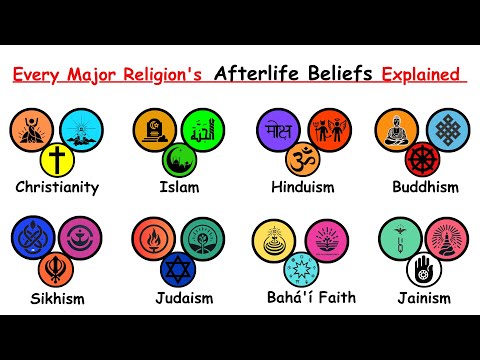
Watch: Every Major World Religion's Afterlife Beliefs Explained in 9 Minutes
This video provides a brief introduction to several religious perspectives on life after death. As you watch, remember that a short overview cannot capture the diversity of beliefs within any religious tradition.
Symbolic Immortality: How Do We Live Beyond Our Deaths?
Here's where I think this discussion becomes particularly interesting from a gerontological perspective. We don't necessarily have to believe in an afterlife to believe that something of us continues after we die.
Psychiatrist Robert Jay Lifton introduced the concept of symbolic immortality to describe the ways people experience a sense of continuity beyond their individual biological lives. Rather than focusing exclusively on whether consciousness survives death, Lifton examined how human beings develop connections to people, ideas, traditions, and experiences that extend beyond their own lifetimes (Lifton, 1979).
He identified several ways people may experience this sense of continuity, including biological connections through family and future generations, creative contributions through work and accomplishments, religious or theological beliefs, relationships with the natural world, and experiences of transcendence that make individuals feel connected to something larger than themselves.
Think about the ways people leave lasting influences on the world around them. Parents and grandparents may recognize aspects of themselves in their children and grandchildren, whether through physical resemblance, shared values, family stories, or traditions that continue across generations. Teachers may influence students who eventually go on to teach others. Artists, musicians, and writers create work that can be appreciated long after their deaths, sometimes by people who were born decades or even centuries later.
But symbolic immortality doesn't require extraordinary accomplishments or public recognition. Someone who volunteers at a community organization, mentors a younger colleague, plants a tree, or helps a neighbor may create consequences that continue long after they're gone.
Organ donation provides another interesting example. A person who donates organs after death may directly improve or save the lives of others. Those recipients may go on to raise families, pursue careers, and influence countless additional people. The donor's biological life has ended, but the consequences of that decision can continue for generations.
We also see symbolic immortality reflected in the ways people choose to be remembered. If you walk around a college campus, you'll probably notice buildings, scholarships, gardens, and gathering spaces named in honor of people who contributed to the institution. Sometimes these memorials recognize financial donations, while others commemorate educators, community leaders, or individuals whose contributions shaped the lives of others.
One of my favorite places to walk is the Alumni Grove at my alma mater. It's filled with beautiful trees that have been planted in recognition of people who wanted to leave something meaningful behind. I love the idea that a person's legacy might be represented by a living tree that continues to grow, provide shade, and become part of the experiences of future generations. There's something rather wonderful about being remembered through something that continues to contribute to the world.
Symbolic Immortality and the Life Course
This concept connects directly to ideas we've encountered in gerontology, particularly Erik Erikson's theory of psychosocial development. Erikson described generativity as a concern for establishing and guiding future generations, often expressed through parenting, teaching, mentoring, creative work, and contributions to society (Erikson, 1950).
As people move through adulthood and later life, they may become increasingly interested in what their lives have meant and what they will leave behind. This doesn't mean that older adults are universally preoccupied with their legacies, or that younger people don't think about these questions. Rather, the awareness that our lives are finite can encourage us to consider how our actions connect us to people and experiences beyond our own lifetimes.
Legacy can also be complicated. Not everyone has children, financial resources, professional accomplishments, or opportunities to leave behind something tangible. And not everyone wants to be remembered through a building, a scholarship, or a family name. Sometimes the most meaningful contributions are the least visible: the kindness someone extended during a difficult time, the encouragement that changed another person's direction, or the traditions that continue because someone cared enough to pass them along.
Symbolic immortality also reminds us that our influence doesn't end neatly at the moment of death. We continue to shape other people's lives through memories, relationships, values, and the consequences of things we've done.
And perhaps that's one reason people find the idea of legacy so meaningful. We know that we won't live forever, but we can recognize that our lives are connected to something much larger than ourselves.
It's Personal
Whether someone finds meaning through religion, spirituality, family, creative work, or a secular understanding of the world, their beliefs about mortality deserve consideration and respect. This becomes especially important when people are experiencing serious illness, approaching the end of life, or grieving someone they love.
As future professionals, family caregivers, or simply people who will inevitably encounter death in our own lives, we need to recognize that what comforts one person may not comfort another. Religious reassurance may be deeply meaningful to someone who shares those beliefs, but it may feel uncomfortable or dismissive to someone who doesn't. Likewise, suggesting that death is simply a biological event may overlook the spiritual significance it holds for another individual.
Our responsibility isn't to determine which perspective is correct. It's to understand how beliefs influence people's experiences and to recognize that individuals have different ways of finding meaning in the face of mortality.
Before moving on, consider this: If you knew that your life would be remembered primarily through the influence you've had on other people, what would you want that influence to be? And are you living in a way that reflects that answer?